Flat Feet and Lower Back Pain: Is There a Connection?
If you've been dealing with persistent lower back pain and haven't found a clear reason why, you might be surprised to learn that the answer could start at your feet. For people with flat feet, the way the foot contacts the ground creates a ripple effect that travels all the way up through the ankles, knees, hips, and into the lumbar spine. This post explores that connection in plain terms, and explains why custom orthotics for flat feet may offer relief in places you didn't expect.
What Flat Feet Actually Do to Your Body's Alignment
Flat feet, medically referred to as pes planus, occur when the arch of the foot collapses, causing the entire sole to make contact with the ground. This is more common than many people realize. Research suggests that approximately 26% of adults have flat feet, though not everyone experiences symptoms from it.
The issue isn't just cosmetic. When the arch collapses, the foot tends to roll inward: a motion called overpronation. This subtle inward roll shifts the alignment of your entire lower body. Your ankle rotates inward, your shin follows, and your knee begins tracking slightly off its natural axis. By the time that misalignment reaches the pelvis and lumbar spine, even a small deviation in foot position can translate into meaningful stress on the lower back over the course of a full day of walking, standing, or activity.
Think of it like a structural foundation. When the base is uneven, everything built on top of it compensates, and those compensations create wear and strain over time. For many patients, lower back discomfort that feels unrelated to any specific injury is actually a long-term result of this kind of biomechanical imbalance beginning at the foot.
The Biomechanical Chain: From Your Foot to Your Lumbar Spine
Understanding this connection requires a brief look at what biomechanists call the kinetic chain: the way forces and movements in one part of the body influence other parts. Your foot is the first point of contact with the ground, which means it sets the tone for everything above it.
When overpronation occurs with each step, the tibia (shinbone) internally rotates. This pulls the femur (thighbone) into internal rotation as well, which tilts the pelvis forward: a position known as anterior pelvic tilt. Studies have found that excessive anterior pelvic tilt increases lumbar lordosis (the inward curve of the lower back), placing additional compressive force on the lumbar vertebrae and surrounding soft tissue.
One study published in the journal Foot & Ankle International found a statistically significant relationship between overpronation and non-specific lower back pain in adults, suggesting that foot mechanics play a more direct role in spinal health than they're often given credit for. Another review found that patients with flat feet were approximately 1.5 times more likely to report lower back discomfort compared to those with neutral arch profiles.
This doesn't mean flat feet cause lower back pain in every case, but for many people, the connection is real, measurable, and worth addressing.
How Custom Orthotics for Flat Feet Address the Root Issue
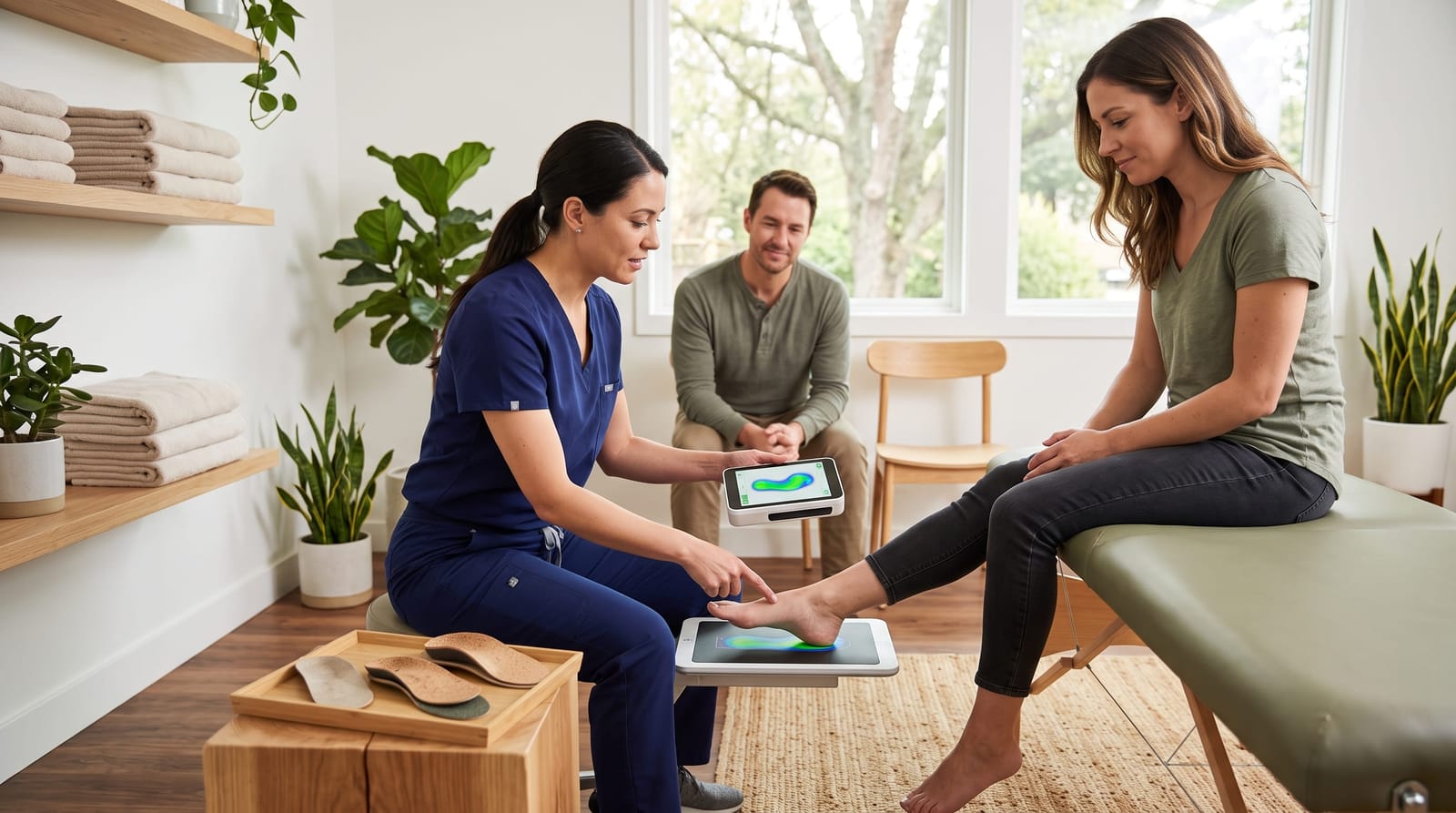
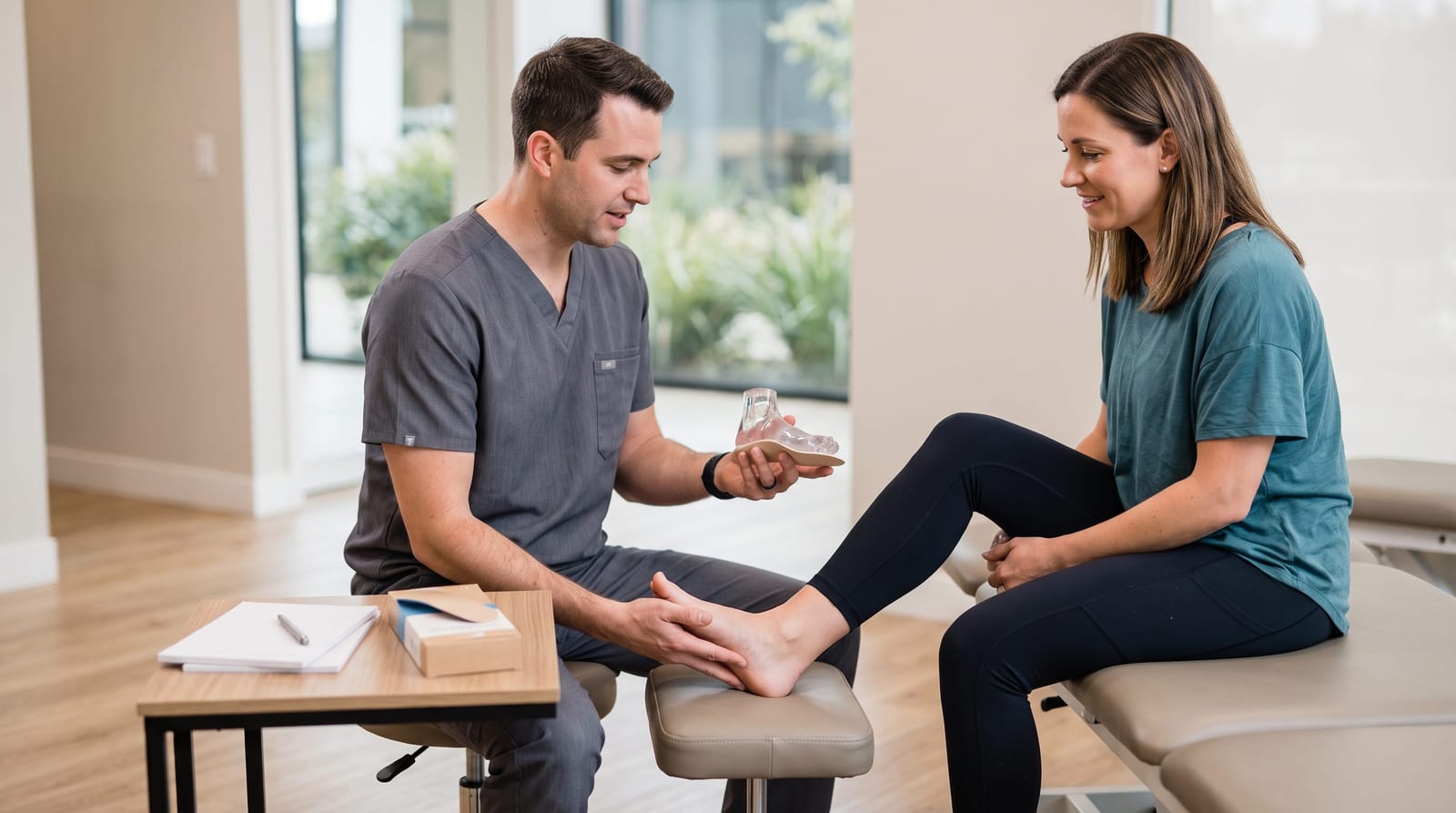
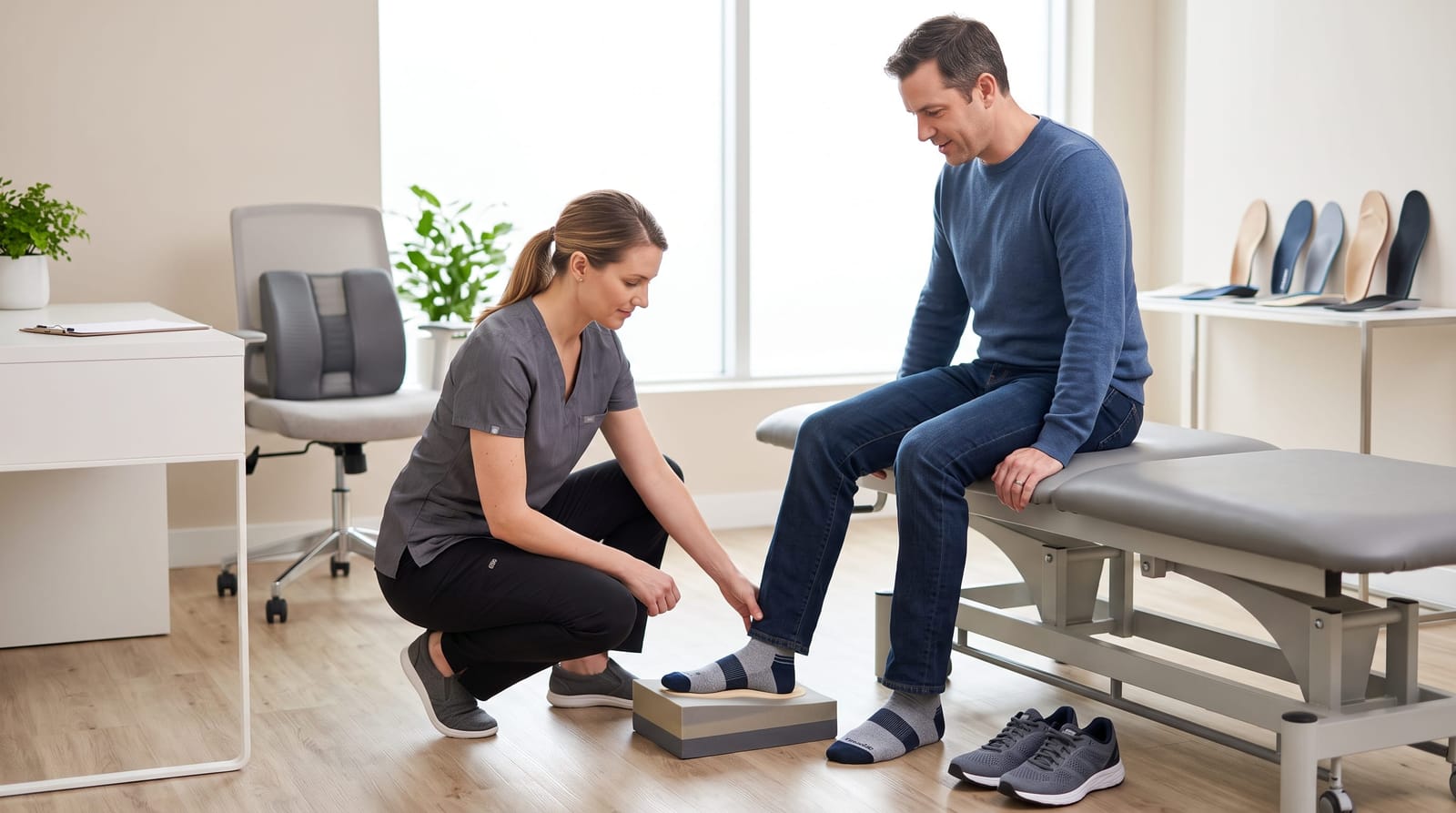
Over-the-counter insoles can provide some cushioning and general arch support, but they aren't designed around the specific mechanics of your individual foot. Custom orthotics are different. They're fabricated based on a precise assessment of your foot structure, arch height, gait pattern, and weight distribution: meaning they're built to correct your overpronation, not a generic version of it.
For flat feet specifically, custom orthotics typically include:
- Medial arch support that lifts and holds the collapsed arch in a more functional position
- Heel posting to reduce inward rolling at the rearfoot
- Forefoot adjustments to distribute pressure more evenly across the sole
By correcting alignment at the foot, the chain reaction up through the ankle, knee, hip, and pelvis is interrupted. The lumbar spine no longer needs to compensate for a tilted foundation, and that's often when patients start noticing that their back discomfort begins to ease.
It's worth noting that orthotics work best as part of a broader care approach. At Prodigy Chiro Care, we often combine orthotic support with chiropractic adjustments and corrective exercises to address both the structural cause and any compensatory tension that has built up in the back and hips over time.
What to Expect When You Start Using Custom Orthotics
One of the most common questions patients ask is how quickly they'll notice a difference. The honest answer depends on how long the biomechanical imbalance has been present and whether any secondary tension patterns have developed in the back, hips, or legs.
Most patients report a noticeable improvement in foot comfort within the first two to four weeks of consistent use. Lower back improvements typically follow, often within four to eight weeks, as the body gradually adapts to better alignment. Some patients with long-standing postural compensation patterns may take a bit longer to experience full benefit, particularly if soft tissue tension in the hips or lumbar region needs concurrent treatment.
A few things that support a successful transition to custom orthotics:
- Wear them consistently, starting with a few hours per day and building up gradually
- Pair orthotic use with supportive footwear that has adequate depth in the toe box and a stable heel counter
- Consider complementary care such as chiropractic adjustments or targeted stretching for the hip flexors and lumbar muscles
- Schedule a follow-up assessment after six to eight weeks to evaluate progress and make any needed modifications
Are Custom Orthotics Right for Everyone with Flat Feet?
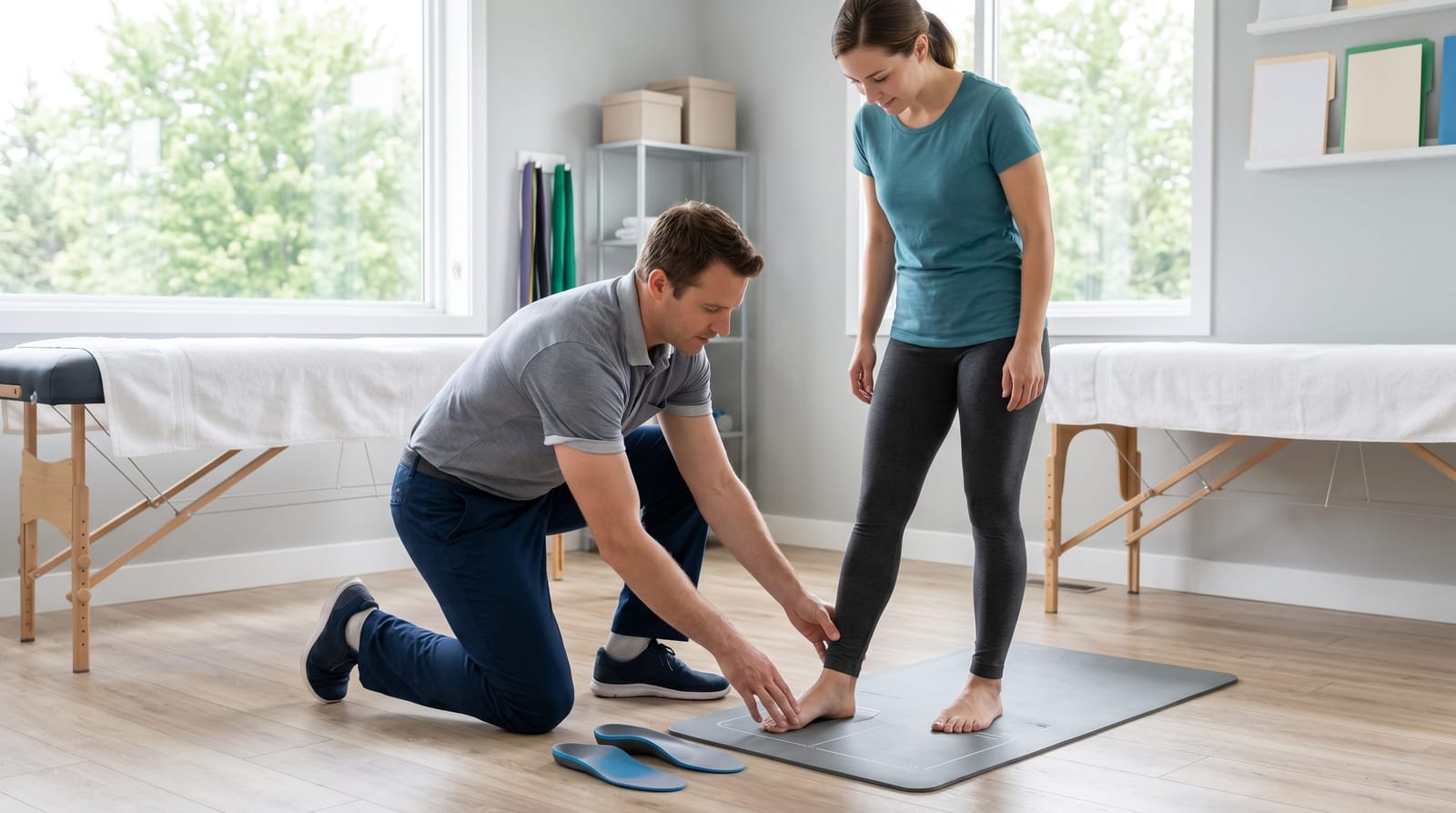
Not every person with flat feet will need custom orthotics, and not every case of lower back pain is caused by foot mechanics. That's why a thorough evaluation matters before committing to any treatment approach. A provider who assesses your gait, posture, and spinal alignment can help determine whether there's a genuine biomechanical link in your specific situation.
Custom orthotics tend to offer the most benefit for patients who:
- Have rigid or semi-rigid flat feet that don't correct naturally when standing on tiptoe
- Experience chronic lower back, hip, or knee discomfort without a clear structural injury
- Spend significant time on their feet for work or activity
- Have already tried general insoles without meaningful improvement
If you're unsure whether your back pain and foot structure are connected, that's exactly the kind of question a comprehensive chiropractic evaluation is designed to help answer.
Frequently Asked Questions
Can flat feet really cause lower back pain?
Yes, for many people there is a direct biomechanical connection. Flat feet often cause overpronation, an inward rolling of the foot, which creates a chain reaction through the ankles, knees, and hips that can result in anterior pelvic tilt and increased stress on the lumbar spine. Research has found that individuals with flat feet are statistically more likely to experience lower back discomfort, though every case is different and a proper evaluation is the best way to determine whether your foot mechanics are contributing to your specific symptoms.
How do custom orthotics for flat feet differ from store-bought insoles?
Store-bought insoles are manufactured to fit a general foot shape and provide broad cushioning or basic arch support. Custom orthotics are fabricated based on a detailed assessment of your individual foot structure, arch height, and gait mechanics. This means they're designed to address the specific way your foot moves and distributes weight, offering more precise correction of overpronation and related alignment issues.
How long does it take for custom orthotics to help with back pain?
Most patients begin noticing improved foot comfort within two to four weeks. Lower back improvements typically become more apparent over four to eight weeks of consistent use. The timeline varies depending on how long the alignment issue has been present and whether complementary care, such as chiropractic adjustments or stretching, is being used alongside the orthotics.
Do I need a referral to get custom orthotics through a chiropractic office?
In most cases, no referral is needed. A chiropractor can evaluate your foot mechanics, gait, and overall posture during a standard consultation and determine whether custom orthotics are appropriate for your situation. At Prodigy Chiro Care, this assessment is part of a broader evaluation of how your body is functioning as a whole.
Putting It All Together
Flat feet are often overlooked as a potential source of lower back discomfort, but the biomechanical link between overpronation and lumbar spine stress is well-documented and clinically meaningful. Custom orthotics for flat feet work by correcting alignment at the foundation, reducing the compensatory strain that travels up through the kinetic chain. When combined with chiropractic care and supportive habits, they can be an important part of a long-term wellness strategy for patients whose back pain has never had a satisfying explanation. If this sounds familiar, a thorough evaluation is a natural next step.