Can Custom Orthotics Fix Posture? The Connection Between Foot Alignment and Spinal Health
When most people think about improving their posture, they look upward, to their shoulders, their spine, or the way they sit at a desk. Rarely do they think about what's happening at the very bottom of the body: their feet. Yet foot alignment plays a surprisingly significant role in how the entire body stacks and moves. If you've been exploring whether custom orthotics fix posture issues you've been living with, you're asking exactly the right question. This post takes a closer look at the biomechanical connection between your feet and your spine, how custom orthotics support postural improvement, and why combining orthotics with chiropractic care tends to produce the most meaningful, lasting results. Understanding this relationship can help you make a more informed decision about your own care.
Your Feet Are the Foundation of Your Entire Posture
Think of your body as a building. If the foundation is uneven, every floor above it shifts to compensate, and over time, those compensations create stress throughout the entire structure. Your feet work the same way. They're the only part of your body in contact with the ground during standing, walking, and most daily activities, which means the alignment of your feet directly influences everything above them.
When feet are well-aligned, weight is distributed evenly across the heel, the ball of the foot, and the toes. The arches act as natural shock absorbers, helping to neutralize the forces generated with every step. But when that alignment is off, whether due to flat feet, high arches, overpronation, or other structural variations, the body begins making subtle adjustments to maintain balance.
How Foot Imbalances Travel Up the Chain
Biomechanics researchers use the term "kinetic chain" to describe how movement forces travel through connected structures in the body. Foot imbalances don't stay localized. Studies suggest that altered foot mechanics can contribute to compensatory changes at the ankle, knee, hip, and lumbar spine. For example:
- Overpronation (where the arch collapses inward) can cause the lower leg to rotate internally, placing added stress on the knee and tilting the pelvis forward.
- Excessive supination (rolling outward) can reduce the foot's natural shock absorption, transmitting more impact force up through the ankle and into the spine.
- Leg length discrepancies, even minor ones, can cause the pelvis to tilt, creating curvature patterns in the lumbar spine over time.
Research published in chiropractic and orthopedic literature indicates that approximately 60 to 70 percent of people have some degree of foot imbalance that affects their overall posture. These aren't always painful in themselves, many people live for years without foot discomfort, but the postural compensations they produce can gradually contribute to tension and discomfort elsewhere in the body.
What Custom Orthotics Actually Do for Posture
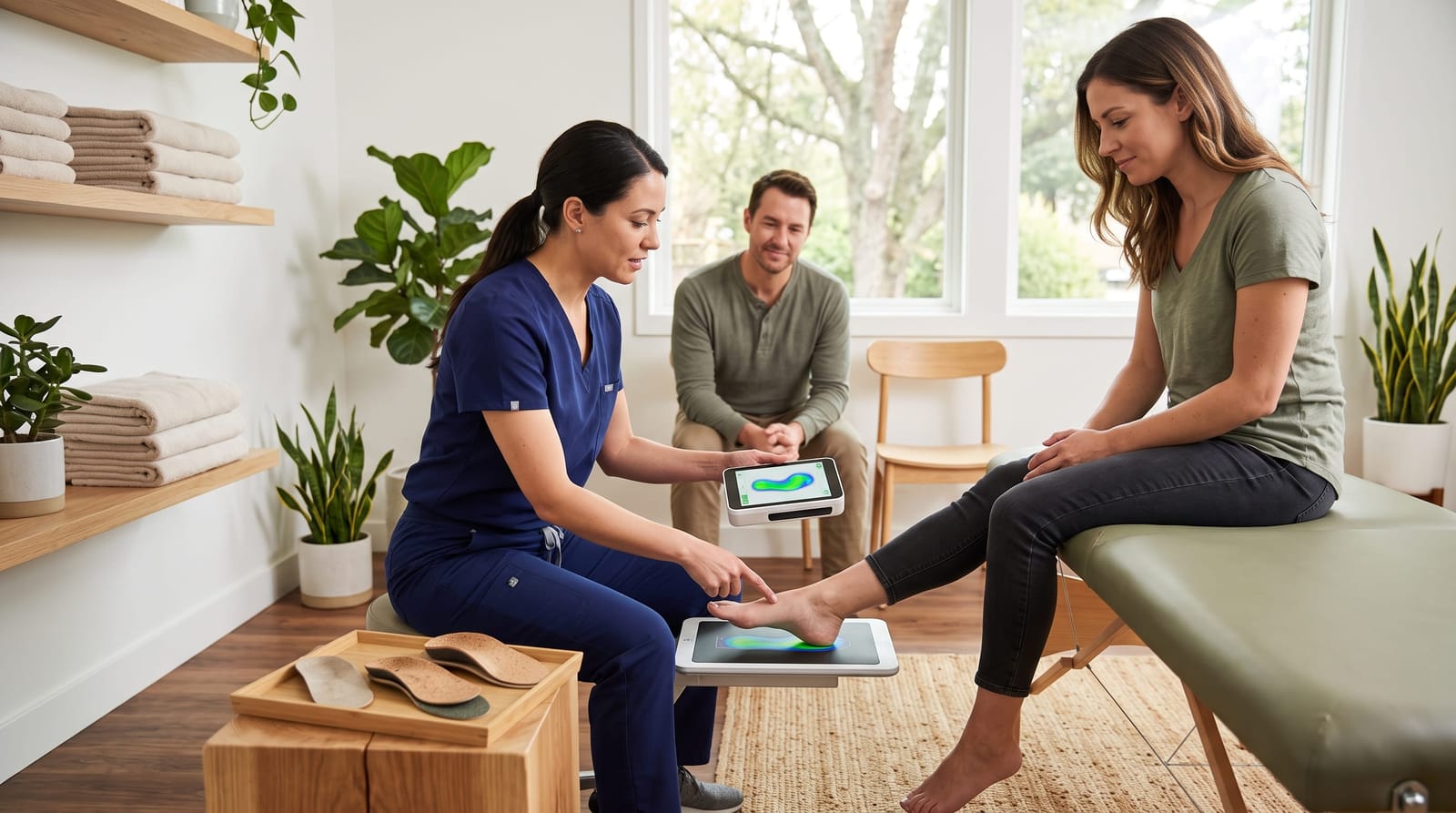
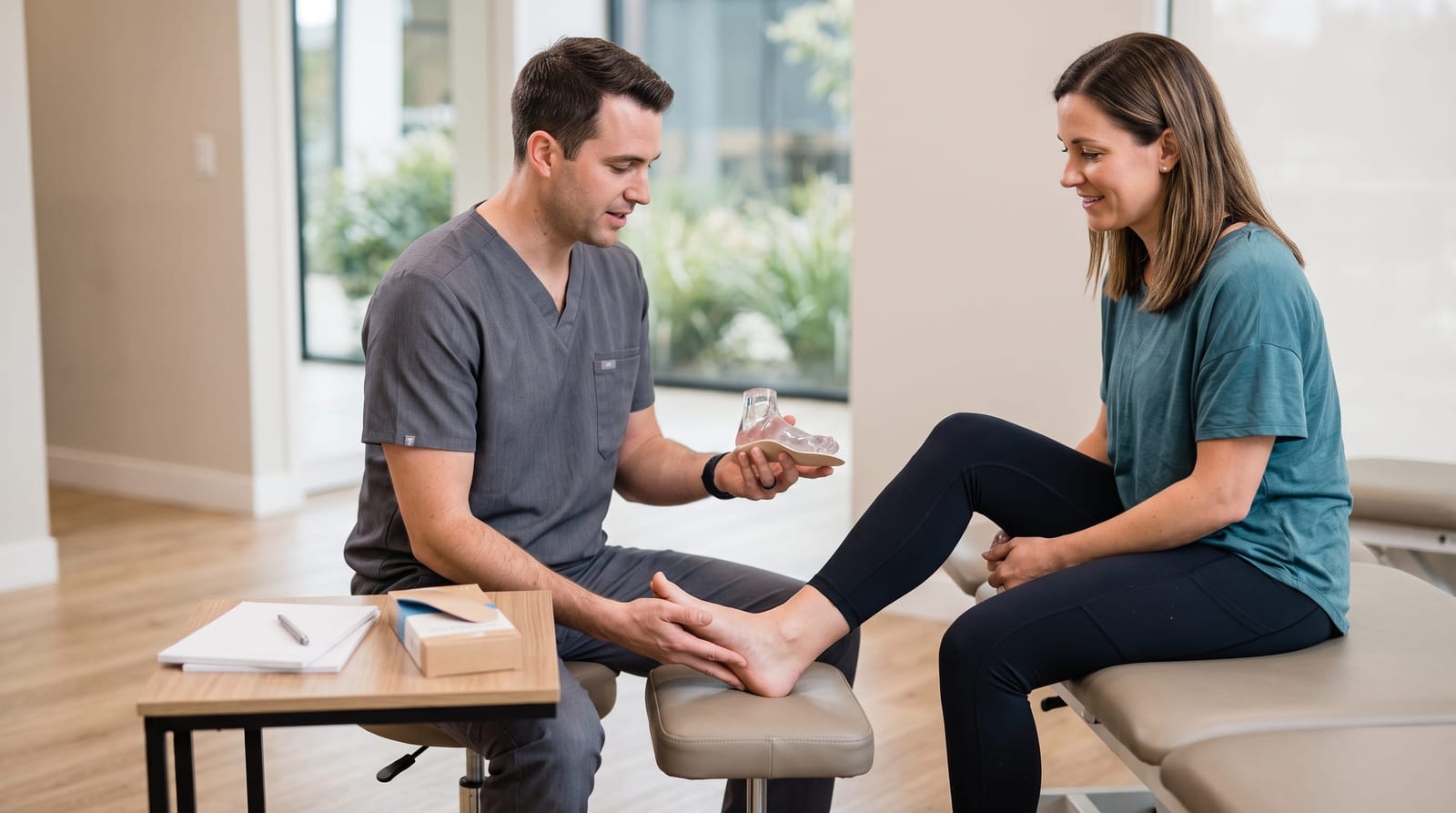
Custom orthotics are precision-crafted shoe inserts designed to match the unique contours of your feet. Unlike over-the-counter insoles, which are manufactured to fit a general foot shape, custom orthotics are based on a detailed assessment of your individual foot structure, gait pattern, and postural needs. That specificity is what makes them a meaningful tool in postural support.
So, can custom orthotics fix posture on their own? The honest answer is: they can be a highly effective part of postural correction, particularly when combined with chiropractic care and targeted movement work. Here's what they contribute:
Redistribution of Weight and Pressure
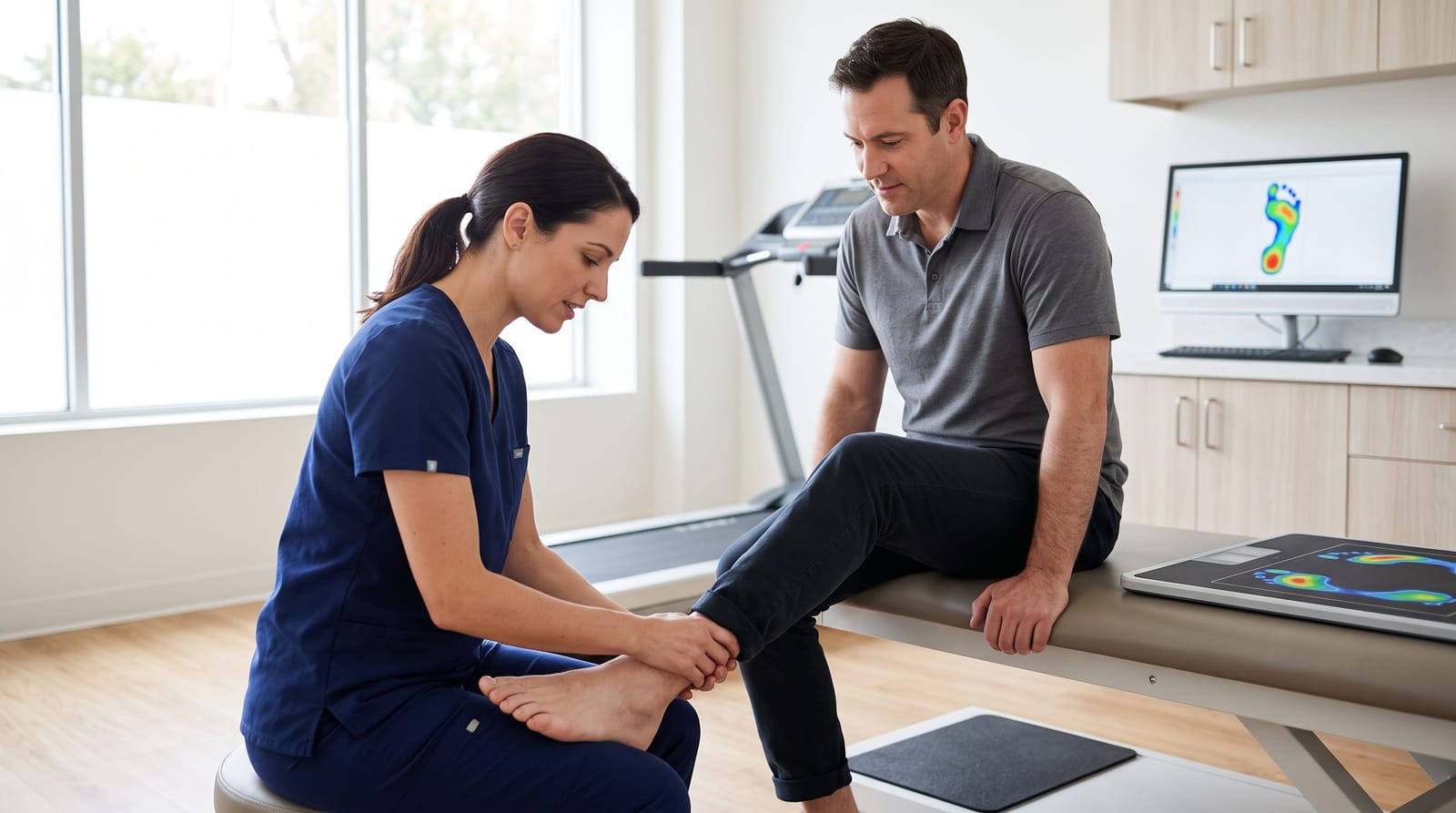
Custom orthotics are designed to redistribute pressure more evenly across the foot's surface. Studies using in-shoe pressure mapping technology have shown that custom orthotics can reduce peak plantar pressure by an average of 15 to 25 percent compared to no orthotic support. This more even load distribution reduces the mechanical strain that travels upward through the kinetic chain, which is one of the key ways custom orthotics fix posture problems that originate at ground level.
Correcting Ankle and Knee Alignment
By stabilizing the rearfoot and providing appropriate arch support, custom orthotics can help reduce the inward collapse associated with overpronation. This supports more neutral ankle and knee positioning during movement: alignment improvements that research suggests may help reduce compensatory hip and pelvic tilting in patients with relevant foot mechanics issues. You can learn more about how this process works specifically for flat feet and overpronation in our post on custom orthotics flat feet.
Supporting a More Neutral Pelvic Position
When the feet are better aligned, the chain reaction above them can shift toward a more balanced position. A more neutral pelvis creates a healthier starting point for lumbar spine curvature and reduces the tendency for excessive anterior or posterior pelvic tilt: both of which are associated with postural strain patterns that chiropractic care frequently addresses.
The Foot-Spine Connection: Why This Relationship Matters
Spinal health and foot health are more interconnected than most people realize. The lumbar spine (the lower back) is particularly sensitive to changes in pelvic alignment. When the pelvis tilts, whether forward, backward, or laterally, the lumbar vertebrae must adapt to maintain the body's center of gravity. Over months and years, these adaptations can contribute to patterns of muscular tension and joint stress throughout the back.
A study examining the effects of custom foot orthotics on spinal posture found measurable improvements in lumbar lordosis (the natural inward curve of the lower back) in participants who used custom orthotics consistently over a 12-week period. While every individual's experience is different, findings like these help explain why podiatrists, chiropractors, and physical therapists frequently incorporate orthotic therapy into postural treatment strategies.
Gait and Its Role in Spinal Loading
Your gait, the way you walk, is one of the primary mechanisms through which foot imbalances affect the spine. Each step generates a force roughly equal to 1.5 times your body weight traveling upward through the skeletal system. Over the course of an average day, most adults take between 6,000 and 10,000 steps. When each of those steps carries a small mechanical imbalance, the cumulative effect on spinal alignment over weeks and months can be considerable.
Custom orthotics influence gait mechanics by modifying how the foot contacts the ground and how forces are absorbed and transmitted through each stride. This is one of the reasons that many patients who begin using custom orthotics report changes not only in foot comfort but in how their back and posture feel during and after walking.
Custom Orthotics as Part of a Comprehensive Postural Care Plan
At Prodigy Chiro Care, we approach postural correction as a whole-body process rather than a single-solution fix. Custom orthotics are a meaningful piece of that puzzle, but they work most effectively when integrated with other care strategies. Think of it this way: orthotics support better alignment from the ground up, while chiropractic adjustments help address restrictions and imbalances in the spine and joints, and targeted movement work trains the muscles to maintain those improvements.
Postural Re-Education: Teaching the Body New Habits
One of the challenges with postural correction is that the body often becomes accustomed to its compensatory patterns. Muscles that have been working overtime to maintain balance grow tight and overactive, while others become underused and weaker. Simply providing better foot support doesn't automatically retrain those muscle patterns: that's where postural re-education comes in.
Our postural re-education services are designed to complement orthotic therapy by guiding patients through movement strategies that reinforce the improved alignment that orthotics help establish. For a deeper look at how these approaches work together, explore our detailed guide on custom orthotics fix posture through integrated postural re-education.
Chiropractic Adjustments and Orthotic Support
Chiropractic care focuses on the alignment and function of the spine and related joints. When custom orthotics improve foot alignment and reduce compensatory patterns in the pelvis and lower back, chiropractic adjustments often become more effective, and their results tend to hold longer. The two therapies support each other in a meaningful way, which is why an integrated approach is frequently recommended for patients dealing with postural concerns.
Who Is Most Likely to Benefit?
While a personalized assessment is always the starting point for understanding your own needs, there are certain foot and postural patterns for which custom orthotics are commonly incorporated into care:
- Flat feet or overpronation: Both involve arch collapse that can contribute to inward knee and hip rotation, affecting pelvic and spinal alignment. Research suggests that custom orthotics reduce overpronation-related ankle eversion by an average of 2 to 6 degrees: a small number with meaningful biomechanical implications over thousands of daily steps.
- High arches: Reduced shock absorption from high-arched feet can increase impact forces throughout the kinetic chain.
- Leg length discrepancy: Even a difference of a few millimeters can contribute to pelvic tilt and compensatory spinal patterns. Orthotics can be designed to address these differences specifically.
- Recurring lower back or hip tension: When these issues are associated with identifiable foot alignment factors, orthotics may be one part of a broader supportive strategy.
- People who stand or walk extensively for work: Those on their feet for 6 or more hours per day have a significantly higher exposure to cumulative mechanical stress from foot imbalances.
Patients exploring whether custom orthotics might help with conditions like plantar fasciitis alongside postural concerns may also find helpful context in our post on custom orthotics plantar fasciitis.
What to Expect When Starting with Custom Orthotics for Posture
Starting with custom orthotics involves more than simply receiving an insert for your shoe. At Prodigy Chiro Care, the process begins with a thorough assessment of your foot structure, gait pattern, and postural needs. This information guides the design of orthotics that are genuinely specific to you, not a generic shape.
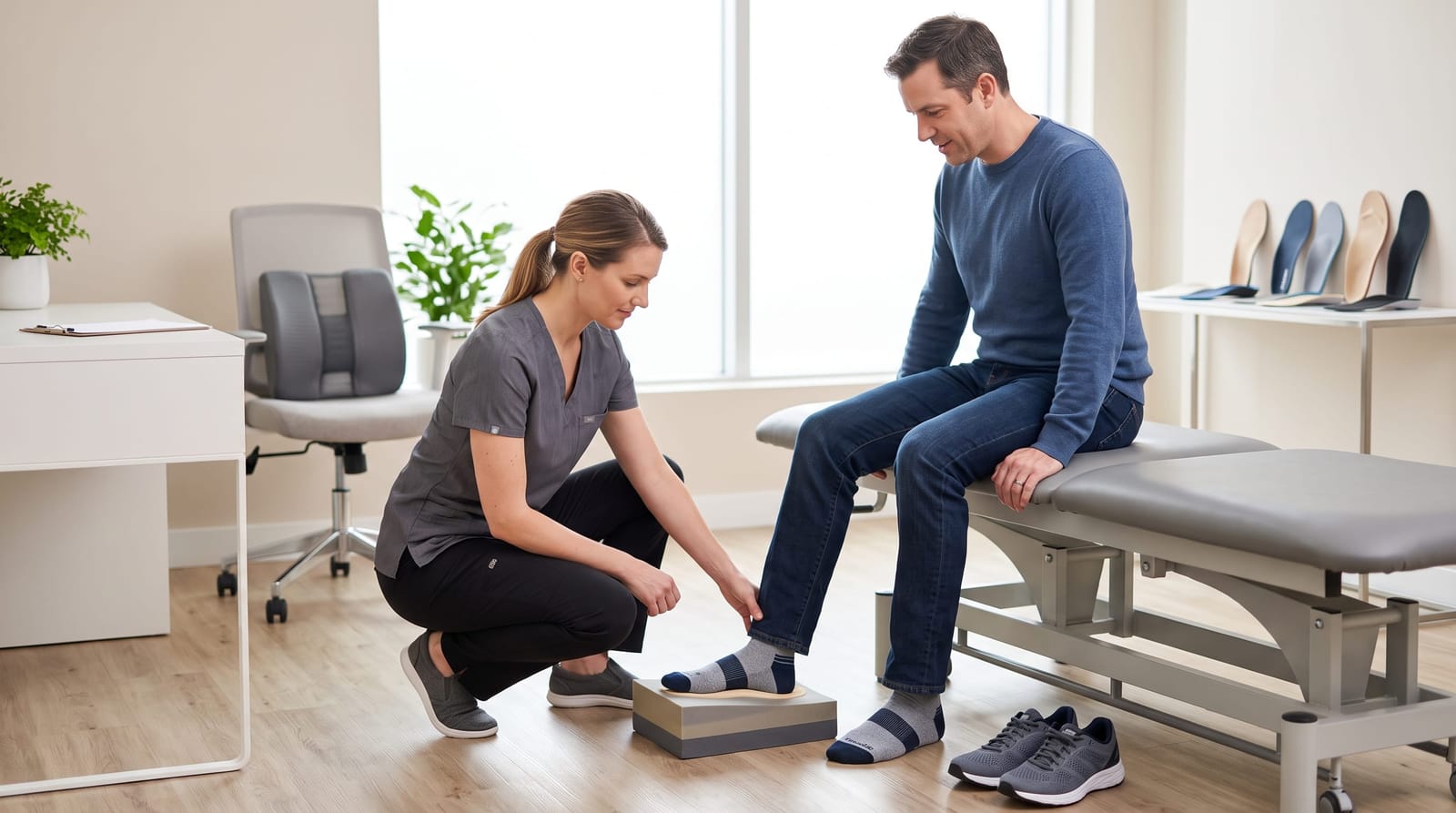
Most patients go through a brief break-in period of two to four weeks as the body adjusts to the new alignment support. During this time, wearing the orthotics for progressively longer periods allows your feet, ankles, and supporting muscles to adapt. Some patients notice postural changes relatively quickly; for others, the improvements develop more gradually as the body's compensatory habits begin to shift. Every individual's experience is different, which is why ongoing communication with your care team matters throughout the process.
For patients whose postural concerns extend into their workplace environment, whether from prolonged standing, desk work, or physically demanding roles, an evaluation of footwear choices and workstation setup can add an important layer of support. Our guide to workplace ergonomic assessment explores how orthotics fit into a broader ergonomic strategy for patients with occupational postural demands.
Conclusion: Posture Starts at the Ground
The connection between foot alignment and spinal health is well-supported by biomechanical research, and it's one that's easy to overlook when postural concerns feel like a "back problem" or a "shoulder problem." Custom orthotics offer a thoughtful, personalized way to address postural patterns at their foundation, supporting better alignment from the ground up. When combined with chiropractic care and postural re-education, they become part of a genuinely integrated approach to long-term postural wellness.
If you're curious about whether custom orthotics could be a helpful addition to your postural care, the team at Prodigy Chiro Care in West Los Angeles would be glad to talk through your situation. We offer thorough assessments and personalized care plans designed to support your comfort, alignment, and quality of life. Reach out today to schedule a consultation and take the first step toward understanding your postural health from the ground up.