Custom Orthotics for Flat Feet: Correcting Overpronation and Its Whole-Body Effects
Flat feet are more common than most people realize. Research suggests that roughly 20 to 30 percent of the general population has some degree of fallen arches. For many, flat feet cause no noticeable problems. But for others, the effects ripple upward through the body: contributing to knee discomfort, hip tension, and even lower back pain. If you've been exploring whether custom orthotics for flat feet might help you, this guide walks through what the research says, how the biomechanical chain actually works, and how a personalized approach to foot support can make a meaningful difference in your daily comfort. This post is part of a broader look at how custom orthotics address specific conditions: explored in depth in our pillar guide on the evidence behind custom orthotics for West Los Angeles patients.
What Flat Feet Actually Mean for Your Body
The term "flat feet" refers to a reduced or absent arch along the inner side of the foot. When you stand, the entire sole makes contact with the ground rather than just the heel, ball, and outer edge.
There are two main types worth understanding:
- Flexible flat feet: The arch appears when you lift the foot but collapses under body weight. This is the most common type.
- Rigid flat feet: The arch is absent even without weight-bearing. This type tends to cause more persistent discomfort and often benefits most from structured support.
Flat feet frequently go hand-in-hand with overpronation. Overpronation means the foot rolls excessively inward with each step. This inward rolling shifts the load distribution across the foot and alters the angle of the ankle, which in turn affects everything above it.
Studies have shown that individuals with overpronation experience measurably different forces at the knee and hip compared to those with neutral foot mechanics. One research review found that overpronation increases tibial internal rotation by up to 30 percent: enough to place noticeable stress on knee joints over time. Understanding this connection helps explain why flat feet are often linked to complaints that seem unrelated at first glance.
The Biomechanical Chain: From Your Foot to Your Spine
Your body functions as a connected system. A change at the foundation, your feet, can influence posture, alignment, and movement patterns all the way up to your neck.
Foot and Ankle
When the arch collapses, the ankle tilts inward. This creates an uneven base that forces compensations at every level above it. Over time, soft tissues around the ankle can become strained from repeated asymmetrical loading.
Knees
As the ankle rolls in, the shin follows. This produces inward rotation at the knee: a joint not well designed to handle rotational stress. People with flat feet are more likely to experience discomfort along the inner knee and around the kneecap. One study found that custom foot orthotics reduced knee adduction moments by approximately 6 percent, which reflects a genuine reduction in medial knee stress.
Hips and Pelvis
The inward rotation from the knee continues upward into the hip. The pelvis may tilt or shift to compensate. Gluteal and hip flexor muscles often work harder than they should, leading to fatigue and tightness in the outer hip and lower pelvis region.
Lower Back and Spine
Pelvic tilt caused by altered foot mechanics can affect lumbar alignment. When the pelvis tips forward or rotates unevenly, the lumbar spine adjusts to maintain balance. Over months and years, this can contribute to muscle tension and postural changes in the lower back. This connection, between flat feet and back discomfort, is worth taking seriously, and it's explored in more detail in our companion post on custom orthotics flat feet and their relationship to lower back pain.
How Custom Orthotics Address Overpronation at the Source
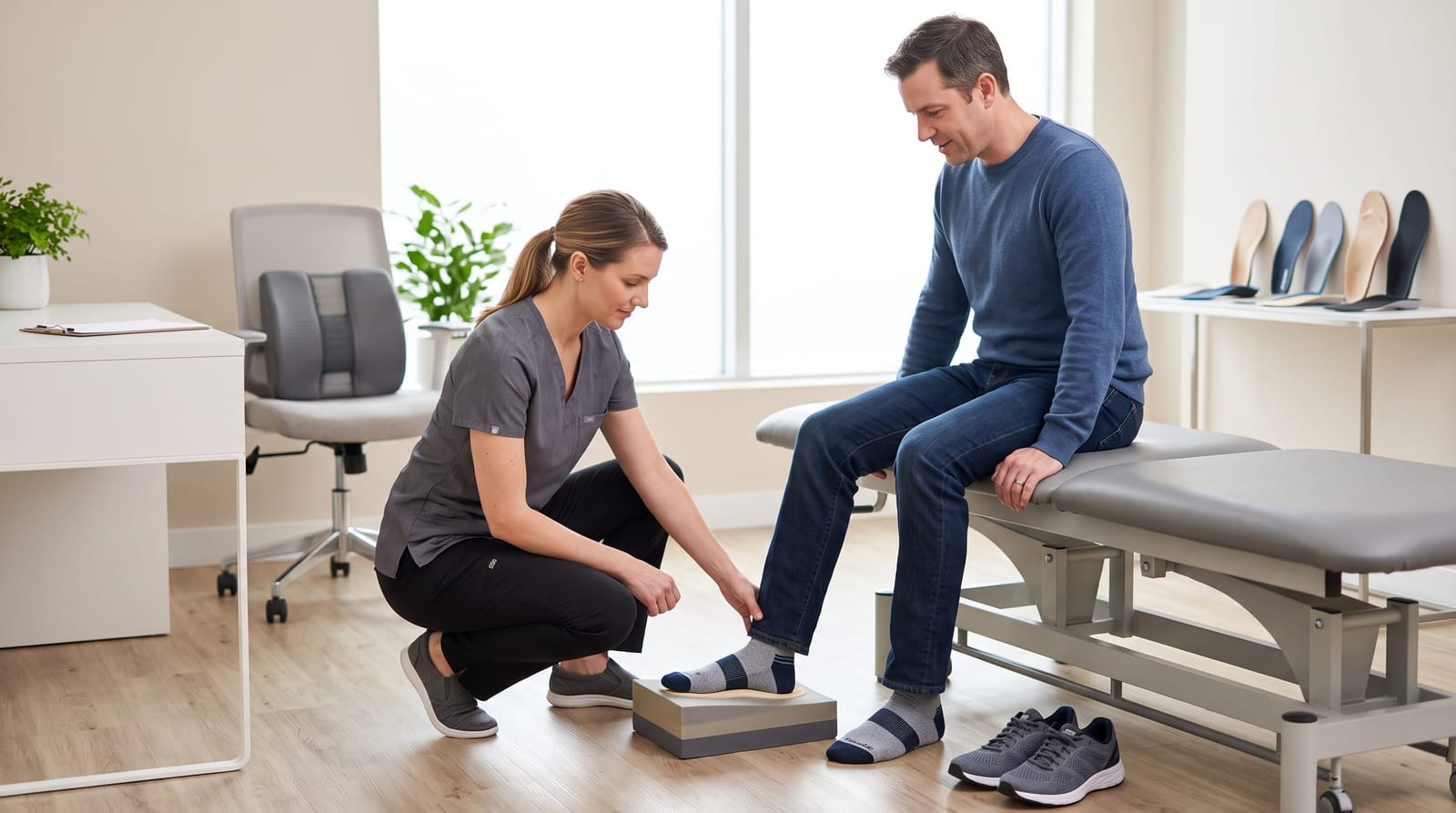
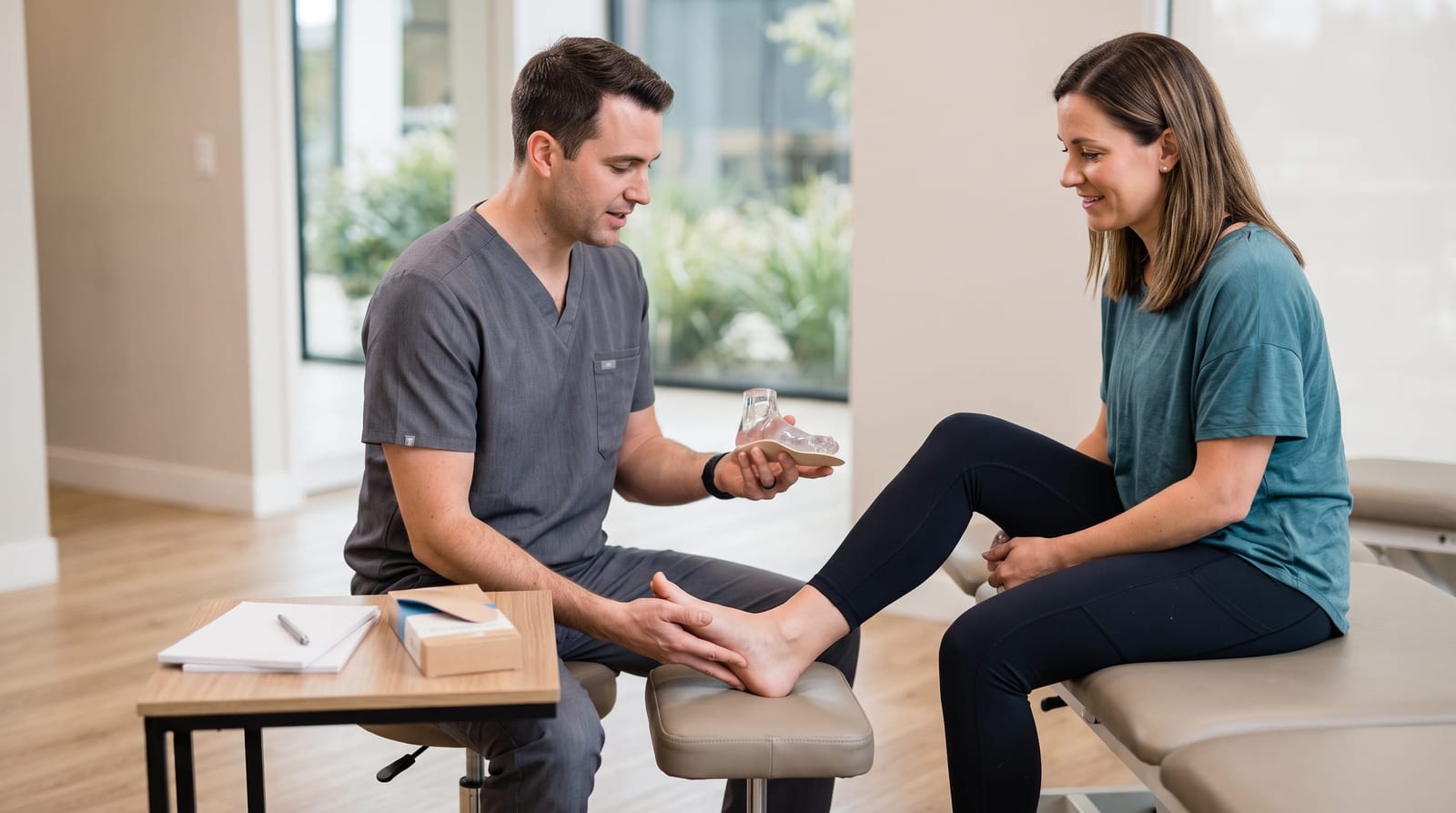
Over-the-counter insoles offer some cushioning, but they aren't designed around your unique foot shape or gait pattern. Custom orthotics are different. They're created from precise measurements or a mold of your foot, which means the support is placed exactly where your individual arch needs it.
What Custom Orthotics Do for Flat Feet
- Arch support: They fill the space beneath the arch to prevent it from fully collapsing under body weight.
- Rearfoot control: A structured heel cup limits how far the ankle rolls inward during each step.
- Load redistribution: Pressure is spread more evenly across the foot, reducing concentrated stress on the heel, inner ankle, and ball of the foot.
- Gait correction: By correcting the foot's position during movement, orthotics help establish a more neutral walking or running pattern.
A 2018 systematic review found that custom foot orthotics significantly reduced pain and improved function in patients with flat feet and associated lower limb discomfort. The effects were particularly notable when orthotics were combined with other supportive care rather than used in isolation.
This is an important point. Custom orthotics work best as part of a broader approach to foot and body wellness, not as a standalone fix.
Choosing the Right Orthotic: What the Assessment Process Involves
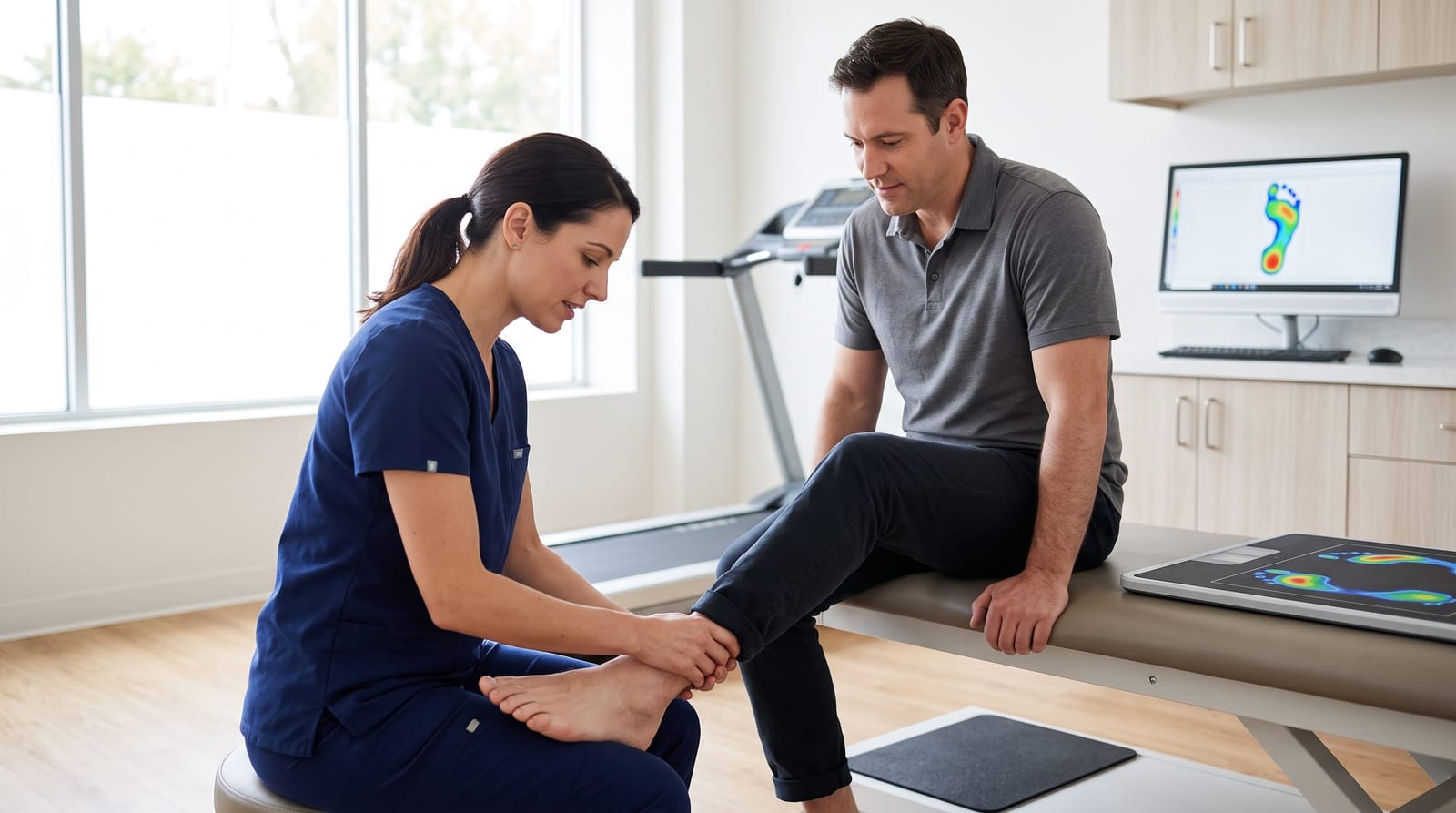
Because flat feet vary significantly from person to person, the evaluation process matters as much as the orthotic itself. A thorough assessment typically includes:
- A gait analysis to observe how your foot moves during walking or running
- Pressure mapping or foot scanning to identify where load is concentrated
- Assessment of ankle, knee, and hip alignment
- Discussion of your activity level, footwear habits, and specific discomfort areas
The resulting orthotic is matched to both your foot structure and your lifestyle. A runner's orthotic looks and functions quite differently from one designed for someone who stands on hard floors for eight hours a day at work.
At Prodigy Chiro Care, orthotics assessments are integrated with a broader view of posture and spinal alignment. This matters because, as the biomechanical chain above illustrates, flat feet rarely affect only the feet.
When Flat Feet Have Already Affected the Spine
For some patients, years of unaddressed overpronation have contributed to changes in posture and spinal alignment. In these cases, addressing the feet alone may not resolve discomfort that has developed higher up in the body.
Chiropractic care can play a supportive role for patients dealing with postural changes, muscle tension, or spinal discomfort that may be connected to their foot mechanics. Gentle spinal adjustments can help restore mobility and ease tension in areas that have been compensating for altered gait patterns over time.
For patients who have developed more significant lower back concerns alongside their flat feet, spinal decompression therapy is another option offered at Prodigy Chiro Care. This gentle, non-invasive approach is designed to relieve pressure on spinal structures and support the natural recovery process. Combined with custom orthotics that address the root mechanical issue, this kind of integrative care addresses the problem from multiple directions.
It's also worth noting the connection between flat feet and plantar fasciitis: a condition where the band of tissue along the bottom of the foot becomes irritated. Overpronation is one of the most common contributing factors to plantar fascia strain. If you're managing both conditions, our post on custom orthotics plantar fasciitis covers how orthotics support recovery from that specific issue.
What to Expect After Getting Custom Orthotics for Flat Feet
Most people notice a difference within the first few weeks of consistent wear, though this varies from person to person. Here's what a realistic adjustment period typically looks like:
Weeks 1-2: Break-In Period
Your feet, legs, and posture are adjusting to a new alignment. It's normal to feel some mild fatigue or muscle awareness as your body adapts. Start with a few hours of daily wear and gradually increase.
Weeks 3-6: Adaptation
Most people move toward wearing orthotics full-time during this phase. Gait patterns begin to shift. Many patients report reduced fatigue during extended walking or standing.
Beyond 6 Weeks: Ongoing Support
Custom orthotics are designed to last. High-quality devices typically remain effective for two to five years with proper care, though this depends on activity level and wear patterns. Follow-up assessments help ensure the orthotics continue to provide the right level of correction as your needs evolve.
Pairing orthotics with appropriate footwear is also important. Supportive shoes with a stable heel counter and adequate depth give the orthotic a proper environment to function effectively.
Related Topics Worth Exploring
If you're researching flat feet and custom orthotics in depth, a few related questions often come up:
- The specific relationship between flat foot mechanics and chronic lower back discomfort is covered in our detailed post on custom orthotics flat feet and lower back pain.
- How orthotics support recovery from plantar fasciitis, another common flat-foot-related concern, is addressed in our guide on custom orthotics plantar fasciitis.
- For a broader condition-by-condition look at how orthotics perform, our pillar guide on whether custom orthotics really work provides a comprehensive starting point.
Taking the Next Step Toward Better Foot Support
Flat feet don't have to define how you feel on your feet, or how you feel in your knees, hips, or back. Custom orthotics for flat feet offer a thoughtful, personalized approach to correcting overpronation and supporting the entire kinetic chain from the ground up. The key is starting with a thorough assessment that looks at your whole body, not just your foot shape.
At Prodigy Chiro Care in West Los Angeles, our team takes an integrated approach to foot mechanics, posture, and spinal wellness. Whether you're just beginning to notice discomfort or have been managing flat-foot-related issues for years, we're here to help you explore your options in a calm, informative environment. Reach out to our West Los Angeles office to schedule a consultation and learn what a personalized assessment could reveal about your foot mechanics and overall alignment.