Do Custom Orthotics Really Work? A Condition-by-Condition Evidence Guide for West Los Angeles Patients
If you've been dealing with foot pain, knee discomfort, or nagging lower back tension, you've probably wondered: do custom orthotics work, or are they just an expensive version of something you could grab off a pharmacy shelf? It's a fair question, and one worth answering carefully.
Custom orthotics have been a topic of growing interest in clinical research. Studies published in peer-reviewed journals have found measurable improvements in pain levels, walking mechanics, and functional mobility among patients who wear properly fitted custom orthotics. A 2017 review in the Journal of Foot and Ankle Research found that foot orthoses significantly reduced plantar heel pain in study participants. That's not marketing language: it's data.
But research alone doesn't tell the full story. The real question for most patients isn't just whether orthotics work in general: it's whether they'll work for your specific condition, your feet, and your daily life in West Los Angeles.
This guide walks through the evidence condition by condition. You'll learn what custom orthotics are designed to do, which conditions they're most commonly used for, how they compare to over-the-counter insoles, and how they fit into a broader approach to whole-body wellness at Prodigy Chiro Care. By the end, you'll have a clear, honest picture of what custom orthotics may offer, and how to find out if they're right for you.
What Custom Orthotics Are Designed to Do
Custom orthotics are prescription shoe inserts crafted specifically for your foot shape, gait pattern, and biomechanical needs. They differ from generic insoles in one important way: they are built around a detailed assessment of how your feet actually function, not just how they look standing still.
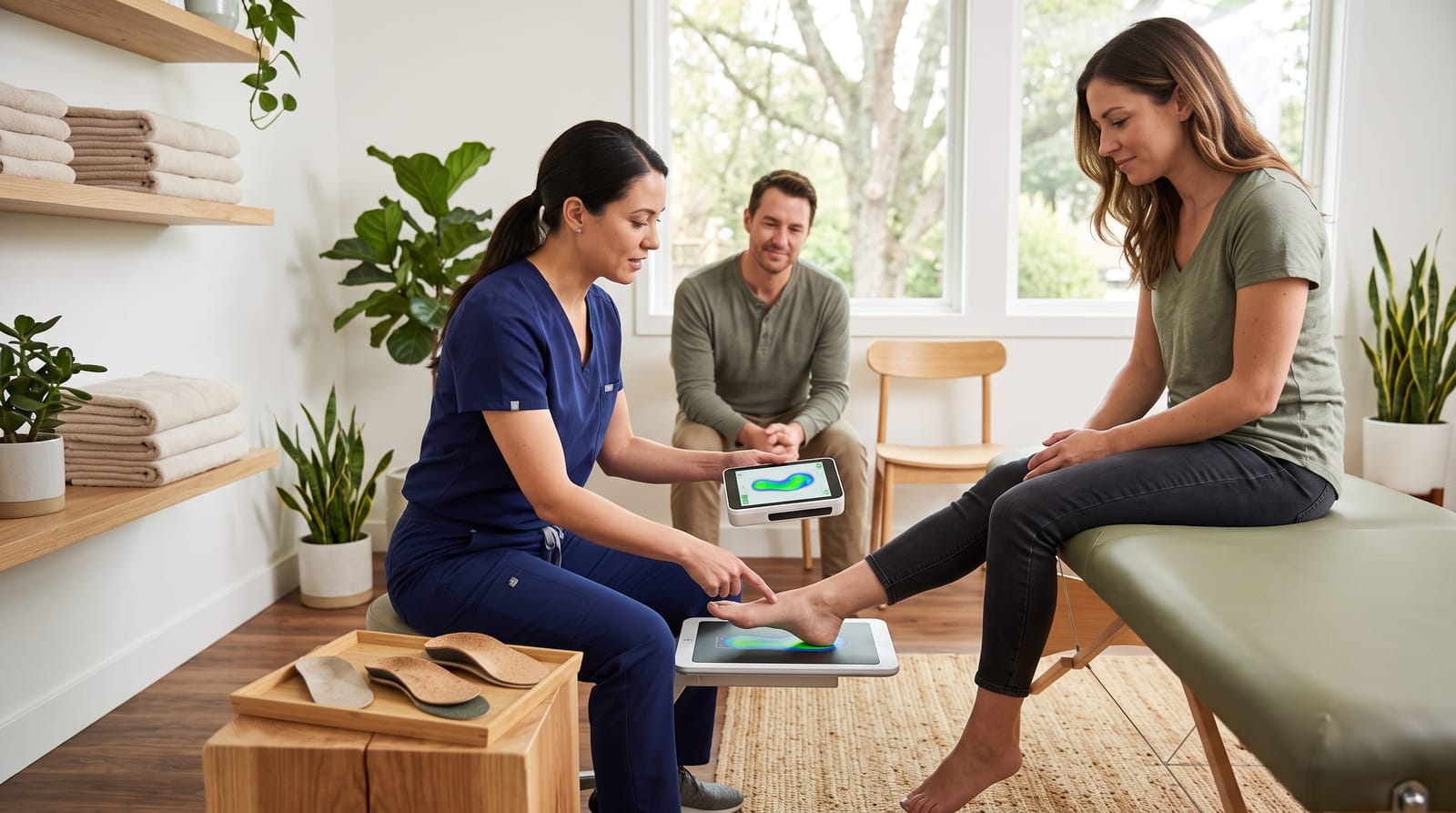
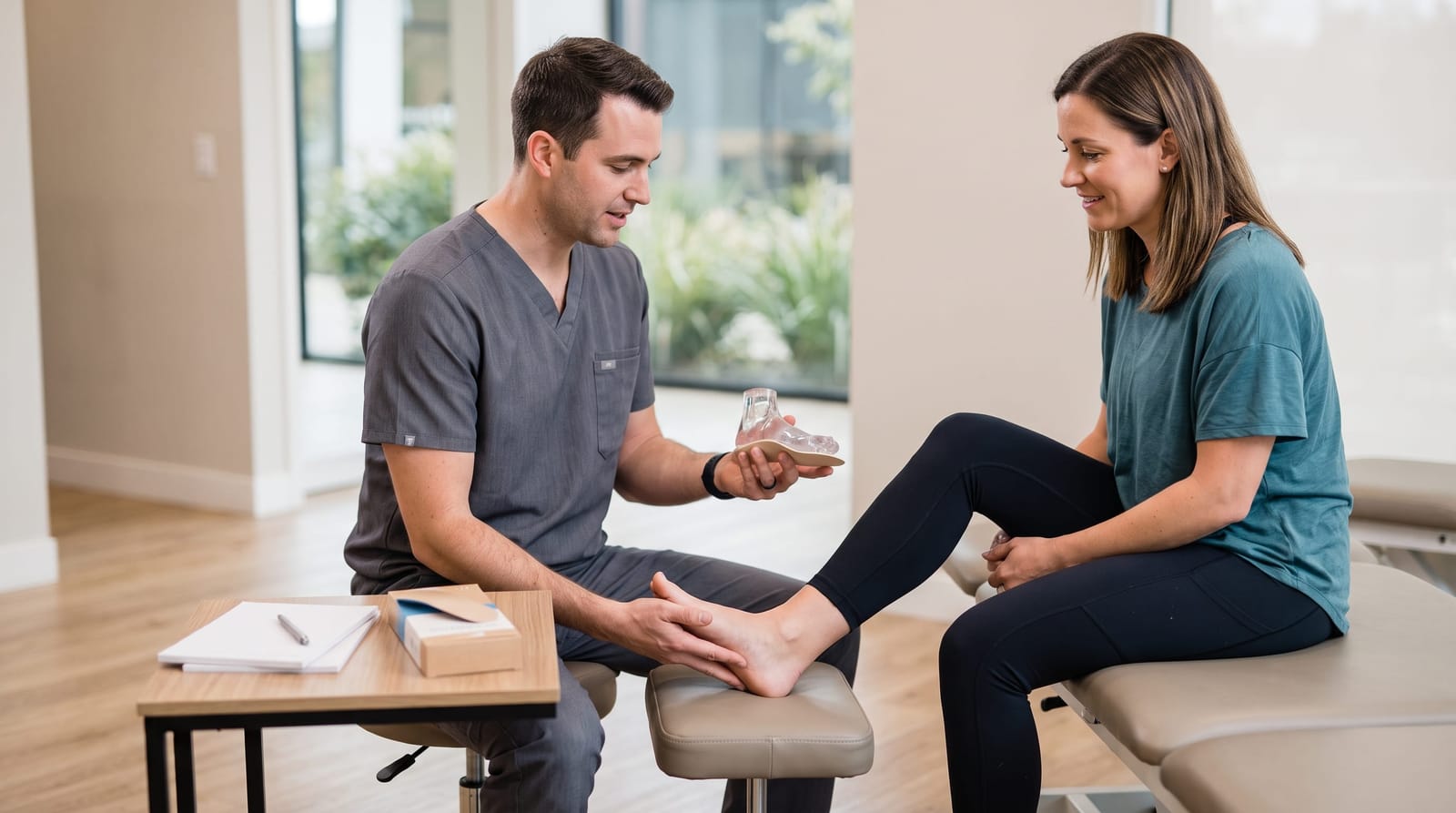
A proper custom orthotic evaluation typically involves a gait analysis, a structural assessment of your foot arches, and sometimes digital scanning or casting to capture the precise contours of your feet. The result is an insert designed to support your unique alignment rather than a mass-produced shape that approximates the average foot.
Biomechanical Support and Pressure Redistribution
Your feet are the foundation of your entire skeletal structure. Each foot contains 26 bones and more than 100 muscles, tendons, and ligaments. When one part of that system is slightly off, the effects can travel upward, through the ankles, knees, hips, and spine.
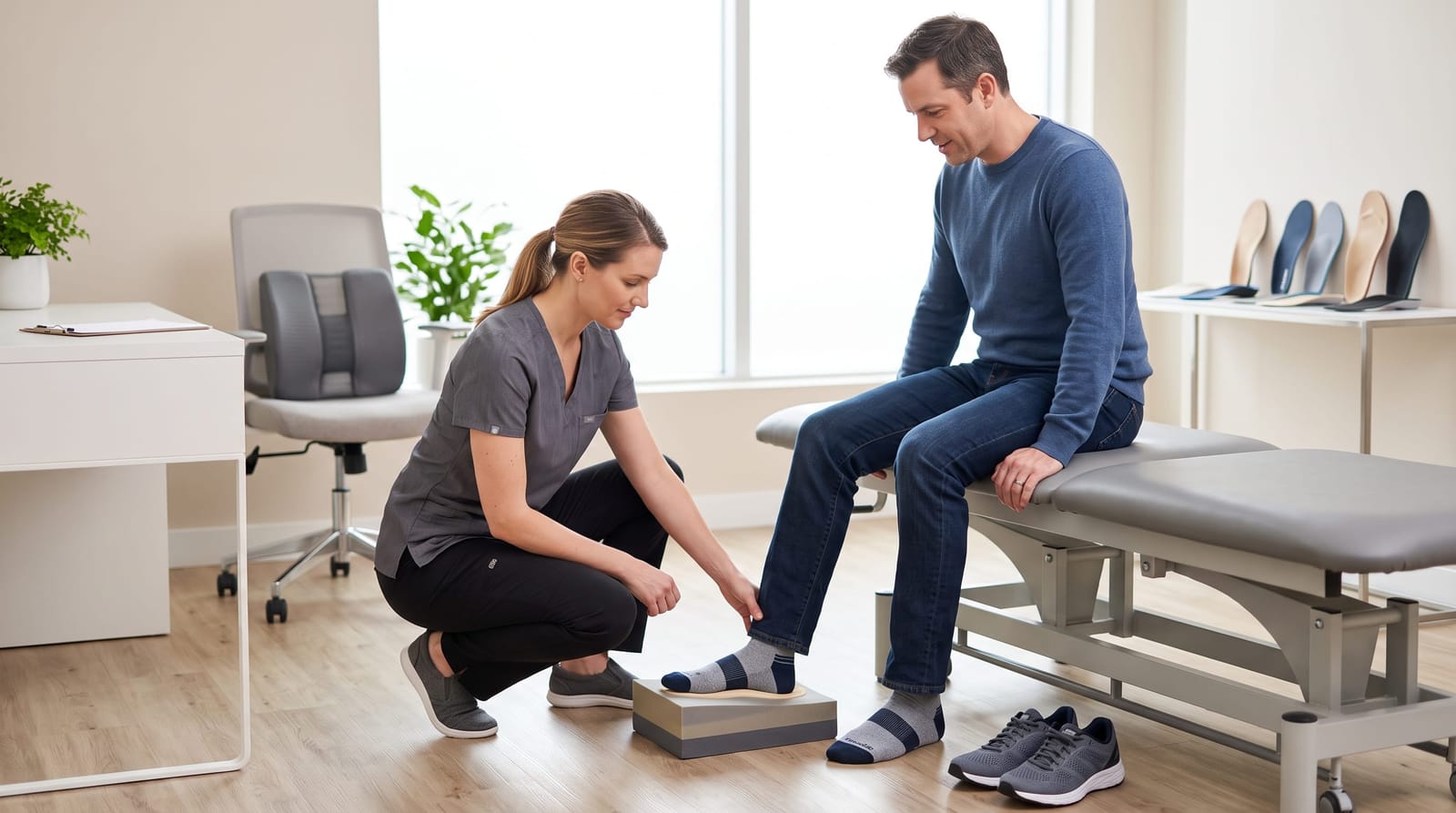
Custom orthotics work by subtly repositioning the foot within the shoe. This shifts pressure away from overloaded areas, supports proper arch function, and encourages healthier movement patterns. Over time, these small corrections can reduce strain on tissues that have been working harder than they should.
What They Are Not
Custom orthotics are not a standalone cure for any condition. They are a supportive tool: one that works best when combined with appropriate care, movement, and professional guidance. Think of them the way you might think of eyeglasses: they correct a functional imbalance while you're wearing them, and they work better when your overall health strategy supports the correction.
At Prodigy Chiro Care, custom orthotics are typically integrated with chiropractic adjustments, posture work, and in some cases spinal decompression therapy: creating a more complete approach to alignment and comfort than orthotics alone could provide.
Custom Orthotics for Plantar Fasciitis: What the Evidence Shows
Plantar fasciitis is one of the most common foot complaints among adults. It involves irritation of the plantar fascia, a band of tissue running along the bottom of the foot, and typically causes sharp heel pain in the morning or after long periods of standing. It's especially prevalent among people who spend long hours on their feet, which in a city like Los Angeles, means a large portion of the population.
Research into custom orthotics for plantar fasciitis is among the most robust in the field. A clinical study published in Arthritis Care & Research found that custom foot orthoses reduced pain and improved function in patients with plantar heel pain over a 12-week period. Another systematic review found that foot orthoses, when combined with stretching programs, produced better outcomes than stretching alone.
The mechanism makes sense when you understand the anatomy. Plantar fasciitis is often worsened by excess pronation (inward rolling of the foot) or insufficient arch support. Custom orthotics address both by providing medial arch support and redistributing the mechanical load away from the heel during each step.
Results vary from person to person, and individual outcomes depend on factors like the severity of the condition, footwear choices, activity levels, and whether other care is involved. A qualified provider can help you understand what to realistically expect. For a deeper look at this specific condition, explore our guide on custom orthotics plantar fasciitis.
Custom Orthotics for Flat Feet and Overpronation
Flat feet, also called pes planus, occur when the arch of the foot collapses, causing the entire sole to make contact with the ground. This isn't always painful on its own, but it frequently leads to overpronation, a movement pattern where the foot rolls inward excessively with each step.
Overpronation is worth paying attention to because its effects aren't limited to the feet. Research has linked overpronation to increased stress on the knees, hips, and lumbar spine. One study found that individuals with flat feet were 1.5 times more likely to experience knee pain than those with normal arch height: a notable figure that illustrates how foot mechanics ripple through the entire kinetic chain.
Custom orthotics for flat feet typically include medial arch support and a corrective posting (an angled adjustment to the heel or forefoot) that encourages the foot into a more neutral position. Over time, this can reduce the compensatory strain that flat feet place on joints further up the leg and spine.
The Whole-Body Connection
The idea that foot alignment influences posture and spinal health isn't new: it's well-established in biomechanical literature. When the feet pronate excessively, the tibia rotates inward, which tilts the pelvis, which alters lumbar curvature. That's a cascade of compensations, and each one adds a small amount of strain to structures that weren't designed to carry it.
Addressing overpronation with custom orthotics is one part of a larger conversation about whole-body alignment. At Prodigy Chiro Care, this is exactly the kind of connection we explore with patients, because treating the foot in isolation often misses the bigger picture. Learn more in our detailed post on custom orthotics flat feet.
Do Custom Orthotics Help with Knee Pain and Hip Discomfort?
Knee pain is the second most common musculoskeletal complaint among adults in the United States, affecting an estimated 25% of the adult population at any given time. While knee pain has many causes, a meaningful subset of cases involves biomechanical factors, including how the feet and ankles move during walking and running.
Patellofemoral pain syndrome (often called "runner's knee") is one condition where foot mechanics play a documented role. When the foot overpronates, it creates a twisting force in the tibia that alters the tracking of the kneecap. Studies have found that custom foot orthoses can reduce patellofemoral pain, with some research showing a 50% or greater reduction in symptoms among patients who combined orthotics with targeted exercise.
Hip discomfort related to leg length discrepancy is another area where custom orthotics can offer support. Even a small difference in leg length, sometimes as little as 3 to 5 millimeters, can alter gait mechanics and create asymmetrical loading of the hip joints and pelvis. A custom orthotic with a heel lift on one side can help compensate for this discrepancy and reduce the associated strain.
What Orthotics Can and Cannot Address
It's important to be clear: not all knee or hip pain has a foot-based origin. Orthotics are most likely to be helpful when a biomechanical component is present and contributing to the discomfort. A thorough assessment by a qualified provider is the appropriate first step, not self-diagnosis or self-prescription.
At Prodigy Chiro Care, we evaluate the full picture before making recommendations. Orthotics may be one element of a care plan, but they're rarely the only element.
Custom Orthotics and Lower Back Pain: Is There a Connection?
Lower back pain affects approximately 80% of adults at some point in their lives, making it one of the most common reasons people seek chiropractic care. While the causes of lower back pain are wide-ranging, there is a meaningful connection between foot mechanics and lumbar spine health that often goes unaddressed.
The lumbar spine and the feet are connected through what biomechanists call the kinetic chain: a series of interdependent joints and muscles that work together during movement. Dysfunction at one point in the chain influences how other points function. Flat feet and overpronation, for example, can cause pelvic tilt and increased lumbar lordosis (inward curvature of the lower back), both of which contribute to lower back tension and discomfort over time.
Several studies have explored whether custom orthotics can reduce lower back pain when foot mechanics are a contributing factor. A study published in Applied Ergonomics found that workers who wore custom foot orthoses reported significantly reduced lower back discomfort after prolonged standing compared to a control group. This is particularly relevant for West Los Angeles residents in occupations that involve long hours on hard floors: retail, healthcare, food service, and more.
When lower back pain has both a spinal component and a foot/gait component, addressing only one side of the equation may produce limited results. This is one reason Prodigy Chiro Care approaches cases holistically: combining custom orthotics with chiropractic care and, where appropriate, spinal decompression therapy to address both the structural and biomechanical contributors at the same time.
Custom Orthotics vs. Over-the-Counter Insoles: Understanding the Difference
Walk into any pharmacy in Los Angeles and you'll find a wall of insoles at price points ranging from a few dollars to over $60. These products have their place: they can add cushioning, absorb shock, and provide mild arch support for people without significant biomechanical issues. But they are not the same as custom orthotics, and understanding the difference is important when you're evaluating your options.
The Fit Problem
Over-the-counter insoles are manufactured to fit a range of foot sizes and shapes. They're designed around an average foot, which means they fit no individual foot particularly well. If your biomechanical needs fall outside the average (and many patients' do), a generic insole may not provide meaningful correction and could even create new points of irritation.
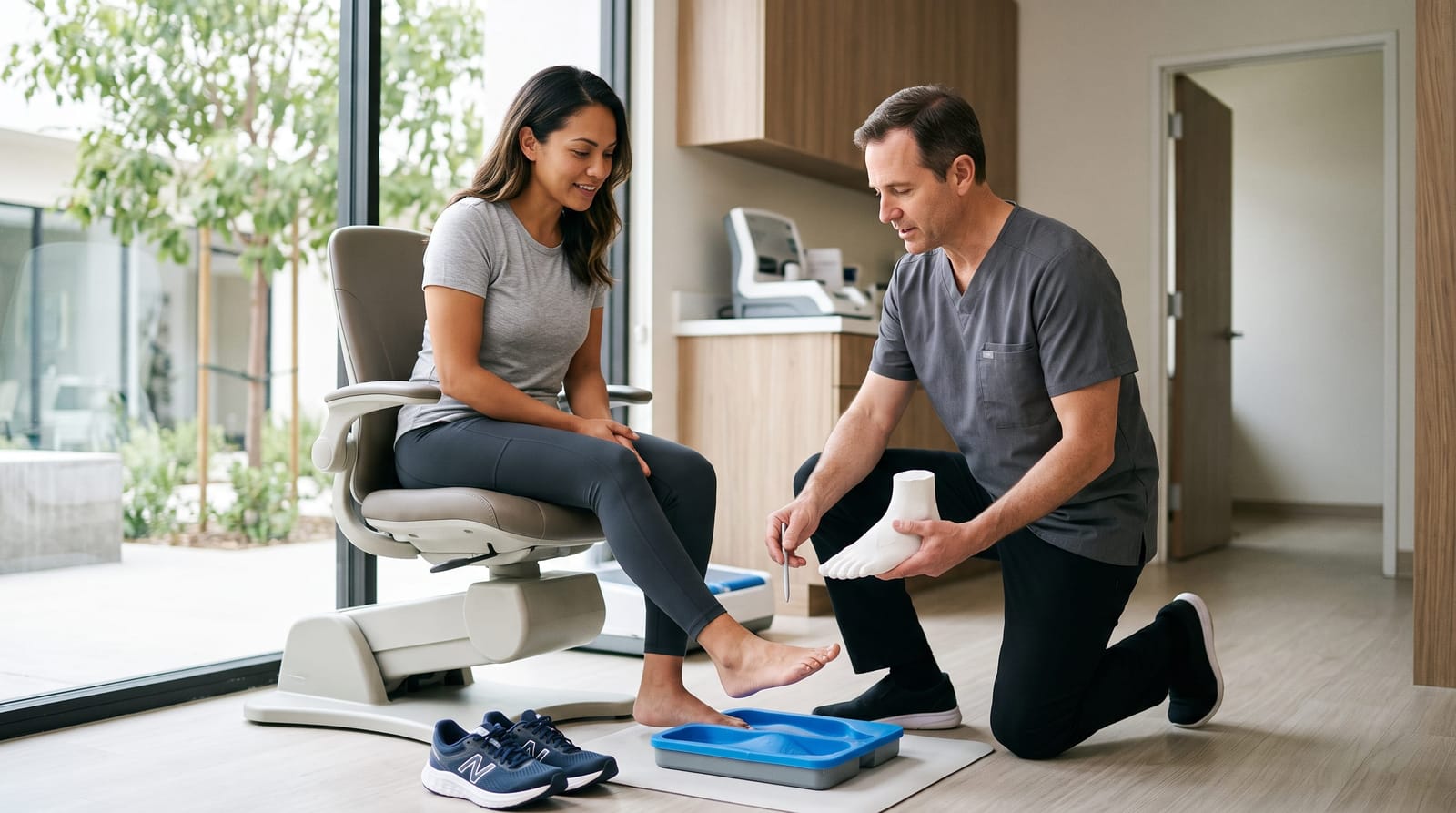
Custom orthotics, by contrast, are fabricated from a precise impression or scan of your specific foot. They account for your unique arch height, foot width, heel alignment, and gait pattern. The result is a device that provides support exactly where your foot needs it, not where the average foot does.
Functional vs. Accommodative Orthotics
Custom orthotics come in two general categories. Functional orthotics are designed to correct biomechanical motion: they influence how your foot moves. Accommodative orthotics are designed to reduce pressure and provide cushioning for sensitive areas. A qualified provider can determine which type (or combination) is appropriate for your needs.
Durability and Cost Over Time
Custom orthotics typically cost more upfront than store-bought insoles. However, they are also significantly more durable: quality custom orthotics can last several years with proper care. When you factor in the ongoing cost of replacing generic insoles every few months, the long-term price difference often narrows considerably. For detailed guidance on navigating costs, see our post on custom orthotics cost insurance.
How Custom Orthotics Integrate with Chiropractic Care and Spinal Decompression
One of the things that sets Prodigy Chiro Care apart is the way we approach custom orthotics, not as a standalone product, but as one component of a coordinated care strategy focused on whole-body alignment.
Chiropractic care addresses the spine, pelvis, and nervous system. Spinal decompression therapy gently stretches the spine to relieve pressure on compressed discs and surrounding nerves. Custom orthotics address the foundation, the feet and ankles, that influence everything above them. When these approaches are used together, they create a more complete picture of alignment support than any single modality can provide alone.
The Alignment Cascade
Consider a patient with lower back pain, knee tension, and heel discomfort. Chiropractic evaluation may reveal misalignment in the lumbar spine. A gait analysis may show significant overpronation. Spinal decompression may help relieve disc-related discomfort. Custom orthotics may address the foot mechanics contributing to the upward chain of strain.
Treating these issues in coordination, rather than in isolation, tends to produce more consistent, lasting improvements in comfort and function. That's the integrated approach we take at Prodigy Chiro Care, and it's why we evaluate foot mechanics as part of a comprehensive wellness assessment for many of our patients.
Posture and Foot Alignment
The connection between foot alignment and posture is one of the more compelling reasons to consider custom orthotics alongside chiropractic care. Research has shown that correcting foot mechanics can influence pelvic positioning and spinal curvature: meaning that what happens at ground level has a genuine impact on posture from the hips upward. For a closer look at this relationship, read our post on custom orthotics fix posture.
Signs You May Benefit from a Custom Orthotic Evaluation
Custom orthotics aren't right for everyone, and they're not appropriate for every type of foot complaint. But there are some common patterns that suggest a professional evaluation might be worthwhile.
- Persistent heel or arch pain that doesn't improve with rest
- Uneven shoe wear patterns (excessive wear on one side or in one area)
- Knee, hip, or lower back discomfort that doesn't have an obvious structural cause
- Flat feet or noticeably high arches that cause discomfort during activity
- Foot fatigue or soreness after moderate amounts of walking or standing
- A history of ankle sprains or recurring lower extremity injuries
- Discomfort that shifts or worsens with changes in footwear
None of these symptoms are a definitive indicator that custom orthotics will help, but they are reasons to have a conversation with a qualified provider. A proper assessment is the appropriate starting point. For a more complete picture of the signs to watch for, visit our guide on do I need custom orthotics.
It's also worth noting that custom orthotics are not a replacement for medical evaluation. If you're experiencing significant pain, numbness, swelling, or other concerning symptoms, speaking with your primary care provider or a licensed healthcare professional is always the right first step.
Deep Dive Topics in This Cluster
This guide is designed to give you a broad, evidence-grounded foundation for understanding custom orthotics and their role in supporting foot health, alignment, and overall wellness. For patients who want to go deeper on a specific condition or question, we've created detailed posts on each of the following topics:
- Custom orthotics plantar fasciitis: A focused look at how custom orthotics support heel and arch health for people dealing with plantar fasciitis, including what to expect during the process and how long improvement typically takes.
- Custom orthotics flat feet: An in-depth exploration of overpronation, its whole-body effects, and how custom orthotics can help correct the alignment patterns that flat feet create throughout the kinetic chain.
- Do I need custom orthotics: A practical guide to recognizing the signs that your foot mechanics may be affecting your broader health, and how to determine whether a custom orthotic evaluation makes sense for you.
- Custom orthotics fix posture: A closer look at the research connecting foot alignment to spinal posture, and how correcting foot mechanics can support better alignment from the ground up.
- Custom orthotics cost insurance: A clear, honest breakdown of what custom orthotics typically cost in the West Los Angeles area, what factors influence pricing, and how to navigate insurance questions with your provider.
Conclusion: What the Evidence: and Your Body, Is Telling You
So, do custom orthotics work? The evidence says yes, for the right patient, with the right condition, fitted and supported by qualified care. Research consistently shows that custom orthotics can reduce pain, improve function, and support healthier movement patterns for a range of common conditions, including plantar fasciitis, flat feet, patellofemoral knee pain, and lower back discomfort with a biomechanical component.
But the evidence also tells us something equally important: orthotics work best as part of a broader approach. At Prodigy Chiro Care in West Los Angeles, we integrate custom orthotics with chiropractic care, posture correction, and spinal decompression therapy because we know that lasting wellness comes from treating the whole person, not just one part of the body in isolation.
If you've been living with recurring foot discomfort, knee tension, or lower back pain and wondering whether your feet might be part of the story, we'd love to help you find out. Schedule a consultation with our team and we'll take the time to listen, evaluate, and build a care plan that makes sense for your specific needs and your life in Los Angeles.
Ready to take the first step toward better alignment and lasting comfort? Contact Prodigy Chiro Care today to schedule your custom orthotic evaluation.