Custom Orthotics for Work Professionals: Standing Desks, Long Commutes and Foot Pain
If you spend your workday on your feet, logging miles between meetings, or sitting through a long LA commute only to stand at a desk for hours afterward, you may already know that nagging heel and arch discomfort too well. For many West Los Angeles professionals, custom orthotics for plantar fasciitis and general work-related foot pain have become a practical part of managing daily comfort. This post breaks down how orthotics fit into the bigger picture of foot wellness for working adults, and what the research actually says about their role.
Why Work Life Is Hard on Your Feet
The modern professional day in West LA is rarely gentle on the body. Consider what a typical workday might look like: a 45-minute commute spent standing on the Metro or walking to and from parking, 6 to 8 hours split between a seated desk and a standing desk setup, and then the reverse commute home. Studies suggest that office workers who use standing desks stand for an average of 3 to 4 hours per day, which sounds healthy in theory, but without proper foot support, it can place significant and repetitive stress on the plantar fascia, the band of tissue running along the bottom of the foot.
Plantar fasciitis: characterized by heel pain that tends to be sharpest in the morning or after long periods of rest: is one of the most common musculoskeletal complaints among working-age adults. Research estimates that plantar fasciitis affects approximately 2 million people in the United States each year, and it's particularly prevalent among individuals who spend extended time on hard flooring without adequate footwear support.
The biomechanics behind this are straightforward. When your foot is not properly supported through its natural arch, surrounding structures compensate. Over time, those compensations can affect not just the foot but the ankle, knee, hip, and lower back: a chain reaction that many professionals feel as generalized fatigue or discomfort at the end of a long day.
What Custom Orthotics for Plantar Fasciitis Actually Do
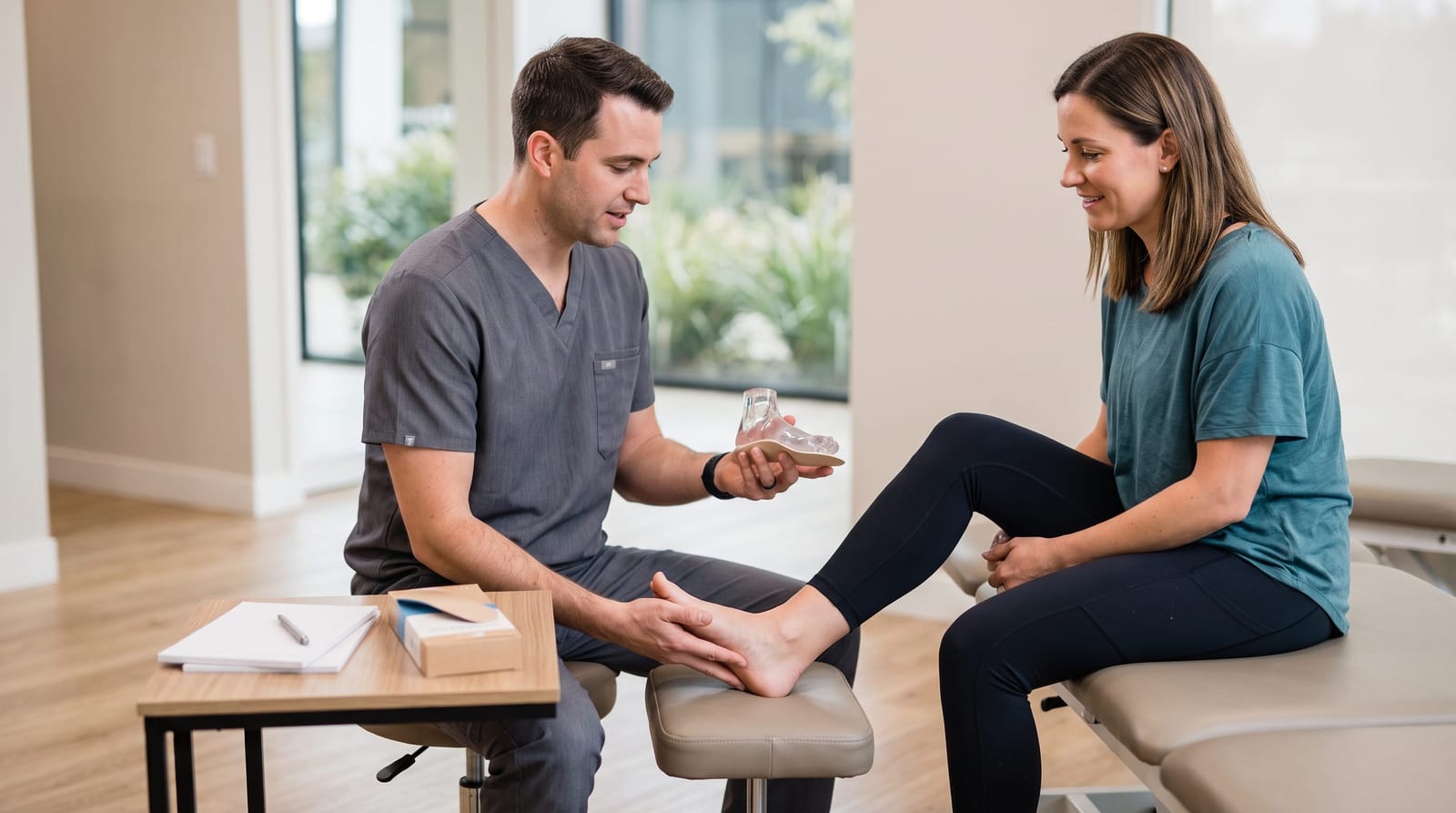
Custom orthotics are prescription shoe inserts fabricated from a three-dimensional mold or digital scan of your specific foot. Unlike over-the-counter insoles, which are built around generalized foot shapes, custom orthotics are designed to match your unique arch height, foot width, gait pattern, and any biomechanical tendencies your provider observes during evaluation.
For plantar fasciitis specifically, custom orthotics work in several ways:
- Distributing pressure more evenly across the entire foot, reducing concentrated stress on the heel and arch
- Supporting the medial arch so the plantar fascia isn't being repeatedly strained with each step
- Reducing overpronation (inward rolling of the foot), which is a common contributor to plantar fasciitis in working adults
- Absorbing impact from hard flooring, concrete, and pavement that professionals encounter throughout the day
- Improving overall alignment from the ground up, which can ease secondary tension in the knees, hips, and lower back
It's worth noting that the research landscape on custom orthotics for plantar fasciitis is nuanced. Some foot health specialists point out that custom orthotics are not necessarily more effective than simpler, more affordable measures for every patient. The right approach depends on the individual, which is precisely why a proper assessment matters before investing in any orthotic solution.
Standing Desks and the Missing Piece Most Professionals Overlook
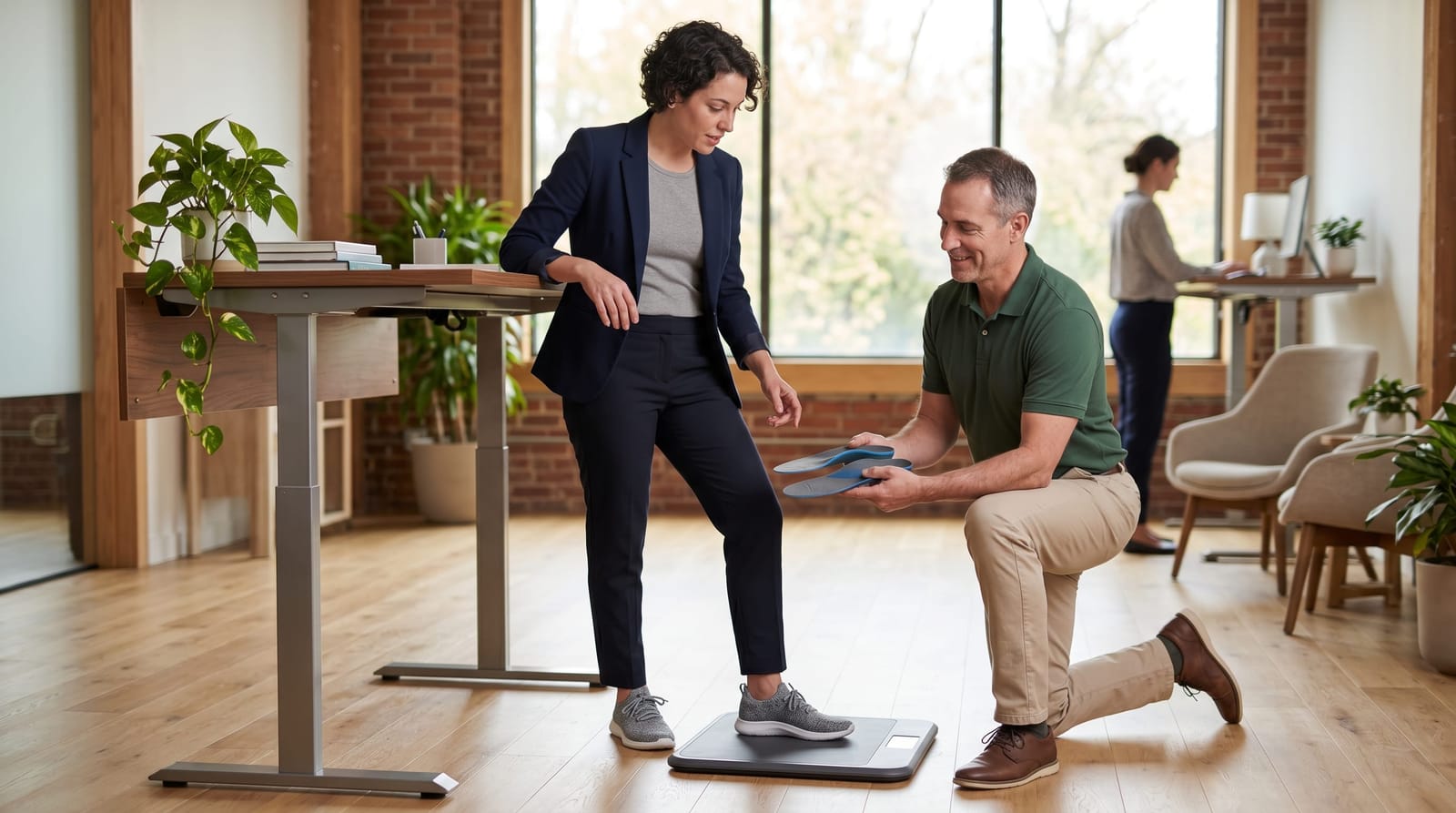
Standing desks became mainstream quickly, with surveys suggesting that more than 60% of large U.S. employers now offer them. They offer real benefits for posture and circulation, but standing for hours on a hard office floor without proper foot support introduces its own set of issues.
Many professionals make the switch to a standing desk and notice within weeks that their heel or arch pain has worsened rather than improved. This is a common experience, and it usually comes down to footwear and foot support, not the desk itself.
Custom orthotics for plantar fasciitis can make a meaningful difference in this context because they address the root biomechanical issue rather than just adding cushioning. A professionally fitted orthotic can be transferred between the shoes you wear to the office, making it a practical solution across your entire workday rather than just one pair of shoes.
Pairing orthotics with an anti-fatigue mat at your standing desk and supportive footwear creates a more complete approach to standing desk comfort: one that many wellness-focused professionals in West LA are increasingly exploring as part of their overall health routine.
Long Commutes, Hard Surfaces, and Cumulative Foot Stress
West Los Angeles commuters face a specific challenge: varied terrain and surfaces throughout the day. A single commute might involve walking on concrete sidewalks, hardwood floors in the office lobby, tile in restrooms, and carpet at a desk, all with different shock-absorption properties. Research indicates that walking on hard, unforgiving surfaces increases the load on the plantar fascia by up to 25% compared to softer surfaces.
For professionals already managing mild plantar fasciitis symptoms, that cumulative daily load can be significant. Custom orthotics worn consistently throughout the day, during the commute and in the office, help maintain alignment and reduce that cumulative strain.
This is one area where custom orthotics provide a practical advantage over general insoles: they're built for your foot and can be designed to fit within the dress shoes, loafers, or professional footwear that LA professionals typically wear, not just athletic sneakers.
What to Expect When You Explore Custom Orthotics
If you're considering custom orthotics for plantar fasciitis or general work-related foot discomfort, here's a general sense of what the evaluation and process typically involves:
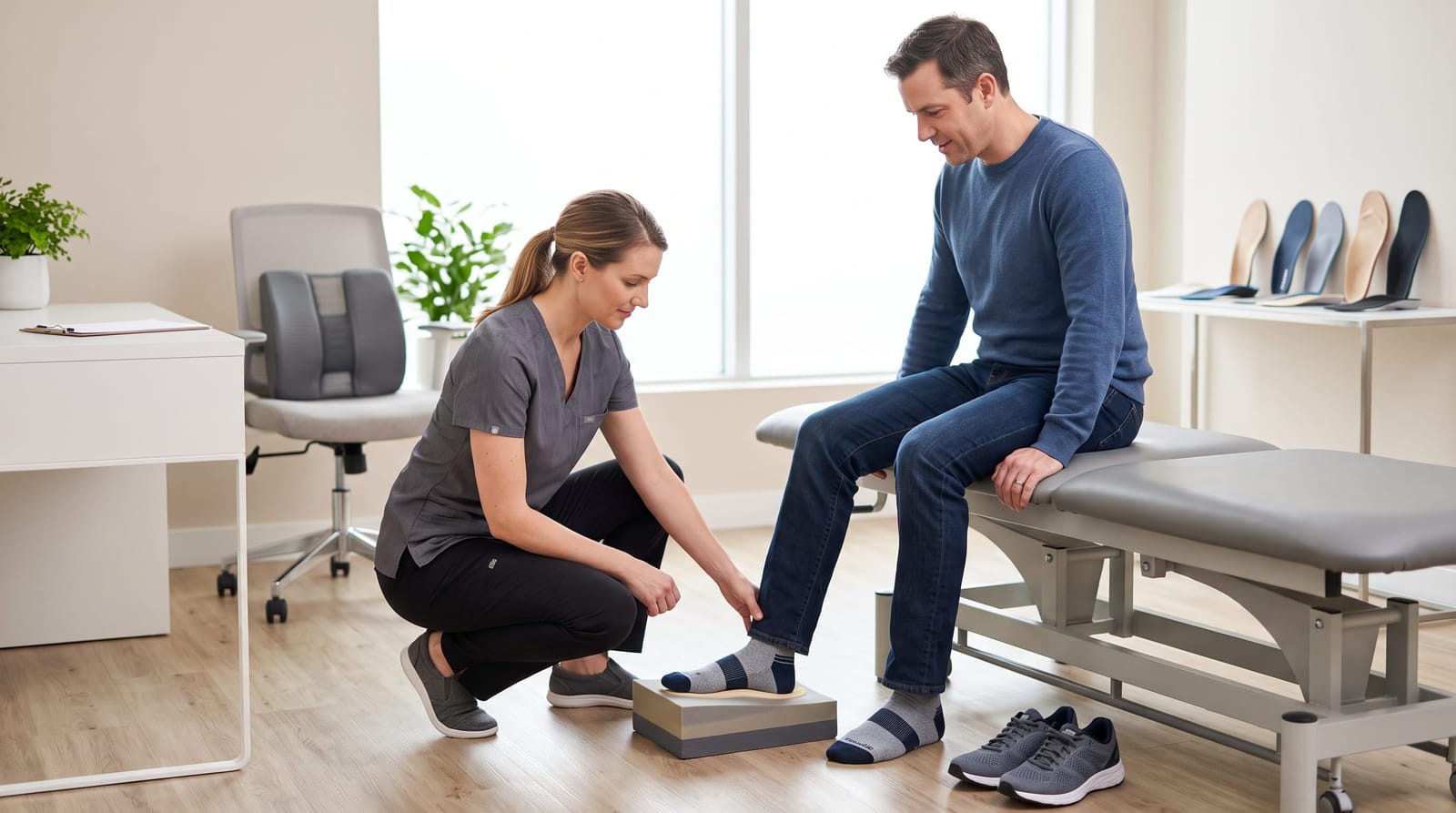
- A gait and posture assessment: your provider observes how you stand, walk, and bear weight
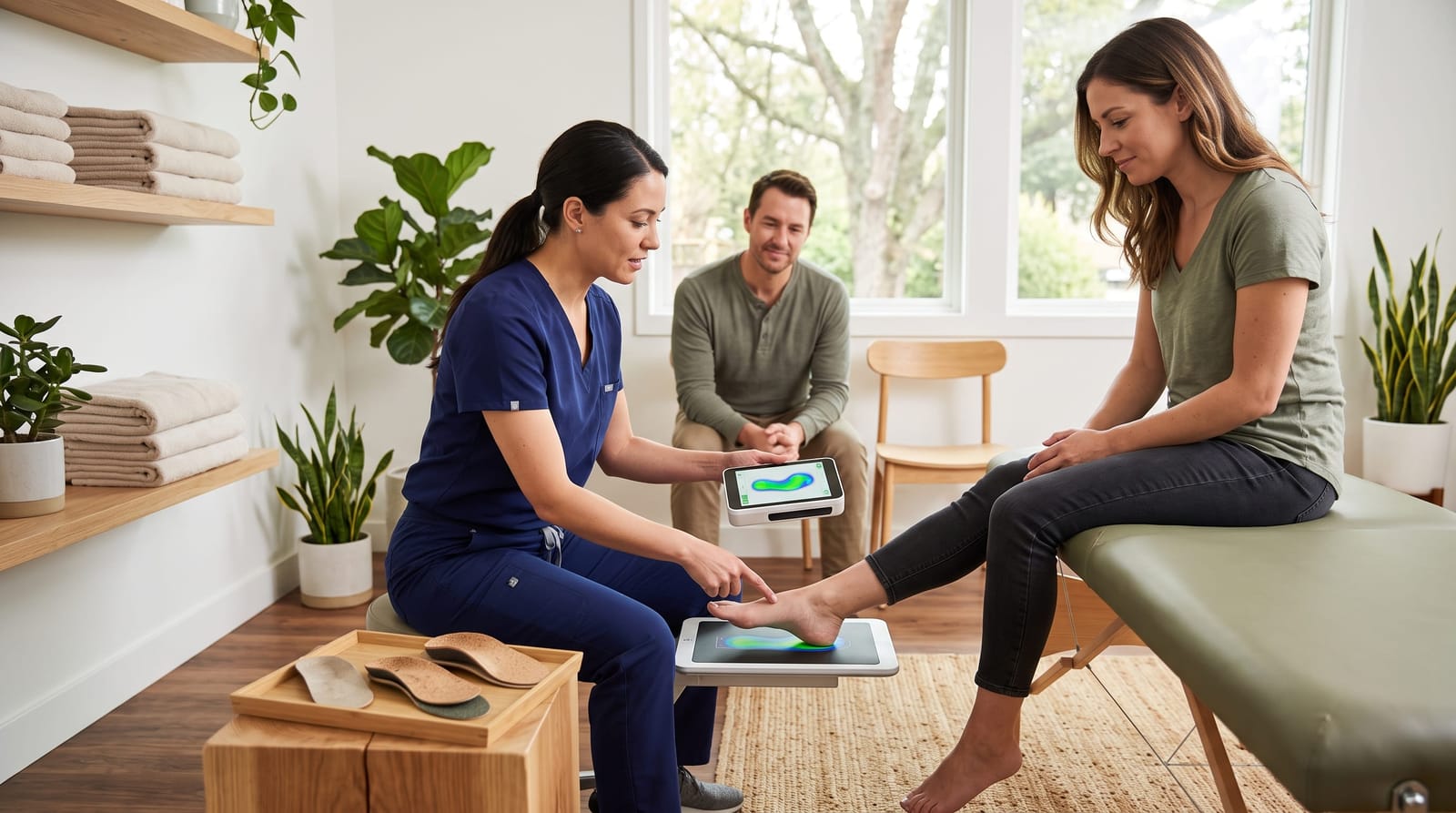
- Foot scanning or casting: a 3D impression or digital scan captures the precise shape of your foot
- Fabrication: orthotics are custom-built based on your scan and the clinical observations from your assessment
- A break-in period: most people wear orthotics for gradually increasing intervals over 2 to 4 weeks as the foot adapts
- Follow-up evaluation: adjustments are made if needed to ensure comfort and proper fit
At Prodigy Chiro Care in West Los Angeles, custom orthotics are often explored as one component of a broader wellness plan that may include chiropractic assessment and soft tissue work: particularly for patients whose foot discomfort has created secondary tension in the lower back or hips. If you're weighing your options, our post on custom orthotics plantar fasciitis and how chiropractic care compare offers a helpful side-by-side look at these approaches.
Frequently Asked Questions
Can custom orthotics help with plantar fasciitis from standing at a desk all day?
Custom orthotics are commonly recommended as a supportive tool for plantar fasciitis related to prolonged standing. By distributing pressure across the foot and supporting the arch, they can help reduce the repetitive strain that long hours on hard surfaces create. Results vary by individual, and they work best as part of a broader approach that includes appropriate footwear and movement habits.
Are custom orthotics better than over-the-counter insoles for work-related foot pain?
Custom orthotics offer a precise fit based on your specific foot shape and gait, which is especially beneficial when there's a clear biomechanical issue like overpronation or a high or low arch contributing to discomfort. Over-the-counter insoles can provide general cushioning and mild support and may be a reasonable starting point for mild discomfort. For ongoing or condition-specific foot pain, a professional evaluation can help determine which option fits your situation.
How long do custom orthotics typically last?
Most custom orthotics are designed to last between 2 and 5 years with regular use, though this depends on the materials used and the activities they're worn for. Orthotics worn in dress shoes for office use may last longer than those worn during high-impact activities. Your provider will typically recommend periodic check-ins to assess whether adjustments or replacements are needed.
Can I wear custom orthotics in professional dress shoes, not just athletic shoes?
Yes. One of the practical advantages of professionally fitted custom orthotics is that they can be designed with the specific footwear profile in mind, including dress shoes, loafers, and other professional styles. This makes them a realistic option for working professionals in West LA who can't wear athletic footwear during the workday.
Bringing It Together
For West Los Angeles professionals navigating the demands of standing desks, long commutes, and long work hours, foot comfort is more than a minor inconvenience: it shapes how you feel throughout your entire day. Custom orthotics for plantar fasciitis and work-related foot pain offer a personalized, practical support option worth exploring, particularly when general measures haven't provided lasting relief. As with any health decision, the most helpful next step is a proper assessment from a qualified provider who can evaluate your specific situation and guide you toward options that fit your life.