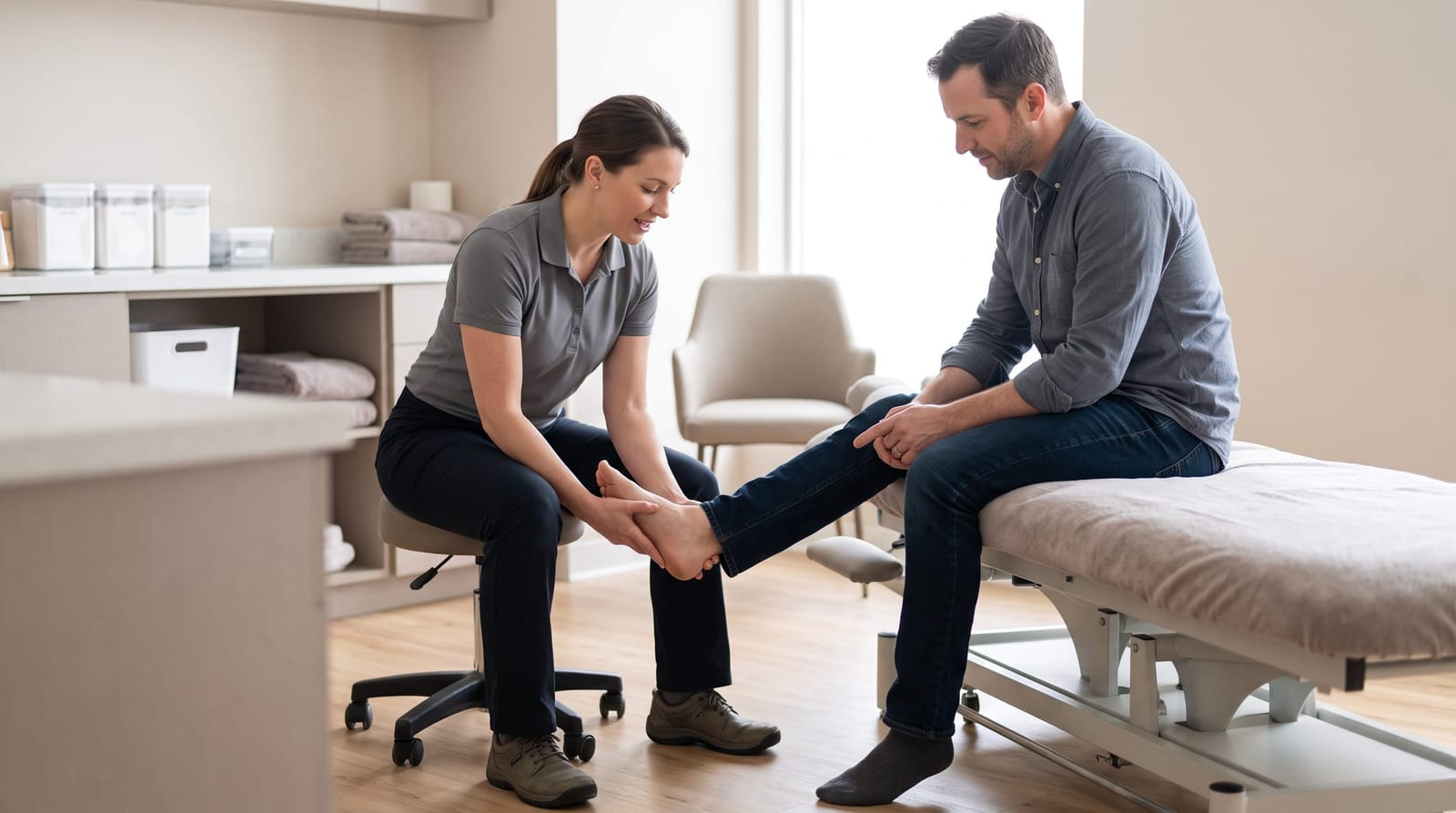
What to Expect During a Custom Orthotic Fitting at a Chiropractic Office

If you've been told that custom orthotics might support your foot health, posture, or overall comfort, you've probably wondered what the fitting process actually looks like. Does it take a long time? Will it be uncomfortable? How soon will you see results? These are completely normal questions, and having clear answers before your first appointment makes the experience far less intimidating. This guide walks you through every stage of the custom orthotic fitting process at a chiropractic office like Prodigy Chiro Care, so you can walk in feeling informed and confident.
Why Custom Orthotics Start with a Full Assessment: Not Just Your Feet
One of the biggest misconceptions about the custom orthotic fitting process is that it simply involves tracing your foot and handing you an insert. In reality, a proper fitting begins well before anyone looks at the bottom of your shoe.
At a chiropractic office, your practitioner will typically start with a full health and lifestyle intake. This includes asking about your daily activity levels, the type of footwear you use most often, any areas of recurring discomfort, and your occupational demands, whether you're logging 10-hour days at a standing desk, training for a half-marathon, or both. Research suggests that approximately 75% of Americans will experience some form of foot pain or gait irregularity during their lifetime, which means orthotics often serve a much broader population than most people assume.
Your chiropractor will also perform a postural evaluation and a lower-extremity assessment. This may involve observing how you stand, how weight is distributed across your feet, and how your knees and hips align relative to your ankles. This broader view matters because foot mechanics don't exist in isolation: they influence how forces travel through your knees, hips, and lower back with every step you take.
This initial assessment phase typically takes 20 to 30 minutes and lays the foundation for everything that follows in the custom orthotic fitting process.
Gait Analysis: Understanding How You Actually Move
After the initial evaluation, your practitioner will move into gait analysis: one of the most valuable and often most eye-opening parts of the custom orthotic fitting process.
Gait analysis involves observing and measuring how you walk and, in some cases, how you run or stand under load. Studies have shown that gait irregularities, such as overpronation (excessive inward rolling of the foot) or supination (outward rolling): are present in an estimated 60 to 70% of the general population, yet many people have no idea their stride is placing uneven stress on their body.
At modern chiropractic offices, gait analysis may be performed using:
- Pressure mapping platforms: digital mats that capture exactly how pressure is distributed across your foot during standing and walking
- Video gait analysis: slow-motion footage that helps your provider see subtle compensations that are invisible to the naked eye during normal movement
- Visual observation: a trained practitioner watching you walk from multiple angles in natural light
The data gathered during gait analysis directly shapes the prescription written for your orthotics. Think of it as the blueprint, without accurate gait information, even beautifully crafted orthotics may not deliver the right support for your specific movement patterns.
Foot Casting and 3D Scanning: Creating Your Custom Mold
Once your assessment and gait analysis are complete, the next step in the custom orthotic fitting process is capturing a precise three-dimensional model of your feet. This is where "custom" truly earns its name.
There are two primary methods used in professional chiropractic settings:
Plaster or Foam Casting
Traditional casting involves placing your foot into a foam box or wrapping it with a plaster-impregnated bandage while your foot is held in a neutral position. Once the material sets, which typically takes just a few minutes, it captures the exact contours, arch height, and alignment of your foot. This mold is then sent to a specialized orthotic lab where your devices are fabricated.
Digital 3D Scanning
Many modern chiropractic offices now use handheld laser or structured-light scanners that capture hundreds of data points across your foot's surface in seconds. Digital scanning is fast, clean, and highly precise: some systems capture accuracy within 0.5 millimeters, and the files can be transmitted directly to the orthotic lab electronically, which can shorten turnaround times.
Both methods are effective when performed correctly. Your chiropractor will recommend the approach best suited to your foot type and the style of orthotic being prescribed. The casting or scanning appointment itself is painless and usually takes 15 to 20 minutes.
Fabrication Timeline and What Happens Between Appointments
After your mold or scan is submitted to the orthotic lab, the fabrication process begins. Unlike prefabricated insoles, which are mass-produced in standard sizes and shapes, custom orthotics are individually manufactured based on your specific prescription, foot geometry, and intended activity level.
Most custom orthotics take between 2 and 4 weeks to fabricate, depending on the lab and the complexity of the design. During this window, your chiropractor may recommend specific footwear guidelines or interim supportive insoles to help maintain comfort while you wait.
The materials used in your orthotics will vary based on your needs. Rigid or semi-rigid shells, typically made from polypropylene or carbon fiber composites, are common for functional support. Softer, accommodative orthotics may use materials like EVA foam or silicone for cushioning and pressure distribution. Many prescriptions combine both, with a firm base and a cushioned top layer tailored to your activity type.
It's worth noting that this manufacturing precision is a primary reason why custom orthotics cost more than off-the-shelf options. Each pair is built specifically for one person: your foot, your gait, your goals.
The Fitting Appointment, Break-In Period, and Follow-Up Adjustments
When your orthotics arrive, you'll return to the office for your fitting appointment. This visit is an important and often underestimated step in the custom orthotic fitting process. Your chiropractor will check the fit inside your footwear, confirm proper placement and alignment, and have you walk or stand to assess initial comfort and function.
Most patients need a gradual break-in period to allow their feet and body to adapt. A common guideline is to begin wearing orthotics for 2 to 4 hours per day during the first week, increasing usage by one to two hours each subsequent week until you're comfortable wearing them throughout the day. This measured approach helps your muscles, tendons, and joints adjust to new alignment without unnecessary soreness.
Follow-up appointments, usually scheduled 3 to 6 weeks after the initial fitting, are a standard and important part of the process. At this visit, your provider will assess how your body has responded, check for any areas of pressure or discomfort, and make adjustments if needed. Minor modifications to the shell, padding, or posted areas are common and expected. Well-made custom orthotics can last 2 to 5 years with proper care, and follow-up appointments help ensure they continue to serve you well over time.
Frequently Asked Questions About the Custom Orthotic Fitting Process
How long does the entire custom orthotic fitting process take from start to finish?
From your initial assessment to receiving your finished orthotics, the process typically spans 3 to 5 weeks. The in-office evaluation and casting or scanning appointments are usually completed within one to two visits, followed by a 2 to 4 week lab fabrication period, and then your fitting appointment.
Is the custom orthotic fitting process painful or uncomfortable?
No: the assessment, gait analysis, and casting or scanning steps are all non-invasive and painless. Some patients experience mild muscle fatigue or awareness during the break-in period as their body adapts to new alignment, but this typically resolves within a few weeks.
Do I need to bring specific shoes to my fitting appointment?
It's helpful to bring the shoes you wear most often, whether those are athletic shoes, work shoes, or casual everyday footwear. This allows your chiropractor to check the fit of your orthotics in real-world conditions and ensures the device is compatible with your daily footwear.
How are custom orthotics different from store-bought insoles?
Store-bought insoles are manufactured in standard sizes for an average foot shape. Custom orthotics, by contrast, are individually prescribed and fabricated based on your specific foot geometry, gait pattern, and functional needs. Studies comparing the two have consistently found that custom devices provide significantly more precise biomechanical correction for individuals with identified gait or structural irregularities.
Walking Into Your Appointment With Confidence
The custom orthotic fitting process is thorough, personalized, and designed with your comfort in mind from the very first step. From gait analysis and precise foot casting to fabrication, fitting, and follow-up care, each stage is built to ensure your orthotics work as a true extension of your body's needs. Understanding what to expect removes the uncertainty, and helps you get the most out of every appointment. To learn more about how orthotics fit into a broader wellness strategy, explore our guide to custom orthotics for active professionals and what long-term orthotic support can look like for your lifestyle.