Does Insurance Cover Custom Orthotics? What Los Angeles Patients Need to Know
When you're exploring custom orthotics as part of your overall wellness plan, one of the first questions that naturally comes up is: what is this going to cost me, and will my insurance help cover it? It's a fair question, and an understandably frustrating one, because the answer is rarely straightforward. Understanding custom orthotics cost insurance coverage in Los Angeles can feel like navigating a maze of policy language, referral requirements, and documentation checklists. This guide is designed to cut through that confusion.
Whether you're a busy professional dealing with foot fatigue from long commutes, an active runner logging miles through Brentwood, or someone standing on your feet all day at work, knowing how your insurance plan may interact with the cost of custom orthotics helps you plan ahead with confidence. Here's a clear, beginner-friendly overview of what to expect.
First: What Do Custom Orthotics Actually Cost?
Before diving into coverage, it helps to understand the baseline cost. Custom orthotics, the kind made from an individual assessment and precise measurements of your feet, typically range from $300 to $800 out of pocket, depending on the provider, the materials used, and the complexity of the design. This is meaningfully different from over-the-counter insoles you might pick up at a pharmacy for $20-$30, or even semi-custom options in the $60-$300 range.
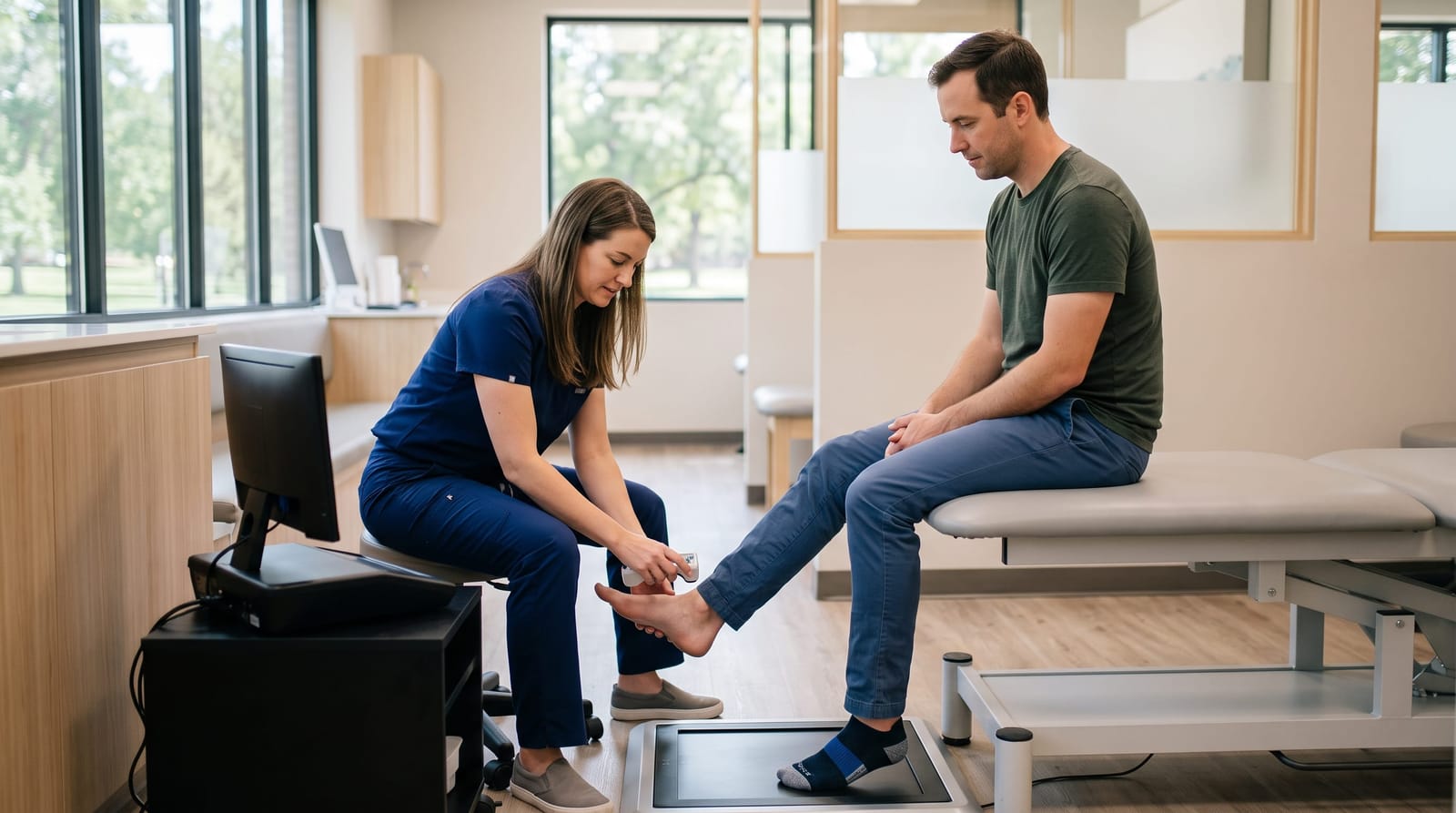
The higher price of custom orthotics reflects the personalized process behind them: a thorough biomechanical evaluation, detailed foot impressions or 3D scanning, and a device fabricated specifically for your foot structure and activity demands. If you're curious about how that process unfolds, learning about the custom orthotic fitting process can help you understand what you're paying for before your first appointment.
The good news is that insurance can meaningfully reduce this out-of-pocket expense, but only when certain conditions are met. The amount covered, and whether coverage applies at all, depends heavily on the type of plan you carry.
How Insurance Coverage for Custom Orthotics Generally Works
Insurance companies generally classify custom orthotics as a durable medical equipment (DME) benefit. This means they're treated similarly to braces, compression devices, or other supportive medical supplies rather than as a standard visit or procedure. Coverage eligibility typically hinges on two factors: your specific plan type and the medical necessity documentation provided by your provider.
PPO Plans
Preferred Provider Organization (PPO) plans tend to offer more flexibility and are often the most likely to include some level of custom orthotics coverage. With a PPO, you may not need a referral, and you generally have the freedom to see specialists, including chiropractors and podiatrists, without going through a gatekeeper. Some PPO plans cover a meaningful portion of custom orthotic costs (estimates suggest up to 80% in favorable scenarios), though this varies widely by plan and insurer. You'll want to review your Summary of Benefits or call your insurer directly to understand your specific coverage.
HMO Plans
Health Maintenance Organization (HMO) plans are more restrictive. They typically require a referral from your primary care physician before coverage applies, and coverage may be limited to specific in-network providers. Custom orthotics may be covered under an HMO if deemed medically necessary, but the prior authorization process can add time and steps to the journey. Understanding your HMO's DME benefits ahead of time can prevent surprises.
High-Deductible Health Plans (HDHPs)
If you carry a high-deductible plan, custom orthotics costs would typically apply toward your deductible before any insurance contribution kicks in. This means you may pay the full cost upfront until your deductible is met, after which your plan's cost-sharing provisions would apply.
FSA and HSA: A Helpful Option for Many Patients
Even when traditional insurance coverage is limited, many patients have access to another valuable tool: Flexible Spending Accounts (FSA) and Health Savings Accounts (HSA).
Custom orthotics are generally considered an eligible expense under both FSA and HSA programs, meaning you can use pre-tax dollars to pay for them. For active professionals in Los Angeles, especially those with employer-sponsored benefits, this can translate into meaningful savings, depending on your tax bracket and the amount you've set aside.
FSA vs. HSA: A Quick Distinction
- FSA (Flexible Spending Account): Offered through employers. Contributions are pre-tax, but funds are often "use it or lose it" within the plan year. Custom orthotics are typically an eligible expense.
- HSA (Health Savings Account): Available to those enrolled in qualifying high-deductible health plans. Funds roll over year to year and can even be invested. HSA dollars used for qualifying medical expenses, including orthotics, are tax-free.
It's worth checking with your benefits administrator or a financial professional to confirm how your specific FSA or HSA plan treats custom orthotic expenses, since plan rules can vary. This content is for general informational purposes and isn't intended as financial or tax advice.
The Role of Medical Necessity Documentation
Perhaps the single biggest factor in whether your insurance will cover custom orthotics, and how much, is documentation of medical necessity. Insurers want to see evidence that custom orthotics are being prescribed to address a specific, documented condition rather than as a general wellness enhancement.
What Documentation Typically Looks Like
Your provider will often need to supply supporting documentation that may include:
- A written prescription or recommendation for custom orthotics from a qualified provider
- Clinical notes describing your functional concerns, gait patterns, or biomechanical findings
- Evidence that conservative measures (such as stretching, footwear changes, or OTC insoles) have been attempted
- A diagnosis code (ICD-10) tied to your condition, such as plantar fasciitis, flat feet, or related musculoskeletal concerns
Without this documentation, insurance claims are frequently denied. Working with a provider who understands this process and can prepare thorough clinical notes is genuinely valuable, and it's one of the ways a knowledgeable chiropractic and wellness practice can serve as a helpful partner in your care journey.
Prior Authorization
Some plans, particularly HMOs and certain PPOs, require prior authorization before your orthotics are fabricated. Skipping this step can result in a denied claim even if coverage would otherwise apply. Always confirm authorization requirements before your fitting appointment.
Practical Steps to Help Maximize Your Reimbursement
Navigating insurance coverage for custom orthotics doesn't have to be overwhelming. Here's a general framework to approach it thoughtfully:
- Review your plan's DME benefits. Look at your Summary of Benefits document or call the member services number on your insurance card. Ask specifically whether custom orthotics (HCPCS code L3000: L3999 range is commonly referenced) are a covered DME benefit under your plan.
- Confirm in-network requirements. Ask whether your provider needs to be in-network for coverage to apply, and verify that your chiropractic or wellness provider meets those criteria.
- Ask about prior authorization early. If your plan requires it, initiate the authorization process before your fitting appointment to avoid delays or out-of-pocket surprises.
- Gather supporting documentation. Work with your provider to ensure your clinical notes, diagnosis codes, and prescription are thorough and clearly support the medical necessity determination.
- Keep all receipts and correspondence. If you pay out of pocket and plan to seek reimbursement, maintain organized records of all provider communications, receipts, and insurance correspondence.
- Consider FSA/HSA funds as a complement or alternative if traditional insurance coverage is limited or delayed.
Remember: this overview is educational, and every insurance plan is different. For guidance specific to your policy, consult directly with your insurance provider or a licensed benefits advisor.
Why Choosing the Right Provider Matters for Insurance Navigation
One thing that experienced custom orthotic patients often mention is how much the provider experience matters, not just for the quality of the orthotics themselves, but for the administrative side of things. A practice that understands DME documentation, knows how to prepare insurance-ready clinical notes, and can help you understand the process before you commit is genuinely worth seeking out.
At Prodigy Chiro Care, we work alongside our patients to make the process as clear and straightforward as possible. We understand that investing in custom orthotics is a meaningful decision for active professionals in West LA, and we want you to feel informed, not confused, at every step. It's also worth considering the broader cost-value picture: understanding do custom orthotics work compared to over-the-counter alternatives can help frame whether the investment makes sense for your lifestyle and activity level before you navigate coverage at all.
Related Details Worth Exploring
If you're moving forward with custom orthotics, or just gathering information, there are a few additional topics worth understanding as you plan:
- The fitting appointment itself: What happens during an evaluation, how impressions or scans are taken, and what to bring. Learn more about the custom orthotic fitting process so you know what to expect.
- Comparing orthotic types by cost and function: Understanding how custom orthotics differ from semi-custom and OTC options helps you communicate more clearly with both your provider and your insurer.
- Long-term value considerations: Custom orthotics, when properly fitted and maintained, can last for years, which factors into their overall cost-effectiveness compared to repeatedly replacing cheaper alternatives.
Wrapping Up: Know Before You Go
Understanding how custom orthotics cost insurance coverage works in Los Angeles doesn't have to be a guessing game. While every plan is different, the general framework: PPO vs. HMO structures, FSA/HSA eligibility, and the critical role of medical necessity documentation: gives you a solid starting point for an informed conversation with your insurer and your provider.
The most important step is asking questions early: before your appointment, before your fitting, and before any claims are submitted. That proactive approach is often what separates a smooth reimbursement experience from a frustrating one.
Ready to explore whether custom orthotics are a good fit for your lifestyle and activity goals? Contact Prodigy Chiro Care to schedule a consultation. We're here to answer your questions, walk you through the process, and support your long-term comfort and wellness, from the first evaluation through every step that follows.