Custom Orthotics for Flat Feet: How They Correct Alignment and Reduce Pain
If you've ever noticed your arches pressing flat against the ground when you stand, you're not alone, flat feet affect an estimated 20 to 30 percent of the general population. For many people, flat feet are simply a structural characteristic. But for active professionals, athletes, and anyone spending long hours on their feet, fallen arches can quietly set off a chain of discomfort that travels well beyond the foot itself. When exploring the broader topic of custom orthotics cost and long-term value for active lifestyles, flat feet represent one of the most common, and most compelling, reasons people seek individualized orthotic support. This guide walks through what flat feet actually do to your body's alignment, how custom orthotics for flat feet address those changes at the source, and what you can realistically expect from this kind of support over time.
What Flat Feet Really Mean for Your Body
Flat feet, clinically associated with overpronation, occur when the arch along the inner side of the foot collapses, allowing the entire sole to make contact with the ground. This changes the fundamental mechanics of how force travels through your body with every step.
A healthy arch functions somewhat like a spring, absorbing shock and distributing weight efficiently across the foot. When that arch flattens, the foot tends to roll inward (pronate) more than it should. Research suggests that excessive pronation can contribute to altered load distribution throughout the lower limb, which over time may be associated with discomfort in the ankles, knees, hips, and lower back.
The Kinetic Chain Effect
Your body moves as a connected system: what biomechanists call the kinetic chain. When the foot overpronates, the lower leg internally rotates to compensate. That rotation shifts stress upward to the knee, changes the angle of the hip, and can even affect how load is distributed along the lumbar spine. Studies have found that individuals with flat feet are significantly more likely to report knee pain, shin splints, and lower back discomfort compared to those with neutral arch structure.
For professionals who spend eight or more hours at a standing desk, or athletes logging significant weekly mileage, this compounded stress becomes a real daily concern, not just an occasional ache.
When Does It Become a Problem?
Some people have flat feet their entire lives without significant issues. Discomfort tends to emerge when activity levels increase, footwear changes, or when age-related changes in soft tissue flexibility reduce the foot's natural adaptability. If you're noticing that pain appears or worsens after periods of standing, walking, or exercise, your foot mechanics may be worth a professional evaluation. Consulting with a qualified healthcare provider is always the right first step before drawing any conclusions about your own situation.
How Custom Orthotics for Flat Feet Work Differently
Walk into any drugstore and you'll find a wall of arch supports, gel insoles, and cushioned inserts: many of them marketed specifically for flat feet. These products have their place, but there's a meaningful difference between a generalized product and a custom orthotic designed around the precise contours of your foot.
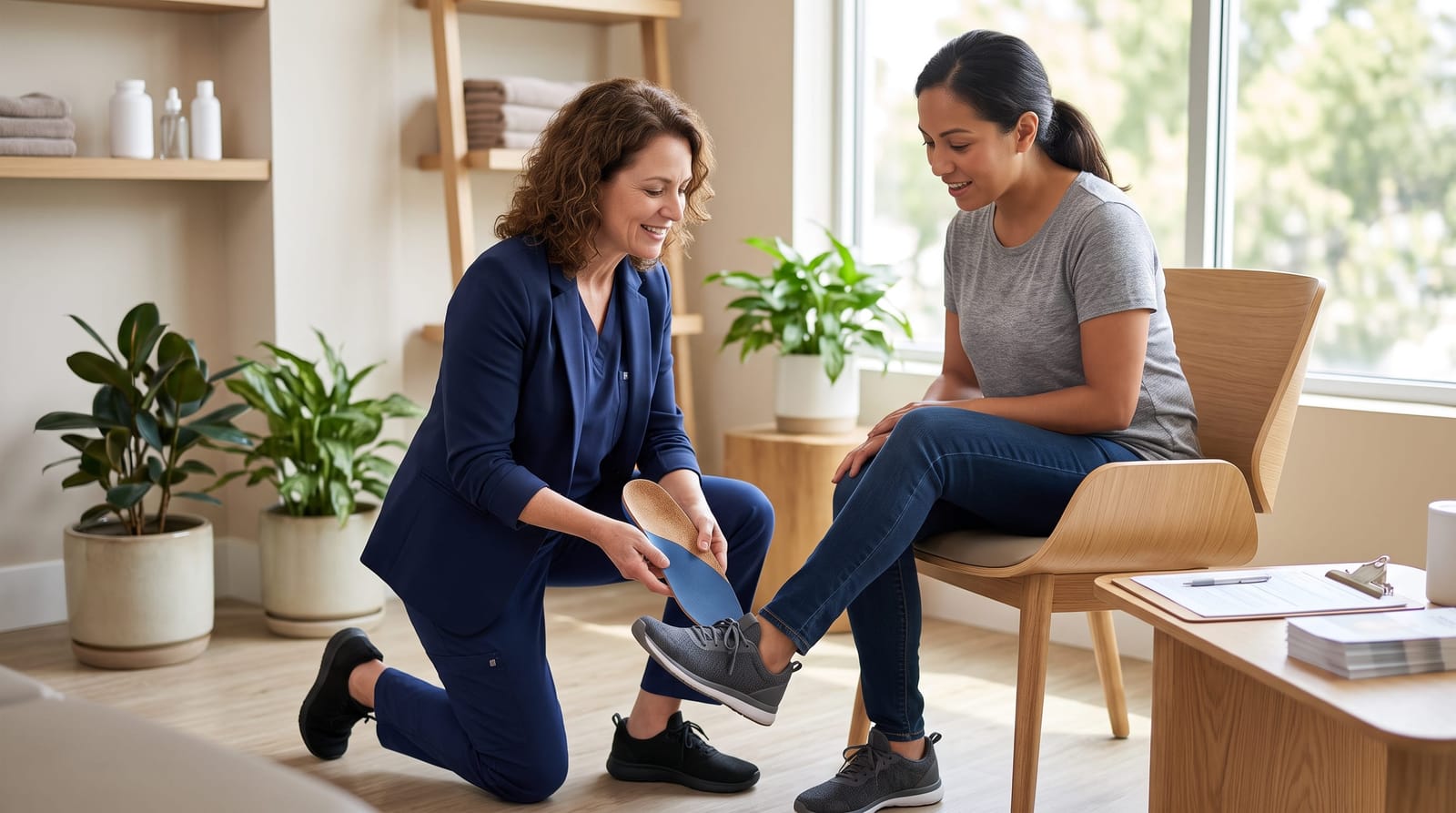
Custom orthotics for flat feet are fabricated from a detailed impression or digital scan of your individual foot, capturing the specific degree of arch collapse, the distribution of pressure points, and the unique geometry of your heel, midfoot, and forefoot. That individualized data drives the design.
What the Device Actually Does
Rather than simply adding cushioning under the arch, a well-designed custom orthotic for flat feet is built to do several things simultaneously:
- Medial arch support: A specifically contoured arch post prevents the foot from rolling inward past a functional range, reducing the degree of overpronation with each step.
- Heel stabilization: A cupped heel cup cradles the calcaneus (heel bone) to keep it aligned in a neutral position rather than tilting inward.
- Forefoot correction: Depending on your foot's structure, wedging or posting at the forefoot may be incorporated to address how force is distributed across the ball of the foot.
- Surface and material selection: The rigidity, flexibility, and top-cover material are selected based on your activity level: a runner's orthotic will differ considerably from one designed for a professional who stands at a retail counter all day.
This level of specificity is simply not achievable with a prefabricated insole, which is manufactured to fit a range of foot shapes rather than any one person's unique anatomy. For a deeper look at how custom devices compare to over-the-counter options on a practical level, the article on do custom orthotics work covers that comparison in detail.
The Assessment Process: Why It Matters for Flat Feet Specifically
Because flat feet exist on a spectrum, from mild arch reduction to complete arch collapse, the evaluation process is particularly important. Not everyone with flat feet needs the same solution, and a thorough assessment helps determine what level of correction is appropriate.
What a Comprehensive Evaluation Typically Includes
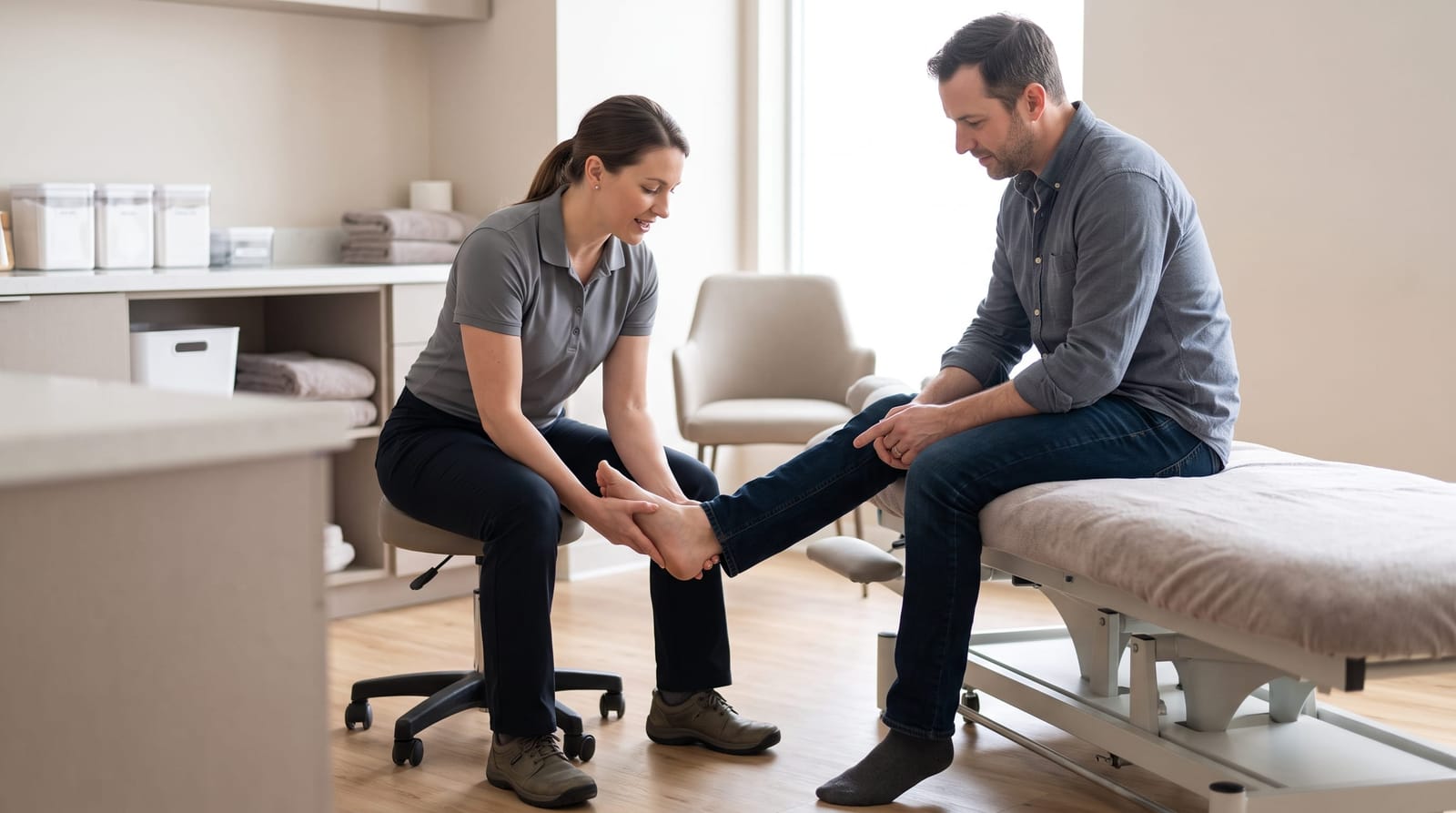
A qualified provider will generally evaluate flat feet through a combination of:
- Static posture analysis: Observing how your feet and lower limbs align while standing.
- Gait analysis: Watching how your feet move through the walking or running cycle, noting where and when overpronation occurs.
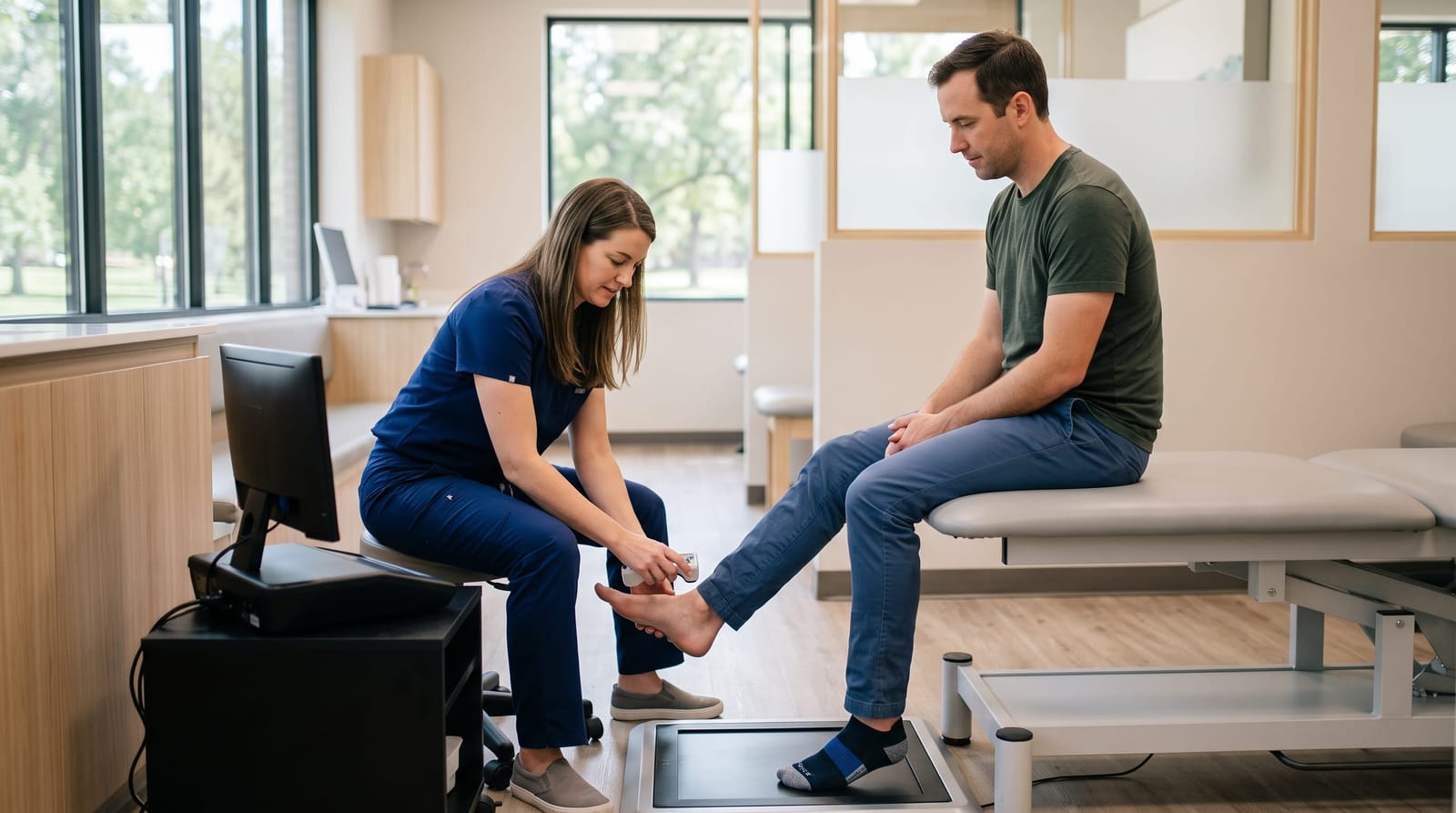
- Foot impression or 3D scanning: Capturing the precise geometry of your foot in a controlled, non-weight-bearing or semi-weight-bearing position.
- Activity and footwear history: Understanding your lifestyle: how many hours you're on your feet, what surfaces you work or exercise on, and what shoes you wear most frequently.
This combination of data means the final orthotic is calibrated not just to your foot shape, but to how you actually use your feet throughout your day. If you're unsure whether your feet are significantly affecting your overall alignment, the post on do I need custom orthotics explores the signs worth paying attention to.
What Outcomes Patients with Flat Feet Can Realistically Expect
It's important to approach orthotic support with realistic expectations. Custom orthotics are a supportive tool: one that works best as part of a broader approach to wellness that may include strengthening exercises, appropriate footwear, and professional care. They are not a cure, and individual results will vary.
That said, there is a meaningful body of research suggesting that custom orthotics can support improved comfort and function for people with flat feet and associated complaints. One frequently cited review found that custom foot orthoses produced greater short-term reductions in foot pain compared to placebo devices, with approximately 68 percent of participants reporting meaningful improvement in pain-related outcomes over a 12-week period.
Common Areas of Improvement
Patients with flat feet who use custom orthotics often report changes in:
- Foot fatigue after prolonged standing or walking
- Inner knee discomfort associated with overpronation
- Plantar fascia strain along the bottom of the foot
- General posture awareness while standing and moving
Because flat feet can contribute to alignment changes all the way up the kinetic chain, some patients also notice downstream changes in how their knees feel during activity. The relationship between foot mechanics and knee health is explored in depth in our article on custom orthotics knee pain.
Timeline and Adjustment Period
Most patients go through a break-in period of two to four weeks as the body adapts to the new support pattern. Some temporary muscle soreness during this phase is normal: your foot, calf, and lower leg muscles are learning to work with corrected mechanics. A qualified provider will guide you through this process and may make minor adjustments to the device if needed.
Custom Orthotics vs. Store-Bought Arch Supports for Flat Feet
This distinction is worth addressing directly, because the price difference between custom orthotics and over-the-counter insoles is significant, and the decision deserves honest consideration.
Prefabricated arch supports can range from $20 to $80 and may provide adequate support for mild, flexible flat feet in individuals with lower activity demands. They can also serve as a reasonable first step to gauge whether orthotic-style support helps at all.
Custom orthotics typically range from $300 to $800 or more depending on the provider and materials involved. For individuals with moderate to significant arch collapse, higher activity levels, or pain that has persisted despite trying standard insoles, that investment often reflects a meaningfully different level of individualized correction. A prefabricated insole is manufactured for the average foot, custom orthotics are manufactured for yours.
For a thorough breakdown of what factors influence cost and how to evaluate that investment relative to your situation, the article on custom orthotics cost insurance provides useful context on both pricing and coverage considerations.
Integrating Custom Orthotics Into an Active or Professional Lifestyle
One of the practical advantages of custom orthotics, and one that often gets overlooked, is their adaptability across footwear and activity contexts. For the working professional who shifts between dress shoes, athletic sneakers, and casual footwear throughout a week, orthotics can be designed to transfer between compatible shoe styles. Some patients opt for two pairs: one tuned for athletic activity and one for daily professional wear.
Tips for Getting the Most from Your Orthotics
- Wear them consistently: The biomechanical benefits of orthotic support accumulate with regular use. Intermittent wear reduces effectiveness.
- Pair with appropriate footwear: Custom orthotics work best in shoes with adequate depth and a removable insole. Very flat or very narrow shoes may not accommodate them well.
- Complement with strengthening: Foot and lower leg strengthening exercises, often recommended by your provider, support the muscles that work alongside your orthotics.
- Schedule follow-up evaluations: Foot structure can change over time. Periodic reassessment ensures your orthotics continue to meet your needs.
- Communicate with your provider: Any persistent discomfort or new pain should be shared with your care team. Minor modifications can make a meaningful difference in fit and function.
Related Details Worth Exploring
The relationship between flat feet and broader musculoskeletal health is a topic with many connected threads. If you're researching custom orthotics for flat feet as part of a larger picture, you may also find value in understanding how orthotic support intersects with specific areas of discomfort. Our article on custom orthotics knee pain goes deeper into how foot mechanics can influence knee health: a common concern for patients with overpronation. Additional posts in this cluster address questions about candidacy, cost, and how to evaluate whether custom orthotics make sense for your specific lifestyle and goals.
Key Takeaways
Flat feet affect a significant portion of the population and, for active and professional individuals, can contribute to a cascade of alignment-related discomfort that extends from the foot to the lower back. Custom orthotics for flat feet are designed to address the unique mechanics of each individual's arch collapse: providing targeted support that prefabricated insoles simply cannot replicate at the same level of precision. While results vary and orthotics work best as part of a comprehensive wellness approach, many patients with flat feet find that well-fitted custom devices meaningfully improve their comfort and ability to stay active.
If you're curious whether custom orthotics might be a good fit for your feet and your lifestyle, the team at Prodigy Chiro Care is here to help you explore your options. Reach out today to schedule a consultation and take the first step toward understanding what personalized support could mean for how you feel and move every day.