Custom Orthotics vs. Over-the-Counter Insoles: A Cost-Value Analysis

When you're weighing your options for foot and lower-body support, the choice between custom orthotics and over-the-counter insoles can feel genuinely confusing. The price difference is significant, and it's natural to wonder whether the extra investment is actually worth it. This question sits at the heart of a broader conversation about long-term wellness for active professionals: one we explore in depth across our pillar guide on custom orthotics for active lifestyles. In this post, we're going to break down both options side by side: how they're made, what they actually do for your biomechanics, how long they hold up, and what the total cost picture looks like over time. If you've ever asked yourself, do custom orthotics work, and whether they work better than what you can buy at a pharmacy, this comparison guide is for you.
What You're Actually Buying: Construction and Design
Over-the-Counter Insoles
Store-bought insoles are mass-produced to fit general foot shapes. They're typically manufactured in a small range of arch heights and widths, designed to offer broad comfort improvements for the average consumer. Materials vary widely, from thin foam padding to gel inserts to semi-rigid plastic arches, but the underlying design philosophy is the same: one size fits most.
That approach works reasonably well for mild discomfort, general cushioning, or short-term use. If you're on your feet at a conference for a day or need a little extra padding in a new pair of shoes, an OTC insole can do the job. The challenge arises when you're dealing with a specific foot structure, gait pattern, or chronic discomfort that doesn't fit into a "general" category.
Custom Orthotics
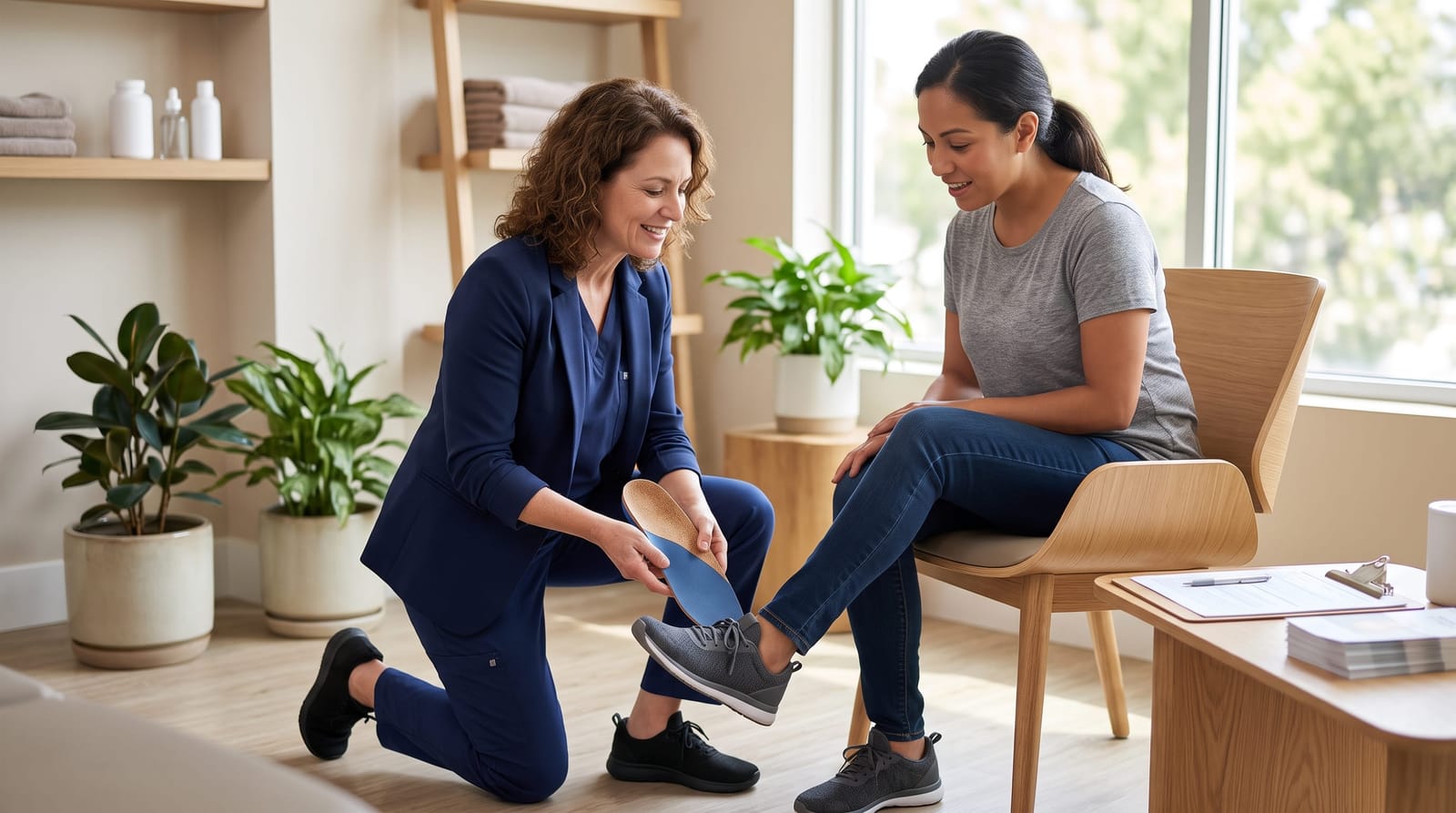
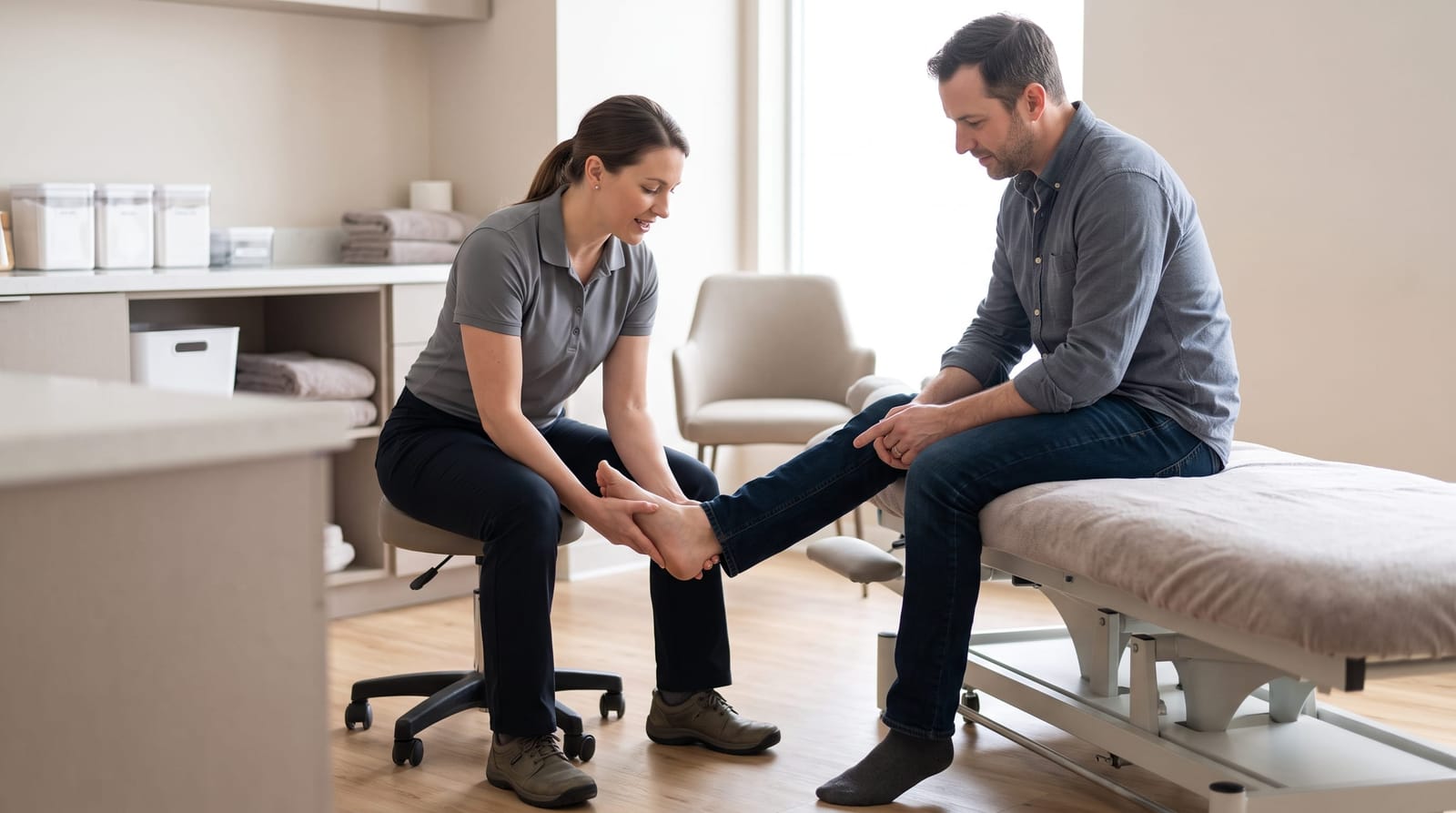
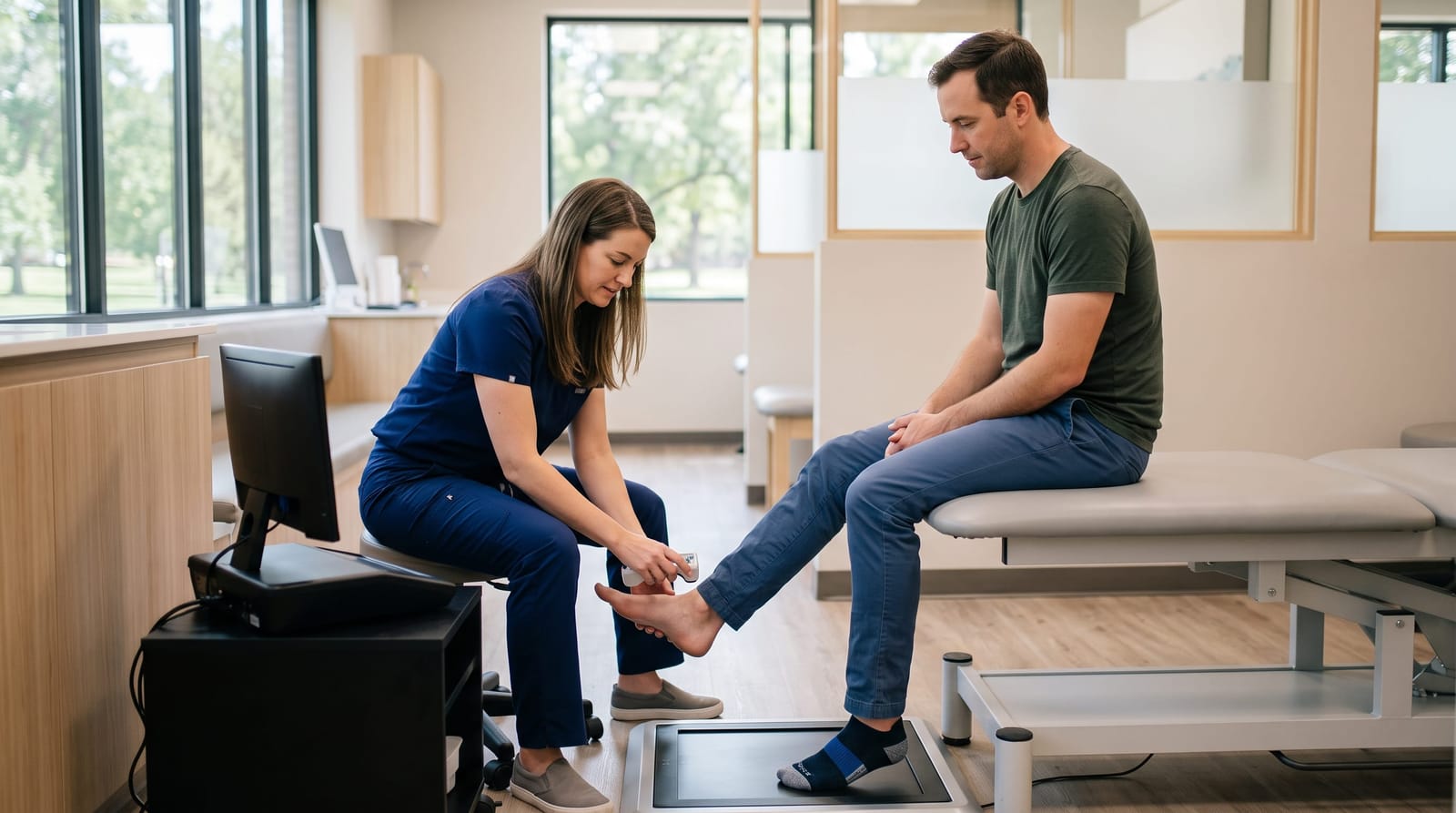
Custom orthotics are fabricated specifically for your feet. The process typically begins with a detailed assessment of your foot structure, gait mechanics, and how you move, whether you're running, walking long distances, or standing at a desk for hours. A mold, scan, or pressure-mapping analysis captures the precise contours of your foot, and the orthotic is then fabricated to match those dimensions exactly.
The materials used in custom orthotics are also selected based on your needs. Firmer materials support gait mechanics and control how the foot moves through each step. Softer materials focus on pressure redistribution and cushioning for sensitive areas. Many custom orthotics combine both in different zones: a rigid midfoot for structural support and a cushioned heel for impact absorption. This level of specificity is simply not available in a product designed for the masses.
Biomechanical Correction: What the Research Tells Us
One of the most important distinctions between custom orthotics and OTC insoles comes down to what they're actually correcting, and how precisely they do it.
General Comfort vs. Targeted Support
OTC insoles are built to improve comfort broadly. They may reduce pressure on the ball of the foot or add cushioning underfoot, but they cannot address the specific mechanics of how your foot interacts with the ground. Overpronation, supination, leg length discrepancy, and similar structural patterns require an individualized response, not a generalized one.
Custom orthotics are designed to address exactly these kinds of issues. By redistributing pressure and correcting misalignment, they support how the foot functions through each phase of the gait cycle. This can have a meaningful ripple effect up the kinetic chain, influencing how load is distributed through the ankles, knees, hips, and lower back. Many people who experience recurring knee or hip discomfort related to alignment find that addressing the foundation, the feet, is a key part of their support strategy.
Condition-Specific Design
Custom orthotics can be fabricated to support a wide range of specific presentations: high arches, flat feet, plantar fasciitis, metatarsal pressure issues, and more. Each of these requires a different design approach. A flat foot needs medial arch support to prevent excessive inward rolling. A high-arched foot needs cushioning and flexibility because it doesn't absorb shock well on its own. An OTC insole cannot distinguish between these two needs, but a custom device can be built to address either one precisely.
This specificity is a core reason why so many active professionals and athletes find that custom orthotics support their performance in ways that store-bought options simply don't match.
Durability and Longevity: The Lifespan Comparison
When evaluating cost, durability is one of the most important variables to consider, and it's an area where custom orthotics have a clear advantage.
How Long OTC Insoles Last
Most over-the-counter insoles are designed for a relatively short lifespan. Foam and gel materials compress with regular use, often losing their functional properties within three to six months. If you're highly active, logging significant mileage running, standing all day, or rotating through multiple pairs of shoes, you may find yourself replacing insoles even more frequently. At a cost of $30-$60 per pair, those replacements add up faster than most people anticipate.
How Long Custom Orthotics Last
Custom orthotics, when properly cared for, are built to last significantly longer. Many people use the same pair for two to five years or more, depending on activity level and materials used. Because they're made from more durable materials and are designed to handle the specific demands of the wearer, they maintain their functional integrity far longer than mass-produced alternatives. It's worth reading more about how long do custom orthotics last for active users and what factors influence their lifespan, including activity type, shoe rotation, and material choices.
There are also situations where orthotics need to be updated, if your foot structure changes, if you recover from an injury, or if your activity patterns shift significantly. Understanding how long do custom orthotics last and when replacement is appropriate helps you plan for the full ownership cycle rather than being caught off guard.
Total Cost of Ownership: Breaking Down the Numbers
This is where the analysis gets genuinely interesting, and where many people's initial assumptions about cost get reframed.
The OTC Insole Math
Let's consider a scenario: you purchase a quality OTC insole at $50 and replace it every four to six months. Over three years, that's roughly four to six purchases, totaling $200 to $300, without any guarantee that the insole is actually addressing your biomechanical needs. If the insole isn't providing the right type of correction, you may continue to experience discomfort that leads to additional wellness visits or other downstream costs.
The Custom Orthotic Math
A single pair of custom orthotics typically carries a higher upfront cost. Prices vary depending on the provider, the complexity of your needs, and your geographic market, but they generally range from a few hundred dollars upward. However, when spread across a two-to-five-year lifespan, the per-month cost often becomes quite comparable to, or even less than, the ongoing cost of replacing OTC insoles regularly.
More importantly, the custom option is actually doing the job it's designed to do. For someone managing a chronic issue related to alignment or gait, the value isn't just in the insole itself: it's in the reduction of discomfort that might otherwise require more frequent clinical visits, the ability to stay active without modification, and the long-term support of joint health across the lower body.
Insurance and Flexible Spending
It's worth noting, though every plan is different, that some insurance policies and flexible spending or health savings accounts may provide partial coverage for custom orthotics when prescribed as part of a clinical care plan. We'd always encourage you to check directly with your provider for the specifics of your coverage, as eligibility varies widely and we're not in a position to advise on insurance decisions. What's useful to know is that these financial tools exist and may help offset upfront costs.
Who Benefits Most From Custom Orthotics?
Over-the-counter insoles are a reasonable starting point for mild, occasional discomfort, and for some people, they're genuinely sufficient. But there are specific situations where the evidence and clinical experience consistently point toward custom orthotics as the more supportive option.
Active Professionals and Athletes
People who spend long hours on their feet, whether at a standing desk, on a job site, or logging miles as a runner, place significant cumulative demand on their feet and lower limbs. For this group, the precision of a custom orthotic isn't a luxury; it's a practical tool for maintaining comfort and function over the long term. Generic insoles may reduce impact slightly, but they can't account for the individual mechanics of how a particular person moves under load.
Chronic or Recurring Discomfort
If you've been managing recurring foot, knee, hip, or lower-back discomfort and haven't found lasting relief through OTC options, that's often a signal that a more precise intervention may be worth exploring. Custom orthotics are designed to address underlying biomechanical patterns, not just mask symptoms temporarily. Speaking with a qualified provider who can assess your specific situation is the right first step.
People With Specific Structural Needs
Flat feet, high arches, significant pronation, and leg length differences are all examples of structural characteristics that OTC insoles are simply not built to accommodate precisely. If your feet fall outside the "average" that mass-market products are designed around, custom fabrication is the only way to get support that's actually matched to your anatomy.
Related Topics Worth Exploring
This comparison is one piece of a larger picture. If you're researching custom orthotics as part of a long-term wellness strategy, a few related topics are worth considering alongside this cost-value analysis:
- How activity level and shoe type affect how quickly orthotics wear down, and what signs indicate it's time for a replacement
- The role orthotics play as part of a broader chiropractic or rehabilitation care plan, rather than as a standalone solution
- What to expect from the fitting and fabrication process, and how to communicate your lifestyle demands to a provider
These details help paint a fuller picture of what the investment in custom orthotics actually involves, from day one through the full lifespan of the device.
Conclusion: Making the Right Choice for Your Lifestyle
The question isn't really custom orthotics vs. insoles in absolute terms: it's about whether the level of precision and durability that custom orthotics offer is appropriate for your specific needs and lifestyle. For mild, occasional discomfort and general cushioning, an OTC insole may be all you need. But for active professionals managing chronic discomfort, dealing with specific structural patterns, or looking for long-term support that holds up to a demanding lifestyle, the total cost of ownership and the biomechanical precision of a custom device make a compelling case.
If you're curious whether custom orthotics might be a good fit for your situation, our team at Prodigy Chiro Care is happy to answer your questions and walk you through what the assessment process looks like. There's no pressure, just a conversation about your goals and what kind of support might help you feel your best.