Spinal Decompression for Bulging Disc: Treatment Process Explained
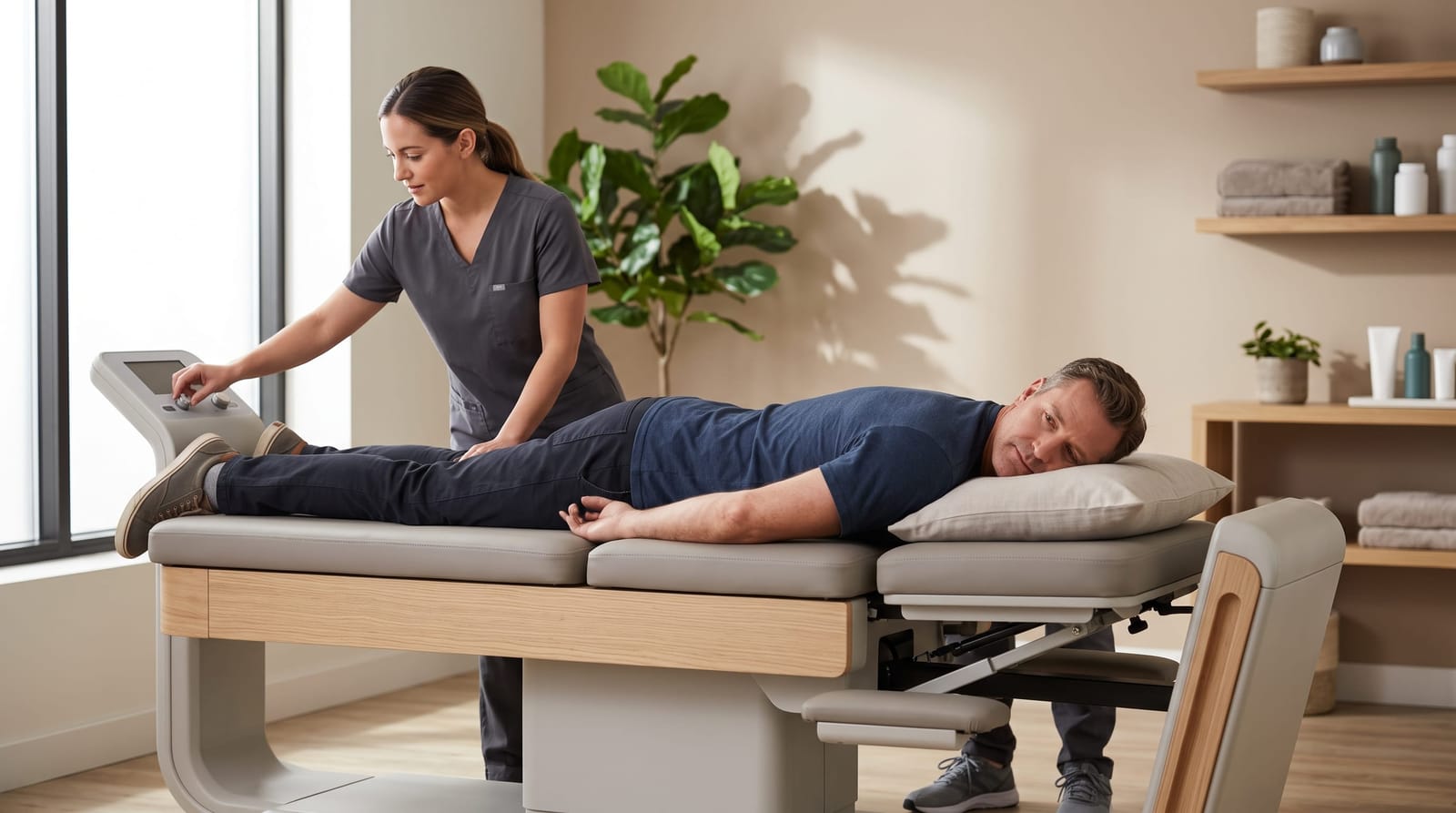
If you've been told you have a bulging disc, you're likely weighing your options carefully, and wondering whether there's a meaningful path forward that doesn't involve surgery. Spinal decompression for bulging disc concerns is one of the more discussed non-surgical approaches in modern chiropractic care, and for good reason. Understanding exactly how it works, and what a realistic treatment process looks like, can help you have a more informed conversation with your care provider. This overview breaks down the mechanism, the process, and what sets this approach apart.
Bulging Disc vs. Herniated Disc: Why the Distinction Matters
These two terms are often used interchangeably, but they describe meaningfully different conditions, and that difference affects how spinal decompression is applied.
A bulging disc occurs when the outer layer of a spinal disc (called the annulus fibrosus) weakens and extends outward beyond its normal boundary. Think of it like a tire that's slightly overinflated and starting to bulge on one side. The disc hasn't ruptured: the inner material (the nucleus pulposus) is still contained. A herniated disc, by contrast, involves a tear or crack in that outer layer, allowing the inner gel-like material to push through.
This distinction matters for decompression therapy in a few key ways:
- Bulging discs often respond well to decompression because the disc material hasn't broken through the outer wall: the structural integrity is still largely intact
- The outer annulus in a bulging disc can potentially be coaxed back toward proper position with gentle, sustained traction forces
- Herniated discs may require a different protocol, longer treatment timelines, or additional therapeutic support
- Both conditions can compress nearby nerves, but the mechanism and severity often differ
When a disc bulges toward the spinal canal or a nerve root, it can create pressure that leads to pain, numbness, or reduced mobility: the kinds of symptoms that often bring patients to explore non-surgical options in the first place.
How Spinal Decompression Works: Retraction and Rehydration
The core principle behind spinal decompression therapy is elegant in its simplicity: by gently and precisely distracting the vertebrae, it creates a negative pressure environment inside the disc. This is sometimes called an intradiscal pressure reduction, and it's what drives two key healing mechanisms.
Retraction
When negative pressure is generated within the disc space, it can encourage the bulging disc material to move back toward a more central position. Rather than forcing anything, the decompression table creates a gentle pull that may allow the disc to settle inward, potentially reducing the contact it has with surrounding nerves and soft tissue. Studies on intradiscal pressure changes during traction-based therapy suggest that negative pressures can reach levels sufficient to encourage this movement, though responses vary by individual and condition severity.
Rehydration
Spinal discs don't have a direct blood supply: they rely on a process called imbibition to absorb nutrients and fluid. When a disc is compressed chronically (as often happens with age, poor posture, or repetitive loading), it can become dehydrated and less resilient. Decompression therapy is thought to promote this rehydration cycle by alternating between distraction and relaxation phases, effectively drawing nutrient-rich fluid back into the disc. Research suggests that adult discs lose significant hydration with age, which is one reason disc-related issues become more common in the 40-60 age range.
Together, these two mechanisms, retraction and rehydration, form the biological rationale for why computerized spinal decompression has become a subject of interest in non-surgical spine care.
What a Full Spinal Decompression Treatment Protocol Looks Like
One of the most common questions patients ask is: "What am I actually signing up for?" Here's a realistic picture of what a structured spinal decompression protocol for a bulging disc typically involves.
Initial Assessment
Before any treatment begins, a thorough evaluation is essential. This generally includes a review of imaging (such as MRI), a discussion of symptom history, and a physical assessment. This step is critical, not everyone is an appropriate candidate for spinal decompression, and a responsible provider will identify contraindications before proceeding.
Treatment Sessions
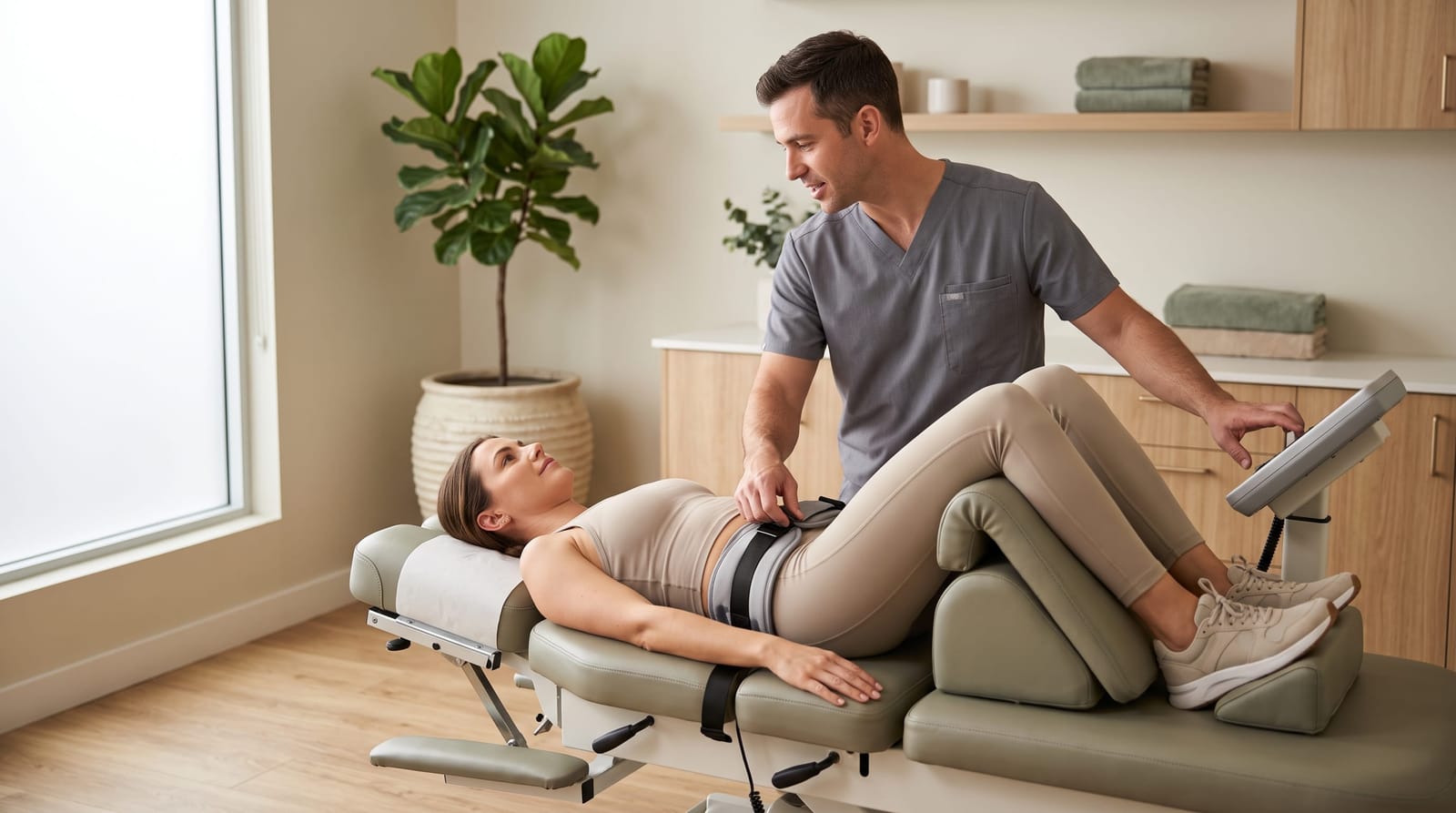
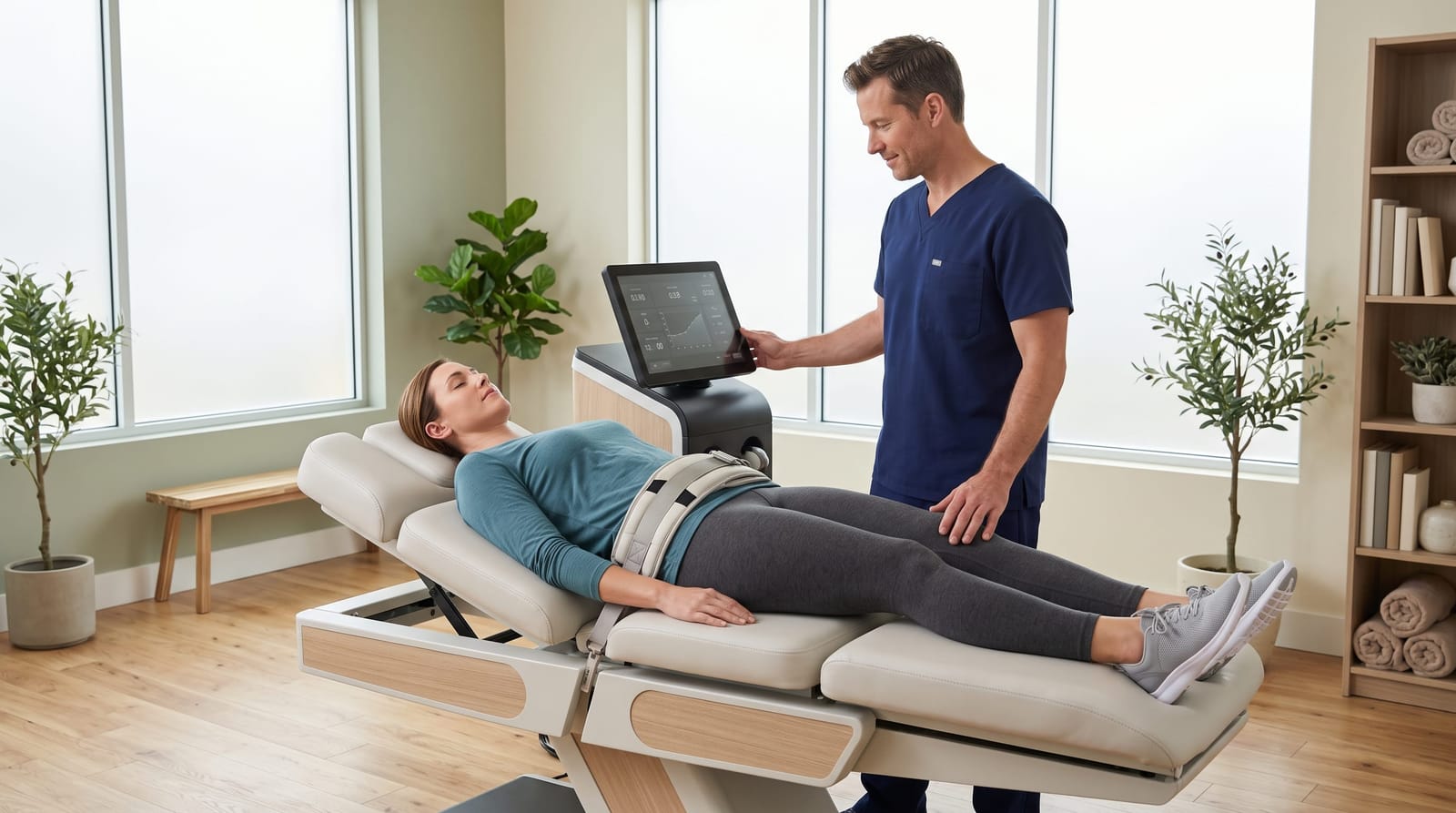
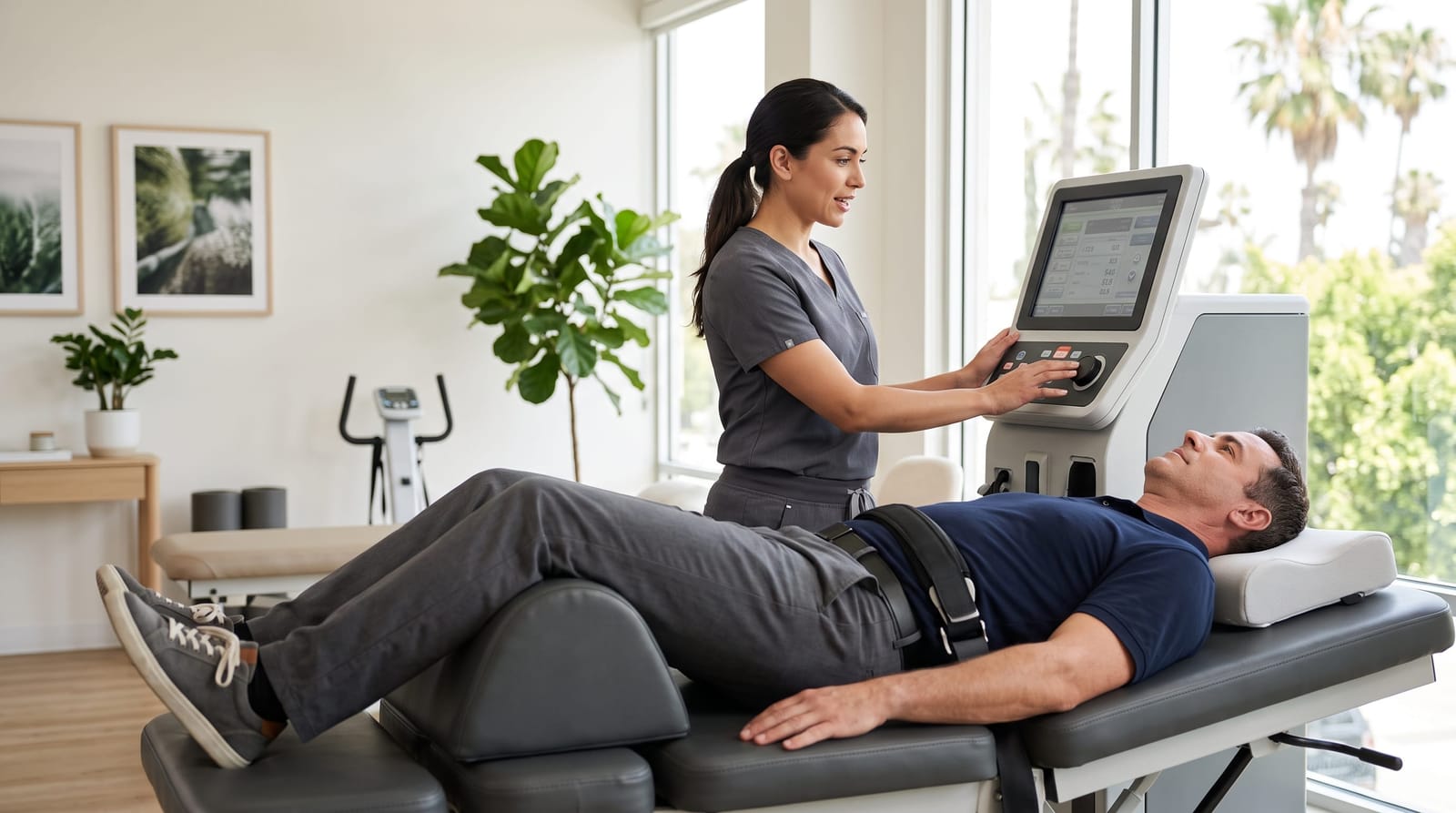
A typical protocol for spinal decompression for bulging disc conditions may involve:
- Session frequency: Often 3-5 sessions per week, particularly in the early phase of care
- Total sessions: Many protocols range from 12 to 24 sessions over 4-8 weeks, though this varies significantly by individual
- Session duration: Each table session typically lasts 20-30 minutes
- Tension levels: Computerized tables allow precise adjustment of distraction force, often starting at lower levels (such as 10-15% of body weight) and gradually increasing based on patient response
- Cycle pattern: Sessions typically alternate between distraction and relaxation phases in timed intervals
Complementary Therapies
Spinal decompression is rarely used in complete isolation. A comprehensive plan often integrates:
- Heat or cold therapy before or after sessions to support tissue response
- Electrical muscle stimulation to reduce muscle guarding
- Chiropractic adjustments to support spinal alignment
- Rehabilitative exercises to strengthen supporting musculature
This layered approach reflects how modern chiropractic care tends to work best, not as a single isolated treatment, but as part of a coordinated wellness plan tailored to the individual.
Why Patients Consider This Before Surgery
For many people with bulging disc symptoms, surgery feels like a significant and uncertain step. Non-surgical spinal decompression is often explored as a first-line option because it is:
- Non-invasive: No incisions, no anesthesia, no post-surgical recovery period
- Adjustable: Computerized equipment allows real-time customization based on how the patient responds during each session
- Reversible: Unlike surgical interventions, decompression therapy carries no permanent structural changes
- Progressive: Most patients go through a gradual escalation of care, allowing providers to monitor tolerance and adjust accordingly
It's worth noting that spinal decompression is not appropriate for every patient or every disc condition. Individuals with certain spinal instabilities, fractures, implants, or other contraindicated conditions would not be candidates. This is precisely why a thorough initial evaluation with a qualified provider is the necessary first step. If your situation also involves nerve-related symptoms, you may find it helpful to explore how spinal decompression for a pinched nerve addresses that overlap in symptom presentation.
Frequently Asked Questions
How is spinal decompression for a bulging disc different from regular traction?
Traditional traction applies a sustained pulling force manually or with basic equipment. Computerized spinal decompression uses sophisticated software to deliver precise, varied distraction forces in controlled cycles. This variance is important: a logarithmic pull-and-release cycle is designed to prevent the paraspinal muscles from guarding against the stretch, potentially making the therapy more effective at reaching the disc itself.
How many sessions does it typically take to notice a difference?
Patient experiences vary considerably, and no specific outcome can be promised. Some individuals report noticing changes within the first several sessions; others find improvement builds gradually over the full course of treatment. Your provider will monitor your progress throughout and adjust the protocol as appropriate. Results are never guaranteed, and outcomes depend on many individual factors.
Is spinal decompression painful?
Most patients describe the experience as gentle and even relaxing. The distraction forces are carefully calibrated to be therapeutic, not forceful. Some patients feel mild muscle soreness in the early sessions as their body adjusts, which is generally short-lived. If anything feels uncomfortable during a session, the treatment can be stopped or adjusted immediately.
Can spinal decompression be used alongside other treatments I'm already receiving?
In many cases, yes, but this is something to discuss openly with both your chiropractic provider and any other healthcare providers involved in your care. Coordination between providers supports the safest and most effective approach to your overall wellness.
Moving Forward with Confidence
A bulging disc diagnosis can feel overwhelming, but understanding the options available to you is the first step toward a clearer path. Spinal decompression for bulging disc conditions works through a precise, mechanically logical process: creating the conditions for retraction and rehydration that may help reduce disc-related pressure over time. With structured protocols, computerized precision, and a comprehensive care plan, this non-surgical approach gives many patients a meaningful option worth exploring with their healthcare team. The best next step is always a thorough evaluation with a qualified provider who can assess whether you're a good candidate.