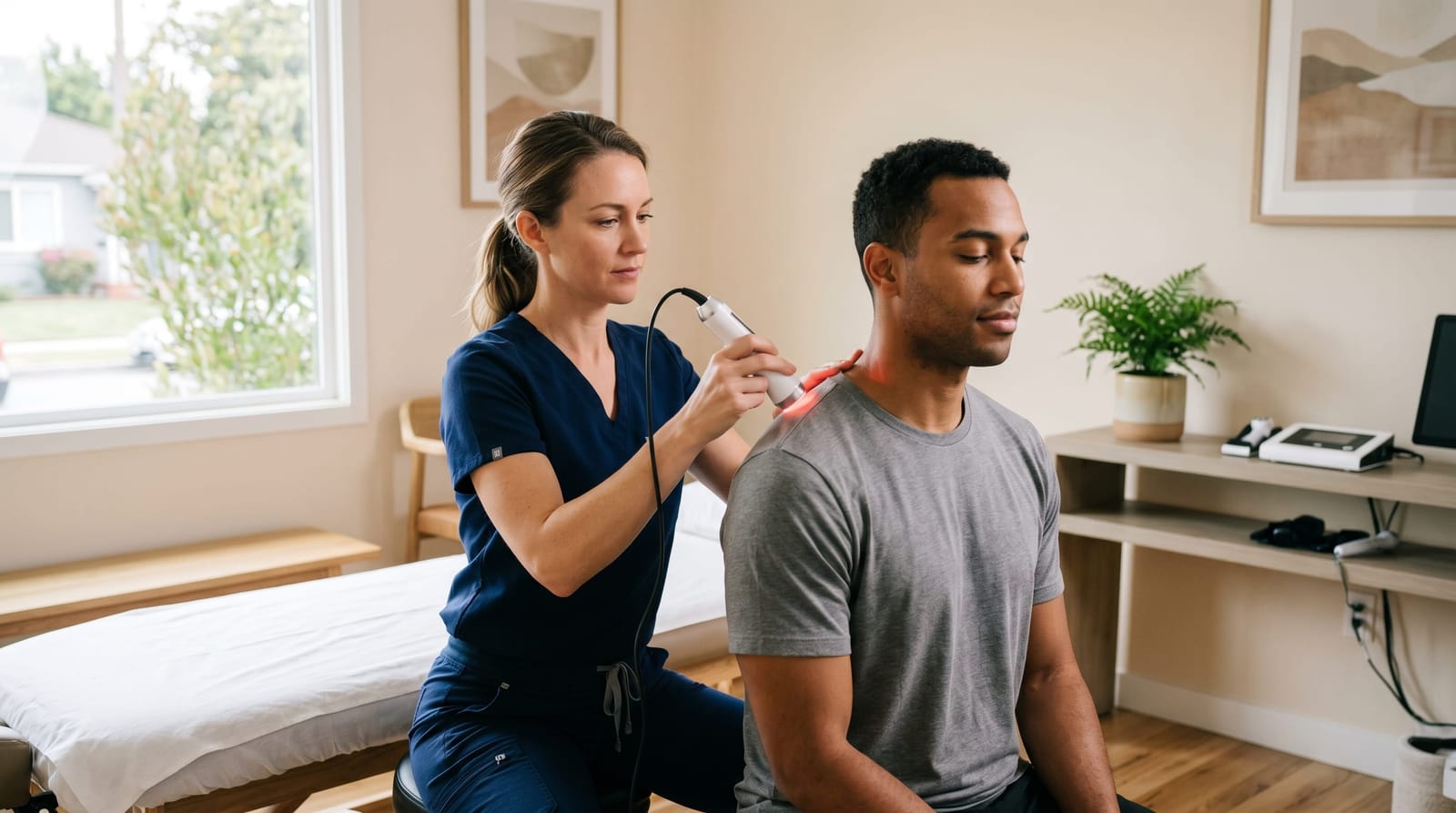
Is Cold Laser Therapy FDA Approved? Understanding the Regulatory Landscape

When you're exploring cold laser therapy as part of your wellness journey, one of the first questions that comes to mind is a smart one: Is this actually regulated? As we explore the full picture of cold laser therapy effectiveness across various conditions on our pillar page, understanding the regulatory foundation is an essential piece of the puzzle. Knowing whether a therapy is FDA approved, or more precisely, FDA cleared, helps you make informed decisions and gives you confidence in the care you're receiving. This post breaks down exactly what FDA clearance means for cold laser devices, how it differs from full approval, what it signals about patient safety, and why it matters when choosing a provider. If you're the kind of person who reads the fine print, this one's for you.
FDA Approved vs. FDA Cleared: Why the Distinction Matters
Here's a detail that trips up a lot of people, including some healthcare providers: cold laser therapy is not "FDA approved" in the traditional sense; it is FDA cleared. These two terms sound similar, but they represent meaningfully different regulatory pathways, and understanding the difference helps you evaluate any therapy more clearly.
What FDA Approval Means
FDA approval is the highest level of regulatory review. It's the process applied to entirely new drugs and certain high-risk medical devices (classified as Class III). This pathway requires extensive clinical trial data demonstrating that a product is both safe and effective for a specific use. Think of the multi-year trials required before a new pharmaceutical reaches your pharmacy shelf: that's the approval process.
What FDA Clearance Means
FDA clearance operates through a separate pathway called 510(k), which applies to medical devices that are substantially equivalent to a legally marketed predicate device already on the market. To receive clearance, a manufacturer must demonstrate that their device is at least as safe and effective as an existing cleared device. This is the standard pathway for the vast majority of medical devices used in clinical settings, from blood pressure cuffs to surgical instruments.
Cold laser therapy devices fall into this category. Multiple cold laser devices have received FDA clearance for uses including temporary relief of minor muscle and joint pain, temporary relief of minor arthritis pain, relaxation of muscle spasm, temporary local increase in blood circulation, and minor pain and stiffness relief. This is a meaningful regulatory milestone: it is not a loophole or a lesser standard for these types of devices.
- FDA Approved: Required for new drugs and high-risk Class III devices; involves full clinical trial review
- FDA Cleared (510k): Required for Class II medical devices; demonstrates substantial equivalence to a predicate device
- Both pathways: Require manufacturers to meet FDA safety and performance standards before devices can be legally marketed
- Cold laser devices: Follow the clearance pathway, which is the appropriate and standard route for this device category
When a provider tells you their cold laser equipment is "FDA cleared," that's accurate, meaningful language, not a watered-down claim.
What Has the FDA Actually Cleared Cold Laser Therapy For?
One company in the cold laser space, Erchonia, holds 22 of the 25 FDA clearances that have been granted to cold laser devices as of recent counts. That concentration of clearances within a single manufacturer speaks to the specificity and rigor of the process. Clearances are not blanket endorsements of an entire technology category; they are granted to specific devices for specific intended uses.
Cleared Indications for Cold Laser Devices
Across cleared cold laser devices, the FDA-recognized indications generally include:
- Temporary relief of minor muscle and joint pain and stiffness
- Temporary relief of minor arthritis pain
- Relaxation of muscle spasm
- Temporary local increase in blood circulation
- Adjunctive treatment in the temporary relief of neck and shoulder pain
- Adjunctive treatment for chronic low back pain
It's worth noting that the word "temporary" appears frequently here, and that's intentional, precise language. FDA clearances reflect what has been demonstrated through the regulatory submission process. Cold laser therapy is positioned as a supportive, non-invasive wellness tool, not a curative treatment. That's an honest, grounded way to understand what this therapy does and how it fits into a broader care plan.
The Role of Wavelength and Device Classification
Cold laser devices typically operate at wavelengths between 600 and 1,000 nanometers, using low-level light energy to interact with cellular tissue. Unlike surgical lasers, they produce no meaningful heat and are non-ablative: meaning they don't cut or damage tissue. This distinction is part of why they're classified differently from high-power therapeutic lasers and why they follow the 510(k) clearance pathway rather than a higher-risk approval process.
What FDA Clearance Signals About Patient Safety
For a research-oriented patient, FDA clearance provides several important assurances. It's not a marketing badge: it's evidence that a manufacturer has satisfied a federal regulatory agency's requirements before bringing a device to clinical use.
Pre-Market Review
Before a cleared device can be used on patients, the FDA has reviewed the manufacturer's technical documentation, performance testing data, and safety information. The agency must be satisfied with the submission before clearance is granted. This pre-market review is meaningful consumer protection.
Post-Market Surveillance
FDA clearance doesn't end the regulatory relationship. Cleared device manufacturers are subject to ongoing FDA oversight, including requirements to report adverse events (called Medical Device Reports), facility inspections, and quality system regulations. If a cleared device is later found to have safety issues, the FDA has authority to require recalls, corrections, and market withdrawals.
What It Does Not Guarantee
It's equally important to be clear about what FDA clearance does not promise. Clearance is not a guarantee of results for any individual patient. Human physiology varies, conditions present differently, and responses to any therapeutic intervention exist on a spectrum. Regulatory clearance establishes that a device is appropriate for clinical use: it does not predict your personal outcome. Anyone suggesting otherwise is overpromising.
- It does mean: The device met FDA safety and performance standards before clinical use
- It does mean: The manufacturer is subject to ongoing federal oversight
- It does not mean: Guaranteed results for every patient or condition
- It does not mean: The therapy replaces diagnosis or treatment from a licensed medical provider
How to Evaluate Whether a Provider Uses FDA-Cleared Equipment
Here's where the regulatory landscape becomes practically useful for you as a patient. Not all laser therapy devices marketed to consumers or used in wellness settings are FDA cleared. The distinction matters.
Questions Worth Asking Any Provider
Before receiving cold laser therapy anywhere, you're entitled to ask straightforward questions about the equipment being used:
- Is the device FDA cleared? A reputable provider should be able to answer this directly and point to the specific device model.
- What is it cleared for? Understanding the cleared indications helps set appropriate expectations.
- Who manufactures the device? Established manufacturers with long regulatory track records provide additional confidence.
- How is the device maintained and calibrated? Proper equipment maintenance is part of responsible clinical practice.
Red Flags to Be Aware Of
Be cautious of providers who cannot name the specific device they're using, claim their laser "cures" conditions, or describe their equipment's regulatory status vaguely. FDA-cleared devices are trackable, clearance information is publicly available in the FDA's 510(k) database. Transparency about equipment is a reasonable expectation for any professional wellness provider.
At Prodigy Chiro Care, we use only FDA-cleared cold laser equipment in our practice. This isn't a marketing point: it's a baseline standard we hold ourselves to as part of offering responsible, evidence-informed care. If you want to know exactly what equipment we use and why, our team is happy to walk you through it.
Cold Laser Therapy Clearance in the Context of Condition-Specific Care
Understanding FDA clearance becomes especially relevant when cold laser therapy is being considered for specific conditions. Our patients exploring cold laser therapy carpal tunnel applications, for example, are often doing careful research before committing to care, and knowing the regulatory foundation of the therapy they're considering is part of that due diligence. Similarly, patients researching cold laser treatment tennis elbow often arrive with detailed questions about both efficacy and safety standards.
Cold laser therapy's clearances for pain relief and circulation support create a coherent framework for understanding how it may fit into a care plan for musculoskeletal conditions. The cleared indications, pain relief, muscle relaxation, local circulation support, align naturally with what patients dealing with repetitive strain injuries, joint discomfort, and soft tissue issues are often seeking support for.
Technology Standards Across the Practice
This same commitment to regulatory standards extends to other technologies we use at Prodigy Chiro Care. Just as FDA clearance matters for cold laser devices, equipment quality and technological standards matter across all aspects of our care, including advanced spinal decompression equipment, where device quality directly affects the consistency and safety of treatment delivery. The principle is the same: cleared, quality equipment operated by trained providers is the standard of care patients deserve.
What This Means for Your Decision-Making as a Patient
The regulatory picture around cold laser therapy is actually reassuring once you understand it clearly. This is not a fringe technology operating outside regulatory oversight. Multiple devices have gone through the FDA clearance process, with specific indications reviewed and cleared for clinical use. Manufacturers are subject to ongoing federal oversight. And when you choose a provider who uses FDA-cleared equipment, you're accessing therapy with a documented regulatory history.
Key data points worth keeping in mind as you evaluate this therapy:
- 25 FDA clearances have been granted to cold laser devices as of recent reporting
- One manufacturer (Erchonia) holds 22 of those 25 clearances: reflecting deep regulatory engagement in this device category
- Cold laser devices typically operate at wavelengths of 600-1,000 nanometers: a range established as non-thermal and non-ablative
- The 510(k) pathway is the standard FDA route for Class II medical devices: the same category that includes thousands of widely used clinical tools
- FDA clearance requires pre-market review and subjects manufacturers to ongoing post-market surveillance
None of this guarantees a specific outcome for any individual. What it does mean is that when cold laser therapy is offered in a responsible clinical setting with FDA-cleared equipment and a qualified provider, the foundational safety and regulatory standards are in place. Whether it's the right fit for your specific situation is a conversation worth having with your care team.
Related Topics Worth Exploring
If you found this regulatory overview helpful, there are several related areas worth exploring as you continue your research:
- How cold laser therapy is applied in condition-specific contexts, including for repetitive strain injuries and joint discomfort
- How equipment quality and technology standards affect outcomes across different therapeutic modalities
- What a realistic care plan incorporating cold laser therapy might look like alongside chiropractic care
Our blog covers these topics in detail, and our team is always available to answer questions specific to your situation.
The Bottom Line on Cold Laser Therapy and FDA Clearance
Cold laser therapy FDA approved? More precisely: cold laser therapy devices are FDA cleared: a meaningful regulatory distinction that reflects the appropriate pathway for this category of medical device. Clearance means pre-market FDA review, specific cleared indications, and ongoing manufacturer oversight. It's a real regulatory foundation, not a marketing claim. At Prodigy Chiro Care, we use only FDA-cleared equipment as part of our commitment to responsible, patient-centered care. If you're curious whether cold laser therapy might be a supportive addition to your wellness plan, we'd love to have that conversation. Contact our team to schedule a consultation and get honest, individualized answers to your questions.