Cold Laser Therapy for Carpal Tunnel Syndrome: Evidence, Results & What to Expect
When you're dealing with the numbness, tingling, and hand weakness that come with carpal tunnel syndrome, it's natural to start exploring every option available before considering surgery. As we discuss throughout our pillar guide on cold laser therapy for pain relief, this non-invasive treatment has emerged as a meaningful option for a range of musculoskeletal conditions, and carpal tunnel syndrome is one of the areas where the research is genuinely encouraging. This post takes a closer look at cold laser therapy for carpal tunnel specifically: what the clinical evidence shows, how the treatment works on nerve tissue, what a realistic course of care looks like, and how it stacks up against other conservative approaches. If you've already heard about cold laser therapy and want to know whether it applies to your situation, this is a good place to start.
Understanding Carpal Tunnel Syndrome and Why Treatment Choice Matters
Carpal tunnel syndrome develops when the median nerve, which runs through a narrow passageway in the wrist called the carpal tunnel, becomes compressed or irritated. The result is a familiar set of symptoms: tingling or numbness in the thumb, index, and middle fingers, a tendency to drop objects, nighttime wrist discomfort, and a general sense of weakness in the hand. It's one of the most commonly diagnosed nerve compression conditions, affecting an estimated 3-6% of the general adult population, with higher rates among people who perform repetitive hand and wrist movements at work.
The reason treatment choice matters so much with carpal tunnel syndrome is that the condition exists on a spectrum. Mild to moderate cases often respond well to conservative care: approaches that don't involve surgery or heavy medication. Severe cases with significant nerve damage may eventually require surgical intervention. Understanding where someone falls on that spectrum shapes which treatments are appropriate to explore.
This matters for cold laser therapy specifically because the research supporting its use is strongest for mild to moderate presentations. That's a meaningful distinction, and it's one worth discussing with your provider before beginning care.
What Cold Laser Therapy Actually Does at the Tissue Level
Cold laser therapy, also called low-level laser therapy (LLLT) or photobiomodulation, uses specific wavelengths of light energy to interact with cells in the treated area. Unlike surgical lasers, it generates no heat and causes no tissue damage. Instead, it works by stimulating the body's own biological processes at the cellular level.
How It Addresses Nerve Compression
In the context of carpal tunnel syndrome, the mechanisms that make cold laser therapy relevant include:
- Reduced inflammation around the median nerve: Swelling and inflammation within the carpal tunnel contribute to nerve compression. Cold laser therapy has been shown to support a reduction in pro-inflammatory markers in treated tissue, which may help relieve some of the pressure on the nerve.
- Nerve regeneration support: One of the more significant aspects of this therapy is its potential to promote nerve regeneration. Rather than simply addressing discomfort, photobiomodulation appears to stimulate the repair processes within nerve tissue itself: a meaningful distinction from treatments that only manage symptoms.
- Improved local circulation: Better blood flow to the wrist and surrounding structures supports tissue healing and can help clear metabolic waste products that accumulate in compressed areas.
- Reduced pain sensitivity: The therapy may influence local pain signaling, making the area less reactive without the systemic effects of pain medication.
These mechanisms work together rather than in isolation, which is part of why the approach can feel different from simply taking anti-inflammatories or wearing a splint at night.
What the Clinical Evidence Shows
Cold laser therapy for carpal tunnel has been studied more thoroughly than many people expect. A review published in the clinical literature on low-level laser therapy concluded that LLLT is an effective therapeutic modality for mild to moderate cases of idiopathic carpal tunnel syndrome, showing measurable improvements on both clinical assessments and neurophysiological testing: the kind of objective nerve conduction studies that measure how efficiently the median nerve is actually functioning. Researchers described it as feasible, safe, and well-tolerated, which reflects what practitioners tend to observe in practice as well.
What the Research Measures
Studies examining cold laser therapy for carpal tunnel typically assess outcomes across a few categories:
- Symptom scores: Self-reported improvements in pain, numbness, tingling, and hand function using validated questionnaires
- Nerve conduction velocity: Objective measurements of how quickly electrical signals travel along the median nerve: slower conduction is a hallmark of nerve compression, and improvements here represent genuine neurological change
- Grip strength: A functional measure of how well the hand is working
- Functional disability: Whether patients can return to activities they had difficulty performing
When studies report improvements across both subjective symptoms and objective nerve conduction measurements, that combination is particularly meaningful. It suggests the changes aren't just about how patients feel: there are measurable physiological shifts occurring in the treated tissue.
It's worth noting that research outcomes vary based on treatment protocols, laser parameters, case severity, and how long symptoms have been present. Not every study uses the same wavelength, dosage, or session frequency, which makes direct comparisons between studies somewhat complex. A provider experienced with this modality can speak to the protocols that tend to be most effective.
How Many Sessions Are Typically Needed and What Improvement Looks Like
One of the most common practical questions people have is: how long does this take? While individual responses vary and no provider can guarantee specific outcomes, clinical protocols for carpal tunnel syndrome typically involve somewhere in the range of 8 to 15 sessions, often scheduled two to three times per week over four to six weeks.
The Pattern of Progress
People working through a course of cold laser therapy for carpal tunnel often describe improvement in a recognizable pattern:
- Early sessions (1-4): Some people notice reduced nighttime symptoms first: less disrupted sleep from wrist discomfort. Others notice subtle changes in tingling frequency or intensity.
- Mid-course (sessions 5-10): More consistent reduction in daytime numbness and tingling, gradual return of hand strength, and improved ability to perform tasks that had become difficult.
- Completion and beyond: Many patients continue to experience improvement in the weeks following their final session, as the tissue-level changes initiated during treatment continue to develop.
It's also common for providers to reassess midway through a care plan to evaluate progress. Objective tools like nerve conduction assessments or grip strength measurements can help track whether the treatment is achieving meaningful change, and inform decisions about continuing, adjusting, or combining with other approaches.
Cold Laser Therapy Versus Other Conservative Approaches
Cold laser therapy doesn't exist in isolation. Most people exploring conservative care for carpal tunnel syndrome will encounter several options, and understanding how they compare, and potentially complement each other, is useful context.
Wrist Splinting
Night splints that hold the wrist in a neutral position are often the first conservative intervention recommended. They're effective at reducing nighttime symptoms for many people, particularly in mild cases. However, splinting addresses positioning rather than the underlying tissue changes in the tunnel itself. Many patients find that combining splinting with active therapies like cold laser produces better results than either approach alone.
Corticosteroid Injections
Injections can provide meaningful short-term symptom relief by reducing inflammation in the carpal tunnel. They're often used as a bridge to buy time or assess responsiveness to conservative care. The limitation is that relief tends to be temporary, typically measured in weeks to months, and repeated injections carry their own considerations. Cold laser therapy, by contrast, is designed to support longer-term tissue changes rather than provide temporary suppression of symptoms.
Occupational Therapy and Ergonomic Adjustment
Addressing the contributing factors, keyboard position, tool grip, wrist angle during tasks, is a valuable part of any conservative carpal tunnel plan. These modifications reduce ongoing stress on the median nerve, which creates a better environment for healing therapies like cold laser to work.
Surgery
Carpal tunnel release surgery is a well-established procedure with generally good outcomes, particularly for moderate to severe cases. For people with mild to moderate presentations who haven't yet exhausted conservative options, it's reasonable to explore those options first. Surgery involves recovery time, and outcomes can vary depending on how long nerve compression has been present. Cold laser therapy is one of several conservative approaches worth considering before surgical intervention, though the decision is always one to make in partnership with your healthcare providers.
Is Carpal Tunnel Reversible With Cold Laser Therapy?
This is one of the most common questions that comes up, and it deserves a thoughtful answer. The short version: for mild to moderate cases, meaningful functional recovery is possible with conservative care, including cold laser therapy. The longer answer involves understanding how long the condition has been present, how much nerve function has been affected, and what contributing factors are addressed alongside the treatment itself.
If you're curious about the nuances of nerve recovery and what "reversible" actually means in this context, we explore that topic in depth in our dedicated post on is carpal tunnel reversible with cold laser therapy, including what the research says about factors that influence long-term outcomes.
It's also worth noting that carpal tunnel syndrome doesn't always occur in isolation. Some people experience overlapping nerve and vascular symptoms involving the shoulder and neck region, which can complicate the clinical picture. Our post on cold laser therapy effectiveness for shoulder pain and thoracic outlet syndrome explores how this therapy is applied to those related conditions.
What to Expect During Treatment at a Chiropractic Wellness Practice
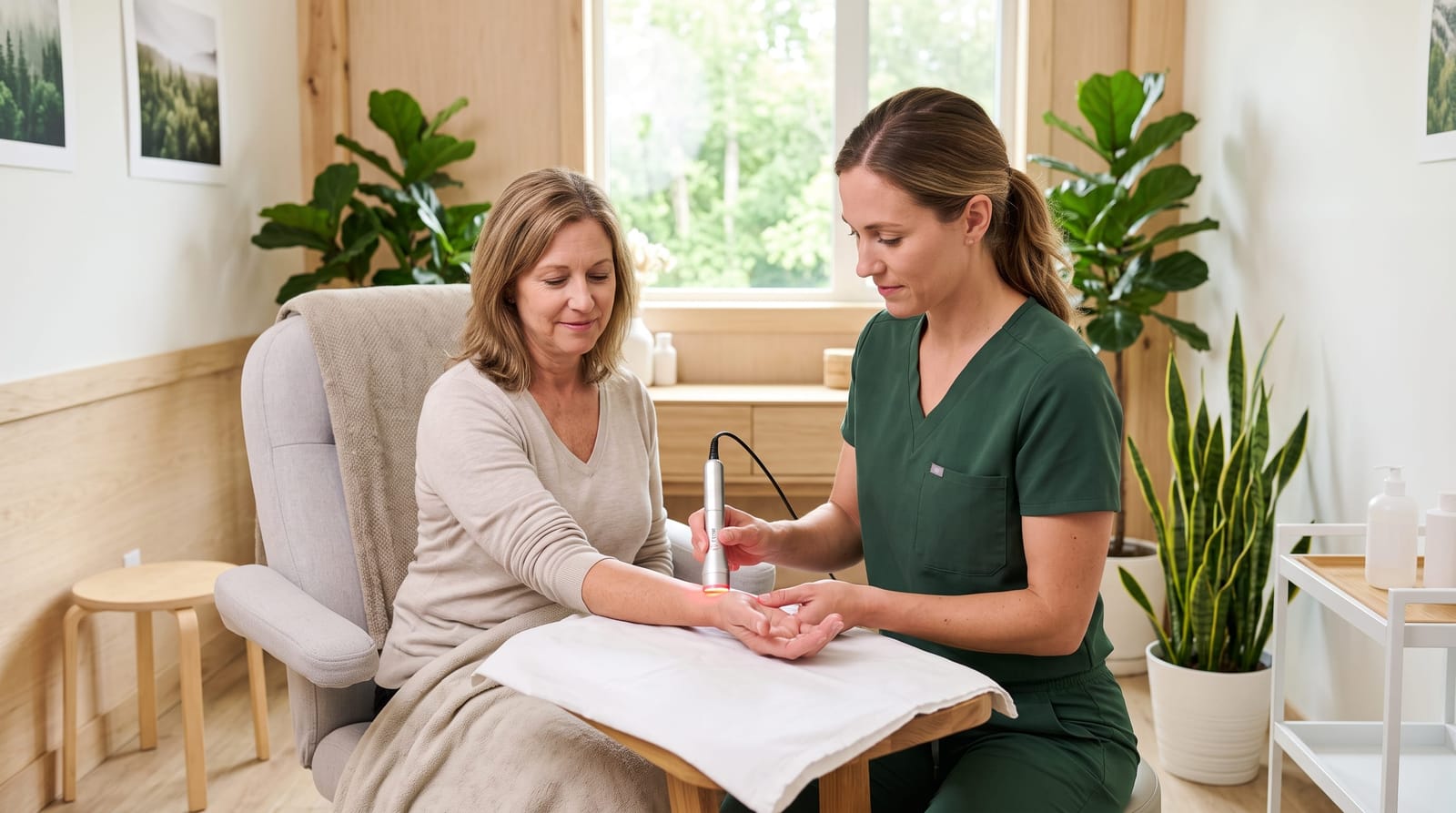
If you're considering cold laser therapy for carpal tunnel syndrome at a practice like Prodigy Chiro Care, here's a general sense of what the experience involves. Sessions are non-invasive and typically brief, often 10 to 20 minutes for the wrist and hand area. The handheld device is applied directly to the skin over the treatment area. Most people describe the experience as comfortable; there's no sensation of heat and no discomfort during the session.
Before beginning, a thorough intake and assessment helps clarify the nature and severity of your symptoms, identify any contributing factors, and establish a baseline so progress can be tracked. A good provider will also want to understand the full picture, including how long you've had symptoms, what activities aggravate them, and what you've tried previously. This context shapes a care plan that makes sense for your situation specifically.
Key Takeaways
Cold laser therapy for carpal tunnel syndrome is a well-researched, non-invasive option with a meaningful track record for mild to moderate cases. Clinical studies support its ability to reduce symptoms and produce measurable improvements in nerve conduction, not just temporary relief. A typical course of care involves 8 to 15 sessions over four to six weeks, with many people noticing early changes within the first few visits. It fits naturally alongside other conservative approaches like splinting and ergonomic adjustment, and it represents a reasonable step to explore before considering surgical options.
If you're living with the daily frustration of carpal tunnel symptoms and want to understand whether cold laser therapy might be appropriate for your situation, we'd welcome the chance to talk through your history and goals. Reach out to Prodigy Chiro Care to schedule a consultation: our team is here to help you make informed, comfortable decisions about your care.