Custom Orthotics for Plantar Fasciitis: Non-Surgical Relief That Lasts
If you've ever taken your first steps in the morning and been stopped in your tracks by a sharp, burning sensation in your heel, you may already be familiar with plantar fasciitis. It's one of the most common sources of foot pain: affecting an estimated 2 million people in the United States each year, and it has a way of quietly derailing everything from your morning run to a full day on your feet at work. When you're looking at the bigger picture of custom orthotics for active professionals, plantar fasciitis is one of the most compelling cases for investing in a personalized, long-term solution. This beginner's guide breaks down what plantar fasciitis actually is, how custom orthotics for plantar fasciitis work to support recovery, and how comparing your options can help you make a more confident, informed decision about your foot health.
What Is Plantar Fasciitis and Why Doesn't It Go Away?
The plantar fascia is a thick band of connective tissue that runs along the bottom of your foot, connecting your heel bone to your toes. Its job is to absorb shock and support your arch with every step you take. When this tissue is repeatedly strained, through overuse, poor biomechanics, unsupportive footwear, or prolonged standing, it can become irritated and inflamed. That's plantar fasciitis.
What makes this condition so frustrating for active and working professionals is that it tends to linger. The plantar fascia has relatively limited blood supply compared to muscle tissue, which can slow the natural healing process. More importantly, if the underlying cause of the strain isn't addressed, whether that's excessive pronation, a tight Achilles tendon, a high arch, or an uneven gait pattern, every step you take continues to re-aggravate the same tissue.
Common Contributing Factors
- Overpronation (feet rolling inward excessively during walking or running)
- High arches or flat feet that alter load distribution
- Tight calf muscles or a shortened Achilles tendon
- Sudden increases in activity level or mileage
- Long hours standing on hard surfaces without adequate foot support
- Worn-out or unsupportive footwear
Understanding what's driving your symptoms is the first step toward finding relief that actually holds, and that's exactly where a personalized approach to care makes a meaningful difference. If you're wondering whether your foot mechanics might be affecting more than just your heels, it's worth exploring do I need custom orthotics as a starting point for understanding the connection between foot function and whole-body alignment.
How Custom Orthotics for Plantar Fasciitis Work
Unlike over-the-counter insoles that offer generalized cushioning, custom orthotics for plantar fasciitis are precision-crafted devices designed specifically around your foot structure, gait pattern, and the biomechanical issues contributing to your symptoms. The goal isn't just to add padding: it's to strategically redistribute how force travels through your foot so the plantar fascia can recover without being constantly re-stressed.
Key Functions of a Custom Orthotic for Plantar Fasciitis
- Arch support: Holds the arch in a more neutral, supported position to reduce the stretching forces on the plantar fascia
- Heel cushioning and cupping: Absorbs impact at the heel, often the most painful point, while stabilizing the fat pad beneath it
- Offloading: Shifts pressure away from the most inflamed areas so the tissue has a chance to calm down
- Gait correction: Addresses overpronation or supination that causes uneven loading across the foot
- Achilles tendon support: A small heel lift or rearfoot posting can reduce strain on the Achilles, which directly affects plantar fascia tension
The design process typically involves a detailed foot scan, casting, or 3D digital imaging, combined with a gait analysis that captures how you actually move. This is what separates a custom orthotic from a generic insert: it's built around your specific mechanics, not an average foot model.
Research consistently suggests that custom orthotics offer measurable benefits for plantar fasciitis sufferers. Studies have found that approximately 70-90% of people with plantar fasciitis experience significant improvement through conservative care: a category that includes custom orthotics as a core component. While results vary by individual, the biomechanical support a well-crafted orthotic provides addresses root causes in a way that generic solutions typically cannot.
Custom Orthotics vs. Other Common Treatment Options
If you've been dealing with plantar fasciitis for a while, you've probably come across several treatment options. Understanding where custom orthotics fit in the broader picture can help you have more productive conversations with your healthcare provider.
Cortisone Injections
Cortisone injections can be effective at reducing acute inflammation and providing short-term pain relief. However, they don't address the biomechanical issues causing the condition. Studies suggest that while injections may provide relief within the first few weeks, their effectiveness tends to diminish over time, and repeated injections carry their own considerations that are worth discussing with a medical professional. Custom orthotics, by contrast, address the mechanical source of the problem rather than managing the inflammatory response alone.
Surgery
Surgical intervention, typically plantar fascia release, is generally considered only after conservative care has been thoroughly explored over an extended period (often 6-12 months or more). Surgery involves recovery time, potential risks, and does not automatically correct the gait mechanics that contributed to the problem in the first place. Most practitioners across disciplines agree that exhausting conservative options first is a sensible approach.
Over-the-Counter Insoles
Store-bought arch supports and heel cups are inexpensive and widely accessible. They can offer temporary comfort, particularly for mild cases. However, because they're designed for an average foot shape, they may not provide the targeted support your specific arch height, heel structure, or gait pattern requires. To explore this comparison in more depth, take a look at our overview of do custom orthotics work when compared to off-the-shelf solutions.
How Chiropractic Care Supports Plantar Fasciitis Recovery
Custom orthotics and chiropractic care work particularly well together for plantar fasciitis because they address the condition from complementary angles. Foot mechanics don't operate in isolation: the way your foot strikes the ground affects your ankle, knee, hip, and lumbar spine. When one area is compensating for dysfunction below, it can create a chain of tension and imbalance that extends well beyond the foot itself.
What Chiropractic Care May Address Alongside Orthotics
- Joint mobility in the ankle and foot, which directly affects how load is distributed during movement
- Soft tissue tension in the calf and lower leg muscles that contribute to plantar fascia strain
- Pelvic alignment and spinal posture that influence overall gait mechanics
- Identifying compensatory patterns in the hip or knee that may have developed in response to foot pain
When custom orthotics correct how your foot functions and chiropractic adjustments support proper alignment and mobility throughout the kinetic chain, many patients find that their recovery feels more comprehensive and sustainable. This isn't about one treatment replacing another: it's about addressing the whole-body pattern that keeps foot pain coming back.
For individuals whose foot issues are connected to a workplace injury or physically demanding occupation, this integrated approach can be especially relevant. Our resource on custom orthotics work injury recovery explores how orthotic support plays a role in helping people return to full function after injury.
What to Expect During the Fitting Process
One of the most common questions people have about custom orthotics is what the process actually looks like. It's more straightforward than many expect.
Step 1: Assessment
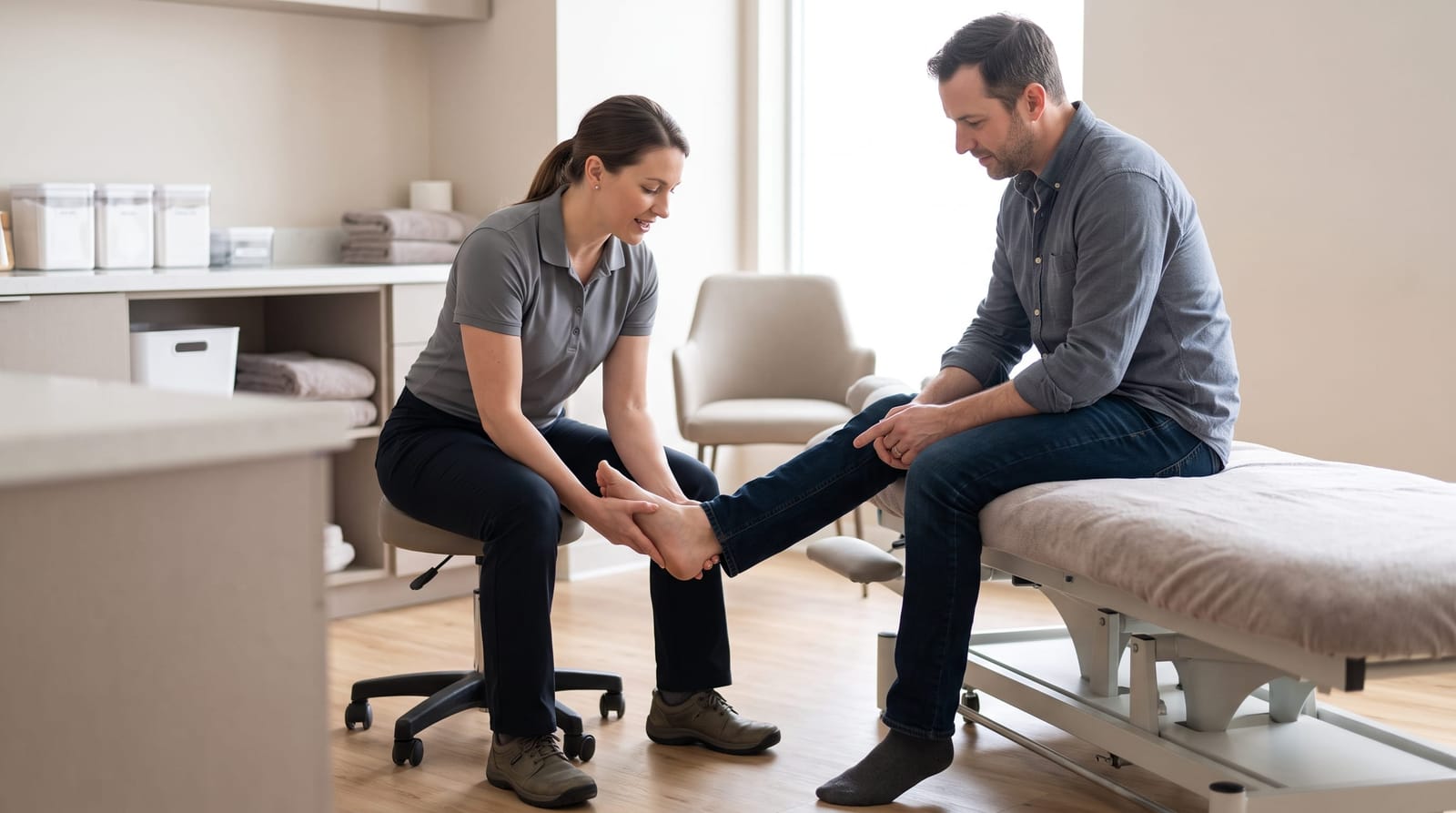
A thorough evaluation of your foot structure, ankle flexibility, arch type, and any areas of tenderness or swelling. This gives the practitioner a clear picture of how your foot is currently functioning and where it's being overloaded.
Step 2: Gait Analysis
Observing how you walk, and sometimes run, reveals patterns that static evaluation misses. This might include video gait analysis or pressure mapping technology to identify where force is concentrated during movement.
Step 3: Casting or Scanning
A mold, foam impression, or digital 3D scan captures the precise contours of your foot in the ideal supported position. This becomes the foundation for your custom device.
Step 4: Fabrication and Fitting
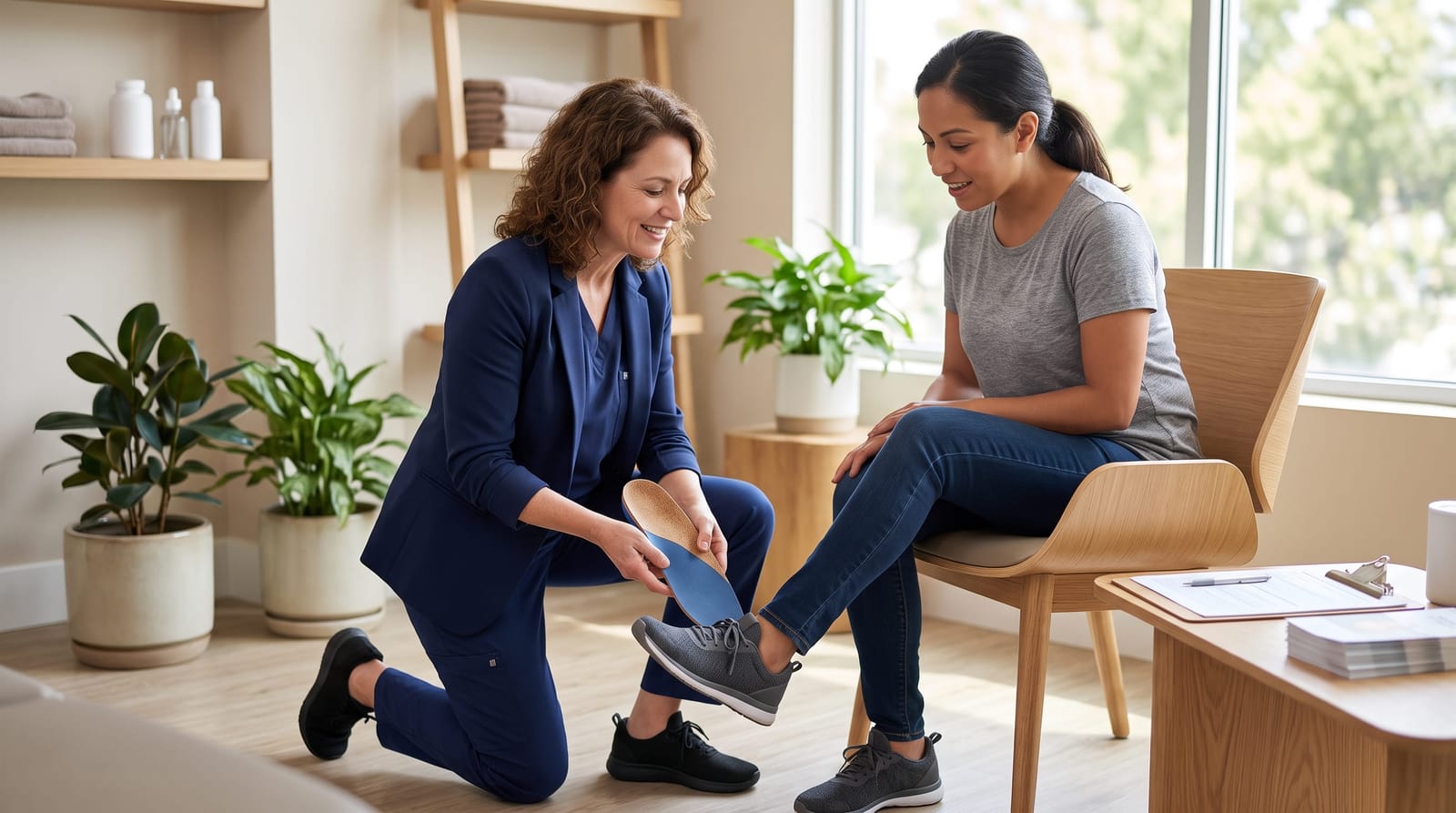
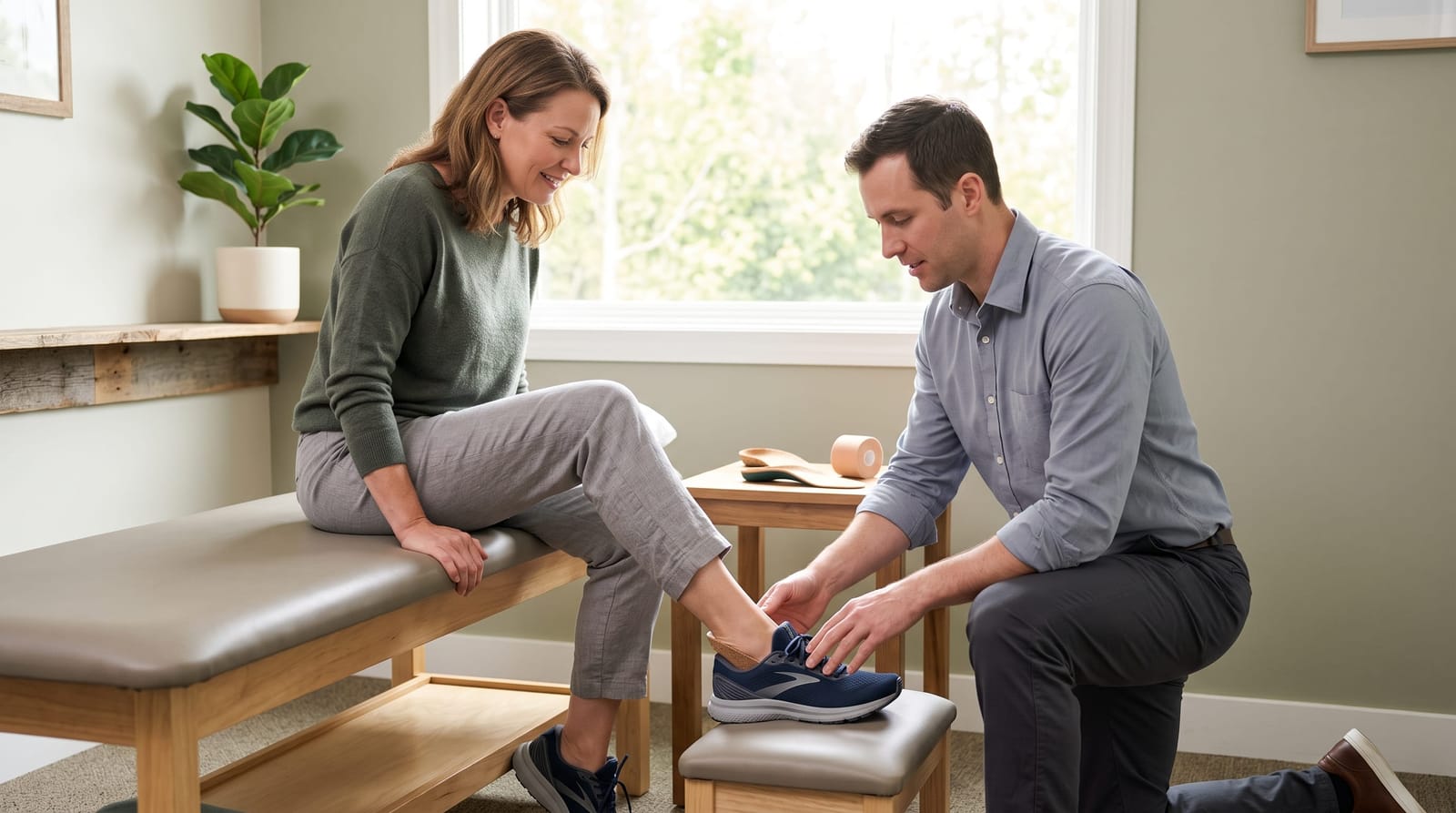
Your orthotics are fabricated by a specialist lab and then fitted and adjusted to ensure they seat properly in your footwear and feel comfortable from the start. There's typically a brief break-in period, usually 1 to 2 weeks, as your body adapts to the new support.
Step 5: Follow-Up
A follow-up appointment allows your provider to make any fine-tuning adjustments and assess how your symptoms are responding. This is also a good opportunity to evaluate whether complementary care such as stretching protocols or chiropractic treatment would support your recovery goals.
Understanding the Investment in Custom Orthotics
Cost is often one of the first questions patients raise when considering custom orthotics, and it's a fair one. Custom orthotics typically represent a higher upfront investment than over-the-counter options. However, when you consider durability: quality custom orthotics are often designed to last 3 to 5 years or longer: alongside the potential reduction in recurring treatments, lost productivity from pain, and the cumulative cost of solutions that only partially work, the value proposition shifts considerably.
Insurance coverage for custom orthotics varies widely depending on your plan and provider. For general guidance on how coverage typically works in the Los Angeles area, our overview of custom orthotics cost insurance can help you understand what questions to ask before your appointment. Always consult directly with your insurance provider and healthcare team to understand your specific plan's benefits.
For active professionals who rely on their bodies to show up fully, whether that's in the gym, on the trail, or through a ten-hour workday, addressing foot pain with a solution that delivers long-term results tends to be a sound investment in quality of life.
Conclusion
Plantar fasciitis is common, but chronic plantar fasciitis doesn't have to be your reality. Custom orthotics for plantar fasciitis address more than just the symptom: they target the biomechanical patterns that prevent the plantar fascia from healing and staying healed. When combined with chiropractic care that supports whole-body alignment and mobility, many patients find a path to more lasting, meaningful relief without jumping to more invasive interventions.
If heel pain has been slowing you down and you're ready to explore whether custom orthotics are the right next step for your lifestyle, we'd love to talk. Contact Prodigy Chiro Care to schedule a consultation: we'll take the time to understand your foot mechanics, your daily demands, and your goals, so we can support your recovery in a way that actually fits your life.