Custom Orthotics for Knee Pain: Addressing the Root Cause
Knee pain is one of the most common complaints among active adults, whether you're logging miles on the beach path, spending long days on your feet, or simply navigating the demands of a busy Los Angeles lifestyle. What many people don't realize is that the source of knee discomfort often begins much further down the chain: at the foot. As part of a broader conversation about custom orthotics for active professionals, this guide explores how foot mechanics influence knee health, how custom orthotics may support better alignment, and how pairing orthotics with chiropractic care can address the bigger picture.
The Foot-Knee Connection: Why Your Foundation Matters
Your feet are your body's foundation. Every step you take sends a chain of forces upward through your ankles, knees, hips, and spine. When that foundation is slightly off, even in ways that aren't obvious to the naked eye, those small mechanical irregularities can accumulate over time and create noticeable discomfort at the knee.
Two of the most commonly discussed knee conditions in active adults are patellofemoral pain syndrome (often called "runner's knee") and iliotibial band syndrome (IT band syndrome). Both conditions involve irritation of structures around the knee joint, and both can be influenced by the way the foot strikes the ground and distributes load during movement.
Overpronation: a tendency for the foot to roll inward during gait: is a well-recognized contributor to this chain reaction. When the foot rolls in, the tibia (shin bone) tends to rotate inward as well, shifting the tracking of the kneecap off its ideal path. Over time, this altered tracking can create friction and inflammation at the front of the knee. Similarly, excessive inward movement can increase tension along the IT band, the thick strip of connective tissue running along the outer thigh to the knee.
Understanding this connection is the first step toward addressing knee discomfort from the ground up: literally.
How Custom Orthotics May Help Correct Gait Patterns
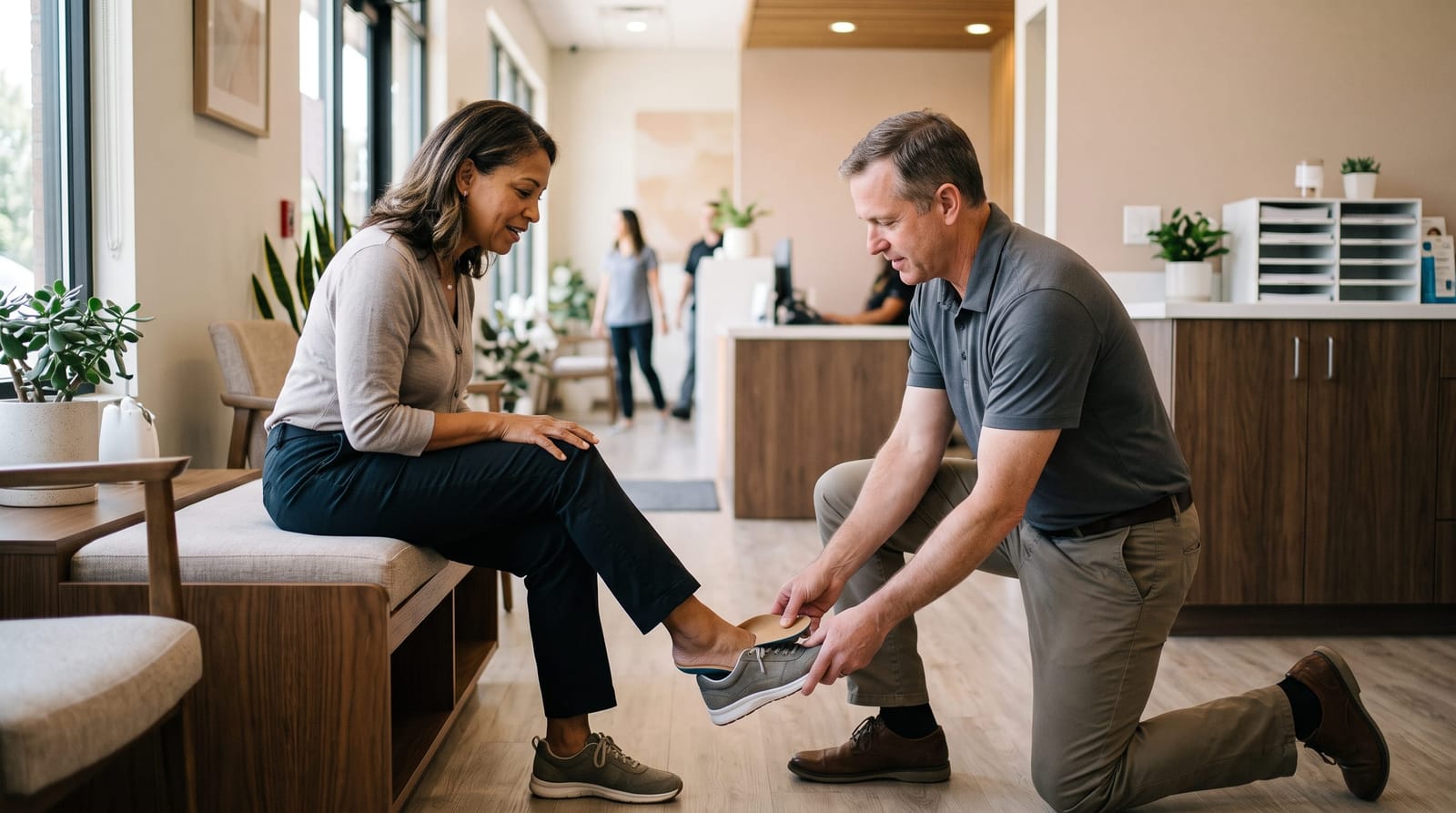
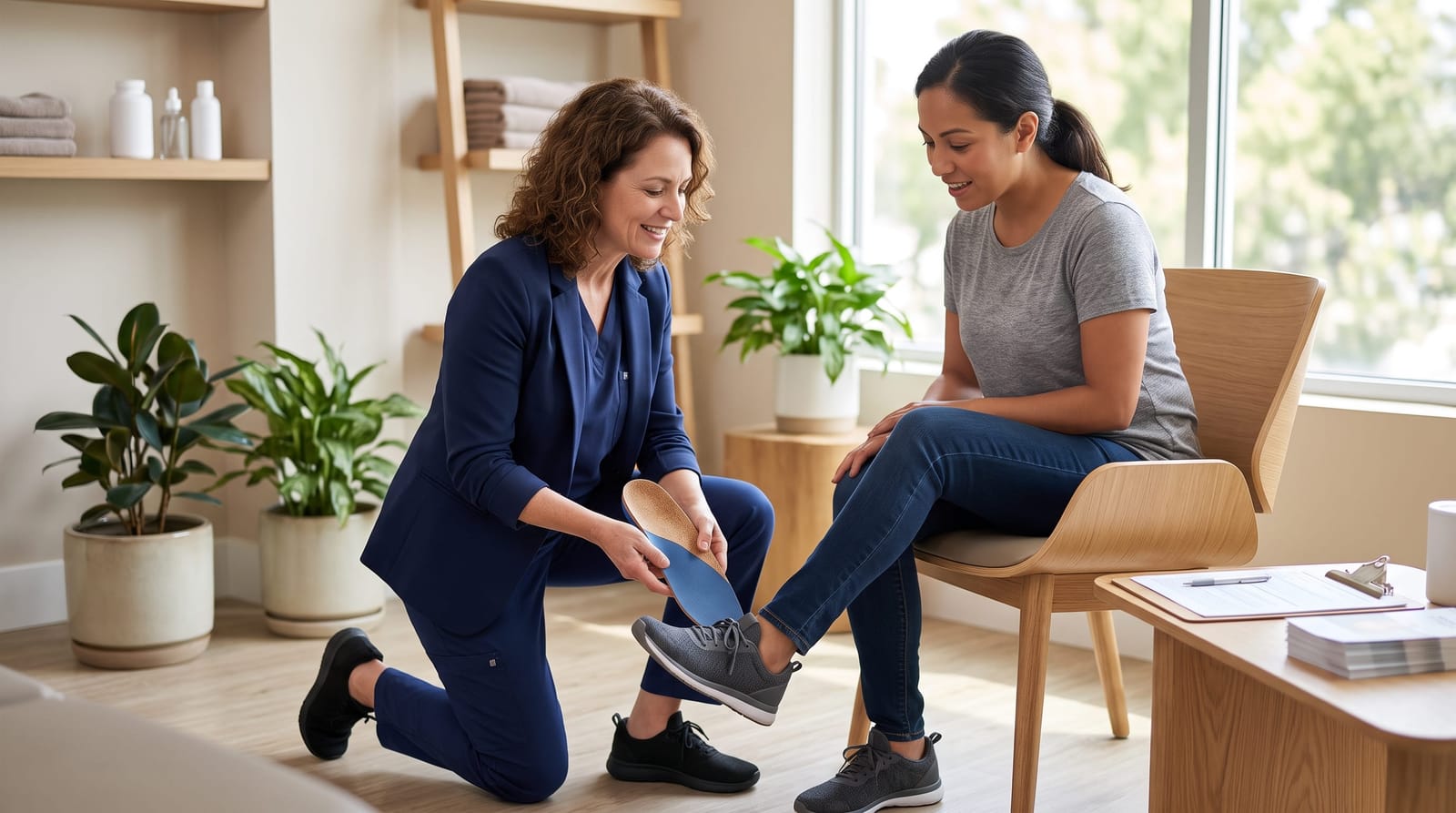
Custom orthotics are prescription-grade insoles crafted from a detailed assessment of your individual foot structure, arch height, pressure distribution, and gait pattern. Unlike over-the-counter insoles, which offer generalized cushioning, custom orthotics are designed to address the specific mechanical patterns that may be contributing to your discomfort.
For knee-related concerns, orthotics are often designed with strategic wedging and support features that gently guide the foot toward a more neutral position during the stance phase of walking or running. Research has explored the use of specific wedging techniques, particularly medially or laterally posted orthotics, to help redistribute load across the knee joint. Studies dating back to the late 1990s and early 2000s examined this approach in the context of medial knee osteoarthritis and found encouraging results regarding pain reduction and load management.
For patellofemoral pain syndrome specifically, foot orthotics have been studied as a supportive intervention, with some research suggesting they can help reduce discomfort by improving the alignment and mechanics that affect kneecap tracking. The goal isn't to passively prop up the foot, but to help the entire lower extremity move in a more balanced, efficient pattern: reducing cumulative stress on the knee over thousands of daily steps.
It's important to note that orthotics work best as part of a broader approach to care. They support the body's mechanics, but they are most effective when paired with other elements of a comprehensive wellness plan.
Integrating Custom Orthotics with Chiropractic Care
Chiropractic care and custom orthotics naturally complement each other because they share a common philosophy: address the underlying patterns driving discomfort, not just the symptoms themselves.
A chiropractor takes a whole-body view of movement and joint function. When a patient presents with knee pain, a thorough evaluation will often look beyond the knee itself: examining gait, hip alignment, pelvic stability, and spinal posture. Foot mechanics are part of that picture. When the foot isn't functioning optimally, it can contribute to compensatory patterns that travel upward, affecting the knee, hip, and lower back simultaneously.
By combining chiropractic adjustments that support joint mobility and alignment with custom orthotics that improve the mechanical foundation underfoot, care becomes more comprehensive. Spinal and pelvic adjustments may help restore balanced movement patterns from above, while orthotics support those patterns from below. Together, they create a more complete environment for the body to move well and recover effectively.
At Prodigy Chiro Care, this integrated approach is central to how we think about knee health. Rather than treating the knee in isolation, we look at the whole kinetic chain, because that's where lasting support begins.
What to Expect from a Custom Orthotics Assessment
If you're curious about whether custom orthotics might be a helpful addition to your knee health support plan, the process begins with a detailed assessment. Here's a general sense of what that involves:
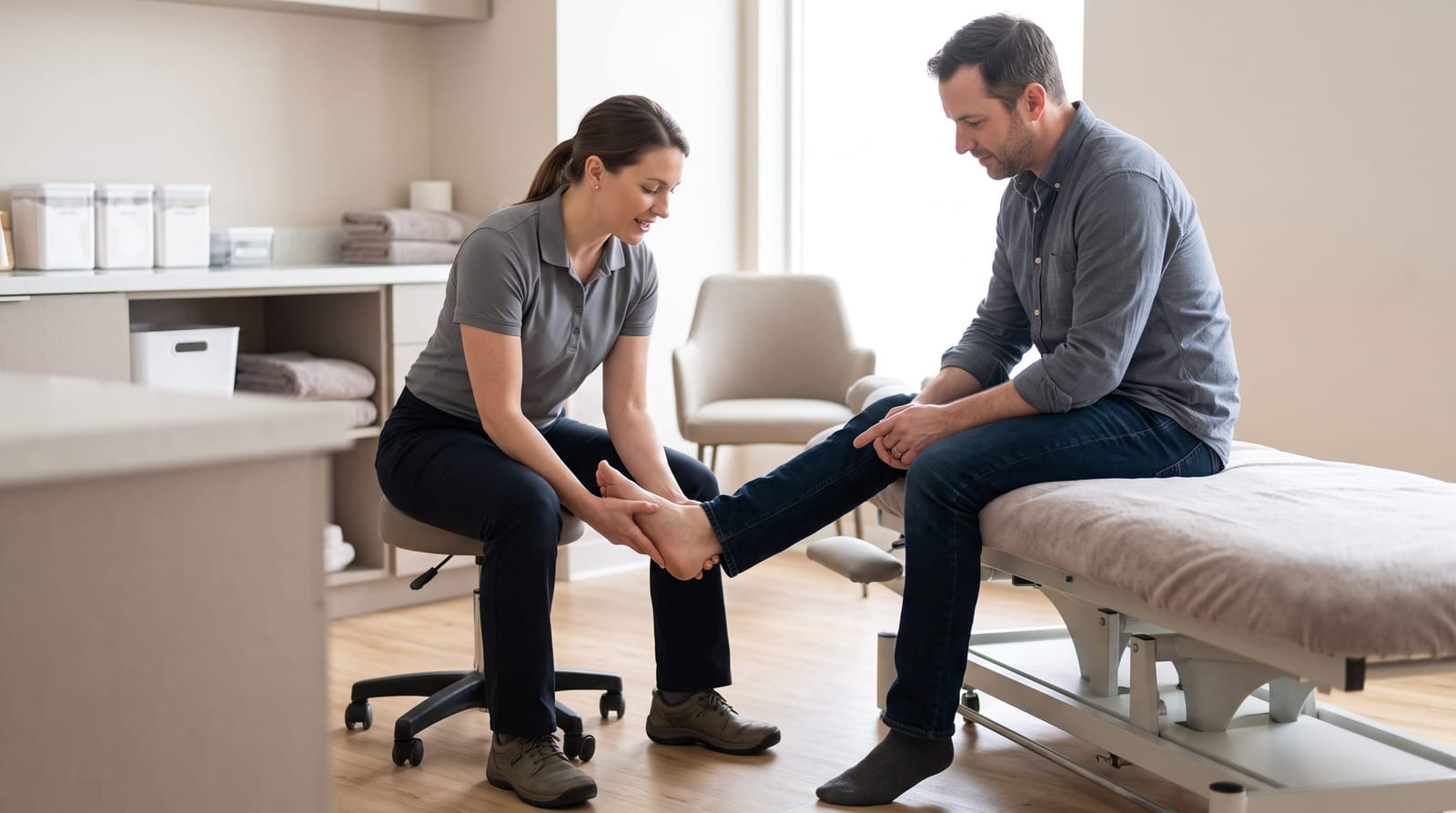
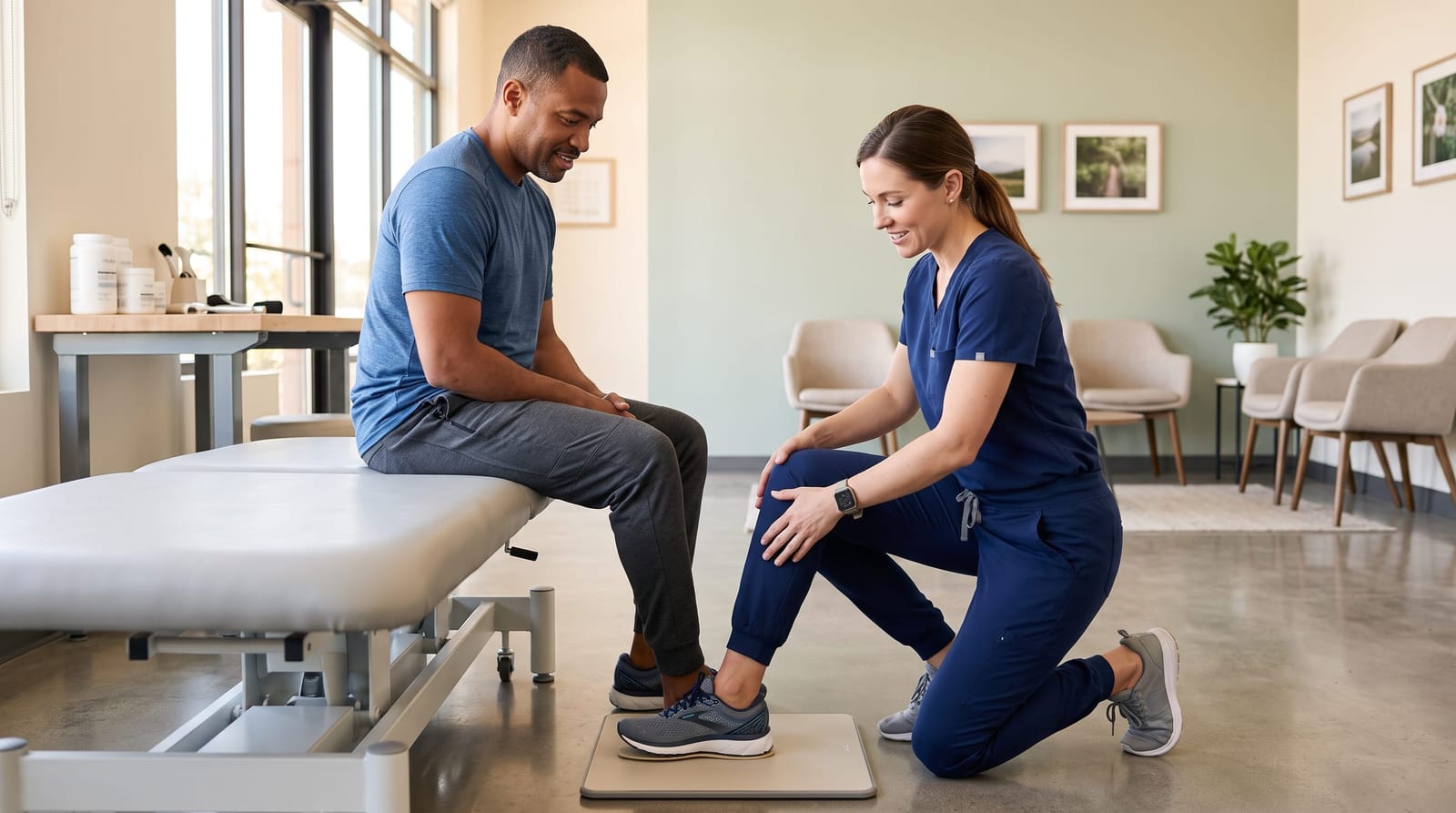
- Gait analysis: Observing how you walk or run to identify mechanical patterns such as overpronation, supination, or asymmetries in stride.
- Foot structure evaluation: Assessing arch height, heel alignment, and any structural characteristics that influence how load is distributed.
- Pressure mapping: Some practices use digital scanning or foam casting to capture a precise image of your foot's contact points and pressure distribution.
- Functional assessment: Looking at how the foot, ankle, knee, and hip interact during movement, because orthotics aren't designed in isolation from the rest of the body.
From there, orthotics are fabricated to address your specific findings. The fit and feel will be unique to you, which is precisely why custom orthotics differ so meaningfully from generic insoles. If you experience any discomfort during an adjustment period, your provider can make modifications to ensure the orthotics are working with your body, not against it.
For active adults exploring the long-term value of custom orthotics, understanding this personalized process is key to setting realistic and helpful expectations.
Supporting Knee Health for the Long Term
Custom orthotics aren't a one-time fix: they're a long-term investment in how your body moves. For active professionals in Los Angeles who run, cycle, hike, or simply spend long hours on their feet, that investment can pay dividends in comfort, consistency, and quality of movement over time.
Complementary strategies that often work well alongside orthotics and chiropractic care include:
- Targeted strengthening exercises for the hips, glutes, and core: areas that play a significant role in knee stability
- Flexibility and mobility work, particularly for the hip flexors and IT band
- Footwear guidance to ensure your shoes support rather than undermine your orthotics
- Periodic reassessment of your orthotics as your activity level, body, or goals evolve
Knee health is rarely about one single factor. It's the cumulative result of how your body moves: day after day, step after step. Addressing the mechanical foundation through custom orthotics, while supporting the broader system through chiropractic care and strengthening, creates a more resilient approach to staying active and comfortable.
Frequently Asked Questions
Can custom orthotics really help with runner's knee?
Research suggests that foot orthotics can be a supportive tool for managing patellofemoral pain syndrome (runner's knee) by helping to improve foot alignment and reduce mechanical stress on the knee. They are typically most effective when used as part of a broader approach that may include strengthening, mobility work, and professional care. A qualified provider can assess whether orthotics are an appropriate fit for your specific situation.
How long does it take to notice a difference with custom orthotics?
This varies from person to person and depends on many factors, including the nature of the discomfort, how consistently the orthotics are worn, and what complementary care is in place. Many people go through a brief adjustment period as the body adapts to a new movement pattern. It's always a good idea to follow up with your provider if you have questions about how the process is going.
Do I need to see a chiropractor if I get custom orthotics?
You don't necessarily need to combine both, but many people find that pairing custom orthotics with chiropractic care provides a more comprehensive approach to joint health. Orthotics address mechanical patterns at the foot, while chiropractic care can support alignment and mobility throughout the spine, pelvis, and lower extremities. Together, they target the kinetic chain from multiple angles.
Are custom orthotics different from store-bought insoles for knee pain?
Yes, significantly. Over-the-counter insoles are designed for general comfort and provide cushioning without accounting for your specific foot structure or gait pattern. Custom orthotics are fabricated from a detailed assessment of your individual mechanics, which means they can be designed with the precise features (such as arch support, wedging, and heel cupping) that correspond to your unique needs. For conditions involving altered biomechanics, that specificity can make a meaningful difference.
Knee pain doesn't always start at the knee. For many active adults, the contributing factors begin at ground level, in the way the foot contacts the ground and how that pattern travels upward through the body. Custom orthotics offer a thoughtful, personalized way to address those mechanics, and when integrated with chiropractic care, they become part of a comprehensive strategy for joint health and long-term wellness. If you're ready to explore what this approach might look like for you, the team at Prodigy Chiro Care is here to help guide that conversation: no pressure, just support.