Custom Orthotics After a Work Injury: Supporting Recovery and Preventing Re-Injury
Recovering from a work-related injury is rarely straightforward, especially when your job keeps you on your feet, walking long distances, or standing for extended shifts. If you've experienced a foot, ankle, knee, or lower back injury on the job, you may be wondering what role custom orthotics could play in your recovery. This post explores how custom orthotics can support the healing process after a work injury, reduce stress on recovering structures, and help you return to your daily routine with greater confidence. For a broader look at orthotics and their value, visit our pillar guide on custom orthotics for active professionals.
Why Work Injuries Often Affect Foot and Lower-Body Mechanics
Work injuries come in many forms, but those that affect the feet, ankles, knees, hips, and lower back are among the most common, and some of the most disruptive. According to the Bureau of Labor Statistics, sprains, strains, and tears account for roughly 35% of all nonfatal workplace injuries involving days away from work. For people in standing professions, nurses, teachers, warehouse workers, retail associates, the lower limbs and spine absorb a significant amount of physical demand every single day.
When an injury occurs, the body naturally begins to compensate. You might shift weight to one side, change your stride, or alter your posture to avoid discomfort. While these compensations feel instinctive, they can quietly create additional strain on uninjured areas over time. A sprained ankle, for example, may cause someone to land differently during walking, eventually placing excess load on the opposite knee or hip.
Custom orthotics work by addressing the foot's role in these whole-body movement patterns. Rather than simply cushioning the foot, they're designed to support proper alignment from the ground up: helping the body distribute weight more evenly during recovery and reducing unnecessary stress on healing tissues.
How Custom Orthotics Support the Recovery Process
Custom orthotics are not a standalone treatment: they're most effective as part of a comprehensive rehabilitation approach. Here's how they typically contribute to the recovery process after a work-related injury:
- Redistributing pressure: Orthotics are designed to spread mechanical load more evenly across the foot, reducing concentrated stress on injured areas like a strained arch, bruised heel, or recovering ligament.
- Improving shock absorption: Research shows that custom orthotics significantly outperform standard insoles in reducing impact forces during walking and standing: a meaningful benefit when injured tissues are still healing.
- Stabilizing foot mechanics: For injuries involving sprains or soft tissue damage, orthotics can help guide the foot into a more neutral position, limiting the excessive rolling or pronation that can slow recovery.
- Reducing compensatory strain: By supporting proper foot positioning, orthotics help minimize the chain-reaction compensations that often affect the knees, hips, and lower back during recovery.
- Supporting return-to-work readiness: For patients who need to return to physically demanding jobs, orthotics can provide an added layer of structural support during the transition back to full activity.
It's worth noting that orthotics function best when paired with other rehabilitative care, including therapeutic exercises, soft tissue work, and movement retraining. A provider familiar with injury recovery can help determine whether and when orthotics make sense for your specific situation.
The Custom Orthotics Work Injury Connection: What Makes Them Different from Off-the-Shelf Options
When people are in the midst of recovery, it can be tempting to pick up a pair of gel insoles from a pharmacy and move on. While over-the-counter insoles offer some general cushioning, they're manufactured to fit a generic foot, not yours. For someone recovering from a work injury, that distinction matters.
Custom orthotics are fabricated from a detailed scan or mold of your specific foot structure. This allows the device to account for your unique arch height, foot width, weight distribution, and gait patterns. Studies comparing custom to prefabricated orthotics have found that custom devices produce measurably better outcomes for patients with specific biomechanical needs: particularly those experiencing pain related to altered gait or structural imbalances.
For a work injury context, this precision becomes especially relevant because:
- Injury changes how you walk, and custom devices can be designed around your post-injury gait rather than a generic template.
- Specific injured structures, a plantar fascia, a posterior tibial tendon, a stressed metatarsal, can be offloaded more intentionally with custom design.
- As you heal, orthotics can be assessed and adjusted by your provider to reflect changes in your foot mechanics over time.
- Custom orthotics typically last 2-5 years with proper care, making them a more durable long-term investment than frequently replaced prefab insoles.
Our team at Prodigy Chiro Care uses advanced foot scanning technology to create orthotics that reflect your current biomechanics: an important consideration when those mechanics may be evolving throughout your recovery.
Integrating Orthotics into a Broader Rehabilitation Approach
Custom orthotics are most powerful when they're part of a coordinated recovery plan. At Prodigy, we view orthotics as one tool within a broader rehabilitation framework that may include chiropractic adjustments, soft tissue therapy, corrective exercises, and posture work.
Here's how orthotics might fit into a typical injury recovery journey:
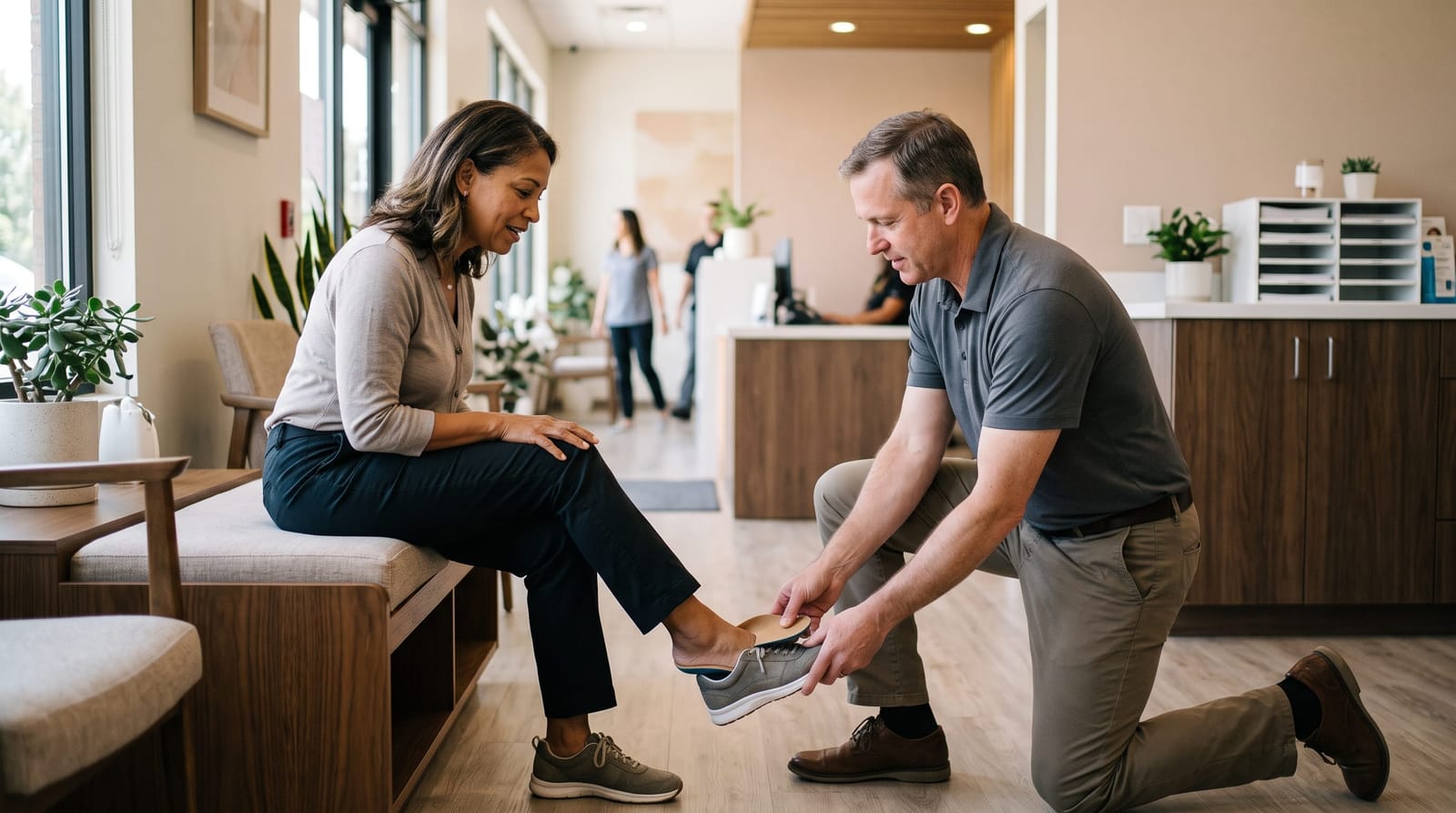
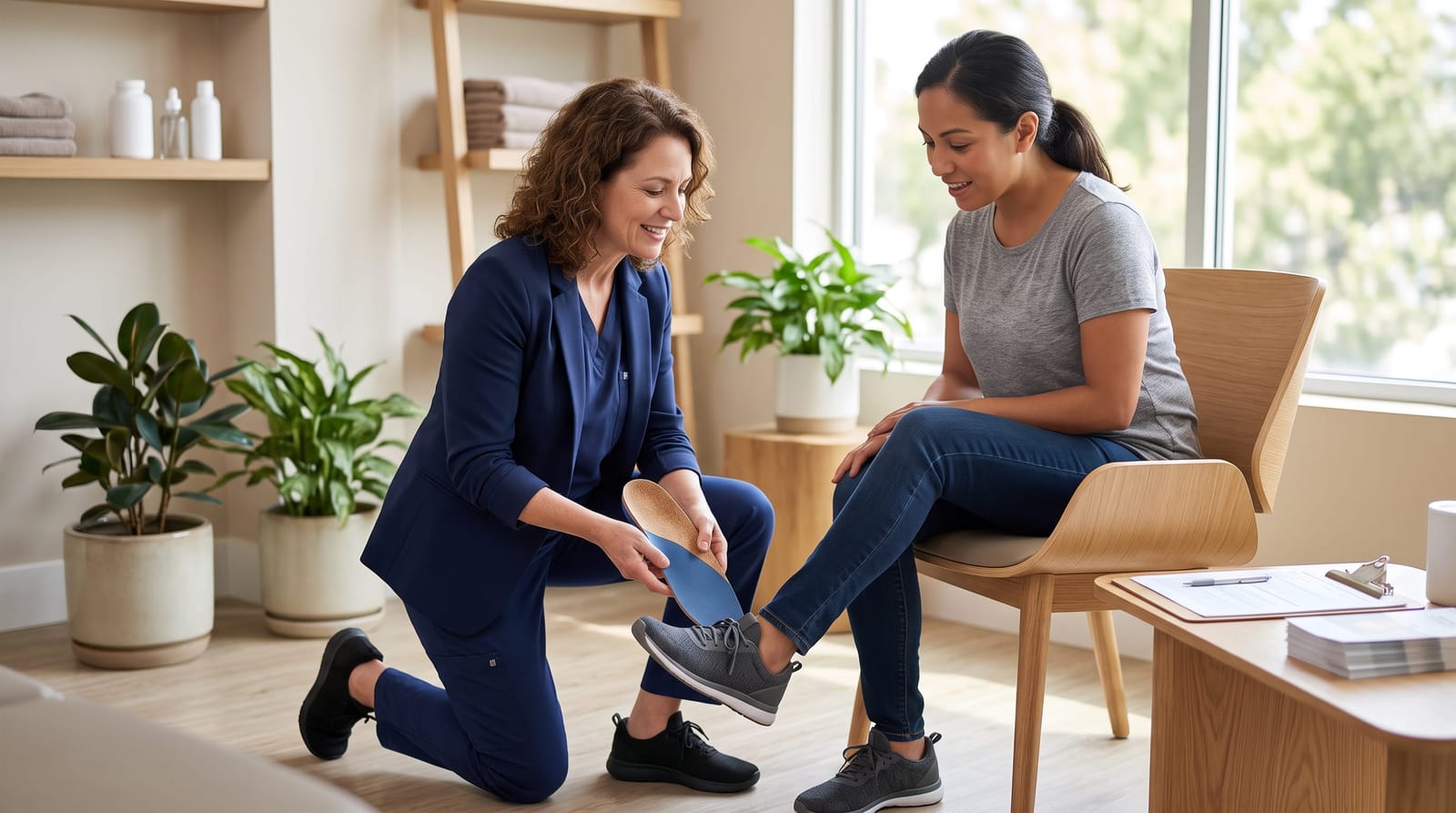
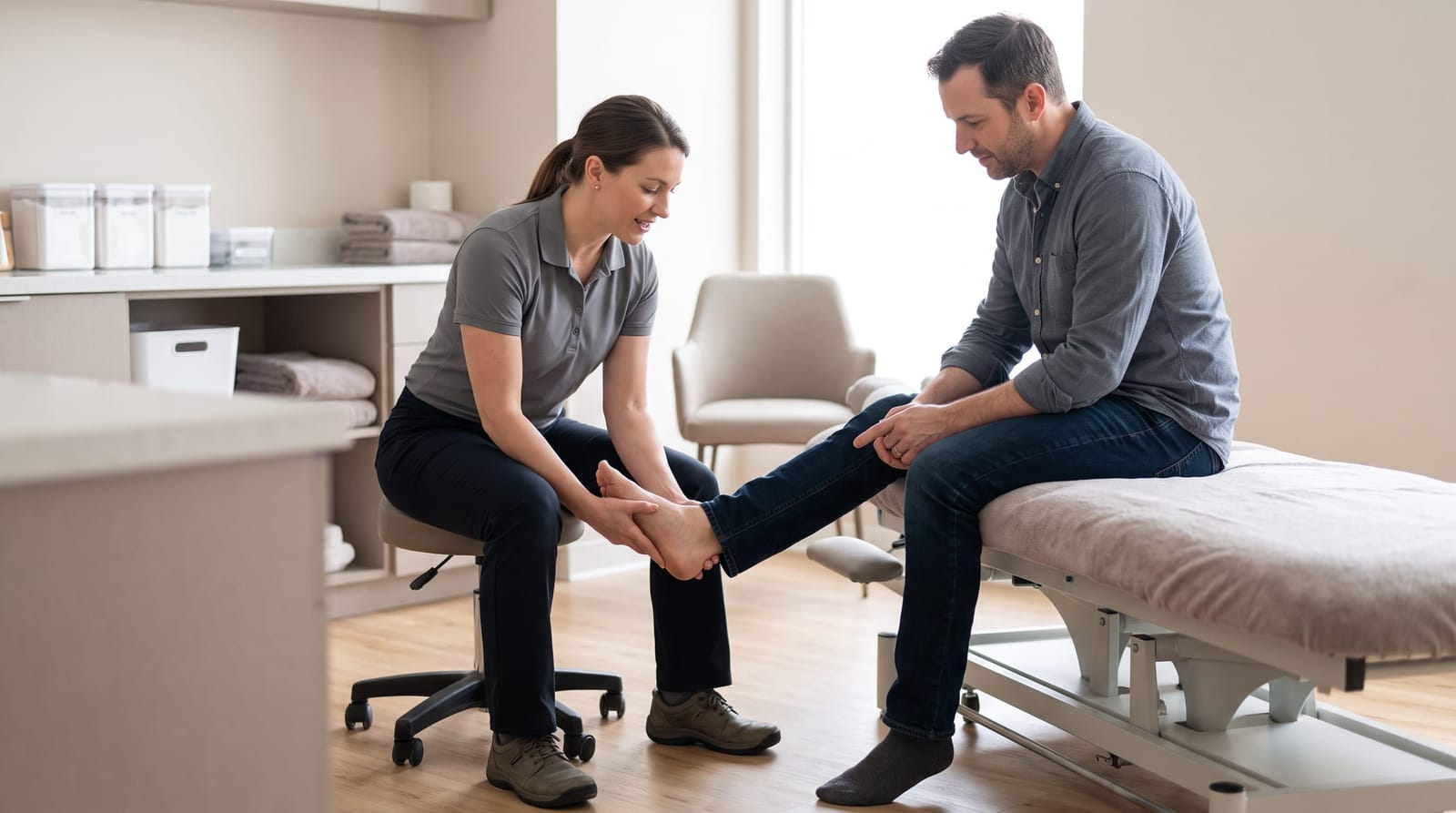
- Initial assessment: A thorough evaluation of your gait, foot structure, and injury history helps identify whether orthotics are appropriate and what type would best support your needs.
- Foot scanning and fabrication: A precise digital scan captures your foot mechanics so the orthotic can be custom-built to your specifications.
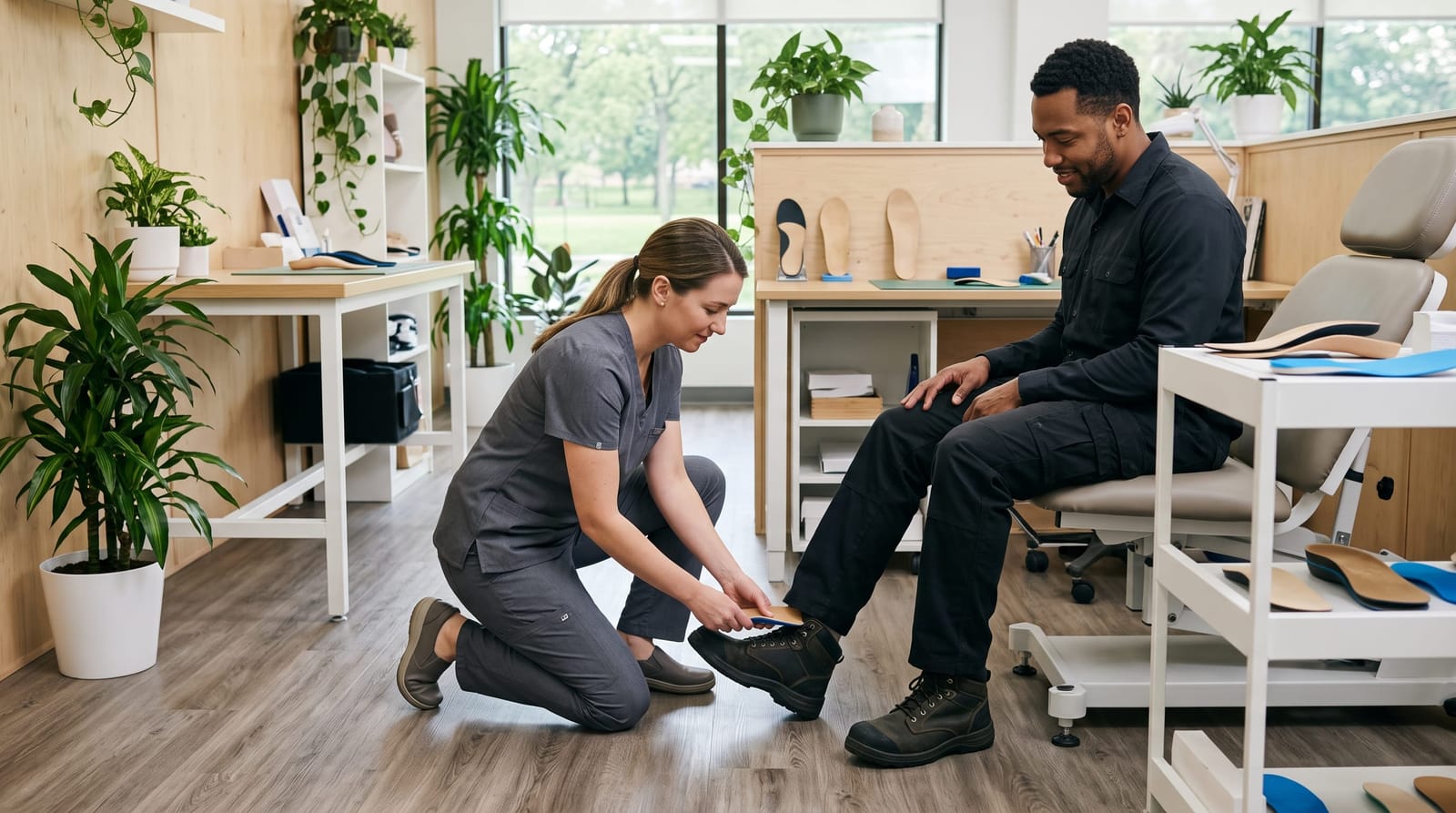
- Integration with active care: Orthotics are introduced alongside other therapies, not in place of them. Movement retraining and strengthening work together with the structural support orthotics provide.
- Progress monitoring: As your body heals and your movement patterns normalize, your provider may reassess whether adjustments to the orthotic are warranted.
- Long-term support planning: For patients returning to high-demand jobs, orthotics may continue to serve a protective role even after the acute recovery phase has passed.
This integrated approach reflects the understanding that recovery isn't just about resolving pain: it's about restoring confident, efficient movement so you can return to the activities and work responsibilities that matter to you.
Preventing Re-Injury: The Longer-Term Role of Orthotics
One of the most compelling reasons to consider custom orthotics during injury recovery is their potential role in reducing the risk of re-injury. Research on biomechanical support devices consistently highlights improved stability, better shock absorption, and more balanced load distribution as contributing factors to long-term lower limb health.
For people in physically demanding professions, the stakes of re-injury are high: both personally and professionally. Returning to work without addressing the underlying biomechanical factors that contributed to the original injury may leave you vulnerable to the same problem repeating. Orthotics, as part of a well-rounded recovery and prevention plan, can help your feet and lower body manage the demands of your job more effectively day to day.
Our guide to custom orthotics for standing and walking professions explores this prevention angle in greater depth, with specific insights for nurses, educators, retail professionals, and others who spend most of their workday on their feet.
Frequently Asked Questions
Can custom orthotics help with lower back pain related to a work injury?
Because the feet serve as the foundation for posture and movement, imbalances or altered mechanics at the foot level can contribute to strain further up the body, including the lower back. Custom orthotics that address foot alignment may support more balanced posture overall, which can be one component of a broader approach to lower back recovery. A provider can help determine whether orthotics are an appropriate addition to your care plan based on your specific injury and presentation.
How long does it take to get custom orthotics, and when should they be introduced during recovery?
The fabrication timeline for custom orthotics is typically 1-2 weeks from the initial foot scan to delivery. As for timing during recovery, that depends on the nature of your injury and your provider's assessment. In some cases, orthotics are introduced early to support healing structures; in others, it makes more sense to wait until a certain degree of recovery has occurred. Your healthcare provider is the right person to guide that decision.
Will I need to wear custom orthotics permanently after a work injury?
Not necessarily. Some people benefit from orthotics during the active recovery phase and eventually transition out of them as their strength, movement, and biomechanics normalize. Others, particularly those in high-demand professions or with specific structural considerations, find ongoing use valuable for long-term comfort and support. This is something to discuss with your care team as your recovery progresses.
Are custom orthotics covered through workers' compensation?
Coverage for custom orthotics through workers' compensation or other insurance programs varies depending on your specific plan, state regulations, and the clinical justification provided by your healthcare provider. We recommend speaking with your employer's HR department, your insurance carrier, or a benefits coordinator to understand what may be covered in your situation. Our team is happy to provide the documentation your provider generates to support that process.
Moving Forward with Confidence
Recovering from a work injury takes time, patience, and the right support, and custom orthotics can be a meaningful part of that support system. By helping to redistribute mechanical load, improve stability, and reduce compensatory strain, orthotics contribute to a recovery environment that's better suited to long-term healing and re-injury prevention. At Prodigy Chiro Care, our approach to custom orthotics is always personalized, collaborative, and integrated with the broader care you're receiving. To learn more about how orthotics fit into our overall approach to injury recovery and wellness, explore our full guide on custom orthotics for active professionals.