Can Custom Orthotics Help with Lower Back Pain?
If you've been dealing with persistent lower back discomfort, you may have explored everything from stretching routines to ergonomic chairs, and still feel like something is missing. What many people don't realize is that the source of lower back tension often begins much further down the body. This guide explores how custom orthotics for back pain fit into a broader picture of musculoskeletal wellness, what the research suggests about the foot-spine connection, and how a comprehensive care approach can support long-term comfort and mobility.
The Foot-Spine Connection: Why Your Foundation Matters
The human body functions as a kinetic chain: a linked system where movement and load at one joint influences every structure above and below it. Your feet are the foundation of that chain. When the foundation is misaligned, the effects can travel upward through the ankles, knees, hips, and into the lumbar spine.
Two of the most common biomechanical patterns that contribute to this are overpronation (when the foot rolls inward excessively) and supination (when the foot rolls outward). Both alter the way forces travel through the lower limbs. Overpronation, for example, tends to cause internal rotation of the tibia and femur, which can shift the pelvis forward and increase lumbar lordosis: the natural inward curve of the lower back. Over time, this altered loading pattern can place repetitive stress on the muscles, ligaments, and joints of the lumbar spine.
Research published in musculoskeletal health literature supports this connection. Studies have found that individuals with excessive foot pronation are significantly more likely to report chronic lower back pain compared to those with neutral foot mechanics. One frequently cited estimate suggests that approximately 70% of people overpronate to some degree: making foot mechanics a relevant factor for a large portion of people living with back discomfort.
This doesn't mean your feet are always the cause of back pain, but for many people they are a meaningful contributing factor: one that often goes unaddressed in conventional treatment plans.
How Custom Orthotics for Back Pain Work
Unlike generic over-the-counter insoles, custom orthotics are designed from precise measurements and a detailed assessment of your individual foot structure, gait pattern, and body mechanics. They're crafted to provide support where your specific foot needs it most, not according to a mass-market average.
When properly designed, custom orthotics serve several functions relevant to lower back comfort:
- Correcting foot alignment: By guiding the foot into a more neutral position during the stance phase of walking or running, orthotics can reduce the rotational forces that travel up the kinetic chain.
- Redistributing ground reaction forces: Custom orthotics help absorb and distribute the impact of each step more evenly, reducing the compensatory load that accumulates in the lower back over thousands of daily steps.
- Supporting the subtalar joint: This joint beneath the ankle plays a key role in controlling foot pronation. Orthotics that properly support this area can reduce the downstream effects on lumbar mechanics.
- Improving pelvic alignment: When foot and ankle mechanics improve, the pelvis often follows, which can help reduce the forward tilt that contributes to lumbar stress.
A review of clinical studies on orthotic interventions found that custom foot orthotics reduced lower back pain scores by 16-40% in participants with chronic symptoms: a meaningful outcome for people whose daily comfort and activity levels are affected. While results vary based on the individual and the underlying causes of their discomfort, these findings suggest that addressing foot mechanics can be a genuinely impactful part of a broader care strategy.
Who May Benefit Most from Custom Orthotics for Back Pain
Custom orthotics for back pain aren't a universal solution, but they tend to be particularly relevant for specific groups of people:
Active Professionals and Athletes
People who spend long hours on their feet, whether running, training, or working in standing professions, accumulate a high volume of repetitive loading through their lower limbs. Even minor biomechanical inefficiencies, when repeated thousands of times per day, can create significant cumulative stress on the lower back. For this group, addressing foot mechanics proactively can support both performance and long-term musculoskeletal health.
Desk Workers with Sedentary Habits
Sitting for extended periods can shorten hip flexors and alter pelvic positioning, which affects lumbar loading when you do stand and walk. If you also have suboptimal foot mechanics during those walking moments, the lower back is absorbing more compensatory force than it should. Custom orthotics can help restore better alignment during movement, complementing strategies like posture awareness and core conditioning.
Individuals with Leg Length Discrepancy
Even a relatively small functional leg length difference, as little as 5-9 millimeters: can alter pelvic tilt and lumbar mechanics enough to contribute to chronic back discomfort. Custom orthotics can be designed to address this imbalance, often in combination with other care approaches.
Orthotics as Part of a Comprehensive Care Approach
It's worth being clear: custom orthotics are most effective when they're part of a broader, integrated approach to musculoskeletal wellness, not a standalone fix. At Prodigy Chiro Care, the philosophy is grounded in treating the full kinetic chain rather than isolating a single symptom or structure.
For patients dealing with lower back discomfort, this often means combining orthotic support with chiropractic manipulation to restore proper joint mobility in the spine and pelvis, and spinal decompression therapy to reduce pressure on lumbar discs and nerves. Addressing the foot mechanics with orthotics while also working on spinal alignment creates a more complete and sustainable pathway toward improved comfort and function.
This kind of layered approach matters because the body rarely has just one contributing factor. Foot pronation may be loading the lumbar spine, but restricted thoracic mobility or tight hip flexors may also be playing a role. A comprehensive evaluation helps identify which factors are most significant for your specific situation and informs a personalized plan accordingly.
If you're also curious about the broader postural effects of custom orthotics, Can Custom Orthotics Fix Your Posture? What to Realistically Expect offers a helpful perspective on what orthotics can and can't address when it comes to full-body alignment.
What to Expect from the Orthotic Fitting Process
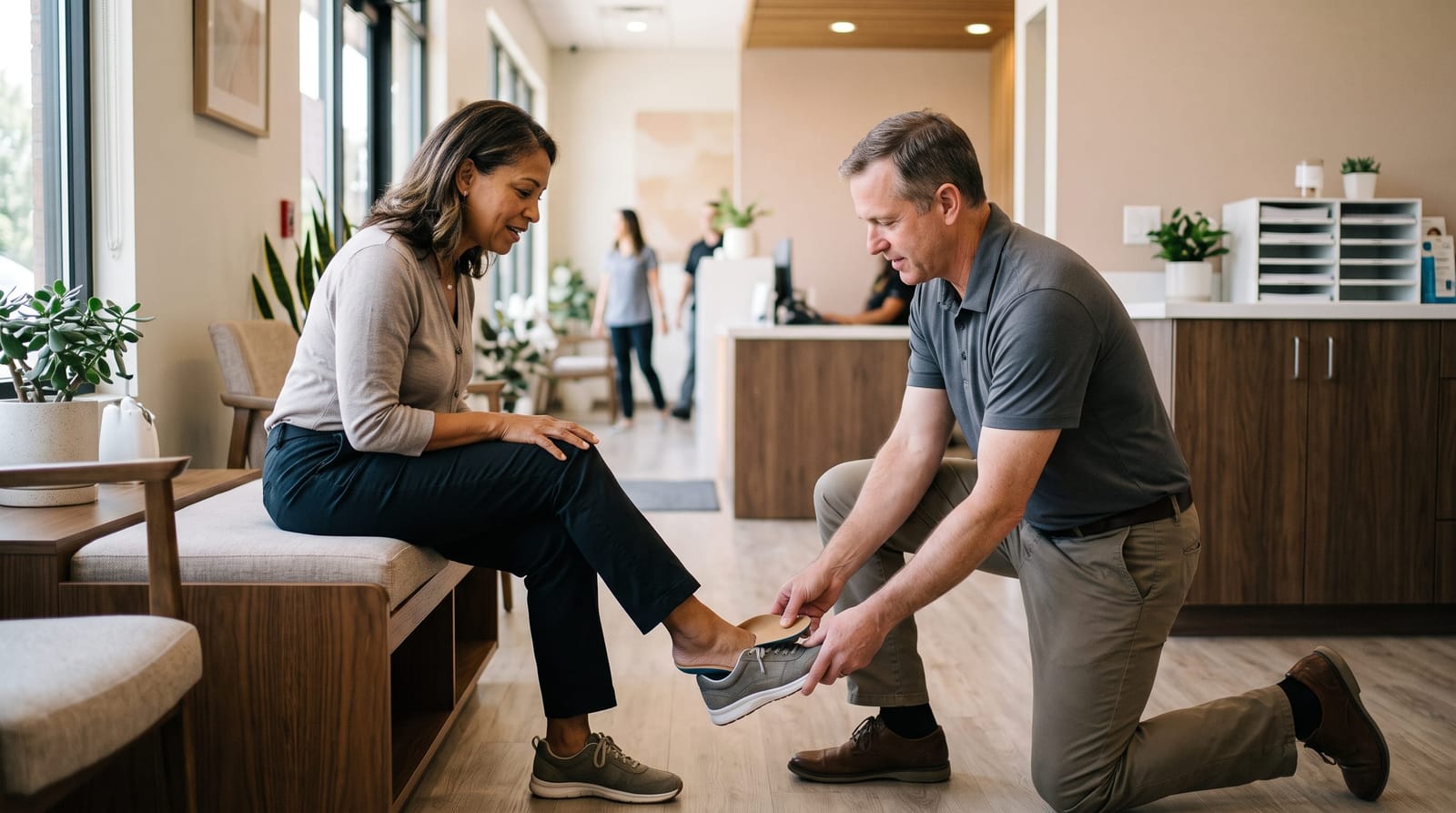
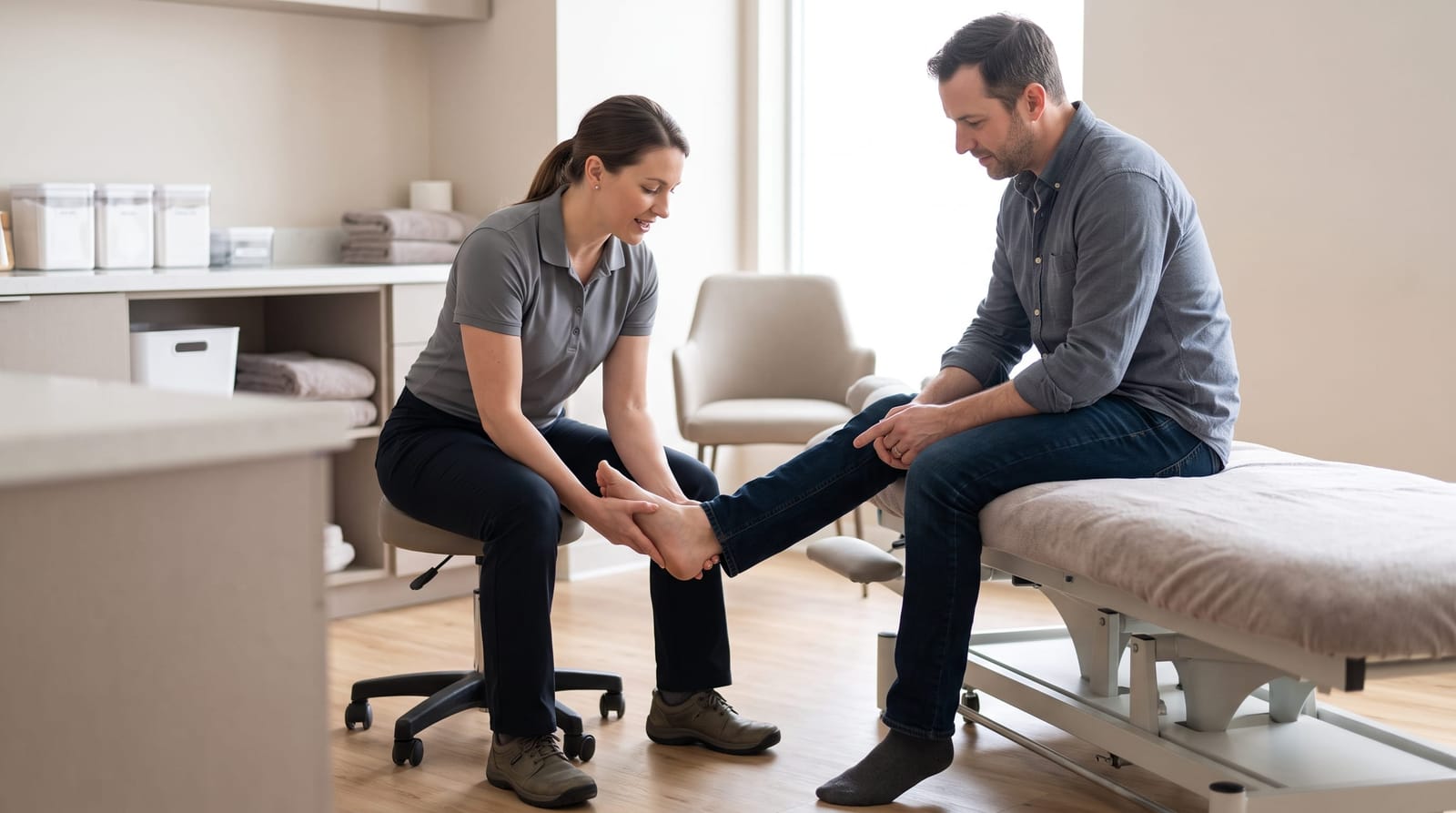
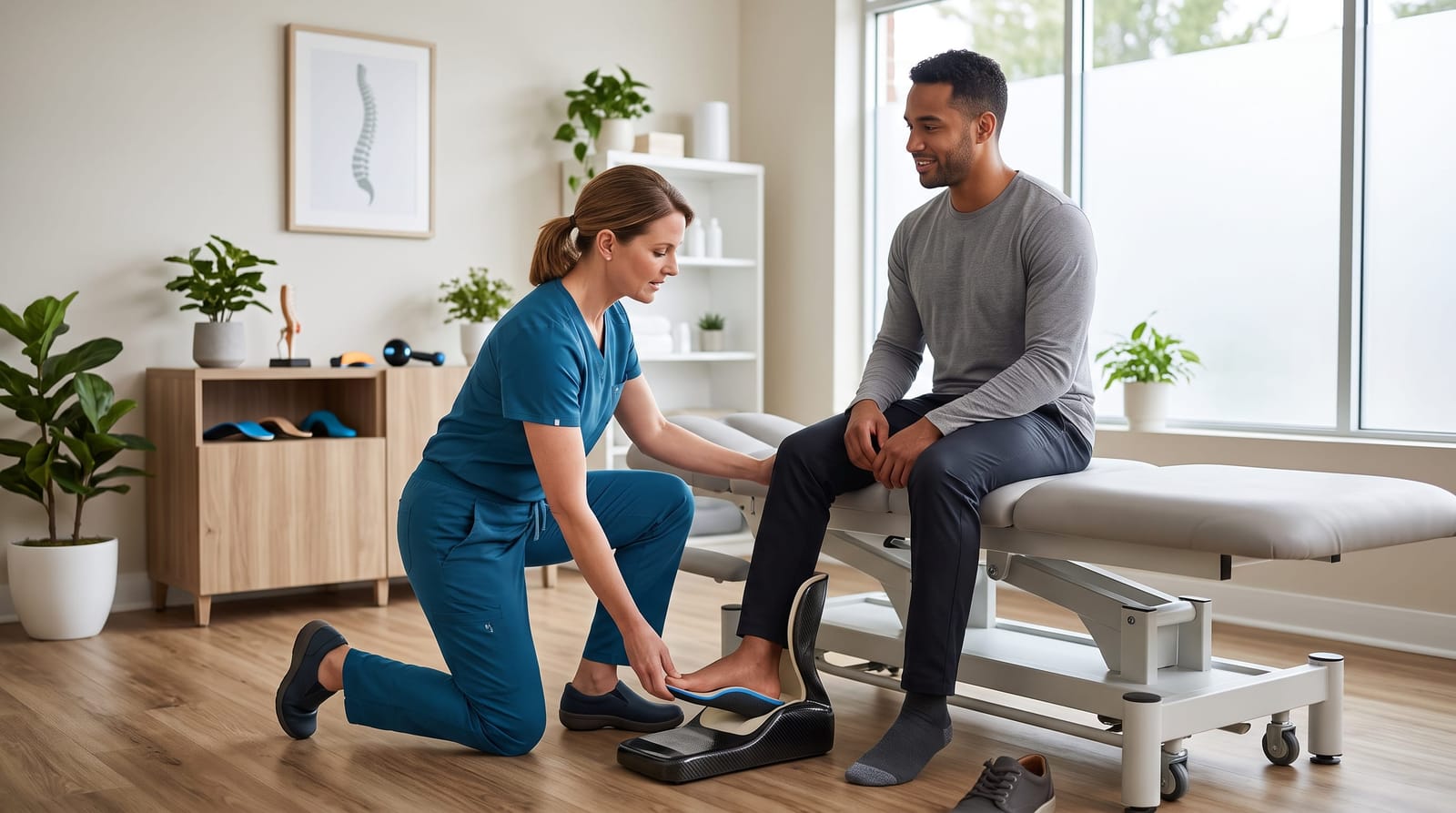
Getting custom orthotics starts with a thorough assessment, not just of your feet, but of your gait, posture, and the specific way your body moves. At Prodigy, this process involves:
- Gait analysis: Observing how you walk and identifying patterns of pronation, supination, or asymmetry in your stride.
- Foot measurements and impressions: Capturing the precise contours of your foot in a neutral, non-weight-bearing position to ensure the orthotic is built around your actual anatomy.
- Functional assessment: Evaluating your ankle mobility, arch structure, and any relevant lower limb or spinal findings that may influence the orthotic design.
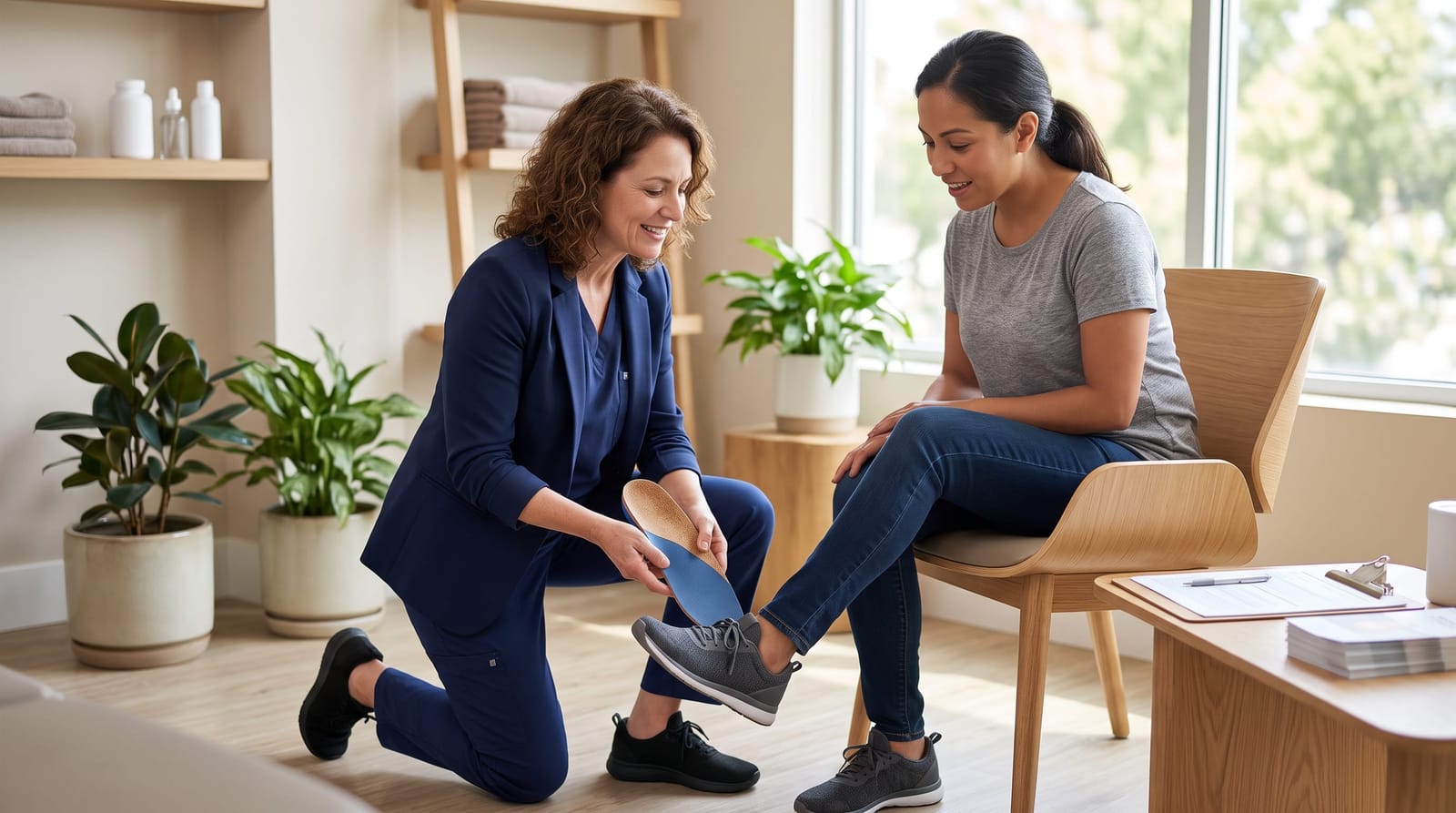
- Custom fabrication: Your orthotics are then crafted to your specific measurements, activity level, and footwear needs, whether you're wearing athletic shoes, dress shoes, or work boots.
- Follow-up and adjustment: The fitting process doesn't end when you receive your orthotics. A follow-up evaluation ensures they're performing as intended and can accommodate any refinements needed.
Most people notice a gradual shift in comfort and movement quality within the first few weeks of consistent use, though experiences vary based on individual factors and how the orthotics are integrated with other care.
Frequently Asked Questions
How long does it take for custom orthotics to make a difference for back pain?
Adjustment timelines vary from person to person. Many individuals begin to notice changes in comfort and movement patterns within two to six weeks of consistent wear. Because orthotics work by gradually influencing biomechanics, their effects tend to build over time rather than appearing immediately. When combined with complementary care like chiropractic treatment, the process of adaptation and improvement can be more comprehensive.
Are custom orthotics better than over-the-counter insoles for back pain?
Over-the-counter insoles are designed around generalized foot shapes and offer minimal biomechanical correction. Custom orthotics are built from precise measurements of your individual foot and gait, allowing them to address the specific mechanics contributing to your discomfort. For back pain with a genuine biomechanical component, the precision of a custom device typically offers more meaningful and lasting support than a generic insert.
Can I wear custom orthotics in different types of shoes?
Yes: custom orthotics can be designed with your lifestyle in mind. Whether you need support in athletic shoes, dress shoes, or work footwear, your provider can tailor the device's profile and materials to fit your primary footwear needs. Some patients have orthotics made for multiple shoe types depending on their activity demands.
Do custom orthotics replace other treatments for lower back pain?
Custom orthotics are best understood as one component of a comprehensive approach rather than a replacement for other care. For many people, the most effective path to improved lower back comfort involves addressing foot and gait mechanics alongside spinal mobility, muscle balance, and other relevant factors. A qualified provider can help assess which combination of approaches is appropriate for your situation.
The Takeaway
The relationship between foot mechanics and lower back comfort is well-supported by biomechanical research, and custom orthotics for back pain represent a practical, evidence-informed tool for addressing one of the root contributors to chronic lumbar discomfort. When designed accurately and integrated with a broader care strategy, including spinal care and a thorough kinetic chain assessment, orthotics can be a meaningful part of supporting long-term wellness and daily comfort. If you're curious about whether this approach might be relevant for your situation, a comprehensive evaluation is the best place to start.