Advanced Spinal Decompression Technology: How Computerized Decompression Tables Deliver Better Outcomes
If you've been living with persistent back pain, a herniated disc, or sciatica that hasn't responded to rest, stretching, or conventional treatments, you may have started researching your options, and found yourself reading about spinal decompression therapy. But as you dig deeper, you quickly discover that not all spinal decompression is created equal. There's a significant difference between the manual traction techniques that have existed for decades and the advanced spinal decompression equipment that today's most forward-thinking clinics use to support better patient outcomes.
This guide is designed to give you a clear, honest, and thorough understanding of how modern computerized spinal decompression technology works, why precision matters when it comes to your spine, and what separates truly advanced equipment from older, less sophisticated approaches. Whether you're exploring this type of care for the first time or trying to decide which provider in Los Angeles is the right fit for your needs, the information here will help you ask better questions, understand what you're looking for, and feel genuinely confident in the decisions you make.
By the time you finish reading, you'll understand the mechanics behind advanced spinal decompression equipment, how computerized systems improve on manual methods, what clinical research suggests about outcomes, and how to evaluate any provider you're considering. Let's start from the beginning.
What Is Spinal Decompression Therapy: And Why Does It Matter?
Spinal decompression therapy is a non-surgical treatment approach designed to gently relieve pressure within the spinal discs: the soft, cushion-like structures that sit between the vertebrae of your spine. These discs act as shock absorbers, and when they become compressed, herniated, bulging, or degenerated due to injury, repetitive stress, aging, or prolonged sitting, they can contribute to a range of uncomfortable symptoms including back pain, leg pain, neck stiffness, and radiating discomfort.
The core principle of spinal decompression is relatively straightforward: by carefully and precisely elongating the spine, a negative pressure environment can be created within the affected disc space. This negative intradiscal pressure may help encourage bulging or herniated disc material to retract, while also supporting the flow of oxygen, fluids, and nutrients back into the disc: a process sometimes described as disc hydration. Over a series of sessions, this combination of pressure reduction and nutrient restoration supports the body's natural healing processes.
What makes this approach particularly appealing for many patients is that it's non-invasive. There's no surgery, no anesthesia, no downtime in the traditional sense, and no recovery period that keeps you from your daily life. For individuals who are actively trying to avoid surgical intervention, or who haven't found lasting relief from other conservative approaches, advanced spinal decompression equipment offers a thoughtful, technology-supported path forward.
However, the quality and precision of the equipment used makes a meaningful difference in how this therapy is delivered. That's where the distinction between older traction methods and modern computerized systems becomes critically important.
The Evolution From Manual Traction to Advanced Spinal Decompression Equipment
Traction, the idea of using a mechanical force to stretch the spine, is not a new concept. Practitioners have used manual traction and basic traction tables for well over a century to help address disc-related back pain. These early methods involved applying a pulling force to the spine, either manually by a practitioner or through basic mechanical setups. While these approaches represented meaningful progress at the time, they had significant limitations.
The Limitations of Manual and Older Traction Methods
Traditional traction applies a relatively constant, undifferentiated pulling force to the spine. This uniform tension can actually trigger a natural reflex in the body called the muscle guarding response: essentially, the muscles along the spine tense up in reaction to the perceived stretch. When muscles tighten against the traction force, the therapeutic benefit is substantially reduced, and discomfort can increase. There's little ability to modulate the force in real time, adjust to the patient's response, or target a specific spinal level with accuracy.
The result was a treatment approach that, while sometimes helpful, was difficult to replicate consistently from session to session, hard to customize to individual patient anatomy, and prone to triggering the very muscle responses it was trying to work around.
How Computerized Systems Changed the Equation
Modern advanced spinal decompression equipment, including tables like the DRX9000, represents a fundamental technological leap forward. These systems use sophisticated computer-controlled tension and release cycles, logarithmic pull curves, and real-time biofeedback sensors to deliver a precise, patient-specific decompression force that minimizes the muscle guarding response.
Rather than pulling with a constant force, computerized decompression tables apply tension in carefully programmed cycles: gradually increasing to a therapeutic peak, then releasing, then gradually increasing again. This oscillating pattern, guided by onboard computer systems, allows the paraspinal muscles to relax rather than resist. The result is a gentler, more targeted therapy that can reach the actual disc space more effectively than older methods allowed.
Advanced spinal decompression equipment also allows clinicians to customize the angle of pull, the maximum distraction force, the cycle timing, and the number of decompression cycles, all tailored to the individual patient's condition, body weight, disc level affected, and treatment goals. This level of personalization simply wasn't possible with earlier traction devices.
How Computerized Spinal Decompression Tables Actually Work
Understanding what happens during a session on advanced spinal decompression equipment helps demystify the process and makes the experience feel far less intimidating. Here's a straightforward walkthrough of what to expect.
The Setup
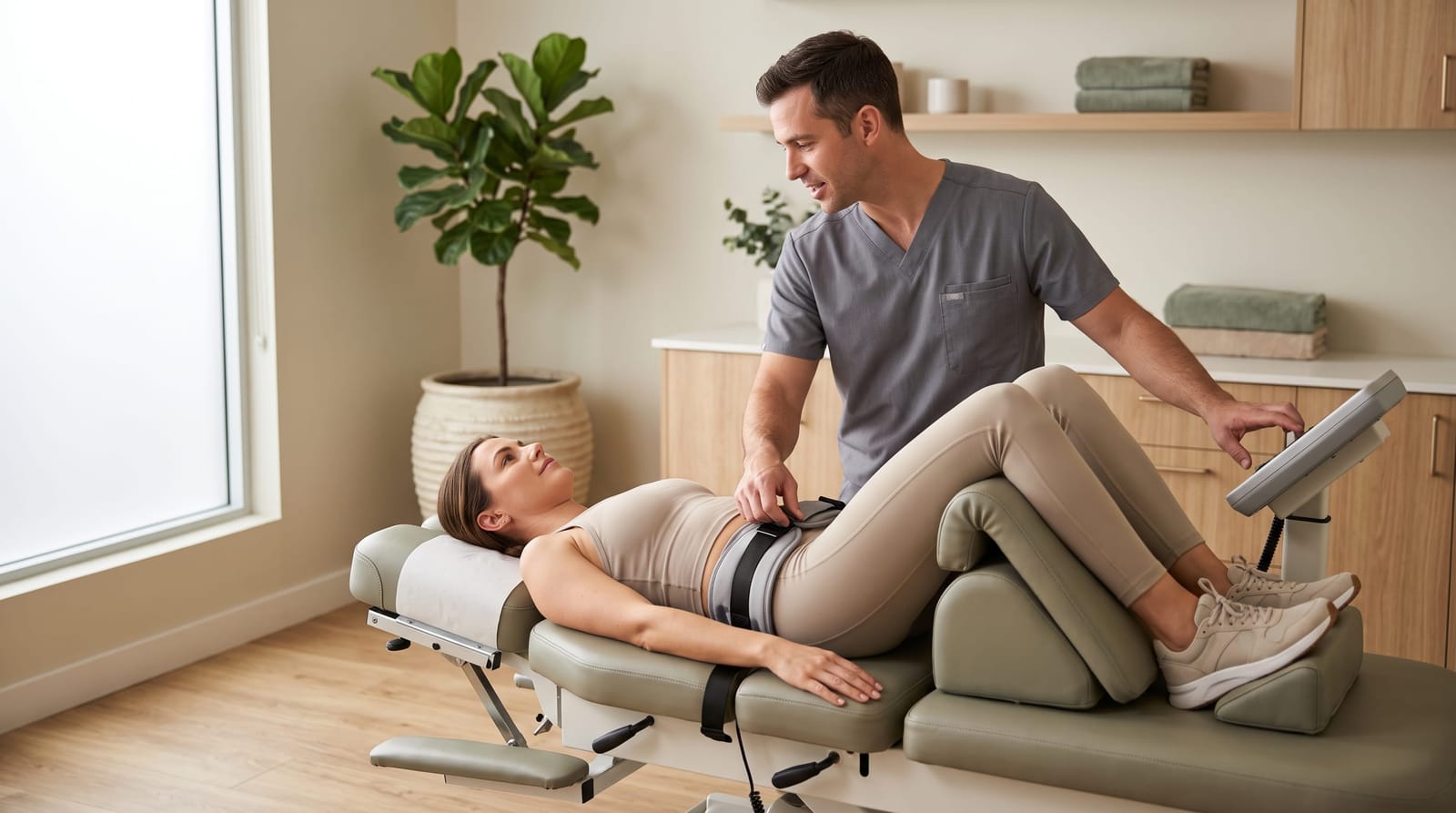
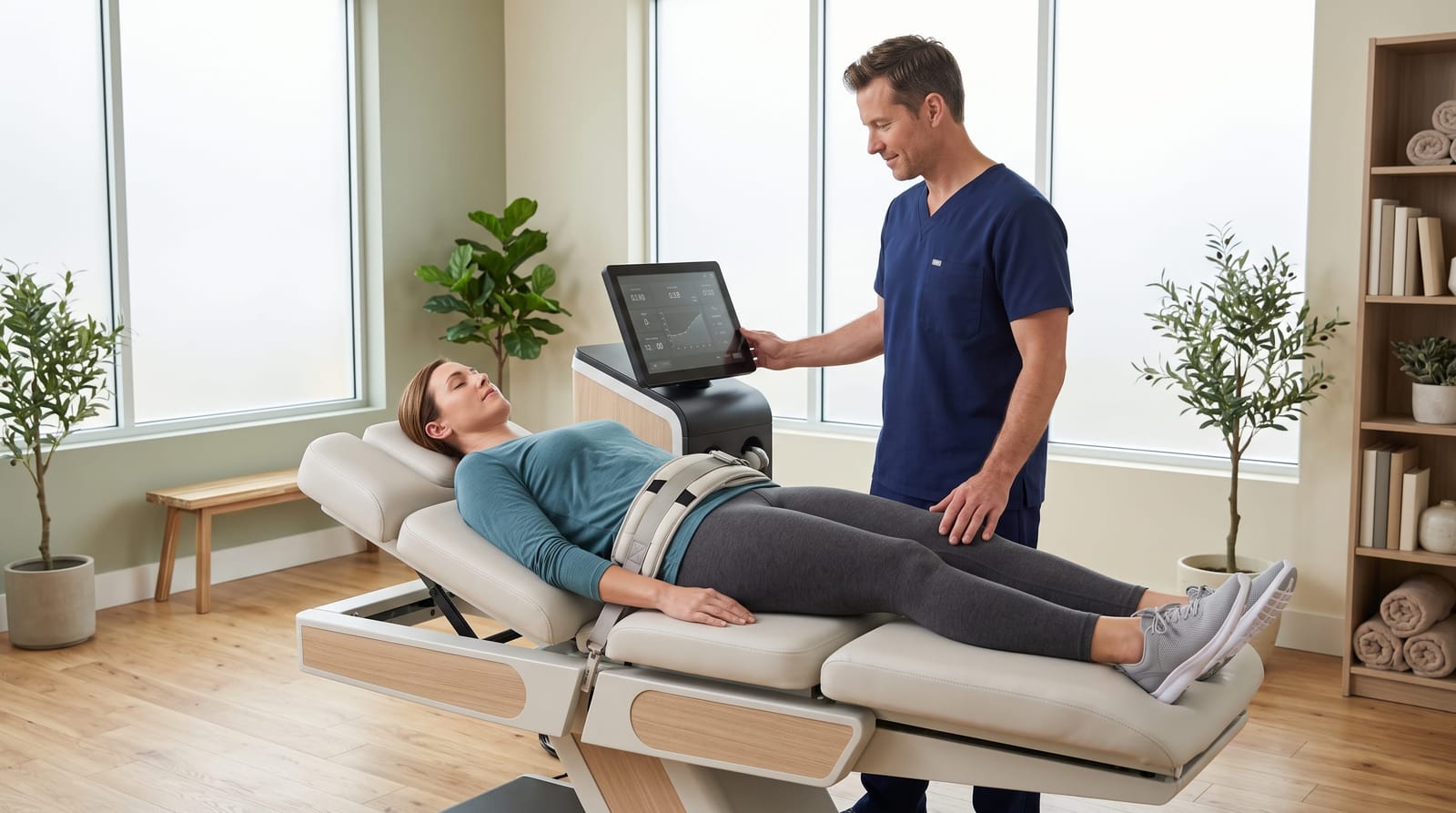
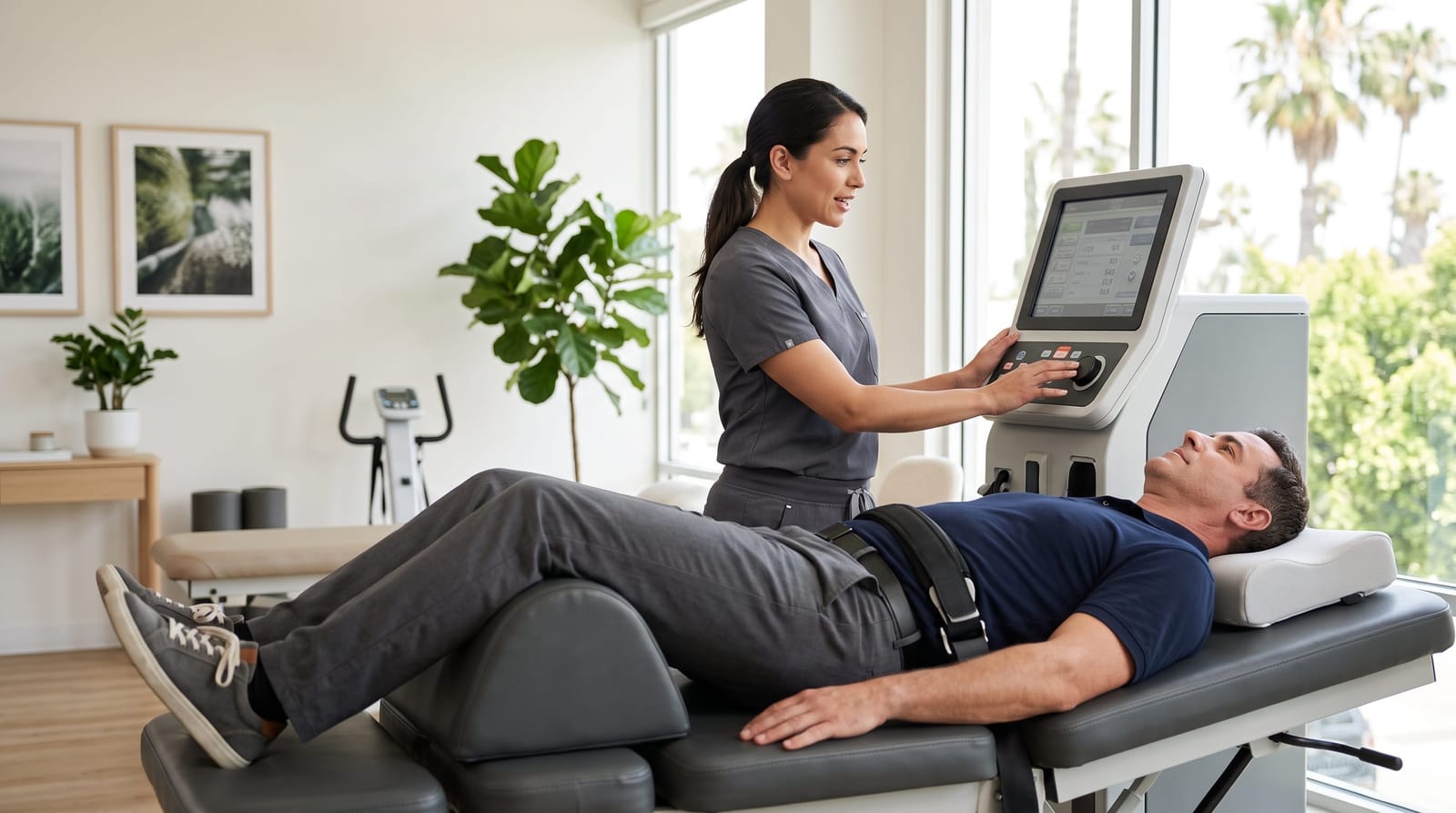
The patient lies on the decompression table, which is specifically engineered to split into two sections: a fixed upper section and a lower section that moves under computer control. For lumbar (lower back) decompression, a specialized pelvic harness is fitted around the patient's hips. This harness connects to the moving lower section of the table and is the primary mechanism through which the therapeutic distraction force is applied. For cervical (neck) decompression, a different harness system is used to gently support and decompress the cervical vertebrae.
The Decompression Cycle
Once the patient is positioned and comfortable, the clinician programs the treatment parameters into the computer system. Each session typically lasts approximately 30 minutes. During that time, the table's lower section glides away from the upper section in smooth, precisely timed increments: pulling the lower spine gently apart while the pelvic harness distributes the force evenly across the targeted vertebral segments.
The computer continuously monitors the applied tension and adjusts the pull dynamically based on the patient's feedback and the resistance encountered. This real-time adjustment is one of the most significant advantages of advanced spinal decompression equipment over manual alternatives. If the system detects unexpected resistance or the patient reports discomfort, the force can be modulated immediately.
The Therapeutic Mechanism
During the distraction phase, the negative intradiscal pressure created within the targeted disc space can promote retraction of herniated disc material and facilitate the movement of water, oxygen, and nutrients back into the disc. Between cycles, as the tension releases, the disc absorbs these materials. Over the course of a treatment series, this repeated hydration and decompression process supports the disc's natural capacity to heal and rehydrate.
The result is a carefully engineered therapy that works with the body's biology rather than against it: supporting healing at the tissue level while the precision technology ensures consistent, reproducible results across every session.
What Makes Advanced Spinal Decompression Equipment Different From What Most Clinics Offer
This is a question worth asking directly, because the answer matters to your care. Walk into many general chiropractic offices and you'll find that they offer "spinal decompression" in some form. But there's a wide spectrum of equipment quality, technological sophistication, and clinical capability within that broad label.
Entry-Level vs. Clinical-Grade Decompression Tables
At the lower end of the spectrum, some practices use basic intersegmental traction tables or entry-level decompression devices that apply minimal or fixed traction forces with limited computer guidance. While these tools can offer gentle support for minor discomfort, they don't come close to the capabilities of dedicated, clinical-grade advanced spinal decompression equipment like the DRX9000 or Hill DT series tables.
Clinical-grade systems are purpose-built for targeted disc therapy. They feature precise force calibration, real-time biofeedback, logarithmic pull curves that minimize muscle guarding, angle adjustability for targeting specific vertebral levels, and treatment protocols informed by clinical research. The investment required to acquire and maintain this level of equipment is substantially higher, which is why it's not found at every chiropractic office.
The DRX9000: A Closer Look at Gold-Standard Technology
The DRX9000 is one of the most extensively studied advanced spinal decompression devices in clinical use. Developed specifically for the non-surgical treatment of lumbar disc conditions, it uses a patented logarithmic pull to gradually achieve the target distraction force while simultaneously applying a proprietary oscillating tension variation that keeps the paraspinal muscles from contracting against the therapy.
The system's computer monitors over 13 physiological variables during each session and adjusts the treatment parameters accordingly. This level of real-time responsiveness is what sets truly advanced spinal decompression equipment apart from anything that could be described as basic traction. The DRX9000 is also FDA-cleared, meaning it has met specific regulatory standards for safety and intended use: an important consideration when evaluating any medical device.
Why Equipment Quality Matters for Your Results
The precision of advanced spinal decompression equipment directly influences how effectively the therapy can target the affected disc, how consistently it can be delivered across sessions, and how comfortably the patient experiences treatment. A system that cannot accurately control its distraction force, cannot minimize muscle guarding, and cannot be customized to individual anatomy is fundamentally limited in what it can accomplish: regardless of how the therapy is marketed.
When you're making decisions about your spinal health, the equipment your provider uses isn't a minor detail. It's central to the entire therapeutic approach.
Conditions That Spinal Decompression Therapy Is Designed to Address
Advanced spinal decompression equipment is specifically designed to support patients dealing with disc-related conditions of the lumbar and cervical spine. While this type of therapy isn't appropriate for every patient or every condition, and it's always important to consult with a qualified healthcare provider to determine whether it's suitable for your individual situation, there are specific disc-related presentations that it is commonly used to address.
Herniated and Bulging Discs
Herniated discs occur when the soft inner material of a spinal disc pushes through a tear in the tougher outer layer. This can place pressure on nearby spinal nerves, contributing to pain, numbness, or radiating symptoms into the arms or legs. Bulging discs involve the outer wall of the disc protruding beyond its normal boundary. Advanced spinal decompression equipment creates the negative intradiscal pressure that may support retraction of this displaced disc material over time.
Degenerative Disc Disease
As discs age and lose hydration, they can thin and become less resilient: a process often described as degenerative disc disease. This degeneration can reduce the space available for spinal nerves and contribute to chronic discomfort. Spinal decompression therapy supports disc rehydration and may help improve disc height and spacing over a treatment series.
Sciatica and Radiculopathy
When disc problems place pressure on the sciatic nerve or other spinal nerve roots, patients can experience pain, tingling, or weakness that travels from the spine into the limbs. Advanced spinal decompression equipment addresses the root source of this nerve pressure, the disc itself, rather than only managing symptomatic discomfort.
Facet Syndrome and Spinal Stenosis
Some patients with facet joint irritation or mild to moderate spinal stenosis (narrowing of the spinal canal) may also benefit from targeted decompression therapy. A qualified provider will conduct a thorough evaluation to determine whether a patient is an appropriate candidate for this type of care.
What to Expect During a Spinal Decompression Treatment Series
One of the most common questions patients ask when considering advanced spinal decompression equipment is: what does the experience actually look like, from the first session through the end of a treatment series? Understanding the realistic structure of care helps set appropriate expectations and supports informed decision-making.
Initial Evaluation and Candidacy Assessment
Before any decompression treatment begins, a thorough clinical evaluation is essential. This typically includes a review of relevant imaging (MRI or X-ray), a detailed health history, and a physical assessment. Not every patient is an ideal candidate for spinal decompression therapy. Certain conditions, including fractures, severe osteoporosis, spinal instability, or hardware from prior spinal surgery, may preclude this type of care. A responsible provider will always conduct this screening before recommending treatment.
Treatment Frequency and Duration
Most spinal decompression treatment protocols involve multiple sessions delivered over several weeks. A typical course of care might include sessions scheduled several times per week, with the total number of sessions determined by the nature and severity of the patient's condition, their response to treatment, and their individual goals. Each session generally runs approximately 30 minutes on the decompression table, and many providers incorporate complementary therapies, such as cold laser therapy, electrical muscle stimulation, or therapeutic stretching, as part of a comprehensive treatment plan.
For a detailed breakdown of realistic treatment timelines and what factors influence how long it takes to see results, the post on how long does spinal decompression take to work covers this in depth. And if you're wondering about the total number of sessions involved, the resource on how many spinal decompression sessions you actually need provides a helpful framework for understanding what to expect.
The Patient Experience During Sessions
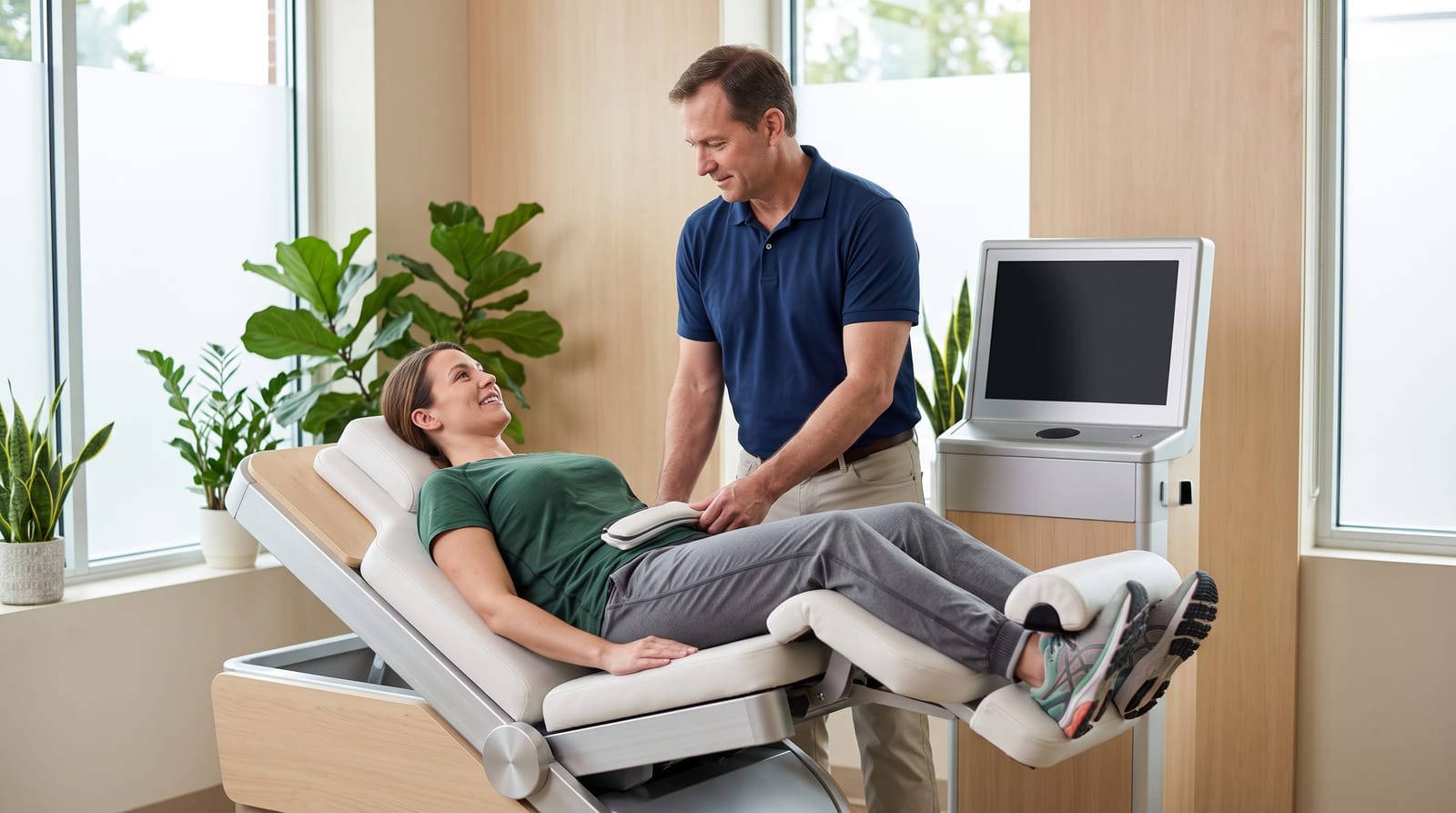
Most patients find sessions on advanced spinal decompression equipment comfortable: many even describe the gentle rhythmic traction and release as relaxing. The computerized nature of the equipment means that the force is always applied gradually and smoothly, and the treating clinician remains present throughout the session to monitor patient comfort and adjust parameters as needed. There's no sudden jerking, no manual manipulation, and no pressure applied directly to sensitive areas.
What the Research Says About Spinal Decompression Outcomes
For the analytically-minded patient who wants to see data before committing to a treatment approach, it's worth understanding what clinical research suggests about the effectiveness of advanced spinal decompression equipment, while also being clear about the nature of that evidence.
Multiple published studies have examined the outcomes of computerized spinal decompression therapy for lumbar disc conditions. Research published in peer-reviewed journals has reported that a meaningful percentage of participants completing a full course of decompression treatment experienced reductions in self-reported pain levels and improvements in functional outcomes. Some studies using MRI imaging before and after treatment series have documented changes in disc morphology, including reduced herniation size and improved disc hydration.
Clinical data on the DRX9000 specifically has shown favorable outcomes across multiple observational studies. One frequently cited study reported that approximately 86% of patients who completed a full DRX9000 treatment protocol experienced significant improvement in their symptoms. While observational studies have limitations compared to randomized controlled trials, this body of evidence does support the rationale for using advanced spinal decompression equipment as part of a comprehensive care approach for appropriate candidates.
It's important to note, as always, that individual results vary based on many factors including the nature and severity of the condition, patient health history, age, lifestyle, and commitment to the full treatment protocol. No provider can guarantee specific outcomes, and spinal decompression therapy is not a substitute for diagnosis or treatment recommendations from a qualified medical professional. For a deeper look at what the available evidence shows, the article on spinal decompression success rate offers a thorough and honest review of the research.
How to Choose the Right Spinal Decompression Provider
Understanding advanced spinal decompression equipment is only part of the picture. Choosing the right provider is equally important, and it requires looking beyond marketing claims to evaluate the quality of care, technology, and clinical expertise available to you.
Ask About the Specific Equipment
Don't hesitate to ask directly what type of decompression table the practice uses. A provider using clinical-grade advanced spinal decompression equipment like the DRX9000 should be able to tell you clearly what the technology is, how it works, and why they chose it. Vague answers about "our decompression machine" without specific detail may indicate less sophisticated equipment than what's being implied.
Evaluate the Evaluation Process
A high-quality provider of advanced spinal decompression therapy will always conduct a thorough candidacy evaluation before recommending treatment. If a practice seems eager to start treatment without reviewing your imaging, health history, or conducting a proper physical assessment, that's worth noting. Proper candidacy screening protects patients and ensures that decompression therapy is applied only where it's clinically appropriate.
Look for a Comprehensive Treatment Approach
The most effective providers of spinal decompression therapy don't treat the table as the only tool in their kit. Advanced spinal decompression equipment works best as part of an integrated plan that may include complementary therapies, rehabilitation exercises, postural correction, and lifestyle guidance. A provider who offers this kind of comprehensive, coordinated care demonstrates a higher level of clinical investment in your outcomes.
Consider Provider Experience and Patient Outcomes
Ask how many patients the provider has treated with their decompression technology, how long they've been offering this type of care, and whether they can share general outcome data or patient experience testimonials. Experience with advanced spinal decompression equipment matters: both for the efficiency of the treatment setup and for the clinical judgment required to optimize protocols for individual patients.
For patients in the Los Angeles area evaluating their options specifically, the article on spinal decompression cost Los Angeles covers what to look for in a local provider and how to think about the investment in this type of care.
Deep Dive Topics: Explore the Full Picture of Spinal Decompression Technology
This pillar guide covers the foundational knowledge you need to understand advanced spinal decompression equipment and how it compares to older approaches. But each of the following topics deserves a closer look on its own. The resources below explore specific aspects of spinal decompression technology and care in greater depth: click through to learn more about the areas most relevant to your questions.
-
Computerized vs. Manual Traction: Understanding the Technology Gap
If you want a side-by-side breakdown of exactly how a computerized spinal decompression table differs from older manual traction methods, including the mechanics, the clinical implications, and why the difference matters for your care, this article goes deep on the technology comparison. -
Finding the Right Spinal Decompression Provider in Los Angeles
Knowing what to look for when evaluating providers in your area is just as important as understanding the technology. The guide on spinal decompression cost Los Angeles walks through the key questions to ask, what quality care looks like in practice, and how to evaluate whether a provider's technology and approach meet the standard you should expect. -
Realistic Timelines: When Will You Start Feeling Better?
One of the most common concerns for prospective patients is how long it will take to notice results. The article on how long does spinal decompression take to work provides an honest, research-informed look at the typical progression of outcomes across a treatment series, including the factors that influence how quickly patients tend to respond. -
How Many Sessions Do You Actually Need?
Treatment frequency and total session counts are among the most practical questions patients ask. The post on how many spinal decompression sessions you actually need explains the typical protocol structure, what drives variation between patients, and how to think about the commitment involved in completing a full course of care. -
What the Research Actually Shows About Success Rates
For patients who want to dig into the evidence, the article on spinal decompression success rate reviews the available clinical literature honestly, including what the studies show, where the evidence is strong, and where there's still room for more research.
Conclusion: Technology That Puts Precision in Service of Your Wellbeing
Advanced spinal decompression equipment represents a meaningful step forward in how we support patients dealing with disc-related back and neck conditions. The shift from basic manual traction to sophisticated, computer-guided decompression technology isn't simply a marketing upgrade: it reflects a genuine improvement in the precision, consistency, and patient-centered nature of the therapy being delivered.
Clinical-grade systems like the DRX9000 use real-time biofeedback, logarithmic pull curves, and individualized treatment programming to create a therapeutic environment that manual methods simply cannot replicate. For patients who are serious about exploring non-surgical options for herniated discs, sciatica, degenerative disc disease, or related conditions, understanding what separates advanced equipment from the alternatives is an essential part of making informed, confident decisions about care.
At Prodigy Chiro Care, we've invested in the technology and clinical expertise to offer this level of care to our patients in Los Angeles, because we believe that the quality of the tools and the thoroughness of the approach directly support the quality of your experience and your results. If you're ready to learn more about whether advanced spinal decompression therapy might be a good fit for your situation, we'd be glad to have a conversation.
Schedule a consultation with Prodigy Chiro Care today to speak with our team about your spinal health goals, learn about the advanced spinal decompression equipment we use, and explore whether this approach is right for you.