Torticollis Treatment: How Chiropractic Manipulation and Cold Laser Provide Relief
If you've ever woken up with your neck locked in an awkward position, unable to turn your head without sharp discomfort, you may have experienced torticollis, sometimes called wry neck. For busy professionals in West Los Angeles, this kind of sudden neck restriction can feel both alarming and deeply inconvenient. As part of a broader approach to posture correction and spinal health, understanding torticollis can help you respond to it wisely. This post explores what torticollis is, what contributes to it, and how chiropractic manipulation for neck pain, combined with cold laser therapy, may support recovery and restored mobility. You'll also find guidance on what a care plan at Prodigy Chiro Care might generally look like.
What Is Torticollis? A Straightforward Explanation
Torticollis is a condition in which the head tilts or rotates to one side while the neck muscles on the opposite side tighten. The word itself comes from Latin, tortus (twisted) and collum (neck). Most adults encounter the acquired form, which can develop suddenly after sleeping in an awkward position, following minor trauma, or as a result of prolonged postural stress.
Research suggests that neck pain affects approximately 30% of adults each year. A meaningful portion of those cases involve restricted cervical rotation. Torticollis sits on a spectrum, from mild stiffness that resolves in a few days to more persistent restrictions involving joint and soft tissue dysfunction.
Two Primary Contributors
- Muscular factors: Muscles like the sternocleidomastoid (SCM) and upper trapezius can go into protective spasm. This spasm pulls the head into the characteristic tilted position.
- Cervical joint factors: Small joints in the cervical spine, called facet joints, can become restricted or irritated. When a facet joint loses its normal range of motion, the surrounding muscles often tighten further in response.
Both factors frequently appear together. Addressing only the muscle without considering joint mobility, or vice versa, may explain why some people experience slow or incomplete recovery.
Why Prolonged Sitting and Screen Time Can Play a Role
West Los Angeles professionals spend an average of 8 to 10 hours a day at a desk or in front of screens. That sustained posture creates cumulative stress on the cervical spine. Over time, this contributes to a pattern often called forward head posture, where the head drifts forward relative to the shoulders.
For every inch the head moves forward, the effective load on the cervical spine increases by roughly 10 pounds. A head that normally weighs 10 to 12 pounds can place 40 to 60 pounds of pressure on the neck when positioned three to four inches forward. That ongoing load fatigues muscles and compresses cervical joints: setting the stage for episodes of acute restriction like torticollis.
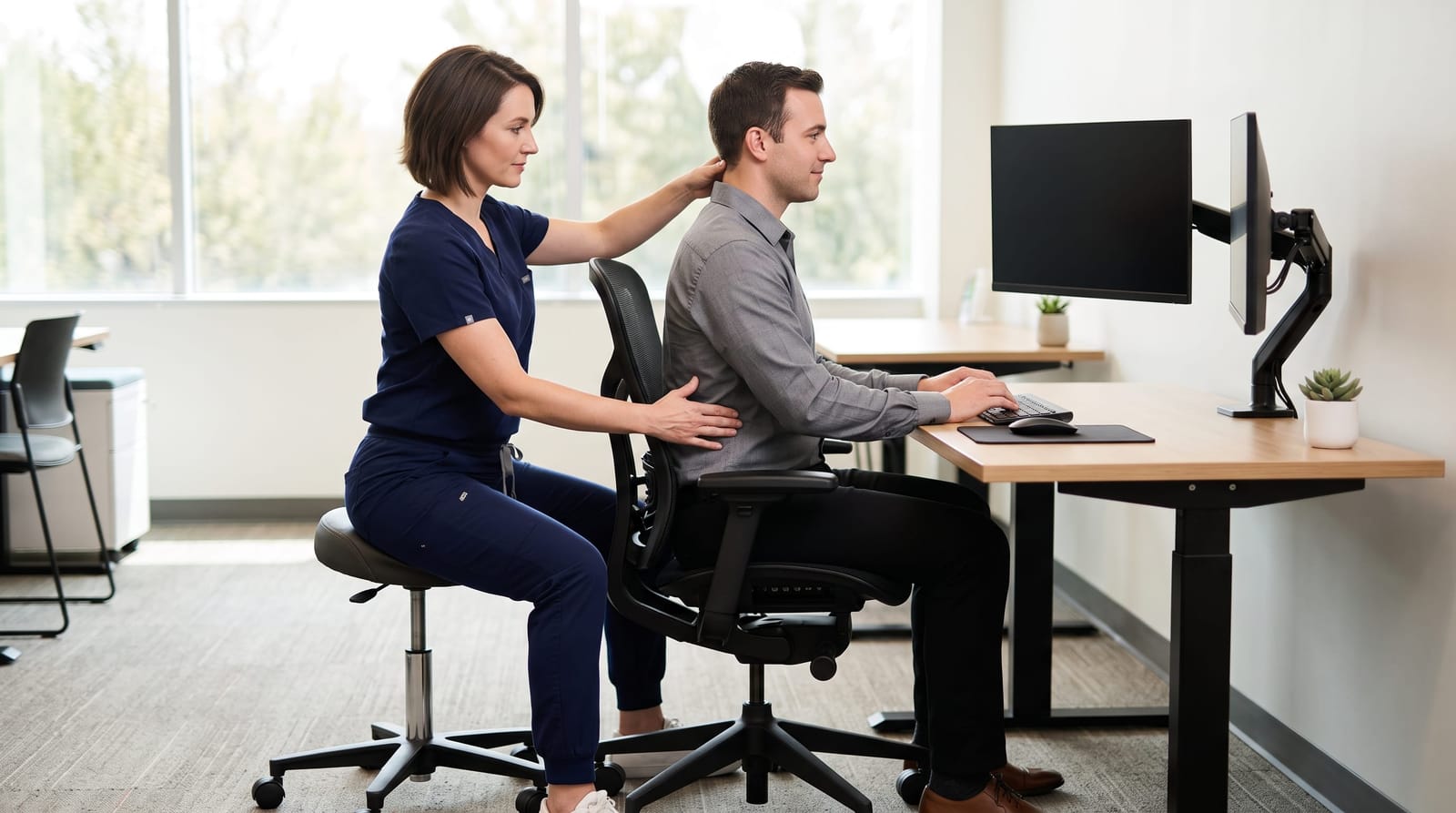
Poor ergonomic setups amplify this risk. Monitors positioned too low, chairs without adequate lumbar support, and long hours without movement breaks all reduce the neck's resilience. Professionals who want to understand more about reducing this daily strain may find it useful to explore ergonomic desk setup principles that chiropractors commonly recommend.
The Connection to Tech Neck
Tech neck, the forward head posture caused by looking down at phones and screens, shares many of the same muscular imbalances seen in torticollis. The deep neck flexors weaken while the posterior cervical muscles shorten. This combination reduces the cervical spine's ability to absorb stress, making acute episodes more likely. Learning how chiropractic manipulation neck pain approaches address forward head posture can provide useful context for anyone managing recurrent neck complaints.
How Chiropractic Manipulation Supports Recovery from Torticollis
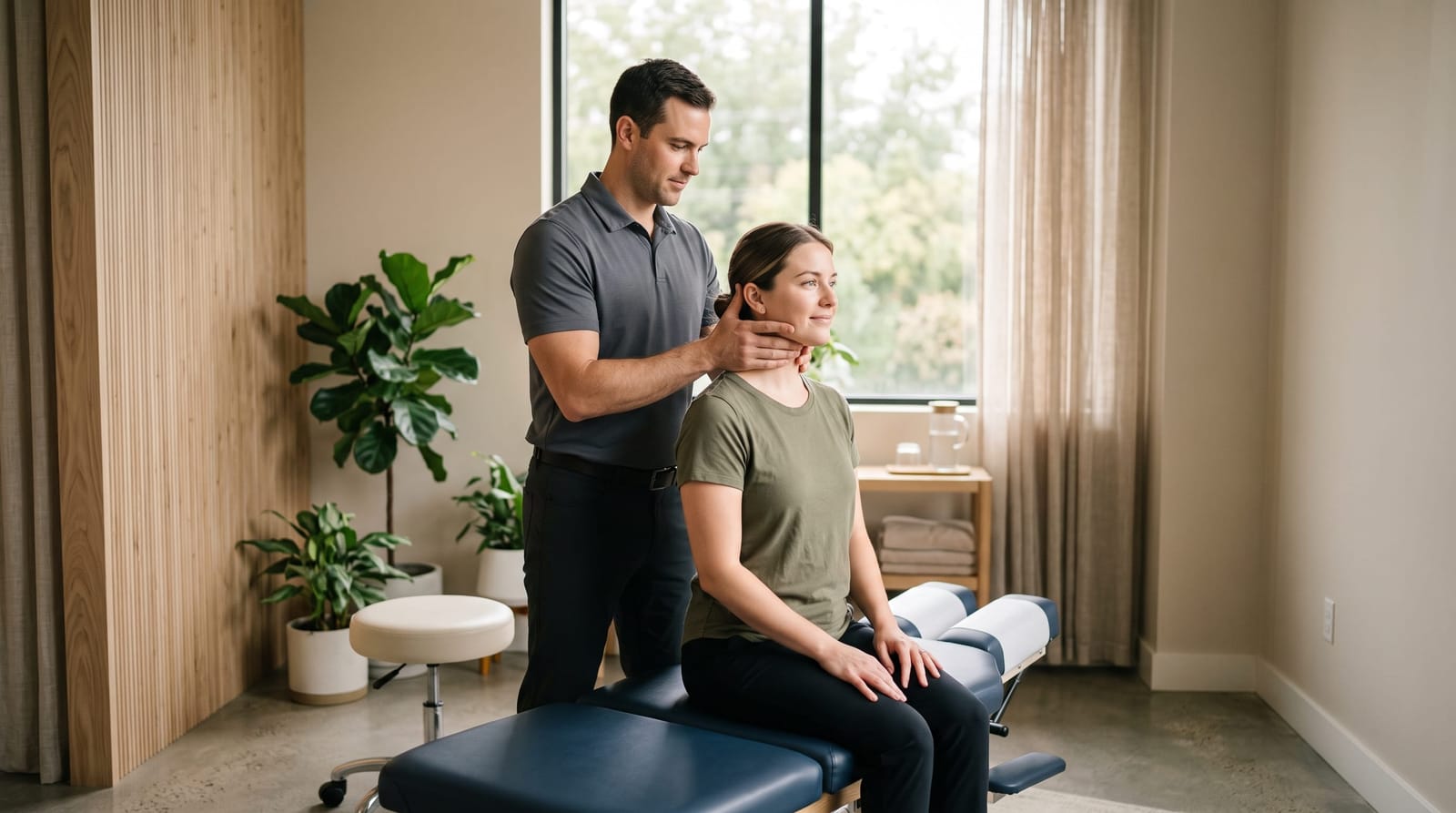
Chiropractic manipulation for neck pain focuses on restoring normal joint motion in the cervical spine. When a facet joint becomes restricted, the surrounding muscles often remain in a guarded, contracted state. Gentle, targeted manipulation aims to address that joint restriction directly.
A 2017 systematic review published in the Journal of Manipulative and Physiological Therapeutics found that cervical manipulation and mobilization produced clinically meaningful improvements in pain and function for individuals with mechanical neck pain. Mechanical neck pain, the kind associated with posture and joint restriction, is the category most relevant to torticollis.
What a Chiropractic Session for Torticollis May Involve
- Assessment first: A thorough intake helps the chiropractor identify which cervical segments are restricted, assess muscle tone, and rule out any concerns that would require a different approach or referral.
- Gentle mobilization: In the early stages of acute torticollis, low-velocity mobilization techniques may be used before any more direct manipulation: allowing muscles to soften before the joint is addressed.
- Targeted cervical adjustment: Once appropriate, a specific adjustment to the restricted segment can help restore motion and reduce the feedback loop between joint restriction and muscle spasm.
- Soft tissue work: Trigger point therapy or myofascial release applied to the SCM and trapezius complements the joint work by directly addressing muscular contributors.
It's important to note that chiropractic manipulation carries potential risks, and every individual's situation is different. Consulting with a qualified healthcare provider before beginning any care is always the appropriate first step. At Prodigy Chiro Care, the intake process is designed to ensure that each plan is appropriate and individualized.
Cold Laser Therapy: Addressing the Inflammatory Component
Cold laser therapy, also known as low-level laser therapy (LLLT), uses specific wavelengths of light to interact with tissue at the cellular level. Unlike surgical or high-power lasers, cold laser devices produce no heat and cause no tissue damage. The therapy is painless and typically takes only a few minutes per session.
The proposed mechanism involves stimulating mitochondrial activity in cells, which may support the body's natural inflammatory regulation and tissue repair processes. A 2009 meta-analysis in The Lancet reviewed 16 randomized controlled trials involving LLLT for neck pain. The analysis found that LLLT reduced pain intensity by 22.2 millimeters on a 100mm visual analog scale compared to placebo: a clinically relevant finding.
Why Combining Cold Laser with Manipulation Makes Sense
Torticollis often involves both joint restriction and soft tissue inflammation. Chiropractic manipulation targets the mechanical component: the restricted joint. Cold laser addresses the inflammatory and tissue-healing component in the surrounding muscles and ligaments.
Using both together means the care plan is working on two different aspects of the same problem simultaneously. Many patients report that combining these therapies allows for a more comfortable experience during the manipulation portion of care, since the surrounding tissue has already received some support from the laser application. This combined approach reflects Prodigy's philosophy of personalized, multi-modal care.
What Recovery Generally Looks Like
Acute torticollis, the sudden-onset variety that appears after sleeping awkwardly or after a minor strain, often improves significantly within a few days to two weeks with appropriate care. More persistent or recurrent torticollis may take longer, particularly if underlying postural patterns and muscular imbalances are contributing factors.
Every individual responds differently. Recovery timelines depend on how long the condition has been present, the degree of joint restriction, overall muscle health, and how consistently any recommended home care is followed.
General Phases of Recovery
- Acute phase (days 1-5): The primary goals are pain reduction and gentle restoration of movement. Cold laser and soft tissue techniques typically feature prominently in this phase.
- Recovery phase (days 5-14): As movement improves, chiropractic adjustments become more central. Gentle range-of-motion exercises may be introduced.
- Stabilization phase (weeks 2-6+): For individuals with recurrent episodes, this phase focuses on postural re-education and strengthening to reduce future vulnerability. Learning about custom orthotics fix posture and broader postural re-education strategies can support this longer-term goal.
These phases are general in nature. A chiropractor at Prodigy will develop a care plan specific to each individual's presentation and goals. No two cases of torticollis are identical, and care should reflect that.
When to Seek Professional Evaluation
Not all neck restrictions are straightforward. Certain symptoms alongside torticollis warrant prompt medical evaluation rather than waiting to see if things improve on their own. These include numbness or tingling radiating into the arms or hands, significant dizziness, difficulty swallowing, fever, or neck pain following a significant impact or fall.
Chiropractic care is appropriate for mechanical neck pain, but a thorough assessment helps distinguish mechanical causes from those that require a different level of care. At Prodigy Chiro Care, the initial evaluation is designed to identify whether chiropractic care is appropriate or whether a referral would better serve the patient.
If you've been experiencing recurrent neck stiffness, difficulty turning your head, or discomfort that disrupts your productivity, it's worth having those symptoms evaluated by a qualified provider. Early attention to cervical joint health tends to support better outcomes than waiting until symptoms become more disruptive.
Related Topics Worth Exploring
Torticollis doesn't exist in isolation. For many professionals, it's one expression of broader patterns, forward head posture, sedentary work habits, muscular imbalances, that develop gradually over months and years. Understanding the full picture supports better long-term results.
- How tech neck and forward head posture develop, and how chiropractic addresses them
- Postural re-education strategies used at chiropractic practices
- Workspace ergonomics that reduce daily cervical strain
Each of these topics connects back to the same goal: a cervical spine that moves freely, muscles that aren't chronically overloaded, and a posture that supports rather than challenges your health over time.
Key Takeaways
Torticollis is a common, treatable condition involving both muscle spasm and cervical joint restriction. Chiropractic manipulation for neck pain addresses the mechanical contributors, restricted joints, while cold laser therapy supports the surrounding soft tissue. Research indicates both approaches offer meaningful benefits for mechanical neck pain, though individual responses vary. Recovery timelines differ from person to person, and care should always be guided by a qualified healthcare provider following a thorough assessment.
If you're a professional in West Los Angeles dealing with neck stiffness, restricted rotation, or recurrent wry neck episodes, Prodigy Chiro Care offers personalized evaluations to help you understand what's contributing to your discomfort and what options may support your recovery. Contact Prodigy Chiro Care today to schedule a consultation and take a clear-headed first step toward better cervical mobility.