Postural Re-Education: What It Is and How It Works at a Chiropractic Practice
If you spend most of your workday sitting at a desk, attending back-to-back meetings, or staring at screens, your posture is working against you, often without you realizing it. Poor posture isn't just a cosmetic issue. Over time, it reshapes the way your muscles, joints, and nervous system function together. That's exactly why posture correction is a central theme in our complete guide to spinal health for West Los Angeles professionals. Within that broader conversation, one service stands out as particularly impactful: postural re-education. Unlike a single chiropractic adjustment, postural re-education is an active, ongoing process that targets the root neuromuscular patterns driving poor posture. In this post, we'll walk through what postural re-education involves, what a session actually looks like, how long the process typically takes, and how supportive tools like custom orthotics fit into the picture.
What Is Postural Re-Education: and Why Is It Different from a Standard Adjustment?
Many people think of chiropractic care as something that happens to them: you lie on a table, the chiropractor adjusts your spine, and you leave feeling better. That's a valuable part of care, but it's only one part. Postural re-education takes a more active approach by working with patients to retrain the habits, movement patterns, and muscle behaviors that created postural problems in the first place.
Here's the distinction: a spinal adjustment addresses where the spine is right now. Postural re-education addresses why it keeps returning to that position. If your deep neck flexors are chronically weak, your hip flexors are perpetually tight from sitting, or your feet are pronating inward and pulling your entire chain of alignment off-kilter, no single adjustment will solve that on its own. The body has a strong tendency to revert to familiar patterns, even uncomfortable ones, because those patterns have become neurologically ingrained.
Postural re-education works by systematically reintroducing what proper alignment feels like, strengthening the muscles responsible for maintaining it, and removing the mechanical obstacles, like foot misalignment, that make proper posture difficult to sustain. Research suggests that consistent postural training can produce meaningful improvements in spinal alignment and muscle activation within 6 to 12 weeks, though results vary by individual.
The Neuromuscular Basis: Why Your Body "Forgets" Good Posture
Most postural problems aren't a matter of willpower or laziness. They're a matter of neuromuscular adaptation. When you sit in the same position for 8 to 10 hours a day, which is common for professionals in West Los Angeles, your nervous system gradually accepts that position as the new default. Muscles that should be active become inhibited, and muscles that should relax become chronically overworked.
Common Neuromuscular Patterns Behind Poor Posture
- Upper crossed syndrome: Tight chest and upper trapezius muscles combined with weak deep neck flexors and lower trapezius, resulting in rounded shoulders and forward head position
- Lower crossed syndrome: Tight hip flexors and lower back combined with weak glutes and abdominals, leading to an exaggerated lumbar curve and anterior pelvic tilt
- Foot pronation cascade: Inward rolling of the feet that shifts knee alignment, rotates the pelvis, and creates compensatory curves throughout the spine
- Thoracic rigidity: Loss of mobility in the mid-back that forces the cervical spine and lumbar spine to overcompensate
Postural re-education targets these patterns directly. Rather than chasing symptoms in isolation, the approach maps the patient's specific compensation patterns and builds a plan to address them layer by layer. This is one reason why the process takes time: undoing months or years of neuromuscular adaptation doesn't happen overnight.
What Postural Re-Education Sessions Actually Look Like at Prodigy
One of the most common questions patients have is: "What will I actually be doing during these sessions?" The answer varies by individual, but most postural re-education programs at Prodigy Chiro Care share a consistent structure.
Initial Assessment
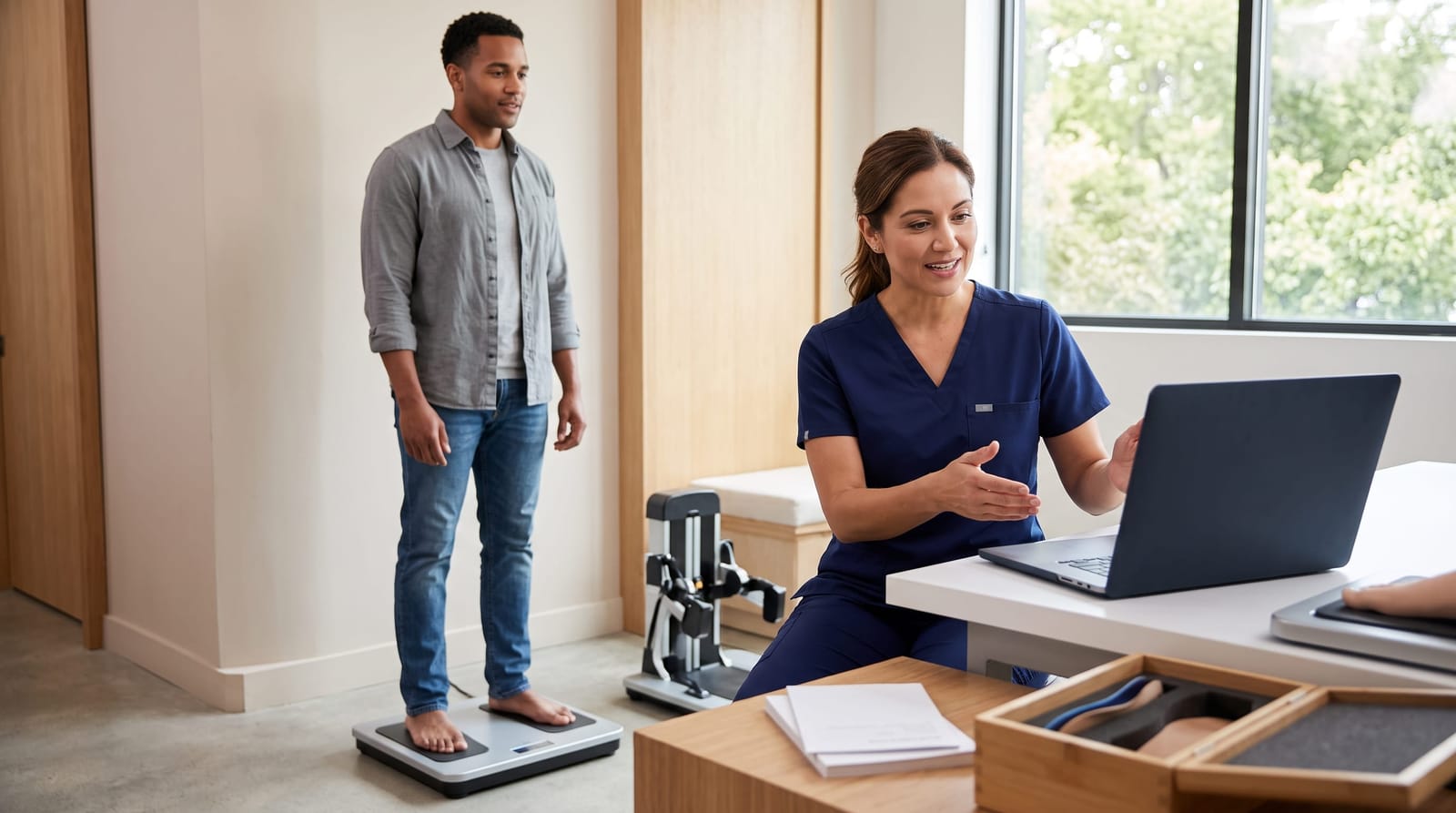
Before any re-education work begins, the care team conducts a thorough postural assessment. This typically involves:
- Visual postural analysis from multiple angles (front, side, and back)
- Gait evaluation to identify how you walk and where compensations appear
- Foot and arch assessment to determine whether foot mechanics are contributing to spinal misalignment
- Muscle strength and flexibility testing to identify inhibited or overactive muscle groups
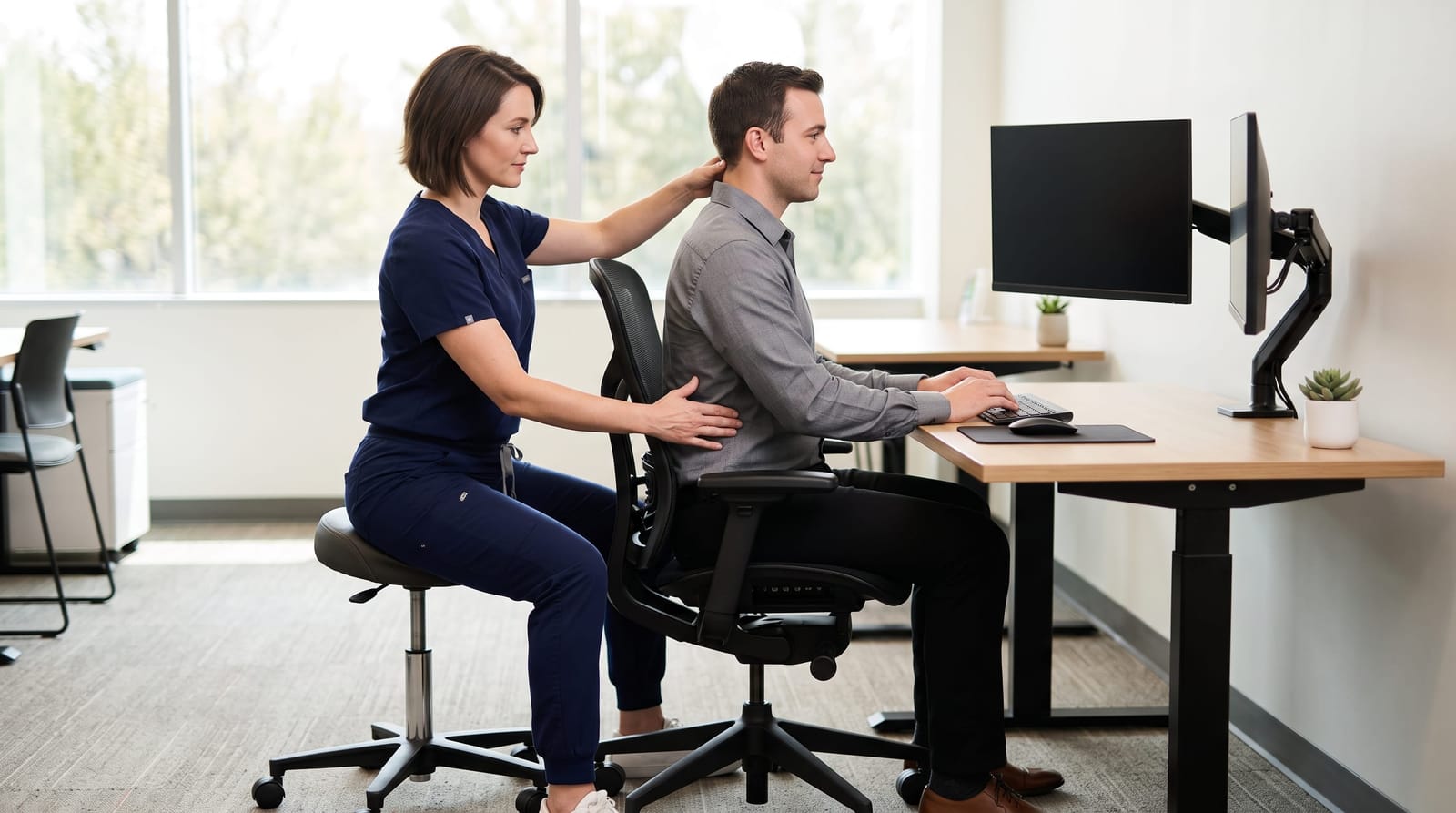
- Discussion of daily work habits, screen time, commuting patterns, and ergonomic setup
This assessment guides everything that follows. Two patients can present with similar complaints, say, chronic neck tension and mid-back stiffness, but have entirely different root causes requiring different approaches.
Active Session Components
Sessions typically blend several therapeutic elements, which may include:
- Targeted corrective exercises to activate inhibited muscles and lengthen overactive ones
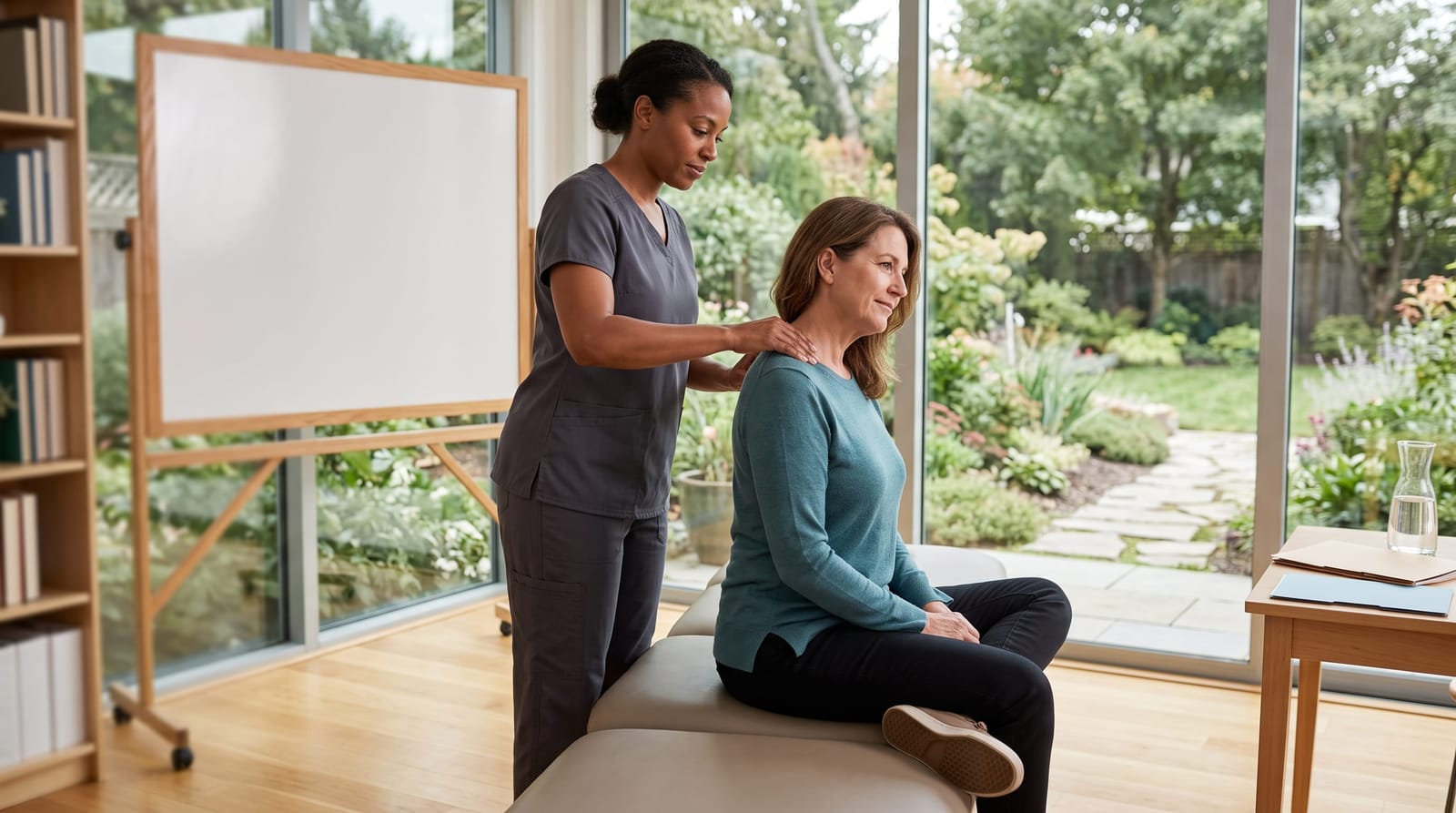
- Chiropractic adjustments to restore joint mobility and reduce restrictions that make proper posture mechanically difficult
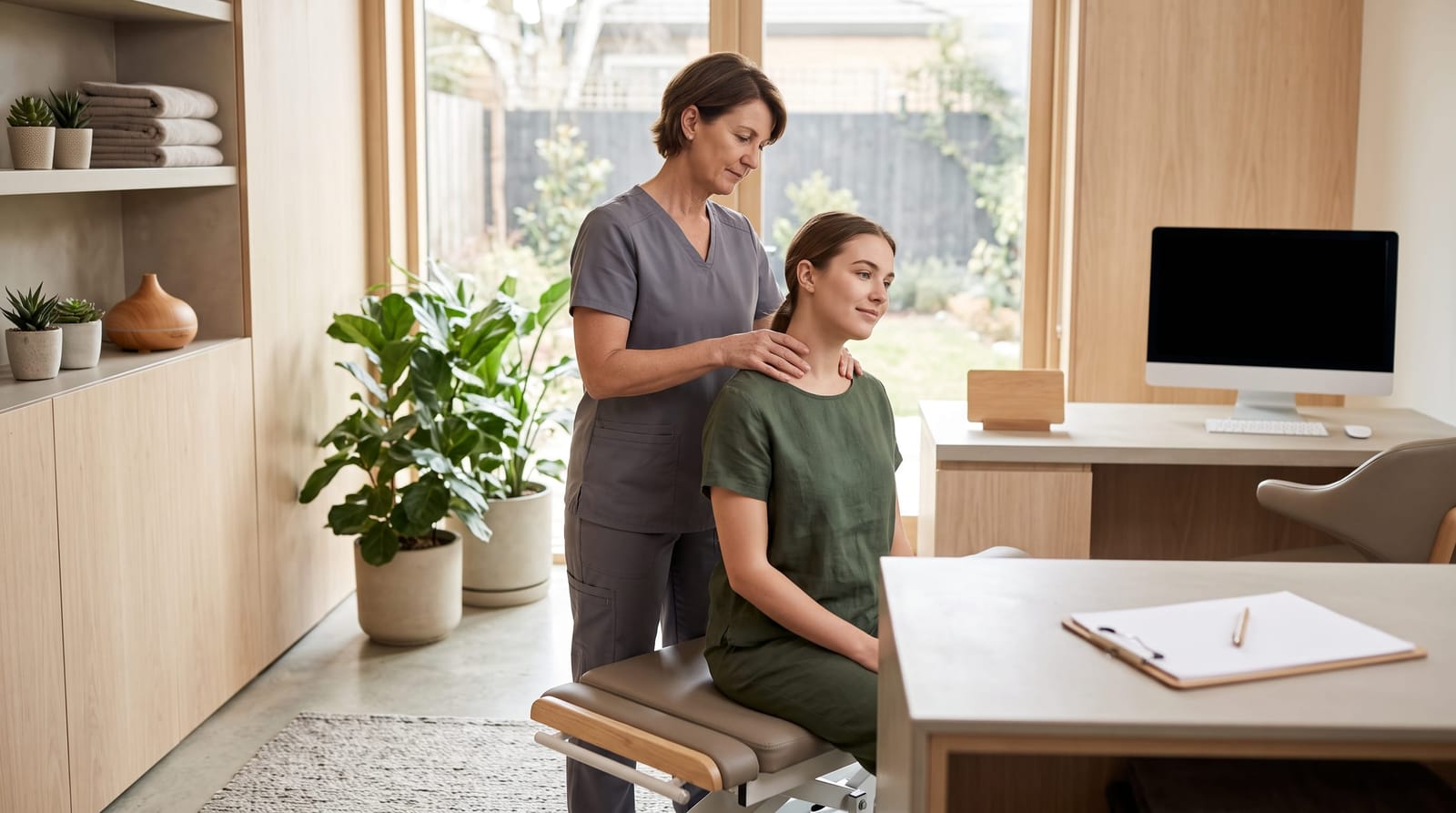
- Soft tissue work to release fascial tension and improve muscle extensibility
- Movement coaching to help patients understand how to carry their posture through daily activities, not just during sessions
- Orthotic fitting and integration when foot mechanics are identified as a contributing factor
For professionals dealing with tech neck and forward head posture, sessions often incorporate work from our chiropractic manipulation neck pain protocol to restore cervical alignment alongside the broader postural re-education work.
How Custom Orthotics Support the Postural Re-Education Process
One of the more surprising elements for many patients is the role that their feet play in their posture. The feet are the foundation of your entire skeletal structure. When that foundation is misaligned, whether due to flat arches, high arches, overpronation, or supination, the effects ripple upward through the knees, hips, pelvis, and spine.
Custom orthotics are specially designed insoles crafted to match your unique foot shape and biomechanical needs. Unlike generic over-the-counter insoles, custom orthotics are fabricated from a precise mold or scan of your foot, taking into account your specific alignment patterns, weight distribution, and functional demands.
How Custom Orthotics Help Fix Posture
When properly fitted custom orthotics fix posture issues stemming from the feet, the impact can extend well beyond the feet themselves. Here's what targeted foot support can address:
- Reduced overpronation: Correcting inward foot rolling helps stabilize the knees and reduce rotational stress on the hips and lower back
- Improved weight distribution: Balancing load across the full foot reduces compensatory muscle tension up the kinetic chain
- Pelvic leveling: When feet are aligned symmetrically, the pelvis is better able to maintain a neutral position, which supports the lumbar curve
- Reduced fatigue: Properly supported feet require less compensatory effort from the ankles, calves, and lower back during prolonged standing or walking
According to research in this area, most patients begin noticing changes in pain levels and posture alignment within several weeks to a few months of consistent orthotic use, with results depending on how regularly they're worn and how they're integrated into a broader care plan. For a deeper look at how foot alignment affects the entire spine, explore our detailed post on custom orthotics fix posture and what the research says about this connection.
At Prodigy, custom orthotics aren't prescribed in isolation. They're introduced as one component of postural re-education: a tool that supports the work happening in sessions and helps patients maintain better alignment during the hours they're away from the clinic.
How Long Does Postural Re-Education Take?
This is the question almost every new patient asks, and the honest answer is: it depends. Postural re-education is not a quick fix, and any provider who promises dramatic results in a single session or two isn't being realistic with you. That said, most patients do begin to notice meaningful changes within a predictable window.
General Timeline Expectations
- Weeks 1-3: Initial assessment, baseline adjustments, and introduction of foundational corrective exercises. Many patients report feeling more aware of their posture and noticing reduced tension during this phase.
- Weeks 4-8: Active neuromuscular retraining begins. This is where exercise progressions, orthotic integration, and consistent adjustments work together. Measurable postural changes often begin appearing during this window.
- Weeks 8-16: Consolidation phase. The goal shifts from creating change to reinforcing and stabilizing it. Many patients reduce visit frequency during this period as they take on more independent maintenance.
- Ongoing: Long-term spinal health maintenance, typically with periodic check-ins and progression of home exercise programs.
Factors that influence timeline include the duration of postural habits, age, activity level, consistency with home exercises, and whether contributing factors like foot mechanics are being addressed concurrently. For a more detailed breakdown of visit frequency and what to expect across different phases, our post on how often chiropractor visits are recommended for postural correction covers this topic thoroughly.
Lifestyle Integration: What Happens Between Sessions Matters
Postural re-education doesn't end when you leave the clinic. In fact, the work patients do between sessions may be just as important as what happens during them. The professionals who see the most sustainable results are those who carry their postural awareness into their daily routines.
Practical between-session strategies that support postural re-education include:
- Setting a timer every 30 to 45 minutes during the workday to stand, move, and reset posture
- Performing 2 to 3 targeted corrective exercises daily, as prescribed during sessions
- Wearing custom orthotics consistently, including during workouts and commuting, not just at the office
- Adjusting monitor height so the top of the screen is at or slightly below eye level
- Using a chair that supports the natural lumbar curve, or adding a lumbar support cushion
- Sleeping in positions that don't force the cervical spine into sustained flexion or rotation
The goal of postural re-education is to make good posture the path of least resistance, not something you have to consciously fight for. That shift happens gradually, through consistent repetition and the right structural support.
Related Topics Worth Exploring
Postural re-education connects to a number of related areas of spinal health care. If you'd like to go deeper on specific aspects of this process, the following posts cover important detail topics:
- The biomechanical relationship between foot alignment and spinal health, explored in our piece on how custom orthotics fix posture from the ground up
- A practical breakdown of visit frequency, progression, and what to expect at each stage, covered in our post on how often chiropractor visits are needed for meaningful postural change
- The specific mechanisms behind tech neck and forward head posture, including how chiropractic manipulation neck pain protocols address cervical alignment
Conclusion: Postural Re-Education Is a Process: and That's a Good Thing
Good posture isn't something you either have or don't have. It's a skill your neuromuscular system learns, maintains, and can always improve. Postural re-education at Prodigy Chiro Care is designed to give your body the tools, structure, and support to make that improvement lasting, not just temporary. From identifying your specific compensation patterns to integrating custom orthotics that reinforce alignment from the foundation up, the process is personalized, gradual, and grounded in how the body actually changes.
If you're a working professional in West Los Angeles who has been managing stiffness, tension, or postural fatigue, we'd welcome the opportunity to learn more about your experience and explore what a personalized postural re-education plan might look like for you. Reach out to Prodigy Chiro Care to schedule a postural assessment and take the first step toward feeling more comfortable in your own body.