Spinal Decompression for Pinched Nerve: Can It Provide Relief?
If you've been dealing with sharp, radiating pain, numbness, or tingling that travels down your arm or leg, you may have heard the term "pinched nerve" from your healthcare provider. And if you've been researching your options, you've likely come across spinal decompression as a potential path toward relief. But what exactly does spinal decompression do for a pinched nerve, and is it worth exploring? This post breaks down the connection between disc problems, pinched nerves, and how decompression therapy works to address the root cause of that discomfort.
What Is a Pinched Nerve and How Does It Happen?
A pinched nerve occurs when surrounding tissue, such as a herniated disc, bone spur, or inflamed soft tissue: places pressure on a nerve root as it exits the spinal column. This compression can interfere with the nerve's normal signaling, leading to symptoms like pain, tingling, burning, weakness, or numbness that may radiate far from the actual site of the problem.
The spine is organized into segments, and between each vertebra sits a spinal disc that acts as a cushion and spacer. When a disc herniates or bulges outward, it can encroach on the space where a nerve root exits the spine: a condition known as foraminal stenosis. According to research, lumbar disc herniation is one of the most common causes of nerve root compression, with studies suggesting that roughly 1 to 2 percent of adults experience a symptomatic herniated disc at any given time.
Understanding the disc-nerve relationship is important when exploring treatment options. The pain you feel in your leg or arm often isn't originating there: it's being generated at the spine, where the nerve is being compressed. This is why addressing the disc problem directly is a central goal of spinal decompression therapy.
How Spinal Decompression Targets Pinched Nerves
Spinal decompression, in the context of non-surgical chiropractic care, refers to a therapy that uses gentle, motorized traction to create negative pressure within the spinal discs. This controlled stretching of the spine achieves two key goals relevant to pinched nerves:
- Reducing intradiscal pressure: By gently separating the vertebrae, decompression lowers the pressure inside the disc. Studies have measured intradiscal pressure drops of up to negative 150 mmHg during decompression, which can help retract herniated disc material away from the nerve.
- Improving nutrient flow: The reduced pressure also creates a gentle "pumping" effect that encourages fluids and nutrients to flow back into the disc, supporting tissue health and reducing inflammation around the compressed nerve root.
When a herniated or bulging disc is pulling back toward its normal position, even slightly, the space available for the nerve root increases. Less compression on the nerve often means less pain, tingling, and weakness over time. This is why spinal decompression pinched nerve treatment is often discussed as part of a broader, conservative care approach before more invasive interventions are considered.
For a deeper look at how this process works specifically for disc issues, our post on spinal decompression bulging disc treatment provides additional context on the mechanics involved.
What to Expect During Spinal Decompression Therapy
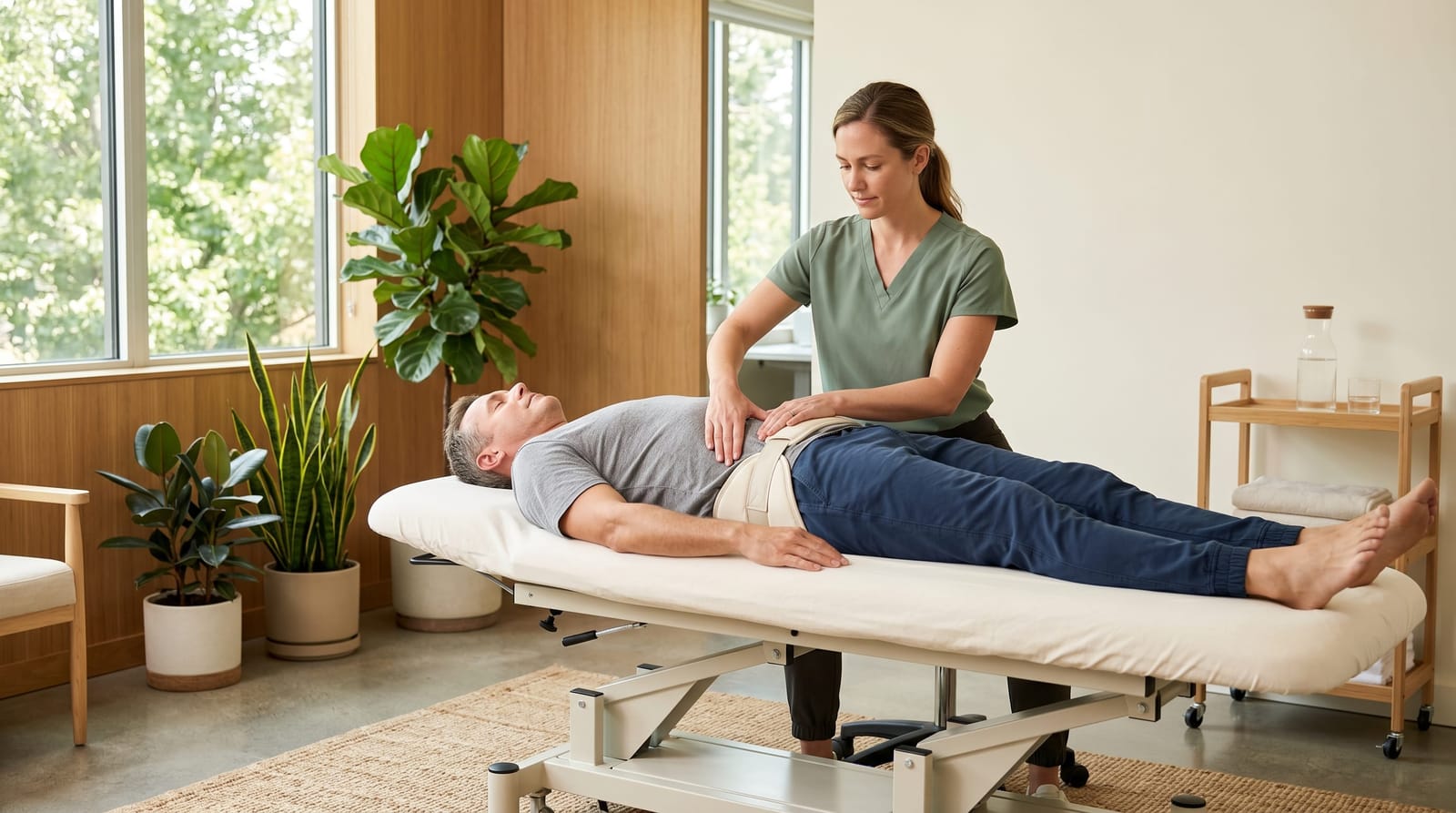
Non-surgical spinal decompression is typically performed on a specialized motorized table. During a session, a harness is fitted around your pelvis or trunk (depending on whether the treatment targets the lumbar or cervical spine), and the table gently applies a controlled pulling force in a cyclical pattern: alternating between stretching and releasing tension.
Most sessions last between 30 and 45 minutes and are generally described as comfortable, with many patients reporting a pleasant sense of relief during treatment. A typical treatment plan may span several weeks, with sessions scheduled multiple times per week in the early phases.
Here's a general overview of what a decompression treatment plan often looks like:
- Initial evaluation: Your provider will review your history, symptoms, and imaging to determine whether decompression is appropriate for your situation.
- Early treatment phase: Sessions are often more frequent in the first two to three weeks, helping to reduce acute nerve compression symptoms.
- Progress assessment: Providers typically reassess symptoms at regular intervals to gauge how the nerve is responding.
- Supportive therapies: Decompression is often paired with additional modalities like heat therapy, electrical stimulation, or targeted stretching to support recovery.
Wondering about session counts? Our guide on how many spinal decompression sessions you may need explores typical treatment timelines in more detail.
Who May Benefit: and Who Should Use Caution
Non-surgical spinal decompression is generally considered for individuals experiencing nerve-related symptoms linked to disc herniations, bulging discs, degenerative disc disease, or spinal stenosis. Research suggests that conservative care, including decompression, helps a significant portion of patients manage symptoms without requiring surgery. In fact, studies indicate that approximately 90 percent of pinched nerve cases improve with non-surgical approaches within 4 to 6 weeks.
That said, spinal decompression is not appropriate for everyone. It is typically not recommended for individuals who:
- Have fractures or spinal instability
- Are pregnant
- Have had certain spinal surgeries with hardware implants
- Have osteoporosis at an advanced level
- Have certain types of tumors or infections affecting the spine
A qualified chiropractic provider will conduct a thorough evaluation to determine whether spinal decompression is a suitable option for your specific situation. This step is essential, not every case of a pinched nerve has the same underlying cause, and treatment should always be personalized.
Combining Decompression With a Broader Recovery Plan
Spinal decompression therapy tends to work best when it's part of a comprehensive care plan rather than a standalone solution. For pinched nerves caused by disc issues, long-term improvement often involves more than just addressing the immediate compression. Supporting factors like core muscle strength, posture habits, and movement patterns all play a role in reducing the likelihood of recurring nerve compression.
Physical therapy and targeted rehabilitation exercises are frequently recommended alongside decompression. Strengthening the muscles that support the spine reduces strain on the discs and helps maintain the space that decompression works to restore. Lifestyle adjustments, such as ergonomic improvements at work, mindful movement practices, and staying active within a comfortable range, further support recovery and overall spinal health.
The goal isn't just symptom relief in the short term. It's helping your spine function in a way that supports lasting comfort and mobility.
Frequently Asked Questions
How quickly does spinal decompression relieve pinched nerve pain?
Response times vary from person to person. Some individuals notice a reduction in nerve-related symptoms like tingling or radiating pain within the first few sessions, while others experience gradual improvement over the course of several weeks. Factors like the severity of disc involvement, how long symptoms have been present, and overall health can all influence the pace of progress.
Is spinal decompression the same as traction therapy?
While both involve stretching the spine, non-surgical spinal decompression uses computerized, motorized equipment that allows for precise control over the angle, force, and rhythm of the decompression. This differs from traditional manual traction. The targeted nature of decompression equipment is designed to focus the separation at specific disc levels where nerve compression is occurring.
Can a pinched nerve heal on its own without decompression?
Many pinched nerves do improve with conservative measures like rest, gentle movement, and physical therapy: research suggests that around 90 percent of cases resolve without surgery. However, when nerve compression is linked to a herniated or bulging disc, targeted therapies like spinal decompression may help support recovery by directly addressing the disc-related pressure on the nerve.
Does spinal decompression hurt during treatment?
Most patients find non-surgical spinal decompression to be comfortable and even relaxing during sessions. The pulling sensation is gentle and cyclical, designed to avoid muscle guarding. If a patient experiences any discomfort during a session, the provider can adjust the settings to ensure the treatment remains within a comfortable range.
Bringing It Together
Pinched nerves can be a source of significant discomfort, but understanding what's happening in your spine, and what non-surgical options are available, can make the path forward feel much more manageable. Spinal decompression therapy works by creating space within the disc and reducing the pressure that's bearing down on sensitive nerve roots. As part of a thoughtful, personalized care plan, it's an approach worth exploring in conversation with a qualified provider. For a fuller picture of disc-related concerns, our pillar guide on herniated disc vs bulging disc covers the broader landscape of disc health, symptoms, and recovery options.