Working With a Herniated Disc: How to Stay Active and Protect Your Spine

A herniated disc does not automatically mean work has to stop, but continuing usual duties is not appropriate for everyone. Symptoms, job demands, and a clinical assessment all matter. The most useful starting point is to look at specific tasks: how long they keep you in one position, what they require you to lift or reach for, and whether the workload can be adjusted.
Workplace ergonomics and activity planning can help address those practical questions. They are not a substitute for an individualized assessment or a guarantee that a particular task is safe.
What a Herniated Disc Means for Your Workday
A herniated disc occurs when inner disc material pushes through a weakened or torn part of its outer layer. Nearby nerves can become irritated, sometimes causing pain, tingling, numbness, or weakness. A bulging disc extends outward over a broader portion of the disc’s edge. These terms describe different changes in a disc, not a stand-alone measure of someone’s ability to work.
A job title also tells only part of the story. An office role may involve prolonged sitting and a lengthy commute. A retail role may combine standing, reaching, and moving stock. Describing those demands is more useful than asking whether “desk work” or “physical work” is acceptable in general.
Ergonomics: Focus on Fit and Flexibility
A useful workstation fits the person and the task. It also allows some variation, rather than requiring one fixed posture throughout the day. Ergonomic changes address how work is performed; they do not repair a herniated disc.
For Desk-Based Work
An ergonomic desk setup involves more than choosing a supportive chair. The chair, screen, keyboard, and work surface need to function together. Features worth reviewing include:
- Seat height and foot support: A chair that allows the feet to rest on the floor or a footrest, without the seat edge pressing behind the knees.
- Back support: A backrest that fits comfortably without forcing an exaggerated upright position.
- Screen position: A monitor positioned for comfortable viewing without sustained looking down or reaching the head forward.
- Keyboard and mouse placement: Enough space to keep these within easy reach, rather than repeatedly reaching across the desk.
- Laptop use: A raised laptop screen may require a separate keyboard and mouse so that improving screen height does not make typing awkward.
A standing desk offers another working position, not a universally better one. Its practical value depends on whether it allows comfortable changes of position while keeping the screen and input devices appropriately placed.
For Standing and Physical Work
Physical demands are not defined by weight alone. How often an object is moved, how far it is carried, and whether the task involves reaching, bending, or turning also matter.
For example, moving supplies from floor level to an overhead shelf is a different task from sliding them between nearby surfaces. A workplace discussion might address storage height, cart access, repeated lifting, shared tasks, or the length of time spent standing in one place. Anti-fatigue mats and adjustable work surfaces address different aspects of the setup; neither determines whether the duties themselves are appropriate.
Build Activity Planning Around the Actual Workflow
Brief breaks can provide opportunities to change position or interrupt a repetitive task. There is no single break schedule that establishes safe activity for every person with a herniated disc.
The workflow matters. Back-to-back meetings may leave little opportunity to leave a chair. A production task may require another worker to provide coverage. Identifying those constraints makes it easier to discuss workable changes instead of relying on a reminder to “move more.”
Task variation is another consideration. Alternating two duties that both involve prolonged bending may change the activity without meaningfully changing its physical demands. A useful comparison looks at posture, repetition, reaching, lifting, and duration.
Why a Generic Stretch List Is Not a Workday Plan
A movement is not automatically suitable because it is described as gentle or can be done at a desk. Neck movements, hip stretches, and lower-back exercises place different demands on the body. A general list cannot account for a particular disc condition or associated symptoms.
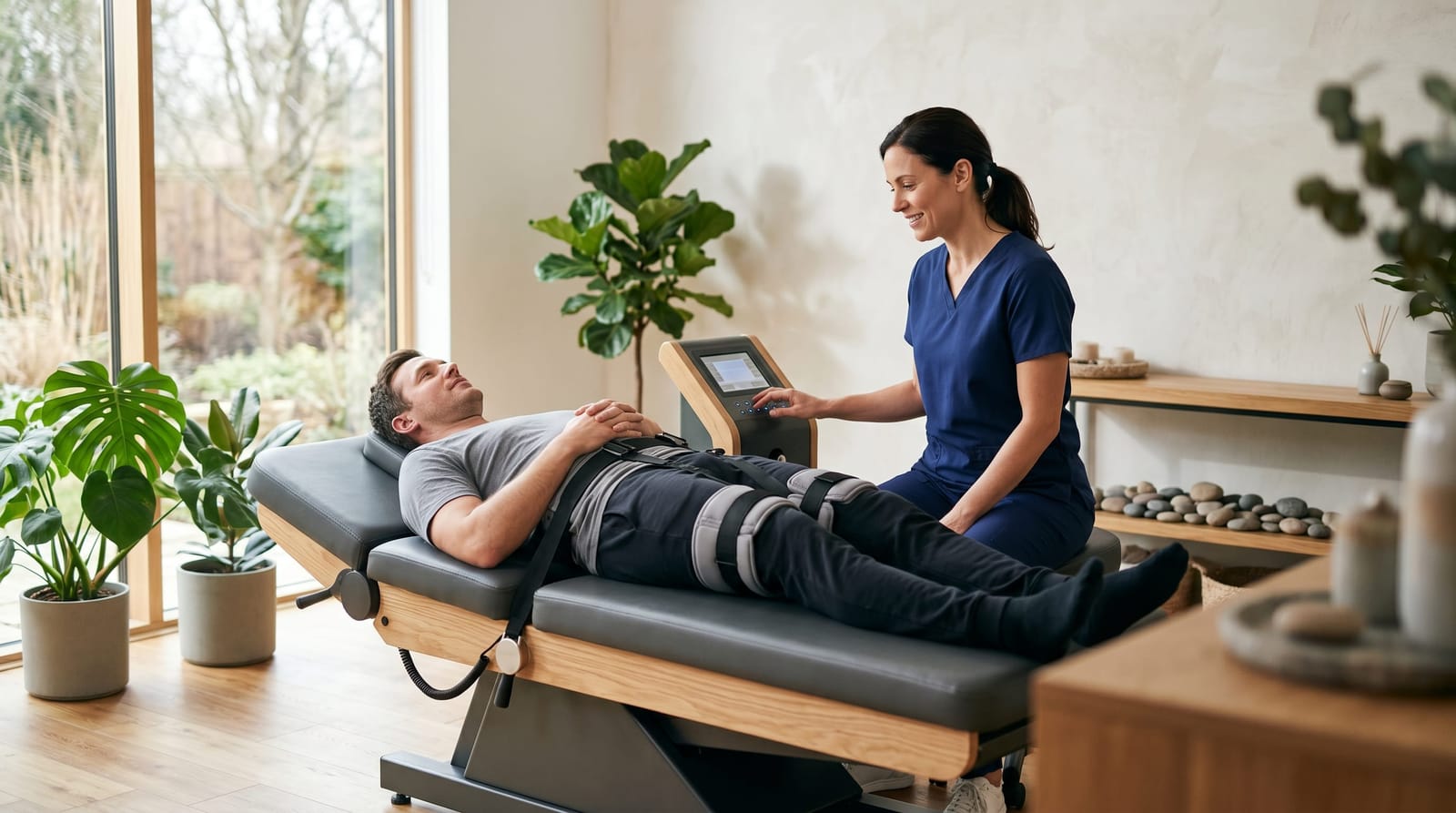
It is also helpful to distinguish posture cues from treatment. Sitting taller or relaxing the shoulders is not the same as spinal decompression therapy, which uses specialized equipment.
When Symptoms and Work Duties Need Clinical Review
This article provides general workplace education, not personal activity limits or an exercise plan. Your own situation needs an individual assessment with our team or your treating clinician. A discussion with a chiropractor can include the demands of your work alongside your symptoms and health history.
Useful details for that discussion include:
- Which tasks coincide with symptoms, and whether symptoms occur during the task or afterward.
- Whether pain stays in one area or travels into an arm or leg.
- Any new or worsening numbness, tingling, or weakness.
- How the commute, household tasks, and exercise add to the workday’s demands.
- Any existing activity restrictions or recommendations from a treating clinician.
New loss of bowel or bladder control, numbness around the groin or buttocks, or rapidly worsening leg weakness requires emergency medical assessment rather than routine workplace adjustments.
Depending on the clinical assessment and the role, a workplace discussion may involve modified duties, different task durations, or fewer repeated lifts. General information about how long herniated disc pain lasts can provide background, but it cannot establish a personal return-to-work timetable.
Where Postural Re-Education and Orthotics Fit
At Prodigy Chiro Care & Spinal Decompression in Santa Monica, we offer postural re-education, custom orthotics, chiropractic manipulation, and spinal decompression. These services address different considerations and are not interchangeable.
Postural Re-Education
Our postural re-education service focuses on posture and movement habits. Workplace questions may involve how a task is arranged, how long a position is held, and whether repeated reaching or bending is built into the setup. This is different from treating one posture as “perfect” or assuming posture alone explains disc-related symptoms.
Custom Orthotics
Custom orthotics are inserts made to fit an individual’s feet and provide support within footwear. Foot support and footwear are relevant topics for people who spend much of the day standing or walking. However, a herniated disc diagnosis alone does not establish a need for orthotics, and orthotics are not a direct treatment for the disc itself.
Staying Active Beyond the Workplace
Work, commuting, household responsibilities, and exercise all contribute to a day’s physical demands. Planning around a physically demanding shift is different from planning around a mostly seated day.
The muscles around the trunk help support the lumbar spine, or lower back. That general role does not make a standard core workout suitable for every disc condition. Walking, swimming, yoga, and strengthening exercises involve different movements and levels of effort; an activity’s name does not describe every demand it places on the body.
For background on treatment discussions, our articles on whether a herniated disc can heal without surgery and on L4 L5 herniated disc treatment explain related topics without setting an individual work or exercise plan.
Make the Workday Discussion Specific
A short description of the most demanding parts of the day is more useful than a broad statement that work is uncomfortable. Helpful details include the longest uninterrupted task, the objects handled, available equipment, and opportunities to change duties or position.
For desk-based work, the ergonomic desk setup guide provides additional workstation considerations. For physical roles, task frequency, storage layout, and access to handling equipment help define the discussion. The aim is to understand the real demands of the job, rather than assuming that either complete inactivity or pushing through symptoms is the only option.