Posture Correction and Spinal Health: The Complete Guide for West Los Angeles Professionals
Here is a question worth sitting with: When did you last go an entire workday without your neck aching, your shoulders rounding forward, or your lower back stiffening up by 3 PM?
If you are a professional in Beverly Hills, Brentwood, or Santa Monica, that question probably hits close to home. You spend long hours at a desk. You commute. You check your phone dozens of times a day. Over months and years, these habits quietly reshape your spine in ways that go far beyond simple muscle tension.
The numbers tell a clear story. According to the American Chiropractic Association, back and neck pain affects roughly 80% of Americans at some point in their lives. A 2020 global analysis published in The Lancet identified low back pain as the single leading cause of disability worldwide. Among knowledge workers and professionals who spend the majority of their day seated, rates of neck pain and postural dysfunction are even higher.
This guide is designed for the professional in their 40s or 50s who suspects that years of desk work are beginning to show up in their body. You will learn what posture-related spinal problems actually look like, how they develop over time, and how an integrated approach, including chiropractic manipulation neck pain care, postural re-education, and supportive therapies: can help you move, feel, and function better.
This is not a guide about managing symptoms. It is a guide about understanding your spine and taking meaningful, proactive steps toward long-term spinal health.
The Professional Posture Problem: Why West Los Angeles Professionals Are at Risk
West Los Angeles is home to a large and highly educated professional workforce. Executives, attorneys, tech professionals, creative directors, and healthcare administrators all share one thing in common: they spend enormous portions of their day in static, seated positions.
Research published in the International Journal of Environmental Research and Public Health found that office workers spend an average of 6 to 8 hours per day sitting. When you add commuting time, and if you are driving from Brentwood to Century City or Santa Monica to Beverly Hills, that commute adds up, total daily sedentary time can exceed 10 hours for many professionals.
That kind of sustained stillness is not what the human spine was designed for. The spine evolved for movement. It relies on dynamic loading and regular positional changes to stay healthy. When we take that movement away, the consequences are predictable.
The Three Primary Culprits
There are three main contributors to posture-related spinal problems in the professional population:
- Prolonged desk work: Hours of forward-focused computer use train the head, neck, and shoulders into a forward position. Muscles on the front of the body shorten. Muscles on the back lengthen and weaken.
- Device use and tech neck: The average adult checks their smartphone 96 times per day, according to research firm Asurion. Each time your head drops forward to look at a screen, the effective weight your cervical spine must support increases dramatically, from roughly 12 pounds in a neutral position to over 60 pounds at a 60-degree forward tilt, according to research published in Surgical Technology International.
- Sedentary commuting: Driving in fixed positions for 30 to 60 minutes, or longer, compounds spinal compression and limits the hip mobility that supports healthy lumbar alignment.
None of these factors is dramatic on its own. The challenge is that they are cumulative, consistent, and rarely addressed until symptoms become hard to ignore.
How Poor Posture Progresses: From Discomfort to Structural Change
Many people think of poor posture as a cosmetic issue or a bad habit that can be corrected simply by "sitting up straight." The reality is more nuanced, and more important to understand.
Posture-related spinal problems do not appear overnight. They develop in predictable stages over months and years. Understanding these stages helps explain why early, proactive care is so valuable.
Stage One: Muscle Fatigue and Tension
In the early stages, poor postural habits create muscle imbalances. Certain muscle groups, particularly the chest, hip flexors, and anterior neck muscles, become shortened and tight. Opposing muscle groups in the upper back, deep neck flexors, and glutes become lengthened and underactive.
The result is that familiar end-of-day aching in the neck and shoulders. Many people dismiss this as normal work stress. It is, in fact, the first signal that postural load is exceeding what your musculoskeletal system can comfortably manage.
Stage Two: Joint Stress and Mobility Loss
When muscle imbalances persist, they alter the mechanical forces acting on spinal joints. Joints that are chronically loaded in poor positions experience increased wear on specific surfaces. Range of motion begins to narrow. People notice they cannot turn their head as freely or look upward as comfortably as they once could.
At this stage, many professionals begin experiencing intermittent headaches, shoulder stiffness, or a persistent sense of tightness between the shoulder blades.
Stage Three: Structural Adaptation
Over years, the spine begins to adapt to the positions it is most frequently held in. The cervical curve, which should have a natural, backward arc, can begin to straighten or even reverse. Intervertebral discs may experience uneven pressure distribution. These are structural changes, not just functional ones.
A 2019 study in the European Spine Journal found a significant association between forward head posture and reduced cervical lordosis in adults who perform sedentary work. These changes are not irreversible, but they are harder to address than the earlier-stage muscle and joint issues that precede them.
This is why professionals who are currently in stage one or two, experiencing tension and early mobility loss, have the most to gain from proactive spinal care.
Understanding Chiropractic Manipulation for Neck Pain and Spinal Health
Chiropractic manipulation is one of the most researched conservative care approaches for spinal pain. Understanding what it is, and what the evidence says, helps professionals make informed decisions about their spinal health.
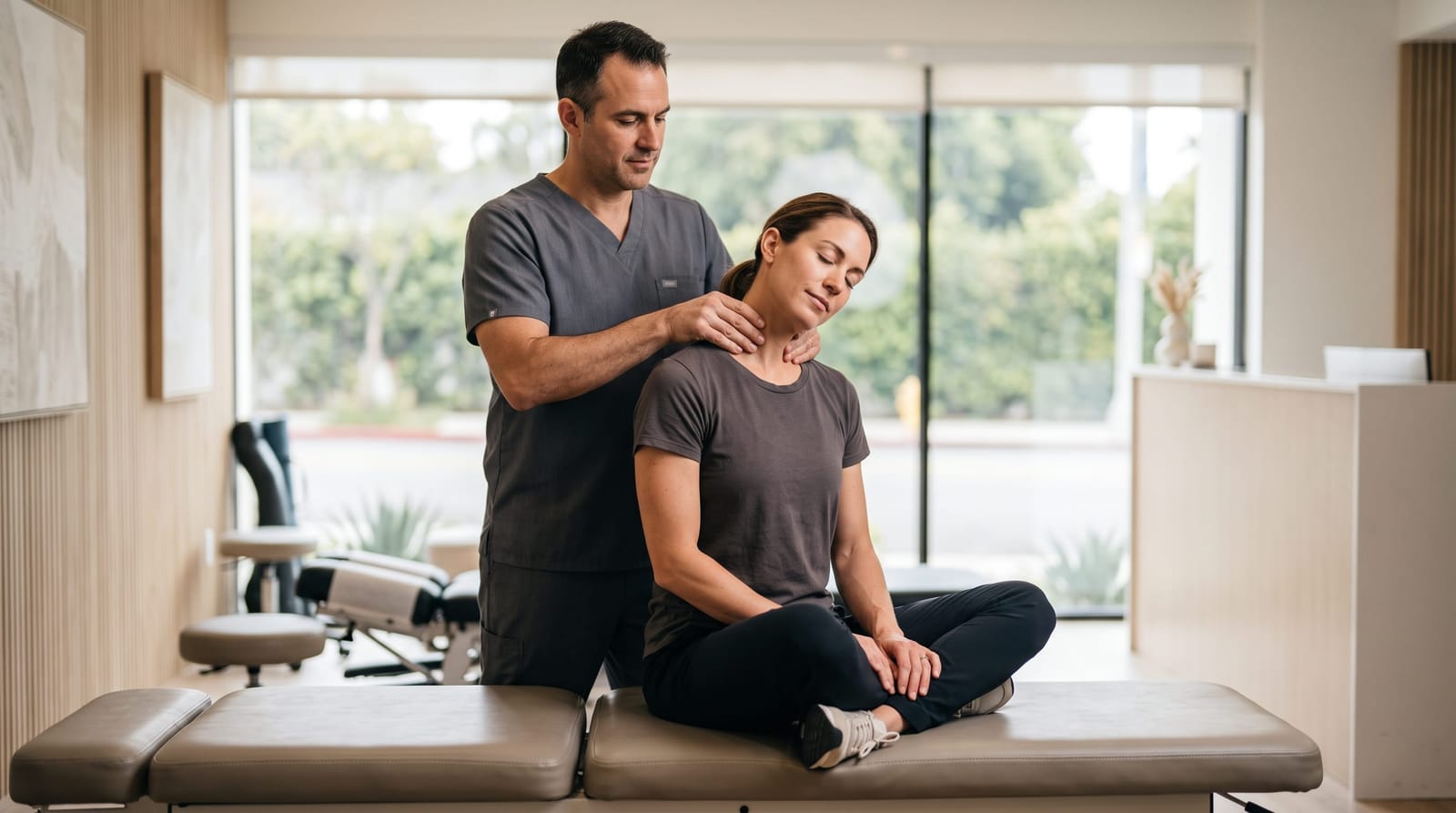
Chiropractic manipulation, also called a spinal adjustment, involves a trained chiropractor applying a controlled, specific force to a spinal joint. The goal is to restore proper joint motion, reduce local muscle tension, and support improved spinal function.
What the Research Shows
A 2021 review published in the Journal of Clinical Medicine found that chiropractic manipulation effectively supported care for acute neck pain. Research examining cervical spine manipulation has identified several areas where it may be beneficial, including neck pain and stiffness associated with poor posture or muscle strain, as well as tension-type headaches that originate from the cervical region.
It is worth noting that, like any healthcare intervention, chiropractic manipulation for neck pain carries some considerations. A thorough intake evaluation, health history review, and professional clinical judgment are important parts of any responsible chiropractic care plan. If you are experiencing neck pain or spinal discomfort, consulting with a licensed chiropractor or your primary care provider is the appropriate first step, not self-diagnosing based on online information alone.
How Chiropractic Manipulation Fits into a Broader Care Plan
At Prodigy Chiro Care, chiropractic manipulation neck pain care is never a standalone solution delivered in isolation. It is one component of a more comprehensive, personalized approach that also includes soft tissue therapy, postural assessment, corrective exercise guidance, and patient education.
For the professional dealing with tech neck, chronic shoulder tension, or early postural changes, this integrated model addresses the underlying contributors, not just the symptoms that prompted the initial visit.
The Role of Custom Orthotics and Postural Support
Spinal health does not begin and end at the neck and back. The entire musculoskeletal system is interconnected. How your feet contact the ground affects how your pelvis sits. How your pelvis sits affects lumbar alignment. Lumbar alignment influences thoracic and cervical posture.
This is why custom orthotics, shoe inserts designed specifically for your foot mechanics, are a meaningful tool in postural correction for many patients.
How Foot Mechanics Influence Spinal Alignment
Overpronation (when the arch collapses inward with each step) is one of the most common foot mechanics issues in adults. Research suggests that overpronation affects between 20% and 30% of the general population. When the arch collapses, the ankle rolls inward, the knee tracks medially, and the pelvis tilts, all of which create compensatory changes up the kinetic chain, including in the lumbar spine.
Custom orthotics are designed from a three-dimensional scan or cast of your foot. They are built specifically to support your arch, improve your foot mechanics, and reduce the compensatory strain that travels up through the spine with every step.
For professionals who are on their feet for portions of the day, whether walking between meetings, commuting, or exercising, addressing foot mechanics is a practical and often overlooked piece of the postural health puzzle.
Supportive Therapies That Complement Adjustments
Beyond custom orthotics, a well-designed spinal health plan may incorporate soft tissue therapies such as myofascial release or instrument-assisted soft tissue mobilization. These approaches help address the muscle imbalances that accumulate alongside postural dysfunction. When muscle tension is reduced and joint mobility is restored, patients are better positioned to engage in the postural retraining work that produces lasting change.
Postural Re-Education: Building Lasting Change Beyond the Adjustment Table
Chiropractic adjustments and supportive therapies address structure and function at the joint and tissue level. But one of the most important, and frequently underemphasized, components of long-term spinal health is postural re-education.
Postural re-education is the process of retraining the body's movement habits and neuromuscular patterns. It involves learning how to position and support your spine correctly during the activities that fill your day: sitting at a workstation, driving, looking at a phone, and exercising.
Why Postural Habits Are Hard to Change Without Guidance
Here is the challenge: most postural habits feel comfortable precisely because they are familiar. The forward head position that strains your cervical spine probably does not feel wrong to you. It feels like your normal. Your nervous system has adapted to it.
Re-educating posture requires targeted corrective exercises, practical ergonomic adjustments to your environment, and guidance from a professional who can identify which specific movement patterns are driving your postural dysfunction. Generic advice, "sit up straight" or "roll your shoulders back", is rarely sufficient because it does not address the underlying muscle imbalances that pull the body out of alignment in the first place.
What Postural Re-Education Looks Like in Practice
At Prodigy Chiro Care, postural re-education is tailored to the individual patient's examination findings, lifestyle, and occupational demands. A Brentwood attorney who spends 8 hours daily at a desk has different postural needs than a Santa Monica entrepreneur who alternates between standing desk work, client meetings, and long drives.
The process typically involves specific corrective exercises targeting the deep stabilizers of the spine and the upper back retractors, ergonomic recommendations for workstation setup, and practical strategies for breaking up prolonged sitting throughout the day. Most patients begin to notice meaningful improvements in their postural awareness within several weeks of consistent engagement with a re-education program.
Building a Spinal Health Routine That Fits a Professional Life
One of the most common concerns professionals raise is time. Between demanding work schedules, family responsibilities, and the general pace of life in West Los Angeles, finding time for proactive health care can feel like another task on an already full list.
The good news is that building a meaningful spinal health routine does not require hours of effort each day. Small, consistent changes, implemented thoughtfully, produce significant results over time.
The 2-Minute Movement Rule
Research from the American Journal of Epidemiology has found that replacing even 2 minutes of sitting per hour with light movement can produce meaningful reductions in all-cause mortality risk. Applied to spinal health, this principle translates simply: short, frequent movement breaks do more for your spine than an occasional long stretch session.
Setting a timer to stand, walk briefly, or perform a few targeted movements every 45 to 60 minutes is one of the highest-return habits a desk-based professional can adopt. It costs almost no time and keeps the spinal joints hydrated, the surrounding musculature active, and the postural warning signals from accumulating throughout the day.
The Role of Proactive Chiropractic Visits
Many professionals approach chiropractic care as something they pursue when pain becomes significant enough to disrupt their life. A different model, one focused on periodic, proactive spinal check-ins, is far more effective at preventing the progression from early postural change to structural adaptation.
Prodigy Chiro Care supports patients in establishing a care rhythm that matches their lifestyle. For some, this means regular monthly visits for spinal maintenance. For others, it means a more intensive initial period followed by periodic check-ins. The right approach depends on your individual findings, goals, and how your body responds to care.
Ergonomics as Preventive Investment
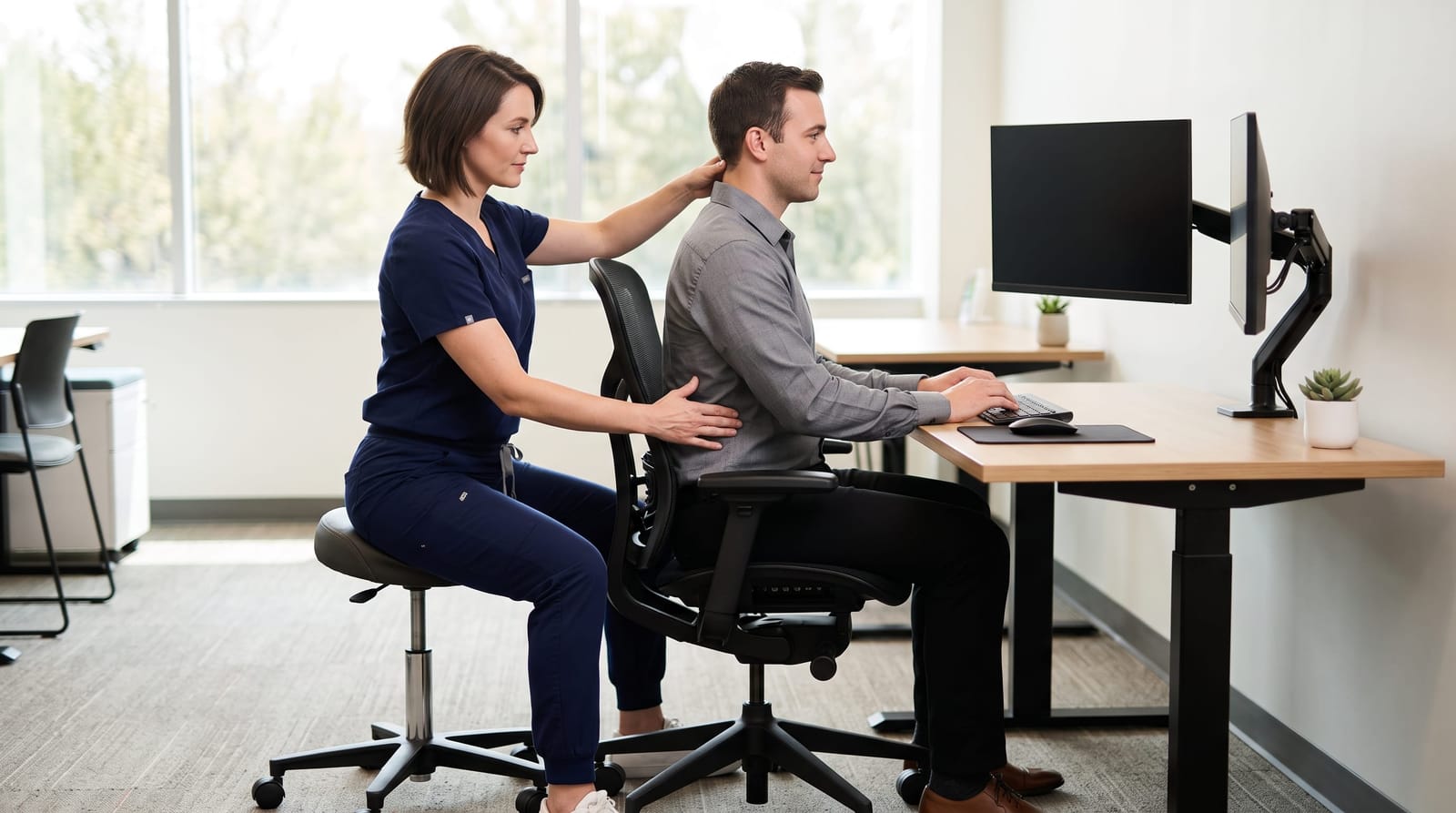
Your workstation is where you spend the majority of your waking hours. Investing in proper ergonomics, monitor height, chair support, keyboard positioning, screen distance, is one of the highest-leverage changes a professional can make. These details may seem minor, but over thousands of cumulative hours at a desk, they determine whether your work environment is a source of postural stress or postural support.
What to Expect When You Visit Prodigy Chiro Care
Understanding what happens during a chiropractic evaluation helps many professionals feel more comfortable initiating care. Here is a general overview of what the process looks like at Prodigy Chiro Care.
The Initial Consultation and Evaluation
Your first visit begins with a thorough conversation about your health history, your occupational demands, your current symptoms, and your goals. No two professionals walk in with the same combination of postural patterns, lifestyle factors, and areas of concern.
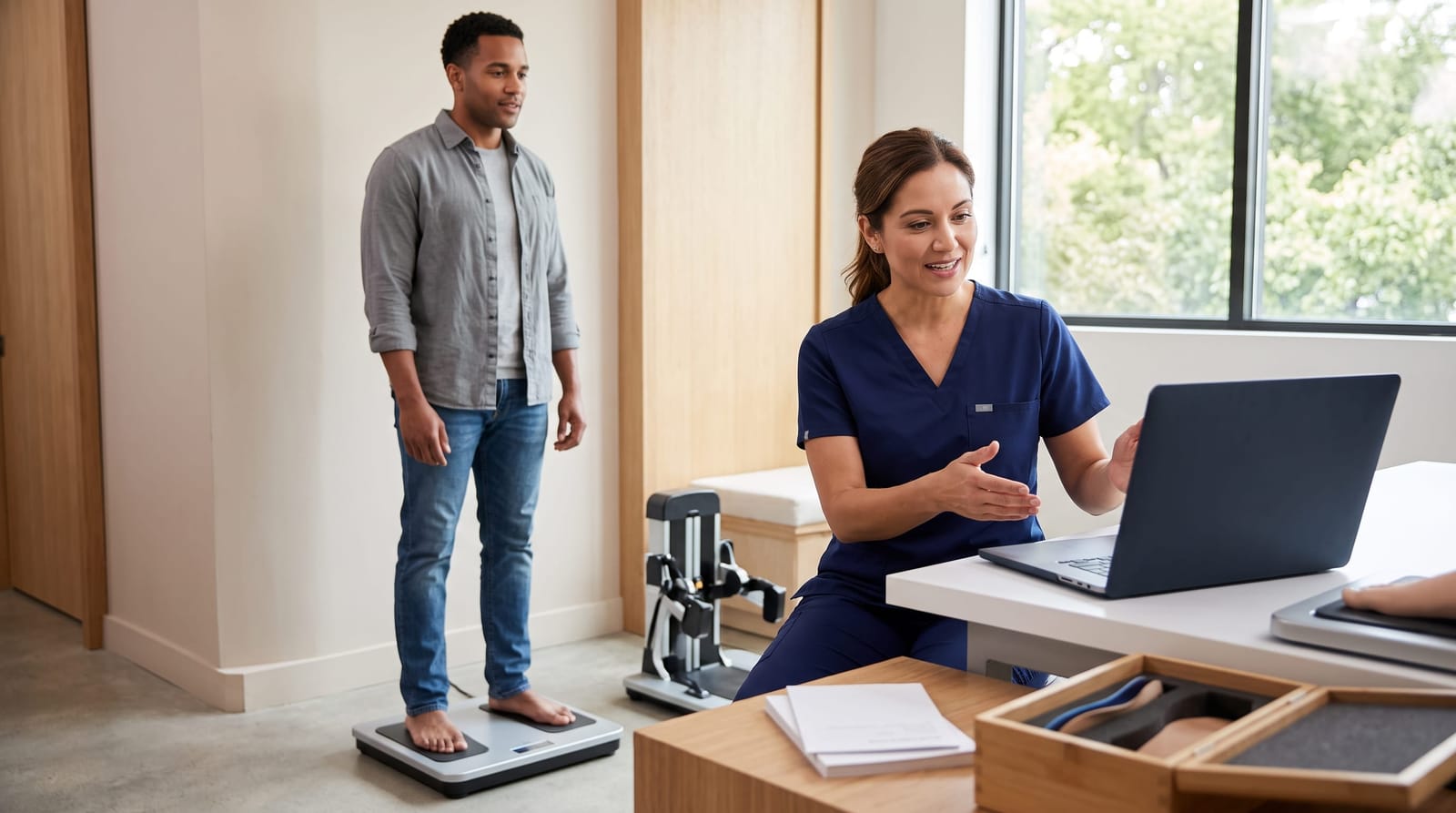
The physical examination includes a postural assessment, looking at how your body holds itself from multiple angles, as well as range of motion testing, orthopedic and neurological screening where appropriate, and palpation of the spine and surrounding musculature. This evaluation is what makes it possible to design a care plan that is specific to your body, not a generic template.
Your Personalized Care Plan
Based on the examination findings, your chiropractor will discuss their clinical impressions with you and outline a recommended care approach. This will typically include the frequency of visits, the types of care that are most appropriate for your situation, and the goals you are working toward together.
At Prodigy Chiro Care, patients are always included in the decision-making process. You will understand what is being recommended and why, and your questions are welcomed and encouraged.
Ongoing Support and Progress Tracking
Progress is regularly reassessed. As your postural patterns improve, your muscle balance shifts, and your symptoms evolve, the care plan adapts accordingly. Prodigy's approach is not static: it is designed to move with you toward your long-term spinal health goals.
Why Prodigy Chiro Care Is a Partner for West Los Angeles Professionals
Prodigy Chiro Care was built with the professional patient in mind. The practice understands that the professionals of Beverly Hills, Brentwood, and Santa Monica are high-performing, time-conscious individuals who value evidence-informed care and genuine expertise over generic, one-size-fits-all approaches.
The practice integrates chiropractic manipulation, custom orthotics, cold laser therapy, soft tissue techniques, and postural re-education into a cohesive, patient-centered model. Each tool is applied with clinical judgment and tailored to the individual, not layered on indiscriminately.
Prodigy also recognizes that the professionals who benefit most from chiropractic care are often those who have not yet reached a crisis point. The 45-year-old executive with a stiff neck and occasional headaches who comes in before those issues compound is far easier to help than the same executive five years later with more significant structural changes.
That proactive orientation, care as a long-term investment in how you feel and function, is central to how Prodigy works with its patients.
Deep Dive: Explore the Full Posture and Spinal Health Topic Cluster
This guide provides a comprehensive overview of posture correction and spinal health for professionals. Each of the following topic areas receives a dedicated, in-depth exploration in the articles below. These resources are designed to help you move from general understanding to specific, practical knowledge on the areas most relevant to your situation.
-
Tech Neck and Forward Head Posture
Forward head posture is one of the most prevalent postural problems in the professional population, and one of the most consequential for cervical spine health. This article examines the mechanics of tech neck, how it develops, and how chiropractic manipulation neck pain care directly addresses forward head posture at the joint and tissue level. -
Postural Re-Education at a Chiropractic Practice
Understanding what postural re-education involves in a clinical setting helps patients engage with it more effectively. This article explains the process in detail, including how custom orthotics fix posture problems and how corrective exercise programs are designed for the individual patient's movement patterns. -
Scoliosis in Adults: Chiropractic Care for Pain and Progression
Adult scoliosis is more common than many professionals realize. This article explores what the chiropractic manipulation evidence based research shows about managing adult scoliosis, reducing discomfort, and supporting spinal stability over the long term. -
Torticollis Treatment: Chiropractic Manipulation and Cold Laser
Torticollis, characterized by involuntary neck tilting and restricted rotation, can be both uncomfortable and limiting. This article covers how an integrated approach of chiropractic manipulation neck pain care and cold laser therapy is used to address torticollis in a clinical setting. -
Ergonomic Desk Setup for Spinal Health
Your workstation environment shapes your posture for 8 or more hours every day. A properly configured desk can support your spine; a poorly configured one steadily works against it. This step-by-step guide to ergonomic desk setup walks through monitor height, chair positioning, keyboard placement, and the other variables that matter most.
Your Spine Is Worth the Investment
Your career, your productivity, and your quality of life all depend on a body that functions well. For professionals in West Los Angeles who spend long hours at desks, in cars, and on devices, the cumulative load on the spine is real, and it deserves real, proactive attention.
The encouraging news is that the progression from early postural dysfunction to more significant spinal change is not inevitable. With the right support, the right clinical guidance, and a genuine commitment to your spinal health, meaningful improvement is achievable at virtually any stage of the process.
Prodigy Chiro Care exists to be that support for professionals in Beverly Hills, Brentwood, Santa Monica, and the surrounding West Los Angeles communities. Whether you are managing current discomfort or simply want to be proactive about your long-term spinal health, the best time to start is now.
We invite you to schedule a consultation with our team and begin the conversation about what personalized spinal care could look like for you. Your spine has been working hard for years. It deserves the same level of investment you give to everything else that matters in your professional life.
Ready to take a proactive step toward better spinal health? Contact Prodigy Chiro Care today to schedule your initial consultation.