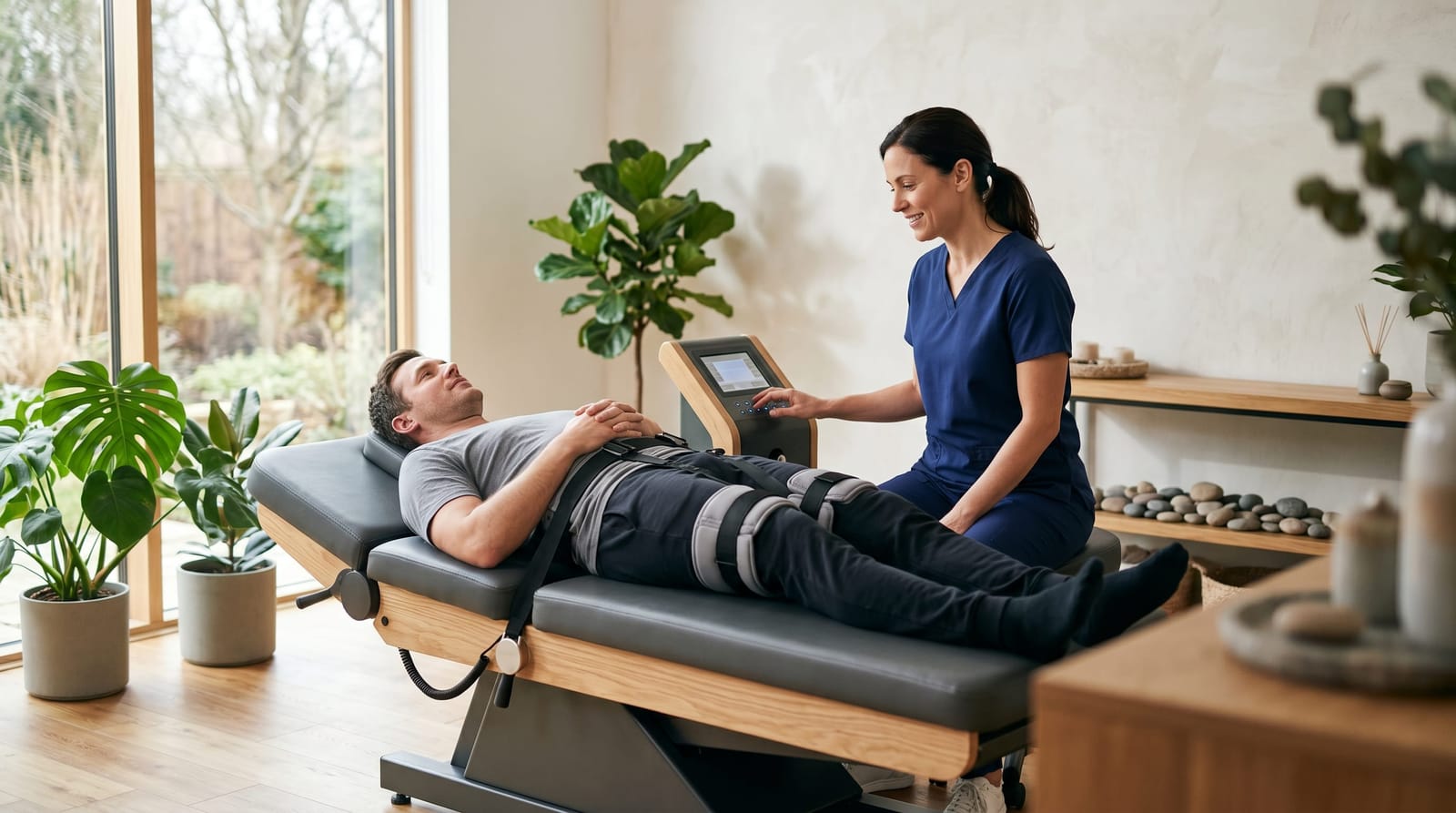
Herniated Disc Recovery Time: Realistic Expectations Without Surgery

One of the first questions people ask after a herniated disc diagnosis is, "How long will this pain last?" It's a completely understandable concern, and the good news is that most people do recover without surgery. Understanding how long herniated disc pain lasts, what healing actually looks like week by week, and what milestones to expect can make the entire process feel far less overwhelming. This guide walks you through a realistic recovery timeline so you know what to expect and how to support your body along the way.
So, How Long Does Herniated Disc Pain Last?
For most people dealing with a herniated disc, noticeable pain improvement begins within the first two to six weeks of consistent, conservative care. Research consistently shows that herniated disc pain lasts, on average, four to six weeks for mild to moderate cases. More significant herniations or cases involving nerve compression may take anywhere from three to six months to resolve fully.
It's worth understanding that "recovery" doesn't always mean the disc returns to its original shape. What often happens is the body gradually reabsorbs some of the disc material, inflammation decreases, and surrounding muscles and tissues adapt in ways that reduce nerve irritation. The pain lessens not because the disc is perfectly restored, but because the body learns to heal around it.
That said, how long herniated disc pain lasts varies significantly from person to person. Factors that influence your individual timeline include:
- The severity and location of the herniation
- Your age and overall health
- How quickly you begin supportive care
- Your activity level and posture habits during recovery
- Whether nerve involvement is present (such as sciatica)
The encouraging reality is that the vast majority of herniated disc cases, well over 80 percent, resolve with conservative, non-surgical approaches.
Week-by-Week Recovery: What Healing Actually Feels Like
Having a rough sense of what to expect each phase of recovery can help you feel more in control and less anxious about normal fluctuations in symptoms.
Weeks 1-2: Managing the Acute Phase
The first one to two weeks are often the most uncomfortable. Pain and stiffness may feel at their peak, and certain movements, like bending forward, sitting for long periods, or sneezing, can aggravate symptoms. This is normal. During this phase, the primary goal is reducing inflammation and avoiding positions that worsen nerve irritation. Gentle movement is encouraged over complete bed rest, which can actually slow recovery. Short, slow walks and gentle stretching can help maintain circulation without straining the affected disc.
Weeks 3-6: Gradual Symptom Reduction
Between weeks three and six, most patients begin noticing meaningful relief. Sharp, shooting pain often softens into a more manageable ache. This is the window where consistent, guided care makes the biggest difference. Low-impact activities like swimming, walking, and gentle yoga are well-tolerated by most people and help improve flexibility while reducing pressure on the disc. Core-strengthening exercises, done carefully and progressively, begin during this stage to support spinal stability. Many people find that how long herniated disc pain lasts is closely tied to how active and consistent they are during this phase.
Months 2-3: Building Strength and Mobility
By months two and three, the focus shifts from pain management to rebuilding. Most people experience significantly reduced daily discomfort and improved range of motion. You may still notice flare-ups with certain activities, but these typically become less frequent and shorter in duration. This is also an ideal time to evaluate posture habits, workplace ergonomics, and sleep positions, all of which can influence how long herniated disc pain lasts beyond the initial healing phase.
Months 3-6: Full Functional Recovery
For more complex cases, the three-to-six-month range is where lasting recovery solidifies. Nerve-related symptoms like tingling or radiating leg pain (common with sciatica-type herniations) often take longer to resolve than localized back pain. By this stage, most patients have returned to everyday activities, though high-impact sports or heavy lifting may require additional conditioning and guidance.
Signs Your Herniated Disc Is Healing
Knowing what progress looks like is just as important as knowing the timeline. Positive healing signs include:
- Pain that is less intense and less frequent over time
- Improved ability to sit, stand, or walk without significant discomfort
- Reduced tingling, numbness, or radiating pain in the arms or legs
- Greater range of motion in the spine
- Less reliance on pain relievers or supportive devices
- Improved sleep quality as nighttime discomfort decreases
Recovery is rarely a straight line. You may have good days followed by a difficult day after mild overexertion: this is a normal part of the process and not a sign that healing has reversed. The overall trend toward improvement is what matters most.
How Chiropractic Care Supports Non-Surgical Recovery
Chiropractic care is one of the most well-supported conservative options for managing herniated disc recovery. Through spinal adjustments, soft tissue therapy, and rehabilitative exercise guidance, a chiropractor can help reduce nerve irritation, restore joint mobility, and support the body's natural healing process.
At Prodigy Chiro Care, we take a personalized approach to herniated disc recovery, because how long herniated disc pain lasts depends heavily on the care and habits you build during those early weeks. Our goal is to help patients move more comfortably, build lasting spinal strength, and reduce the risk of re-injury over time. We don't offer quick fixes, but we do offer consistent, evidence-informed support tailored to where you are in your recovery.
If you're trying to understand the broader picture of disc health, including how a herniated disc differs from a bulging disc and what that means for your recovery path, our complete guide to herniated disc vs bulging disc covers everything you need to know as a starting point.
Frequently Asked Questions
How long does herniated disc pain last without treatment?
Without any treatment or supportive care, herniated disc pain may still improve over time: the body has a natural ability to reduce inflammation and adapt. However, recovery without guidance tends to take longer and carries a higher risk of worsening symptoms or developing compensatory movement patterns. Most experts recommend beginning conservative care early to shorten how long herniated disc pain lasts and to prevent recurrence.
Can herniated disc pain come back after it heals?
Yes, it can: particularly if the underlying issues that contributed to the herniation (such as poor posture, weak core muscles, or repetitive strain) are not addressed. This is why rehabilitation and lifestyle adjustments during recovery are so important. Building spinal strength and awareness after initial healing significantly reduces the likelihood of future flare-ups.
Is it normal for herniated disc pain to feel worse some days during recovery?
Absolutely. Recovery from a herniated disc is rarely perfectly linear. Minor setbacks or flare-up days are common, especially after increased activity, prolonged sitting, or stress. These temporary increases in discomfort do not mean your healing has reversed. If severe pain, sudden weakness, or loss of bladder or bowel control occurs, however, it's important to seek care promptly.
What activities should I avoid while recovering from a herniated disc?
During the early stages of recovery, it's generally wise to avoid heavy lifting, high-impact exercise (such as running on hard surfaces), prolonged sitting without movement breaks, and activities that involve repetitive twisting of the spine. As symptoms improve, a gradual return to these activities, with proper guidance, is typically safe and encouraged.
Moving Forward With Confidence
Understanding how long herniated disc pain lasts puts you in a much stronger position to manage your recovery with patience and purpose. For most people, meaningful relief comes within six weeks, and full functional recovery is well within reach over a few months with consistent care and smart daily habits. You don't have to navigate this alone: having the right support team makes a significant difference in both how you heal and how you feel throughout the process. If you'd like personalized guidance, we're here to help you take the next step toward feeling better.