Cold Laser Therapy for Carpal Tunnel: Does It Actually Help?

If you've been dealing with the tingling, numbness, or hand weakness that comes with carpal tunnel syndrome, you've probably started researching your options, and wondering whether cold laser therapy carpal tunnel treatment is worth exploring. It's a fair question, especially when you're trying to avoid surgery or repeated injections. This post breaks down what cold laser therapy actually does for carpal tunnel, what the research suggests, how it compares to other approaches, and what you can realistically expect from a treatment plan.
Understanding Carpal Tunnel Syndrome and Why Treatment Choice Matters
Carpal tunnel syndrome occurs when the median nerve, which runs through a narrow passageway in your wrist called the carpal tunnel, becomes compressed or irritated. This compression is what causes the familiar symptoms: numbness and tingling in the thumb, index, and middle fingers, a weak grip, and discomfort that often worsens at night or after repetitive hand activity.
According to the American Academy of Orthopaedic Surgeons, carpal tunnel syndrome affects approximately 3 to 6 percent of the general adult population, making it one of the most common nerve-related conditions in the upper extremities. Because the symptoms range from mildly annoying to significantly disruptive, treatment options also span a wide spectrum, from wrist splints and conservative therapies all the way to surgical intervention.
For many people, especially those in the earlier or moderate stages of the condition, the goal is to find something that addresses the underlying inflammation and nerve irritation without jumping straight to invasive procedures. That's where cold laser therapy enters the conversation as one option worth understanding.
How Cold Laser Therapy Works on Nerve and Tissue Healing
Cold laser therapy, also called low-level laser therapy (LLLT) or photobiomodulation, uses specific wavelengths of light, typically in the red or near-infrared spectrum, to penetrate soft tissue without generating heat. The term "cold" simply reflects the fact that the laser does not cut or burn tissue the way surgical lasers do. Instead, it interacts with cells at a biological level.
When the light energy reaches the target tissue, it is absorbed by cellular structures called mitochondria: the energy-producing components of your cells. This absorption is thought to support a process called photobiomodulation, which may help:
- Reduce localized inflammation around the carpal tunnel
- Support nerve tissue recovery by promoting cellular energy production
- Encourage improved circulation in the wrist and surrounding structures
- Help decrease sensitivity in irritated nerve fibers
For carpal tunnel syndrome specifically, the aim is to calm the inflamed tissue compressing the median nerve while supporting the nerve's own healing response. The treatment is applied externally to the wrist area, is completely painless, and requires no recovery time.
What Clinical Research Suggests About Cold Laser Therapy and Carpal Tunnel
Research into cold laser therapy carpal tunnel outcomes has grown meaningfully over the past two decades. While it's important to note that no treatment produces identical results for every individual, published studies offer encouraging findings worth considering.
A frequently cited study published in Photomedicine and Laser Surgery found that patients receiving low-level laser therapy for carpal tunnel syndrome reported statistically significant improvements in pain scores and nerve conduction measurements compared to a placebo group. In some clinical trials, participants experienced a reduction in pain severity of approximately 50 percent or more following a structured course of treatment: typically ranging from 8 to 12 sessions delivered over several weeks.
A systematic review examining multiple randomized controlled trials concluded that LLLT showed meaningful short-term benefits for both pain relief and functional improvement in mild-to-moderate carpal tunnel syndrome. Researchers noted improvements in grip strength, symptom frequency, and nerve conduction velocity: a measurable marker of how well the median nerve is functioning.
These findings don't suggest cold laser therapy is a universal solution, but they do support its role as a legitimate, evidence-informed option within a broader treatment plan. As always, individual circumstances vary, and a qualified healthcare provider can help determine whether this approach is appropriate for your specific situation.
Comparing Your Options: Cold Laser Therapy vs. Other Carpal Tunnel Treatments
When you're weighing your choices for carpal tunnel management, it helps to understand where cold laser therapy fits alongside the other commonly recommended approaches.
Wrist Splinting
Wearing a wrist splint, particularly at night, is often recommended as a first step. It helps keep the wrist in a neutral position, reducing pressure on the median nerve. Splinting is low-risk and accessible, but it primarily manages positioning rather than addressing underlying inflammation or nerve healing directly.
Corticosteroid Injections
Steroid injections can provide meaningful short-term relief by reducing inflammation around the carpal tunnel. Research suggests they may offer relief for approximately 3 to 6 months in many cases. However, repeated injections are generally limited due to potential effects on surrounding tissue, and they don't address the root cause of nerve irritation for everyone.
Surgery (Carpal Tunnel Release)
For more severe or long-standing cases, carpal tunnel release surgery involves cutting the ligament that forms the roof of the carpal tunnel, relieving pressure on the nerve. It has a high success rate, but it also involves recovery time, some risk of complications, and is generally considered when conservative options haven't provided adequate relief.
Cold Laser Therapy
Cold laser therapy occupies a meaningful space in the non-invasive, conservative treatment category. It doesn't require downtime, involves no needles or incisions, and is painless during application. For patients with mild-to-moderate carpal tunnel syndrome who want to explore non-surgical options before escalating to more invasive interventions, it represents a well-tolerated approach. It's also worth noting that cold laser therapy is sometimes used alongside other conservative strategies, like splinting or targeted rehabilitation exercises, rather than as a standalone treatment.
If you're also dealing with related upper-extremity discomfort, you may find it helpful to explore how cold laser therapy supports conditions like tennis elbow, where a similar anti-inflammatory mechanism is applied to tendon tissue.
What to Expect During Cold Laser Therapy for Carpal Tunnel
If you're considering cold laser therapy carpal tunnel treatment, knowing what a typical session looks like can help ease any uncertainty.
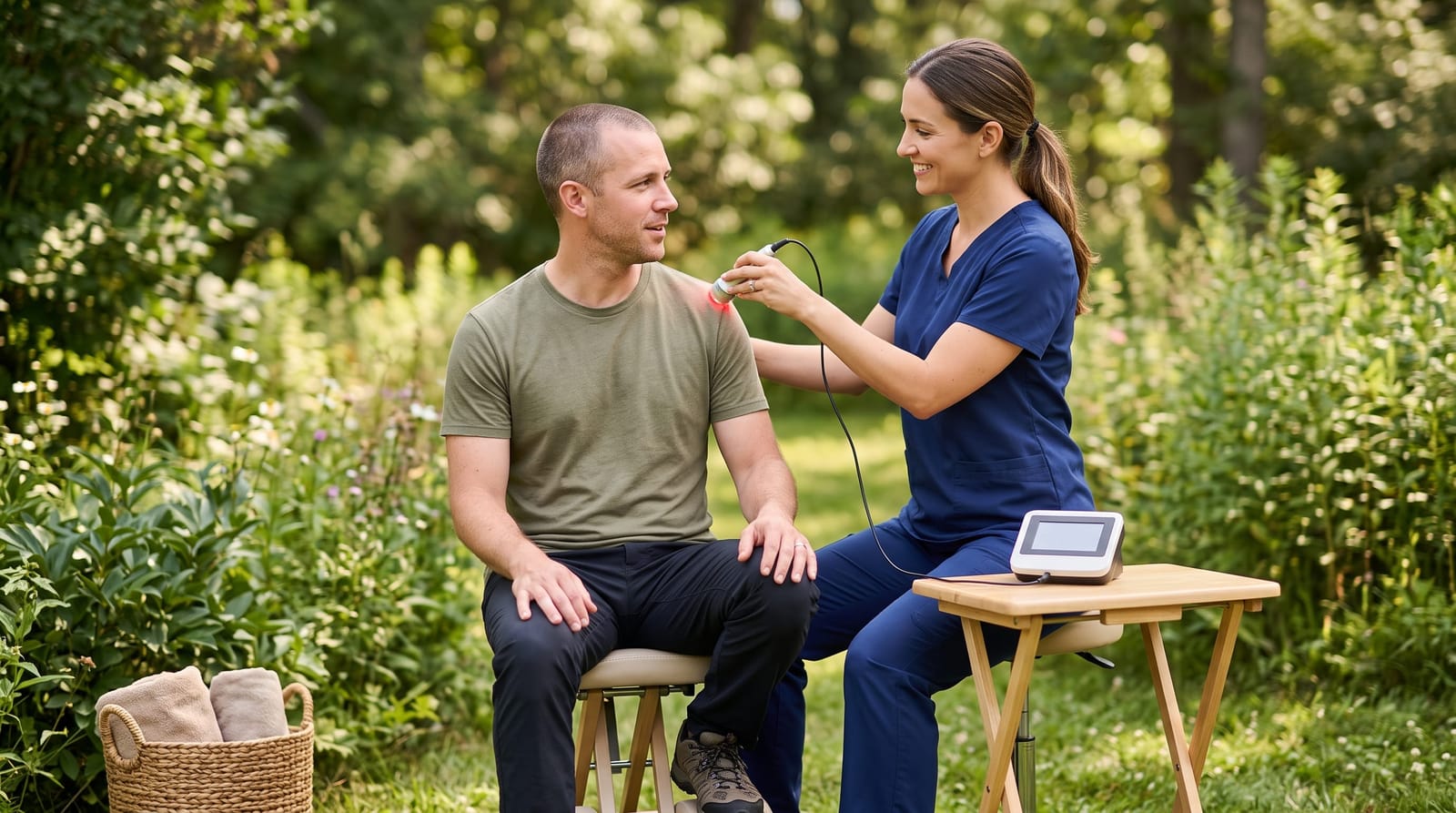
Sessions are generally brief: most last between 5 and 15 minutes depending on the device used and the area being treated. A handheld laser device is positioned over the wrist, and the light is applied directly to the skin. You won't feel heat, vibration, or discomfort. Many patients describe the experience simply as sitting quietly with a device held near their wrist.
A typical treatment course for carpal tunnel syndrome may involve 8 to 12 sessions, often scheduled 2 to 3 times per week. Some patients report noticing changes in their symptoms within the first few sessions, while for others improvement builds gradually over the course of the full treatment plan. Every person responds differently, which is why an individualized approach guided by a knowledgeable provider makes a real difference.
Cold laser therapy is also being explored for neck and shoulder-related nerve discomfort, if that's part of your experience, learning about cold laser therapy for neck and shoulder pain may provide additional helpful context.
Frequently Asked Questions
How many cold laser therapy sessions are typically needed for carpal tunnel syndrome?
Most treatment plans for carpal tunnel syndrome involve somewhere between 8 and 12 sessions, typically scheduled two to three times per week. The exact number depends on the severity of your symptoms and how your body responds to treatment. A provider will usually reassess your progress at regular intervals and adjust the plan accordingly.
Is cold laser therapy painful for carpal tunnel?
No: cold laser therapy is a painless procedure. You won't feel heat or any physical sensation during the session. The "cold" in the name reflects the non-thermal nature of the laser, distinguishing it from the high-intensity lasers used in surgery. Most patients find the sessions easy to tolerate and require no recovery time afterward.
Can cold laser therapy be used alongside other carpal tunnel treatments?
In many cases, yes. Cold laser therapy is often incorporated as part of a broader, multi-modal approach to managing carpal tunnel syndrome. It may be used in combination with wrist splinting, rehabilitation exercises, or other conservative therapies. A healthcare provider familiar with your full health picture is best positioned to guide how these approaches might work together for you.
Who is a good candidate for cold laser therapy for carpal tunnel?
People with mild-to-moderate carpal tunnel syndrome who are looking for non-invasive options before considering injections or surgery are often candidates worth discussing this therapy with. It's also sometimes considered for individuals who haven't responded fully to splinting alone, or those who prefer to avoid corticosteroids. A qualified provider can evaluate whether it's a good fit based on your symptoms, history, and overall health.
Bringing It Together
Cold laser therapy carpal tunnel treatment offers a non-invasive, well-tolerated option for people looking to address carpal tunnel symptoms without immediately turning to injections or surgery. Clinical research supports its potential to reduce pain and inflammation and support nerve healing, particularly for mild-to-moderate cases. While individual results vary and no treatment comes with guarantees, it represents a meaningful addition to the conservative care toolkit. If you're exploring your options, speaking with a qualified provider is the right next step: they can help you determine whether cold laser therapy fits within a personalized care plan designed around your specific needs.