Sciatica Pain Relief, Flare-Ups, and Daily Living: A Guide for Santa Monica Patients
Sciatica can make ordinary decisions difficult: how to sit through a meeting, find a comfortable sleeping position, or plan a day when leg discomfort keeps changing. The key distinction is between temporary comfort and care that addresses why symptoms are occurring. Both matter, but they answer different questions.
Gentle movement, stretching, and heat or cold are among the non-surgical options discussed for sciatica pain relief by Harvard Health. Their suitability depends on the individual rather than a single routine that fits everyone.
This information is general education, not an individual care plan. Your own situation needs assessment by a licensed healthcare professional; our team at Prodigy Chiro Care & Spinal Decompression can evaluate whether chiropractic care is appropriate. New loss of bladder or bowel control, numbness around the groin, or rapidly worsening leg weakness warrants urgent medical evaluation rather than a routine chiropractic visit.
Understanding Sciatica Before Comparing Relief Options
Sciatica describes symptoms associated with irritation or compression of the sciatic nerve or the nerve roots that contribute to it. Symptoms can travel from the lower back or buttock into the leg and may include pain, tingling, or numbness. The term describes a symptom pattern; an assessment explores its cause.
That distinction matters when comparing care options. Two people may both describe their symptoms as sciatica while having different examination findings, activity limitations, and care needs.
Comfort, function, and recovery answer different questions
- Comfort: How bothersome are symptoms at a particular moment?
- Function: How are sitting, walking, sleeping, working, and other daily activities affected?
- Recovery: How are symptoms and everyday abilities changing over time?
For example, less discomfort while resting is useful information, but it tells a different story from being able to complete a commute comfortably. Describing both symptoms and daily limitations gives a fuller picture than a pain rating alone.
What Matters During a Sciatica Flare-Up
A flare-up generally means symptoms have become more noticeable or disruptive. An important distinction is whether the episode resembles a familiar pattern or includes something different. Intensity matters, alongside changes in sensation, movement, and everyday ability.
A brief account of the episode can make a care conversation more productive:
- Onset: When did the change begin, and what was happening around that time?
- Location: Is discomfort in the same area as before, or has it moved or spread?
- Associated symptoms: Is there tingling, numbness, or a change in leg strength?
- Activity impact: Is the main difficulty sitting, walking, sleeping, or another task?
- Pattern: Is the episode settling, staying similar, or becoming more disruptive?
These details help a clinician understand the change. The choice of activity or treatment depends on the broader assessment, not simply how intense the discomfort feels.
Where heat and cold fit
Heat and cold are commonly discussed as temporary comfort measures. Harvard Health describes both in its overview of sciatica relief.
A discussion about temperature-based comfort includes more than how many days symptoms have lasted. Skin sensation and other health conditions also matter. Feeling temporarily more comfortable and identifying the cause of symptoms remain separate parts of the care discussion.
Movement, Rest, and Stretching: Understanding the Balance
Rest and movement are not necessarily opposites. A short pause from a demanding task differs from spending much of the day inactive. General sciatica guidance favors tolerable movement rather than prolonged bed rest and recognizes worsening pain with movement as a reason for medical review, as explained by Harvard Health.
Different activities also place different demands on the body. A short walk, a long drive, lifting a suitcase, and an exercise class involve different positions, durations, and effort. Comfort with one activity tells only part of the story.
Activity includes more than exercise
Household tasks, errands, commuting, and desk work all contribute to the day’s activity. Looking at the sequence can reveal details that a list of workouts misses.
For example, discomfort during an evening walk may follow a long drive and several hours of seated work. Describing that sequence gives a clinician more context than reporting only that walking was uncomfortable.
A useful activity description includes the task, its duration, the position involved, and how symptoms behaved during and afterward. This helps explain a pattern without turning every movement into a test.
What makes a stretching plan useful
Gentle stretching may be part of a sciatica care plan. Harvard Health describes potential benefits for flexibility and mobility. Selecting a stretch involves the person’s examination findings, medical history, and current symptoms, rather than the movement’s name or popularity.
An exercise plan is easier to understand when it explains the purpose of each movement, the expected sensations, and the circumstances in which it would be modified. Those details are more useful than copying another person’s repetitions or range of movement.
Sitting, Desk Work, and Driving With Sciatica
The question of the best sitting position often assumes there is one correct posture. A more useful discussion considers the person, the seat, the task, and the time spent in that position. A photograph of upright posture cannot show how a setup feels throughout a working day.
Chair fit and treatment are different considerations
An ergonomic review may consider:
- Seat height and depth: How the chair fits the person’s legs and allows access to the work surface.
- Foot support: Whether the feet have a stable resting place.
- Back support: How the chair or a cushion contacts the back.
- Reach: Whether the keyboard, mouse, or other tools require sustained reaching.
- Task duration: Whether the day involves uninterrupted sitting or a mixture of activities.
These details concern the working setup. A cushion changes support, while a standing desk changes the working position. Neither replaces an explanation of why leg symptoms are occurring, and standing comfort is a separate consideration from seated comfort.
A commute is a separate sitting task
A car seat differs from an office chair because the position also needs to allow safe access to the steering wheel, pedals, and mirrors. Driving involves the additional requirement of responding reliably to traffic.
For a Santa Monica commute, useful details include time behind the wheel, whether discomfort begins immediately or later, and whether getting into or out of the vehicle is difficult. A comfortable desk arrangement may feel quite different from a car seat.
Describing the specific task helps distinguish difficulty sitting still from difficulty entering a vehicle, reaching the controls, or tolerating a longer journey.
Sleeping Positions and Nighttime Comfort
Side-lying, back-lying, and stomach-lying place the hips and lower back in different positions. Usual sleeping preferences, the mattress, and current symptoms all contribute to nighttime comfort.
Pillows change support, too. A pillow between the knees changes leg support during side-lying; a pillow beneath the knees changes support during back-lying. These arrangements concern positioning rather than correction of an underlying spinal condition.
Which part of the night is difficult?
Sleep disruption can involve several distinct problems:
- Discomfort while initially settling into bed.
- Symptoms that interrupt sleep later in the night.
- Difficulty turning from one side to the other.
- Discomfort when getting into or out of bed.
- Symptoms that are most noticeable upon waking.
For example, difficulty turning in bed raises a different question from discomfort that develops while remaining in one position. That distinction makes the care conversation more specific.
When comparing pillows or mattresses, the relevant questions concern how the support differs and which part of sleep is difficult. A product’s “orthopedic” label alone offers little guidance about those individual needs.
How Chiropractic Manipulation and Spinal Decompression Differ
We offer chiropractic manipulation and non-surgical spinal decompression in Santa Monica, with more than 26 years of experience. These services use different methods. Understanding what each involves makes a proposed care plan easier to discuss.
Chiropractic manipulation
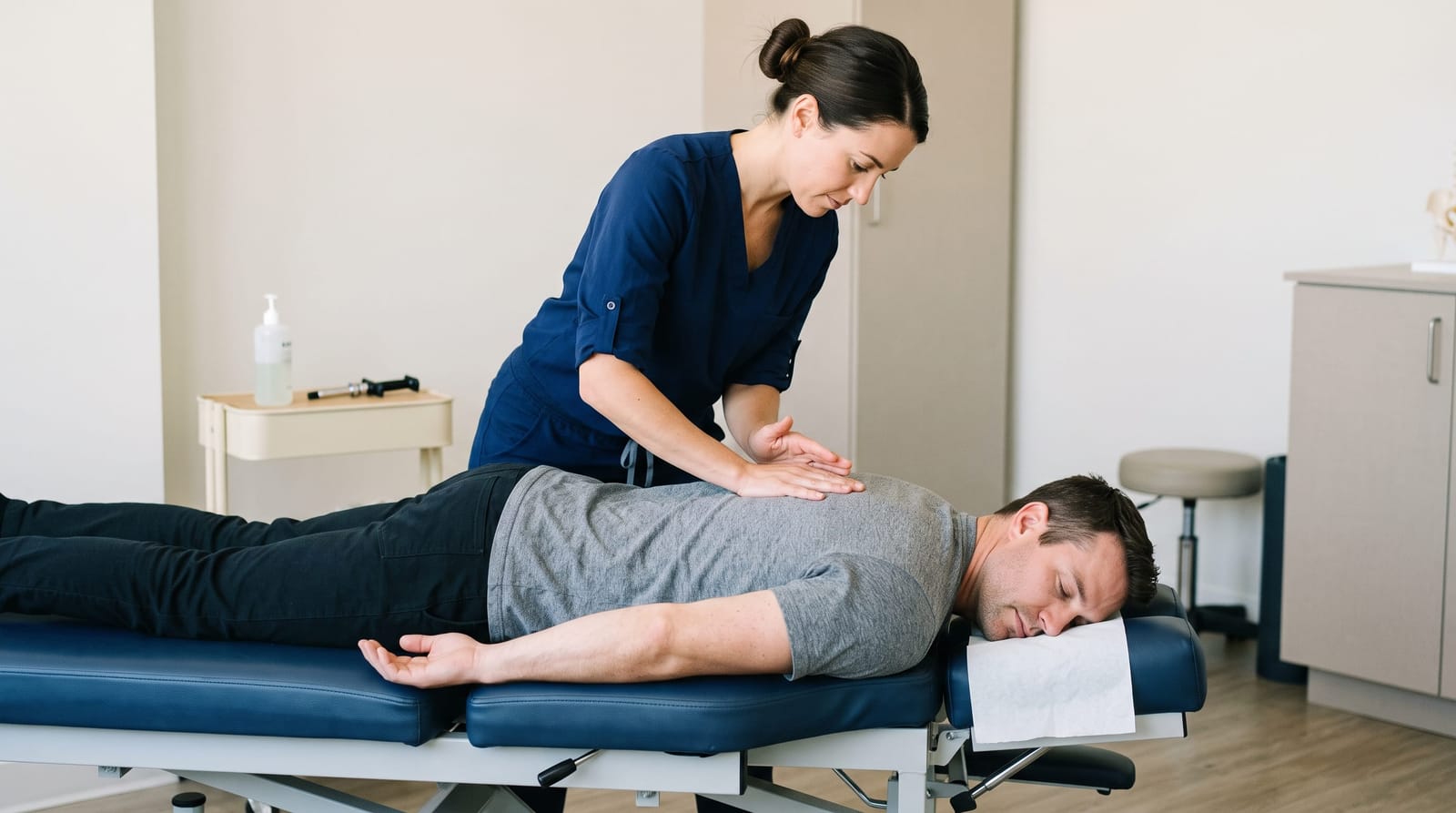
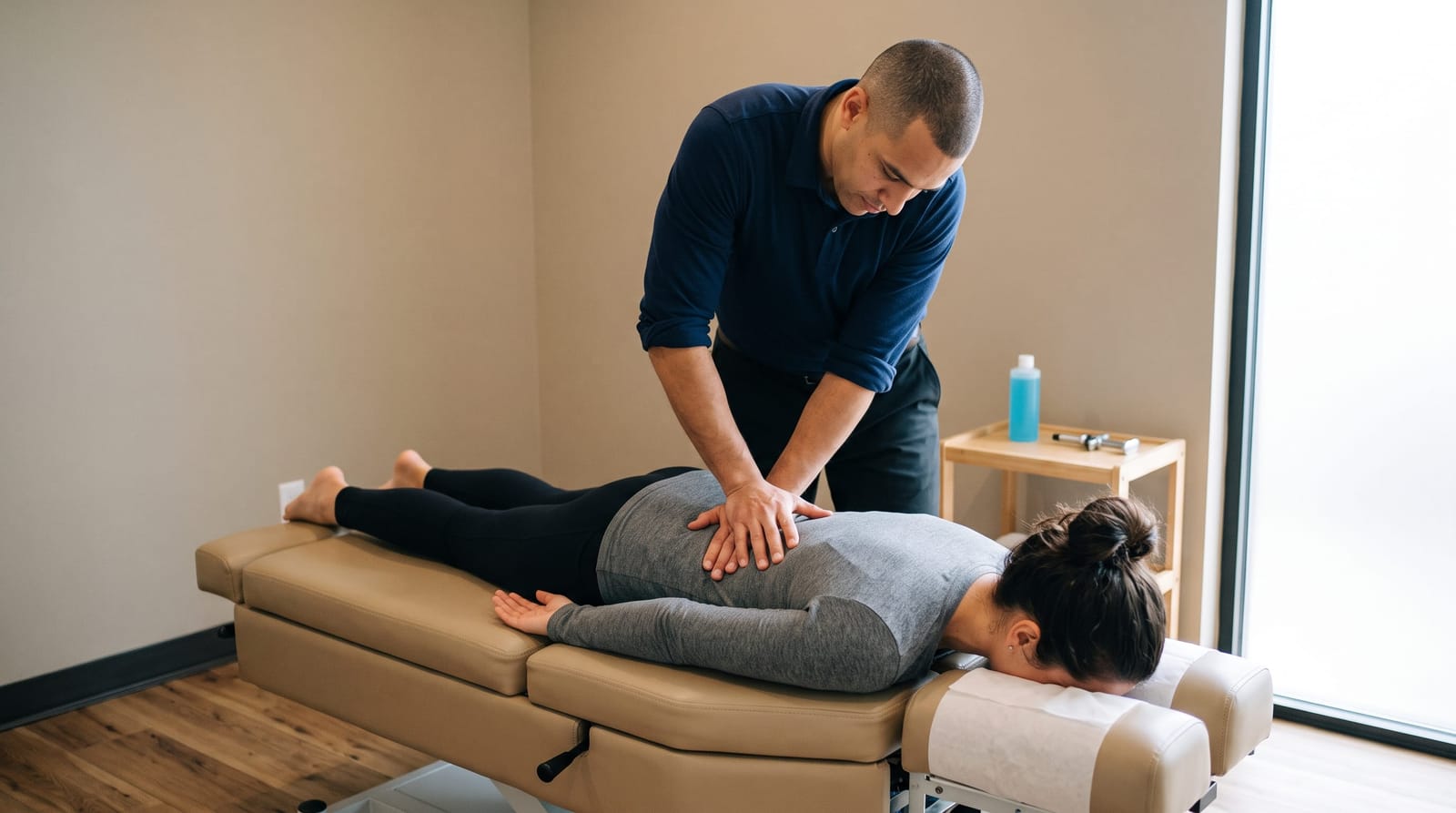
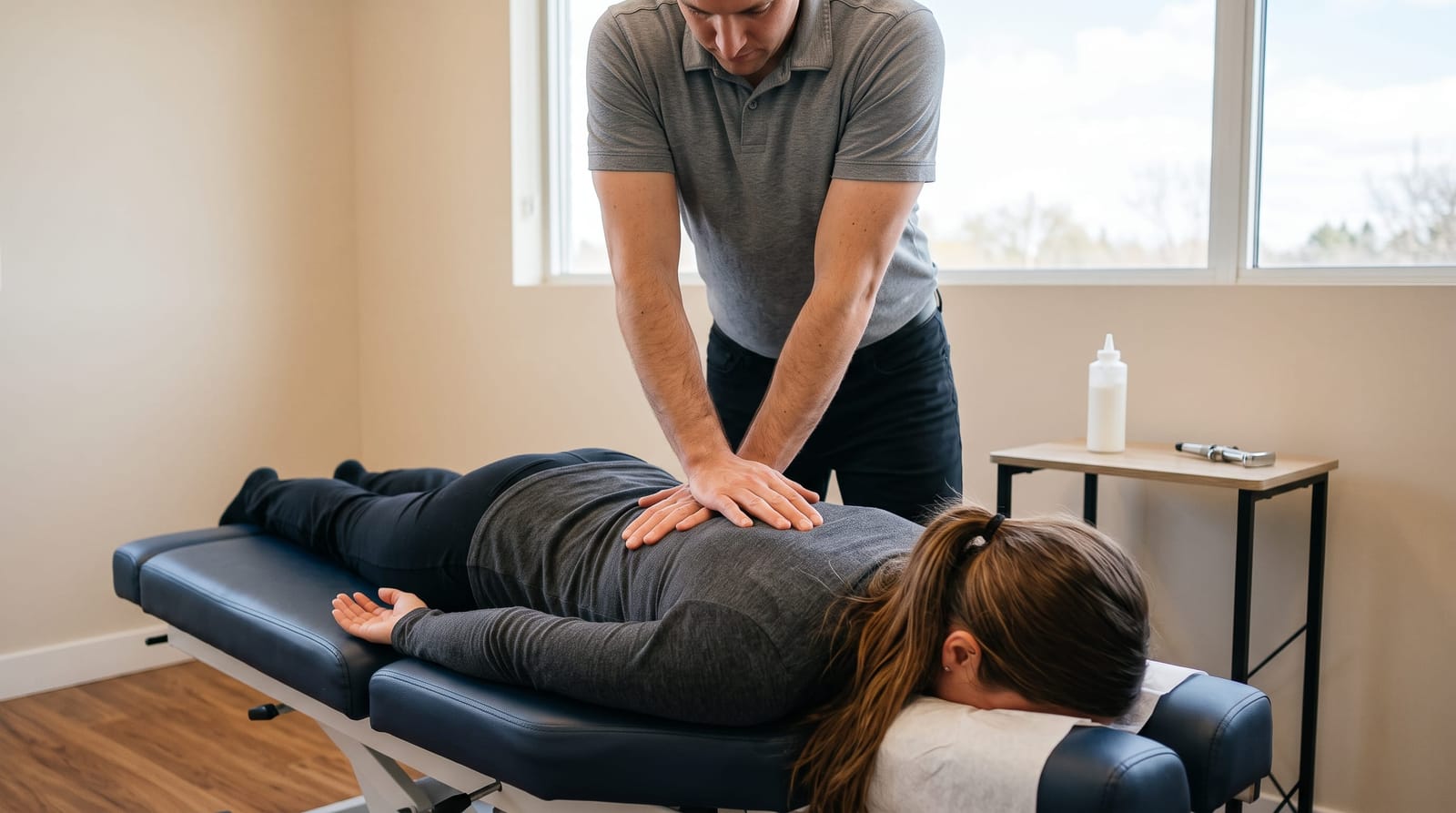
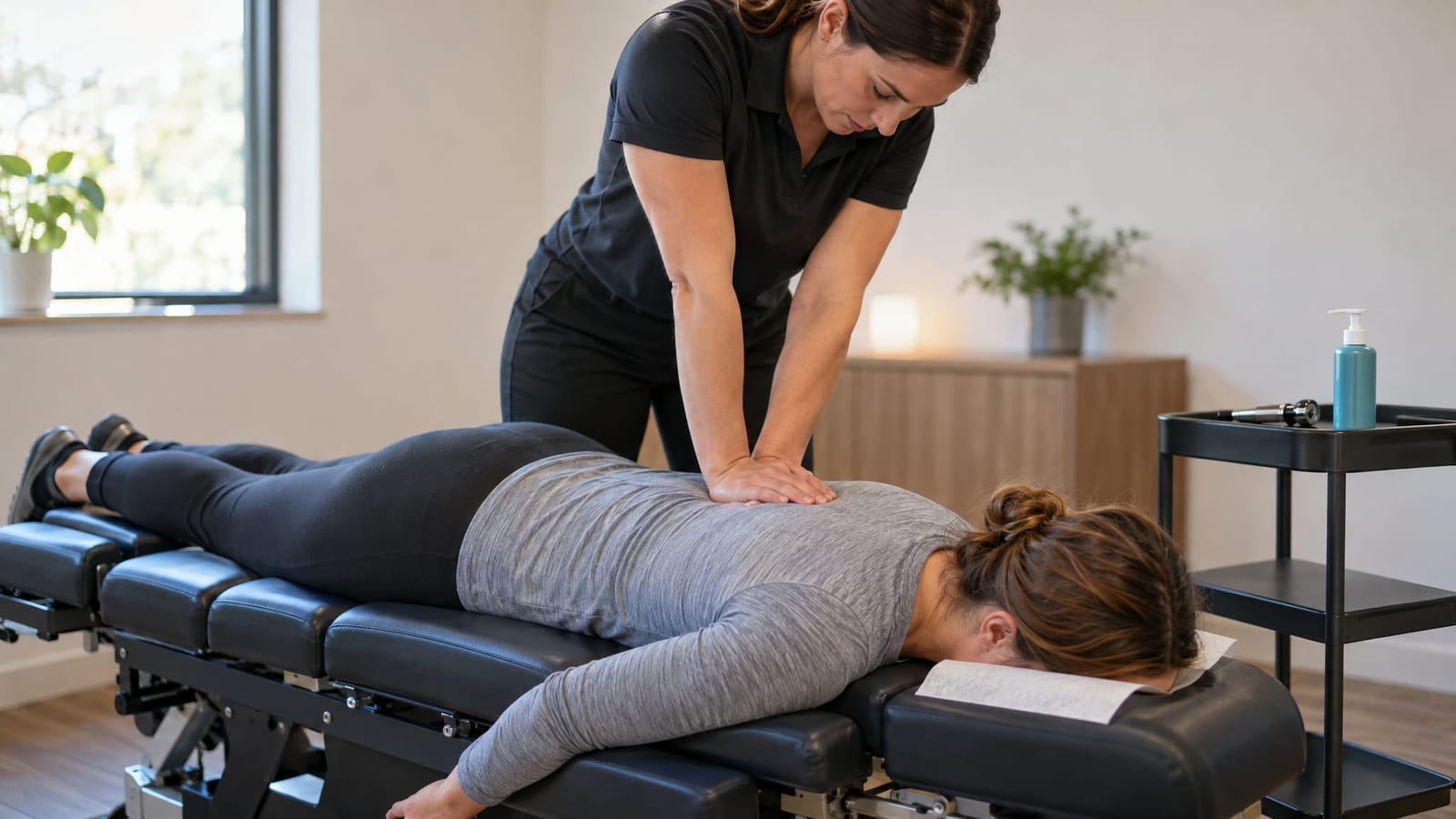
Chiropractic manipulation involves a clinician applying a controlled force to a joint. Techniques vary in how that force is delivered. Our services include Diversified, Activator, and low-force techniques.
For someone concerned about an adjustment, useful questions include what the technique involves, what sensations may occur, and how comfort concerns are considered. A clear explanation of the proposed technique is more helpful than a blanket promise about how every adjustment will feel.
Non-surgical spinal decompression
Our spinal decompression service uses a computerized table to apply a controlled distraction force between the vertebrae, the bones of the spine. In everyday language, the table applies a gentle pulling force. This is a non-surgical procedure.
An individual assessment informs whether decompression is appropriate. The care discussion connects the examination findings with the purpose of the procedure, the proposed visits, and the points at which progress will be reviewed.
Questions that clarify a proposed decompression plan include:
- What findings make this option relevant to my situation?
- What happens during a session?
- What sensations are expected, and how is comfort communicated?
- What changes will be used to evaluate progress?
- When will the plan be reassessed?
Available services and an individual plan
We also offer cold laser therapy and custom orthotics. These are distinct services, not a standard set of treatments for everyone with sciatica symptoms.
The useful question is what role a proposed service has in the individual plan. Technique names and equipment describe the method; the assessment explains why that method is being considered.
What a Professional Evaluation Can Clarify
An evaluation brings together symptom history, physical findings, and the effect on daily activities. It can explore whether sciatica accurately describes the symptoms, whether chiropractic care fits the presentation, or whether another type of medical assessment is more appropriate.
Repeated interruptions to work, sleep, or walking provide important context, as do changes from a familiar symptom pattern. These details help move the conversation beyond finding another position or product.
Information that helps explain the problem
A concise account can include:
- When symptoms began and how they have changed.
- Where symptoms occur and whether sensation or strength feels different.
- The everyday activities most affected.
- Previous episodes and care already received.
- Relevant medical history, medications, and existing reports or imaging.
- The main concern about treatment or daily function.
Existing records provide context. Whether any new imaging is relevant is a separate clinical decision, rather than an automatic next step.
Session length and the course of care
The length of an appointment and the number of appointments are different planning questions. Session length concerns what happens during a visit. The overall course of care also involves the findings, goals, response, and review points.
A clear explanation covers what proposed visits involve, when progress will be reviewed, and what would prompt a change in approach. This gives the plan more meaning than a visit count alone.
Recovery, Recurrence, and Long-Term Expectations
A question about a permanent cure asks about both the current episode and the possibility of future symptoms. Because sciatica describes a symptom pattern with different possible causes, long-term expectations depend on more than the label.
Relief during one episode and the possibility of another episode are separate issues. A useful care discussion addresses current progress without promising that symptoms will never return.
Progress includes everyday ability
Pain ratings provide one measure of change. Sleep disruption, comfort during seated tasks, walking, and the ability to handle work or household responsibilities add context.
For example, a lower pain rating alongside continued sleep disruption presents a different picture from lower pain and easier daily activity. Both symptom changes and remaining limitations belong in a progress review.
Why recovery timelines differ
The cause of symptoms, their duration, examination findings, and other health factors influence recovery discussions. Another person’s timetable is not a reliable forecast.
The direction of change provides a more useful reference point. New limitations, increasing symptoms, or little meaningful progress are relevant to reassessment. The review considers whether the current plan still fits rather than assuming that additional visits alone are the answer.
More on Everyday Comfort and Recovery
- Sitting and positioning: Our article on sitting with sciatica takes a closer look at seated positions and support during daily activities.
- Flare-up questions: The sciatica flare up what to do guide explores comfort measures and care discussions when symptoms become more disruptive.
- Long-term expectations: Our discussion of can sciatica be cured examines symptom relief, recovery, and recurrence.
Connecting Daily Difficulties With Clear Care Goals
A concrete goal, such as sitting through a work meeting or turning in bed more comfortably, gives a care discussion a practical reference point. Describing the current difficulty, the desired change, and a planned review point keeps the conversation focused on daily life as well as symptoms.