Natural Sciatica Relief: Comparing Non-Surgical Options
Natural sciatica relief can mean several different things: everyday movement, comfort measures such as heat or cold, or clinician-delivered care without surgery. Spinal decompression, chiropractic manipulation and cold laser therapy are among the options patients ask about, but they work in different ways and deserve separate consideration.
The most useful comparison is not which option sounds the most natural. It is what each approach involves, what purpose it serves and how changes in symptoms and daily function will be evaluated. No single approach fits every cause of sciatic symptoms.
This overview is educational. Choosing care for your own symptoms and medical history requires an individual assessment with our chiropractic team or another licensed healthcare professional.
What “Natural” Means When Comparing Sciatica Options
Sciatica describes a pattern of nerve-related pain that can travel from the lower back or buttock into the leg. It is not simply another name for lower back soreness, and similar-sounding symptoms do not necessarily have the same explanation.
“Natural” is not a precise medical category. For some people, it means avoiding surgery. For others, it means exploring care that does not involve medication. Those preferences can shape a conversation about options, but they do not determine whether a particular approach is suitable.
It helps to separate three roles:
- Everyday comfort: measures discussed for easing discomfort during daily life.
- Activity and function: attention to movement, sitting demands and the tasks symptoms interrupt.
- Clinical care: an assessment followed by a discussion of specific treatment options.
These roles can overlap. Temporary comfort, however, is different from a lasting change in symptoms or the ability to do everyday activities.
Everyday Approaches: Movement, Positioning and Comfort
Movement and heat or cold are among the self-care approaches discussed for easing sciatic discomfort by Harvard Health. They belong in a different category from hands-on treatment or equipment-based therapy.
Movement and daily activity
Movement is a broad category, not a single exercise routine. Walking, structured rehabilitation and a yoga class place different demands on the body. An exercise described online as a “sciatica stretch” does not establish that it matches a particular person's symptoms.
A useful clinical conversation starts with function rather than a list of exercises. Difficulty getting through a commute presents a different problem from discomfort during lifting or standing at work. Describing the activity, how long it lasts and what interrupts it gives the clinician something concrete to assess.
This distinction also helps separate general fitness goals from symptom-specific care. A wish to remain active is valuable context, but it does not require committing to a particular stretch, pose or exercise program before an assessment.
Sitting and workstation demands
Seated work involves more than posture. Chair height, desk arrangement, time spent sitting and the demands of the task all shape the experience. A position used comfortably for a short meal may feel different during a long drive.
Our article on sitting with sciatica explores this daily-living topic in more detail. For a care discussion, a description such as “the drive is harder than walking around the office” is more informative than simply saying that sitting hurts.
Heat and cold as comfort measures
Heat and cold are comfort measures, not tests of what is causing pain. Feeling temporarily better with either one does not identify the source of the symptoms or establish that the underlying issue has changed.
That is also why immediate comfort and longer-term care deserve separate conversations. For the short-term side of that distinction, our article on what to do during a sciatica flare-up focuses on the questions that arise when symptoms become more disruptive.
Comparing Clinician-Delivered Non-Surgical Options
At Prodigy Chiro Care & Spinal Decompression in Santa Monica, we offer spinal decompression, chiropractic manipulation and cold laser therapy. Each uses a different method. Understanding those differences makes it easier to discuss the purpose of a proposed service rather than grouping everything under “natural relief.”
Spinal decompression: Computerized, table-based traction
Our non-surgical spinal decompression therapy uses a computerized table to create a gentle distraction force between the vertebrae, the bones of the spine. “Distraction” here means a controlled separating force. This is different from surgical decompression, which involves an operation.
The distinguishing feature is the method of delivery: the table applies a controlled pulling force rather than a clinician performing a manual adjustment. The description explains what the equipment does, not a guaranteed result.
Practical questions about this option include:
- What finding from the assessment makes table-based decompression relevant?
- What positioning does a session involve?
- What changes in symptoms or everyday function will be reviewed?
- How will the need for further sessions be reassessed?
The question of how many spinal decompression sessions are needed belongs alongside those questions. A session count describes the proposed schedule; it does not, by itself, explain the goal or measure progress.
Chiropractic manipulation: Controlled force applied to joints
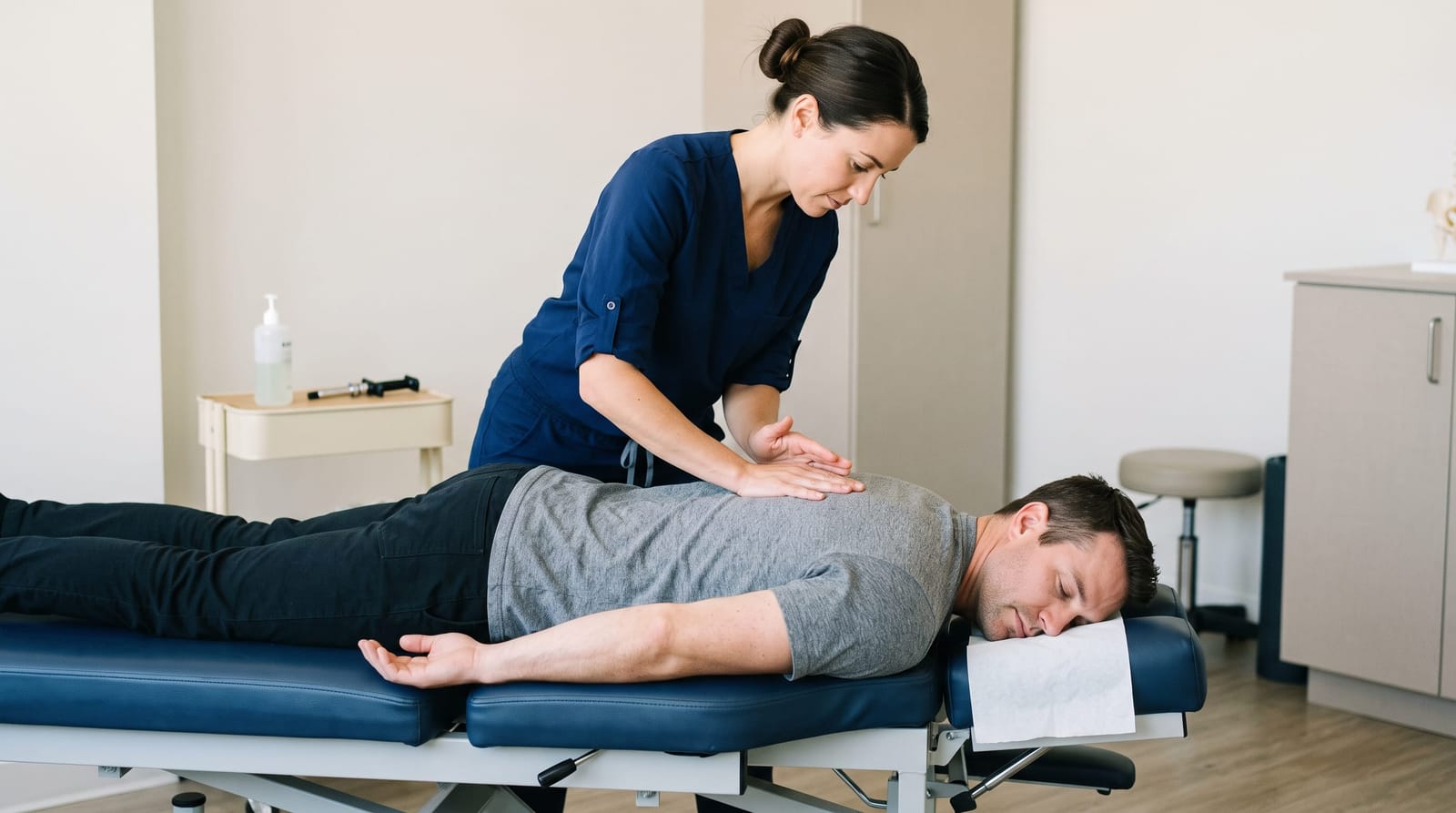
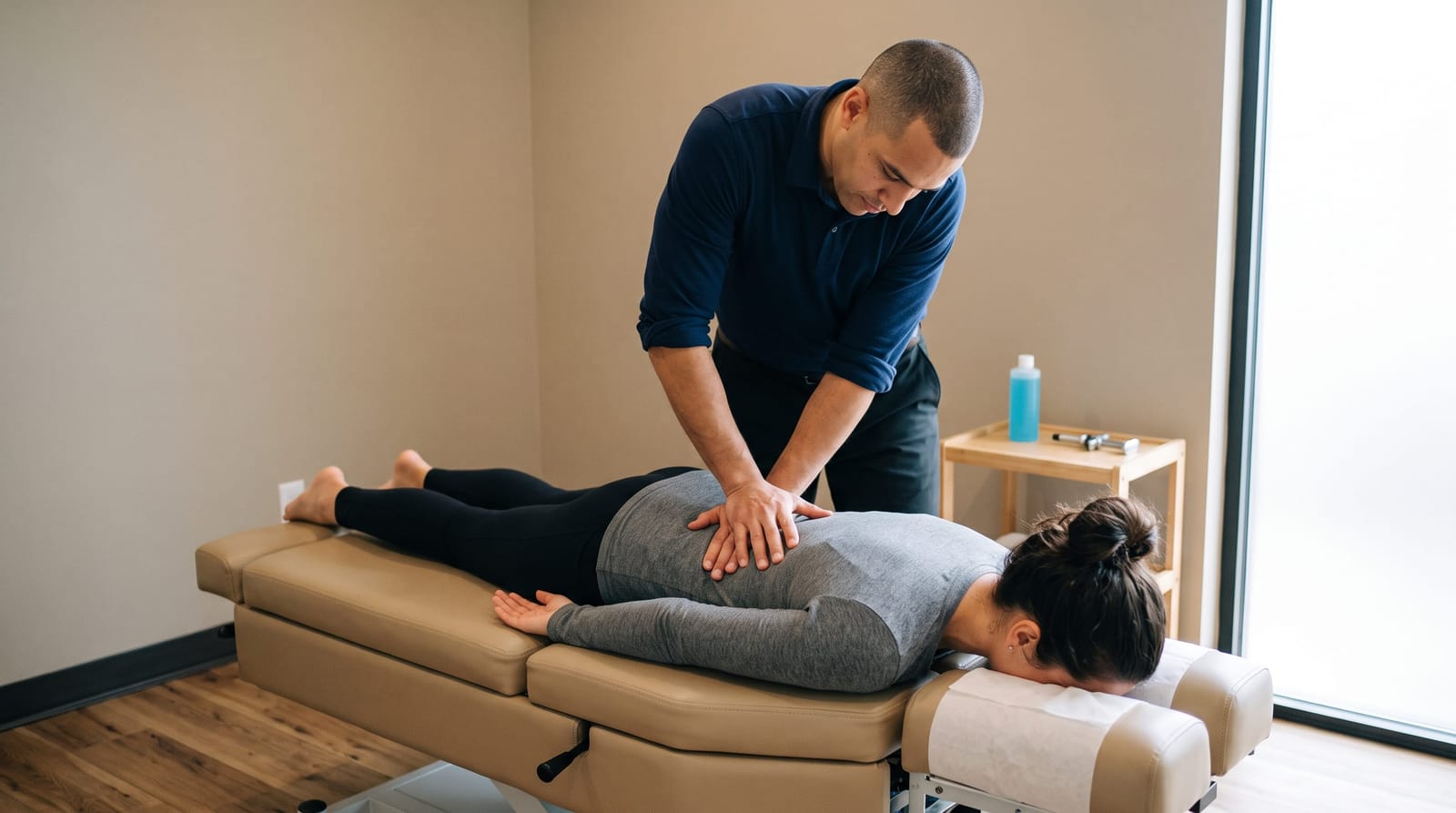
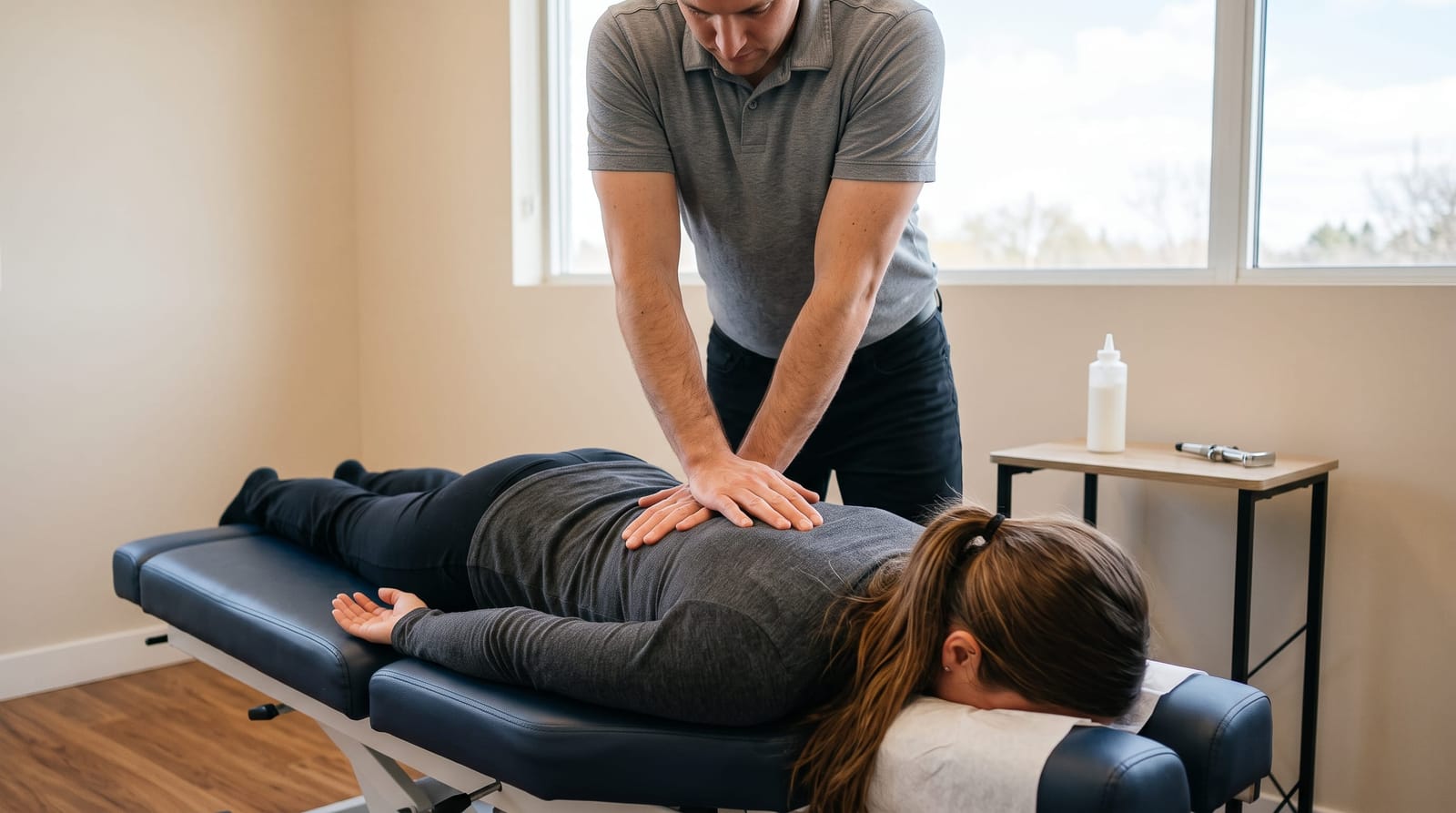
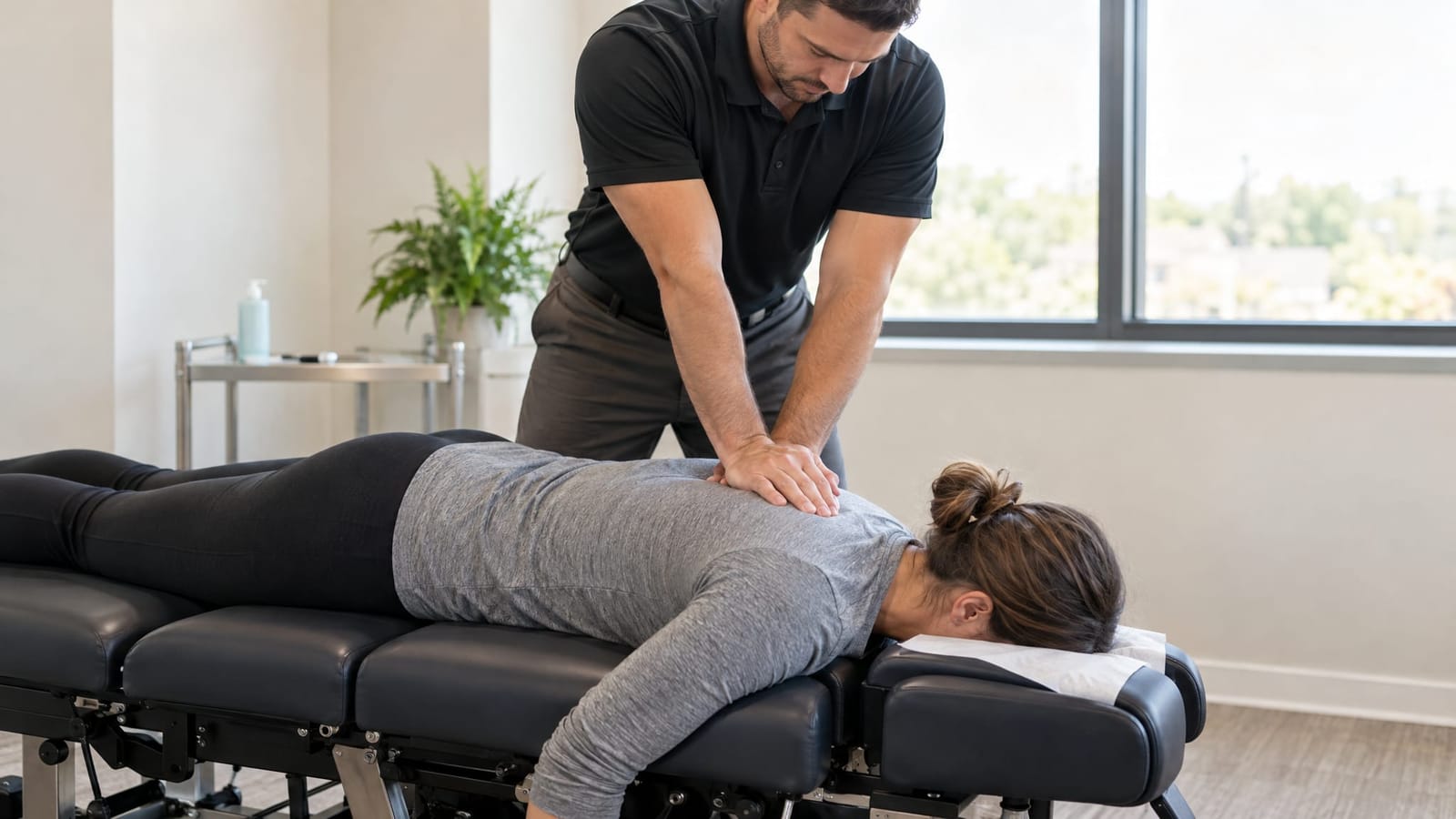
Chiropractic manipulation involves applying controlled force to joints. It differs from computerized decompression in both delivery and the movement involved. The term “adjustment” also does not describe one identical experience across every chiropractic technique.
We offer chiropractic manipulation as well as low-force and Activator techniques. These provide different ways of delivering chiropractic care, rather than interchangeable promises about sciatica relief.
For someone concerned about what an adjustment will feel like, the useful discussion is specific: the proposed technique, the position used and how discomfort during the procedure would be handled. A description of the method is more meaningful than a blanket assurance that every adjustment feels the same.
Another important distinction is the treatment goal. A discussion about joint movement is not automatically an explanation of every leg symptom. The connection between the assessment, the proposed technique and the intended goal gives the decision its context.
Cold laser therapy: Light-based treatment
Cold laser therapy uses low-intensity light rather than manual force or mechanical traction. It is different from a surgical laser used to cut tissue. It also does not physically stretch the spine in the way a decompression table does.
The useful comparison is therefore not whether cold laser sounds gentler or more advanced. It is what role it would play in the overall care plan and how that role differs from other services being discussed.
When several therapies are proposed together, questions about cold laser can stay focused:
- What is the specific purpose of including it?
- What change would be meaningful to track?
- When will its continued role be reviewed?
Our article on cold laser therapy for sciatica pain takes a closer look at this option. The important distinction here is that a light-based service, a manual adjustment and table-based traction are different interventions, even when discussed within the same plan.
What a Combined Approach Adds to the Decision
A multi-modal approach means using more than one type of care. Its value is in having a clear purpose for each component, not simply including more services.
For example, a discussion might address both a proposed clinical treatment and the demands of a seated workday. Those are related concerns, but they are not the same task. One conversation explains the treatment; the other identifies the daily activity the person wants to do more comfortably.
Several distinctions help keep a combined plan understandable:
- Purpose: What is each component intended to address?
- Overlap: Are different services being proposed for the same goal, or for separate reasons?
- Practical demands: What positioning, appointments and participation does each involve?
- Review: How will the overall plan be reassessed rather than simply repeated?
A plan can be personalized without being complicated. Clear explanations make it possible to understand why an option is included and what information will guide the next decision.
Making the Comparison Useful to Your Daily Life
A short written summary can make a clinical conversation more specific without trying to diagnose the problem. Useful details include when symptoms began, the activities they interrupt, previous care and what changed afterward.
Goals also become clearer when expressed as everyday tasks. “Sitting through a meal comfortably” or “participating in a usual workday” provides more context than “fix my back.” These are examples of discussion goals, not predictions about treatment results.
Relief and permanent resolution are separate questions. A comfortable afternoon, a change in pain intensity and a sustained return to an activity describe different experiences. Our article on whether sciatica can be cured permanently explores that longer-term distinction.
The clearest way to compare natural sciatica relief options is by their purpose, method and place in an individually assessed plan. “Natural” can describe a preference. A meaningful care decision needs a more specific explanation.