Left-Side vs. Right-Side Sciatica: Does the Side Matter for Treatment?

The side matters as a clue, but it does not determine treatment by itself. Left-sided and right-sided sciatica involve the same basic nerve anatomy on opposite sides of the body. Neither side automatically indicates a more serious problem or calls for a different type of care.
What matters more is where symptoms travel, whether sensation or strength has changed, how everyday activities are affected, and what an examination shows. When comparing spinal decompression with chiropractic manipulation, the useful question is not “Which treatment is for my side?” It is “What findings make this approach appropriate?”
Left-Side vs. Right-Side Sciatica at a Glance
There is a sciatic nerve on each side of the body. Each forms from nerve roots in the lower spine, travels through the buttock and down the back of the thigh, and branches into nerves serving the lower leg and foot. This arrangement is broadly symmetrical.
| Comparison | Left-sided sciatica | Right-sided sciatica |
|---|---|---|
| Where symptoms occur | The left buttock or leg, sometimes extending into the foot. | The right buttock or leg, sometimes extending into the foot. |
| What the side can suggest | Irritation involving nerve pathways serving the left leg. | Irritation involving nerve pathways serving the right leg. |
| Possible spinal causes | A disc problem or narrowing around a nerve on the left. | The same types of disc problems or narrowing on the right. |
| What guides treatment decisions | The symptom pattern, health history, and examination findings. | The same factors, with attention to right-sided findings. |
Sciatica does not have to follow an uninterrupted line from the back to the toes. The areas involved can vary, and leg symptoms may be more noticeable than back discomfort.
Either Side Can Be Affected by the Same Spinal Conditions
A herniated disc, sometimes called a slipped disc, involves disc material extending beyond its usual boundary. Depending on its location, it may irritate a nearby nerve root. A disc problem toward the left can affect left-sided nerve structures; a problem toward the right can affect right-sided structures.
Narrowing of the spaces around spinal nerves can also be uneven. This helps explain why a problem originating in the spine may be felt mainly in one leg rather than across the entire lower back.
Side alone cannot identify the cause. Left-sided pain does not automatically mean a herniated disc, and right-sided pain does not necessarily mean an injury occurred on that side. The symptom location is interpreted alongside the history and examination.
The route through the leg adds useful detail
“Left leg pain” provides less information than “discomfort through the left buttock and outer lower leg, with tingling in the foot.” Different nerve roots contribute to sensation and movement in different areas, so the distribution helps guide a clinical assessment.
These patterns overlap, however, so a symptom diagram is not a reliable way to identify an affected nerve. Not every pain in the buttock or leg is sciatica. Hip, muscle, joint, and other nerve problems can produce similar symptoms.
What Matters More Than Left or Right?
The side is one part of a larger pattern. The following details provide information that a left-or-right label cannot:
- Symptom type: Pain, tingling, reduced sensation, and weakness are different findings, even when they occur in the same area.
- Extent: Symptoms limited to the buttock differ from symptoms extending into the lower leg or foot.
- Change over time: A familiar pattern differs from symptoms that are spreading, changing sides, or affecting new activities.
- Function: Difficulty walking, using stairs, or controlling foot movement provides information beyond a pain rating.
- Examination findings: Movement, sensation, muscle strength, and reflexes help a clinician understand the pattern more fully.
Symptoms that switch sides or affect both legs are changes in the overall pattern, not a diagnosis in themselves. They add information to the assessment rather than pointing automatically to one cause or treatment.
This article is general education, not a personal treatment plan. Your situation needs an individual assessment with our chiropractic team to determine whether chiropractic care or another form of evaluation is appropriate. New bladder or bowel control changes, numbness around the groin, or rapidly worsening leg weakness warrant urgent medical evaluation rather than a routine chiropractic visit.
Does the Side Change Spinal Decompression or Chiropractic Manipulation?
At Prodigy Chiro Care & Spinal Decompression in Santa Monica, we offer both spinal decompression and chiropractic manipulation. These are different approaches, not interchangeable names for the same procedure. Neither is selected solely because symptoms affect the left or right leg.
Spinal decompression: suitability matters more than side
Our non-surgical spinal decompression service uses a computerized table to create a distraction force between the vertebrae, the bones of the spine. “Distraction” means a pulling force intended to create separation between those structures.
Whether this type of traction is appropriate depends on health history and clinical findings, not simply on which leg hurts. The side alone does not determine the amount of force or the number of sessions.
A useful discussion separates how the table works from why the procedure is being considered. Understanding the mechanics is different from understanding whether the approach fits an individual situation.
Chiropractic manipulation: assessment guides the technique
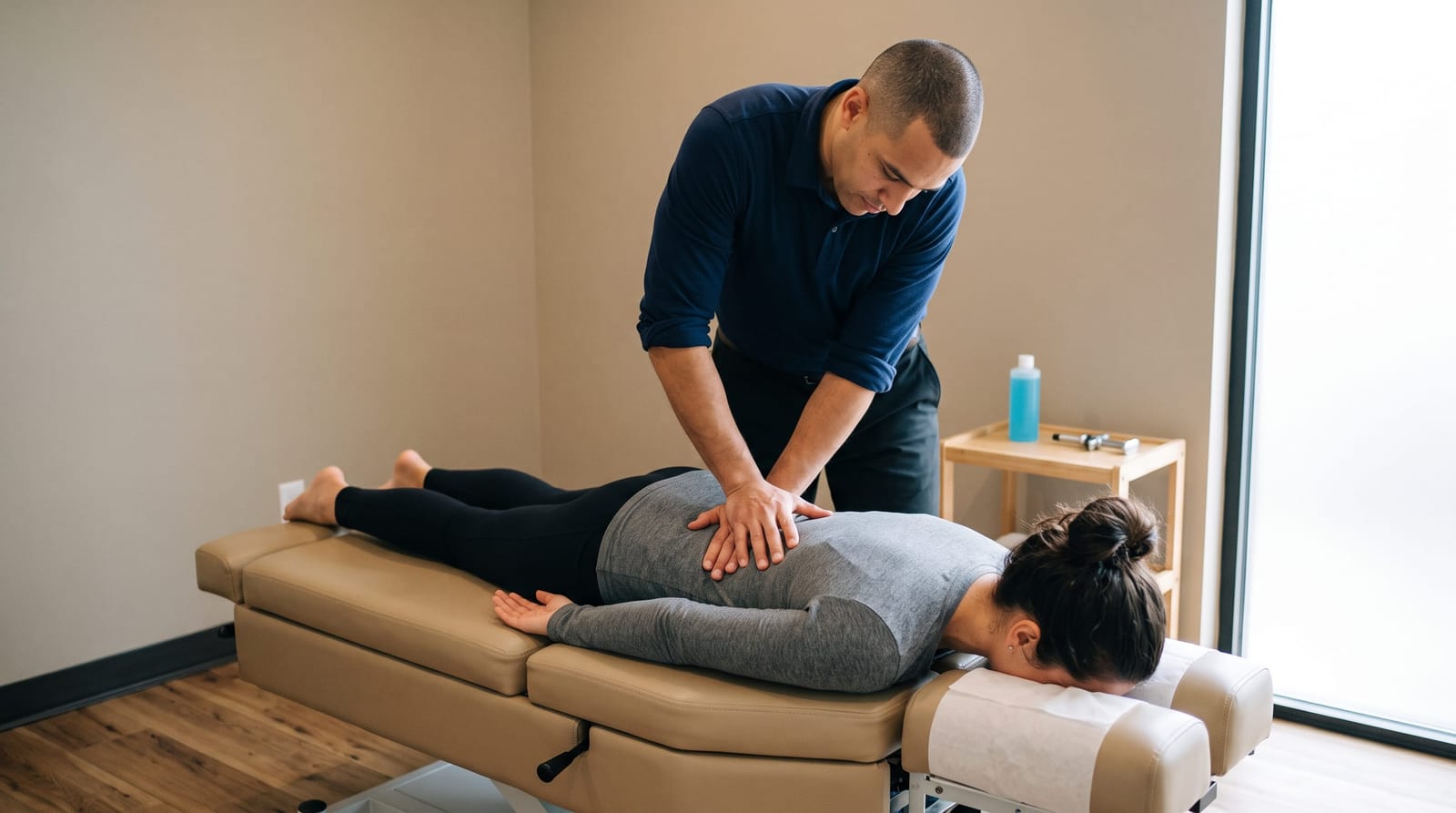
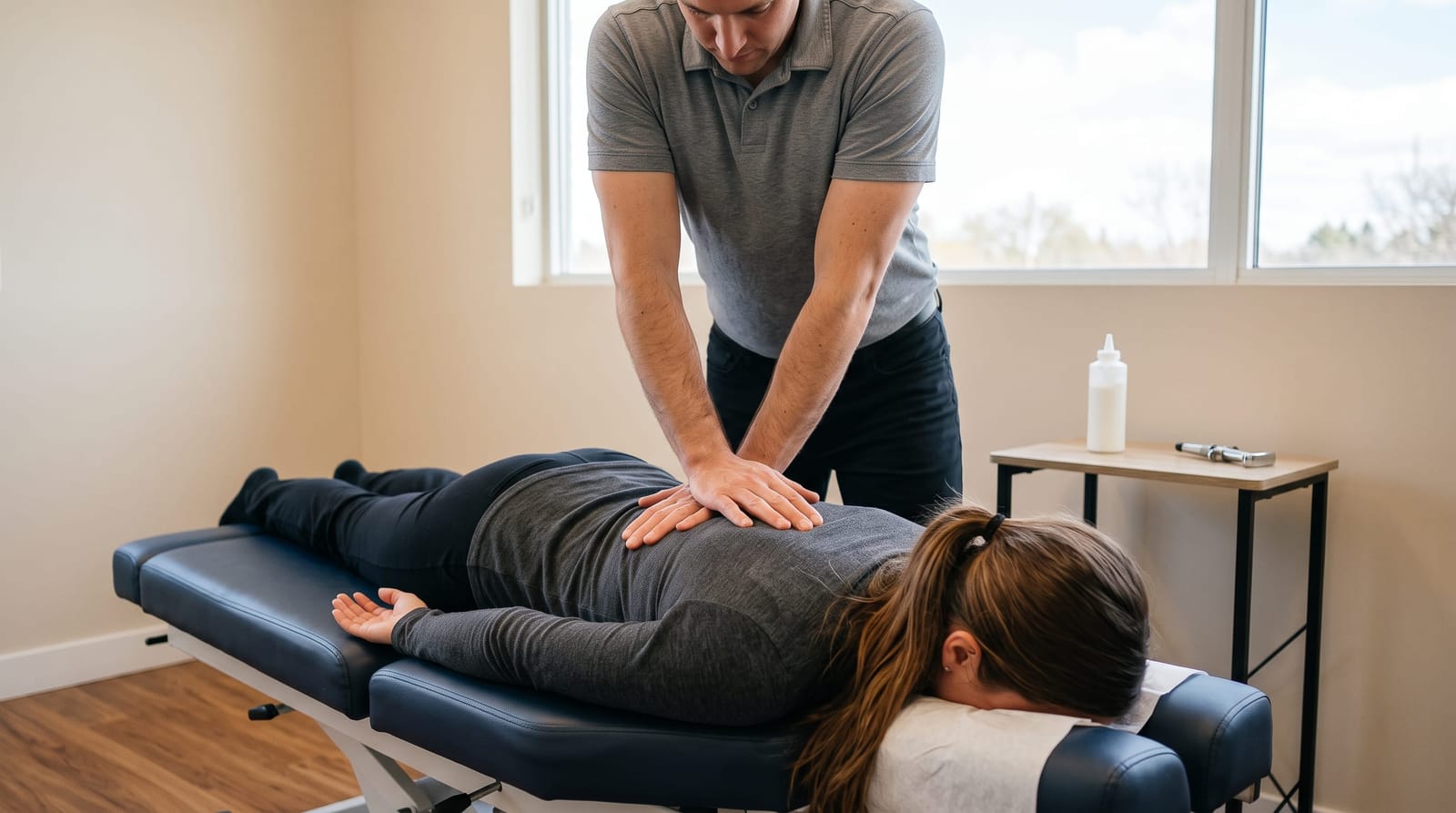
Chiropractic manipulation involves applying a controlled force to a joint. The location of leg pain does not automatically identify the joint to address or the direction of a technique. Care is not simply performed on the left because the left leg hurts, then reversed for right-sided symptoms.
We also offer Activator and Low Force techniques. These provide different approaches within chiropractic care, but technique choice is not determined by which leg is symptomatic.
Questions that help clarify either decompression or manipulation include:
- What examination findings are relevant to this option?
- What would the procedure involve, and what sensations might occur?
- What are the risks and alternatives?
- How would changes in symptoms or function affect the plan?
How the Affected Side Matters in Daily Activities
Left-sided and right-sided symptoms can create different practical difficulties because daily activities are not always symmetrical. Using vehicle pedals, stepping into a shower, and getting out of a particular side of the bed involve different movements and demands.
For example, right-leg symptoms may be especially noticeable during pedal use, while left-leg symptoms may stand out during the movement used to exit a car. That difference describes the activity affected. It does not mean one side has a worse spinal problem.
The same distinction applies to sitting with sciatica. Useful details include when symptoms appear, where they travel, and how sitting differs from other activities. A painful left leg does not automatically make leaning to the right an appropriate response. Comfort in a position and identifying the cause are separate questions.
Useful Details to Bring Into a Care Conversation
A clear description can make a clinical conversation more productive without turning it into a self-examination. Useful details from ordinary activities include:
- Which side is affected and where symptoms are felt.
- Whether the sensation is pain, tingling, numbness, or a change in strength.
- When the current pattern began and whether it has changed.
- Which everyday tasks are affected and what happens during them.
- Previous episodes, assessments, and responses to care.
For someone looking into what to do during a sciatica flare-up, the distinction between a familiar episode and a new symptom pattern is particularly relevant. “This is my usual right-sided discomfort” communicates something different from “The discomfort is familiar, but now my foot feels weak.”
The Bottom Line: Side Is a Clue, Not a Treatment Plan
The most useful description goes beyond “left” or “right” to explain where symptoms travel, what has changed, and how daily function is affected. Those details, together with clinical findings, provide a more meaningful basis for discussing care than the affected side alone.