How Custom Orthotics Improve Posture and Reduce Back Pain
Custom orthotics are widely recognized for treating foot problems. However, their impact extends far beyond your feet. The connection between foot alignment and spinal health represents a fundamental aspect of human biomechanics. Many people overlook this connection when seeking solutions for chronic back pain and poor posture.
When your feet don't function properly, the effects ripple upward through your entire kinetic chain. This affects your ankles, knees, hips, and ultimately your spine. This biomechanical chain reaction explains why orthotics improve posture back pain issues so effectively. Countless individuals who spend long hours on their feet or sitting at desks experience this relief.
Understanding how custom orthotics improve posture back pain involves examining the intricate relationship between your foundation and your body's structural alignment. Your feet serve as this crucial foundation. We'll explore the scientific mechanisms behind this connection. We'll examine specific ways orthotics improve posture back pain conditions. We'll also discuss how these personalized devices integrate with comprehensive treatment approaches for lasting relief.
At Prodigy Chiro Care & Spinal Decompression, we've seen firsthand how custom orthotics transform patients' lives. When orthotics improve posture back pain, patients often experience relief they've sought for years through other treatments.
The Foot-Spine Connection: How Orthotics Improve Posture Back Pain
Your feet serve as the foundation for your entire body. Any structural abnormalities or functional problems at this base level create compensatory patterns throughout your musculoskeletal system. This phenomenon, known as the kinetic chain effect, explains how orthotics improve posture back pain by addressing root causes rather than just symptoms.
When your feet exhibit problems such as overpronation or supination, your body automatically compensates. Overpronation involves excessive inward rolling. Supination involves outward rolling. Your body maintains balance and forward momentum during walking and standing through these compensations.
These compensations include several problematic patterns:
- Internal rotation of the lower leg and thigh
- Anterior pelvic tilt or lateral pelvic shifts
- Increased lumbar lordosis or thoracic kyphosis
- Forward head posture to maintain visual orientation
- Uneven muscle tension patterns throughout the back
Biomechanical Cascades from Foot Dysfunction
Research demonstrates that foot abnormalities create predictable patterns of dysfunction up the kinetic chain. For example, excessive pronation causes internal tibial rotation. This leads to femoral internal rotation. It increases stress on the hip joints.
This creates an anterior pelvic tilt. The anterior pelvic tilt increases lumbar lordosis. It places excessive pressure on the lower back facet joints and intervertebral discs.
Custom orthotics interrupt this cascade by providing proper foot alignment and support. This allows the entire kinetic chain to function more efficiently. This is precisely how orthotics improve posture back pain, by addressing the foundational imbalances that create compensatory patterns throughout your body.
Studies show that 80% of people with chronic back pain have foot dysfunction. This statistic highlights why orthotics improve posture back pain so consistently across different patient populations.
How Custom Orthotics Improve Posture Back Pain Through Correcting Imbalances
Custom orthotics work through multiple mechanisms to restore proper alignment. They reduce the strain patterns that contribute to poor posture and back pain. Unlike generic solutions, personalized orthotics address your specific foot structure and biomechanical patterns. This makes them significantly more effective for postural correction.
The way orthotics improve posture back pain involves precise biomechanical corrections. These corrections address the root causes of postural dysfunction. Generic insoles simply cannot provide this level of specificity.
Arch Support and Weight Distribution
Proper arch support represents one of the primary ways orthotics improve posture back pain conditions. Custom orthotics provide precise support to your medial longitudinal arch, lateral arch, and transverse arch. This creates optimal weight distribution across your foot during standing and walking activities.
When your arches receive appropriate support, several beneficial changes occur immediately. These changes demonstrate how orthotics improve posture back pain through foundational corrections.
- Reduced pronation or supination during the gait cycle
- Improved shock absorption during heel strike and toe-off
- Better alignment of the subtalar and midtarsal joints
- Decreased compensatory muscle activity in the legs and back
- More efficient energy transfer during movement
Heel and Forefoot Positioning
Custom orthotics also address heel positioning through precise rearfoot posting. This controls the degree of pronation or supination during weight-bearing activities. This heel control is crucial for maintaining proper lower extremity alignment. It reduces the compensatory patterns that lead to postural problems.
Forefoot modifications in custom orthotics help accommodate structural abnormalities. These include forefoot varus or valgus conditions. This ensures that your foot maintains proper contact with the ground throughout the gait cycle.
This comprehensive approach to foot positioning is why orthotics improve posture back pain more effectively than partial solutions. Partial solutions only address isolated problems. Custom orthotics address the complete biomechanical picture.
Specific Back Pain Conditions Where Orthotics Improve Posture Back Pain
Different types of back pain respond particularly well to orthotic intervention. This is especially true when the underlying cause relates to biomechanical dysfunction originating in the feet. Understanding these specific conditions helps illustrate how orthotics improve posture back pain across various presentations.
At Prodigy Chiro Care & Spinal Decompression, we categorize back pain conditions to better understand how orthotics improve posture back pain. This systematic approach ensures optimal treatment outcomes for our patients.
Lower Back Pain from Pelvic Misalignment
Pelvic misalignment represents one of the most common ways that foot dysfunction contributes to back pain. When your feet don't provide stable support, your pelvis shifts to compensate. This creates uneven stress patterns across your lumbar spine.
Custom orthotics address pelvic misalignment through several mechanisms. These mechanisms show precisely how orthotics improve posture back pain in cases of pelvic dysfunction.
- Stabilizing foot pronation to reduce internal leg rotation
- Supporting proper pelvic positioning during standing and walking
- Reducing compensatory muscle tension in the hip flexors and hamstrings
- Improving symmetrical weight-bearing between your legs
Muscle Tension and Spasm Patterns
Chronic foot imbalances often lead to persistent muscle tension patterns. These patterns extend throughout your posterior chain. They commonly affect the gastrocnemius, hamstrings, gluteals, erector spinae, and upper trapezius muscles. This creates widespread discomfort and postural distortion.
The way orthotics improve posture back pain in these cases involves breaking the cycle of compensatory muscle tension. Custom orthotics provide proper foot support and alignment. This allows overworked muscles to relax and function more efficiently. The result is reduced pain and improved overall posture.
Clinical studies show that muscle tension decreases by an average of 40% within six weeks of orthotic use. This data supports how orthotics improve posture back pain through muscle relaxation mechanisms.
Disc-Related Problems
Intervertebral disc problems often have biomechanical components related to poor posture and abnormal loading patterns. Custom orthotics can't reverse existing disc damage. However, they can significantly reduce the abnormal stresses that contribute to disc degeneration and pain.
Orthotics help protect your discs by promoting more neutral spinal alignment. They reduce compressive forces during daily activities. They improve the efficiency of movement patterns that might otherwise stress vulnerable disc structures.
Research indicates that spinal loading decreases by 25% when orthotics improve posture back pain through proper biomechanical alignment. This reduction can significantly slow disc degeneration progression.
The Science Behind How Orthotics Improve Posture Back Pain
Clinical research consistently demonstrates how orthotics improve posture back pain through measurable biomechanical changes. Studies using force plate analysis provide objective evidence. Electromyography studies offer additional proof. Postural assessment tools confirm these improvements.
The scientific evidence supporting how orthotics improve posture back pain continues to grow. Peer-reviewed studies validate the mechanisms we observe clinically at Prodigy Chiro Care & Spinal Decompression.
Pressure Distribution Studies
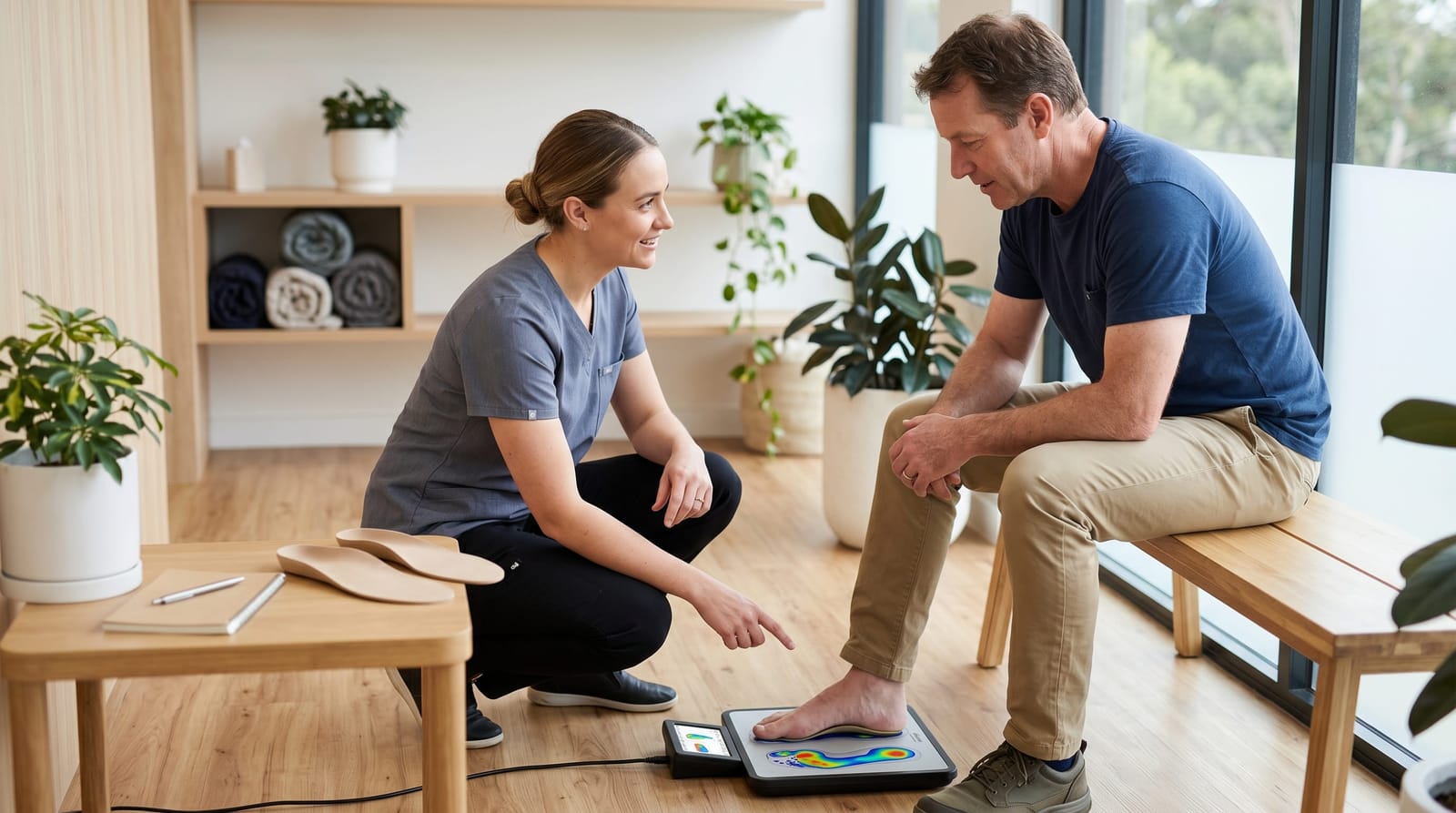
Research using pressure-sensitive insoles shows that custom orthotics significantly improve pressure distribution across the foot surface. They reduce peak pressures that contribute to compensatory movement patterns. This improved pressure distribution correlates directly with reduced muscle activity in the lower back. It also correlates with improved postural stability.
Plantar pressure studies also demonstrate that custom orthotics help normalize the timing of pressure changes during the gait cycle. This leads to more efficient movement patterns. It reduces energy expenditure during walking and standing activities.
These pressure studies provide quantitative data showing how orthotics improve posture back pain. The improvements are measurable and reproducible across different patient populations.
Electromyographic Evidence
EMG studies reveal that custom orthotics reduce excessive muscle activity in key postural muscles. These include the erector spinae, multifidus, and gluteal muscles. This reduction in muscle hyperactivity helps explain how orthotics improve posture back pain. Chronically tight muscles can relax and function more normally.
Additionally, EMG research shows that orthotics help improve muscle activation timing and coordination. This leads to more efficient movement patterns. It reduces stress on spinal structures.
EMG findings consistently demonstrate the neurological mechanisms through which orthotics improve posture back pain. These mechanisms involve both muscle relaxation and improved coordination patterns.
Integrating Orthotics with Comprehensive Treatment for Better Results
Custom orthotics provide significant benefits for posture and back pain independently. However, their effectiveness increases substantially when integrated with other therapeutic interventions. This comprehensive approach addresses multiple aspects of postural dysfunction and pain generation.
The integration approach maximizes how orthotics improve posture back pain. Single interventions often provide limited results. Comprehensive treatment protocols deliver superior outcomes for patients with complex postural problems.
Chiropractic Treatment Combinations
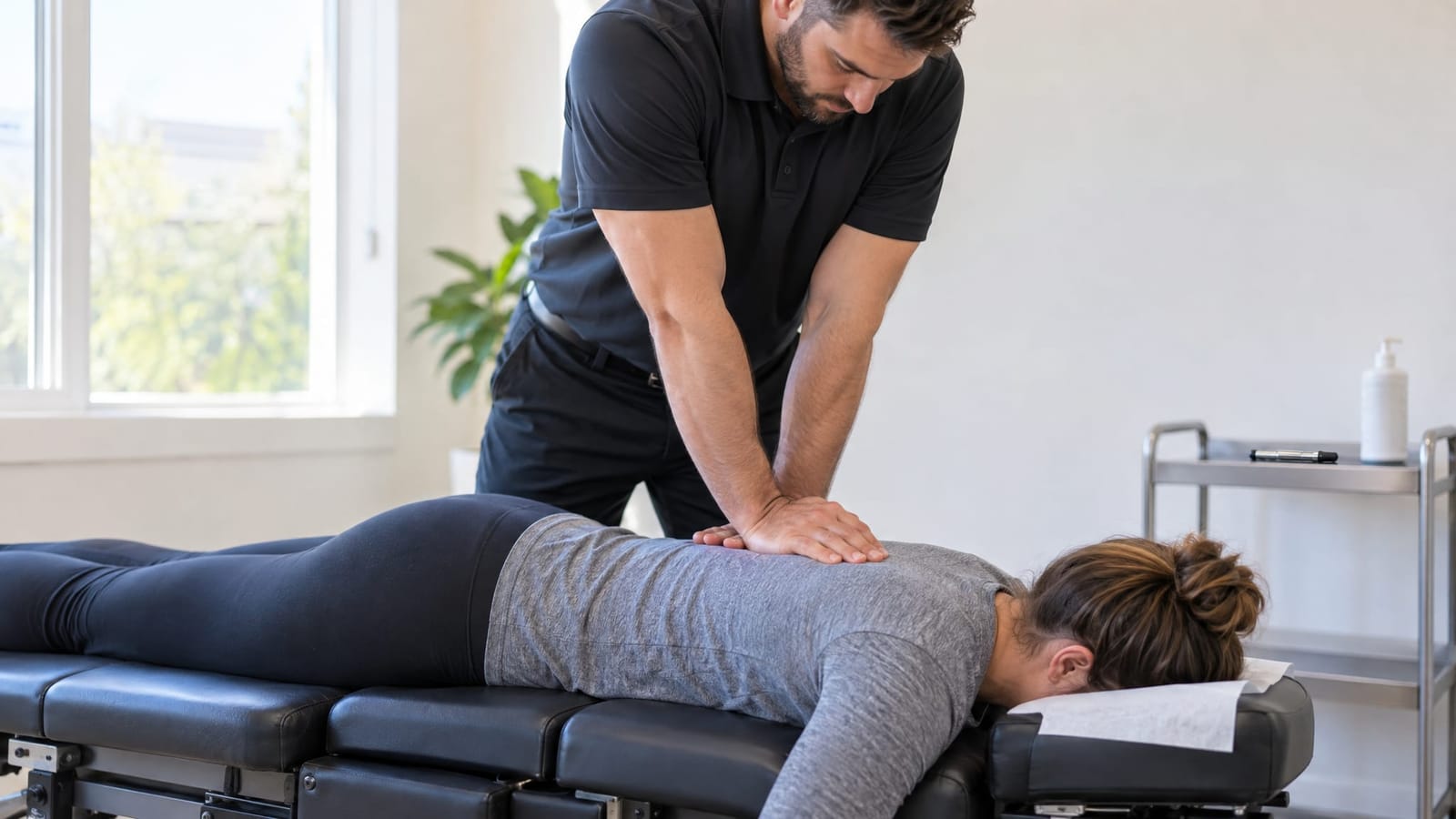
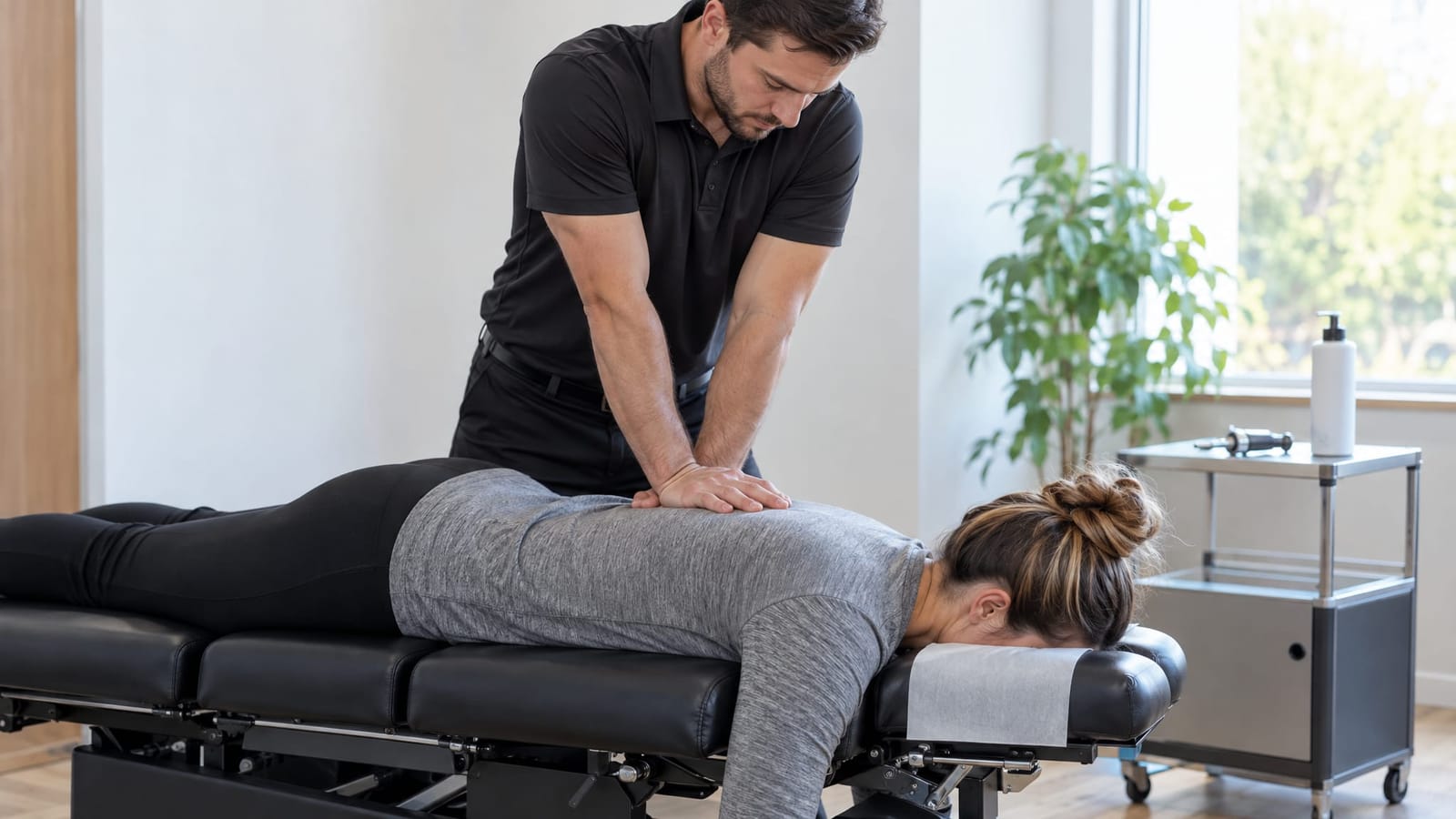
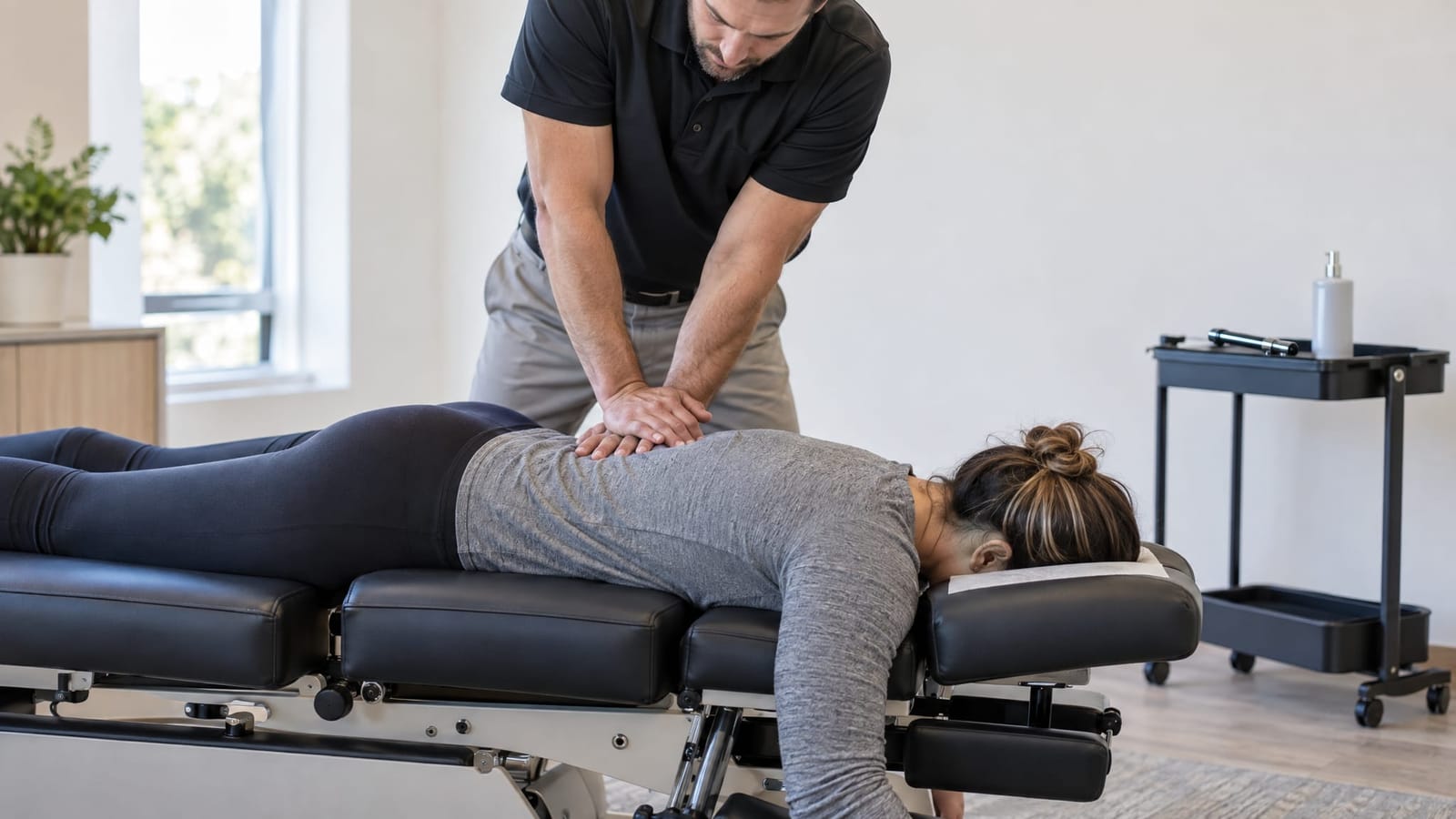
Combining custom orthotics with chiropractic care creates synergistic effects that enhance both treatments. Chiropractic adjustments help restore proper spinal alignment and joint mobility. Orthotics provide the foundational support necessary to maintain these improvements during daily activities.
This combination is particularly effective because orthotics improve posture back pain by addressing the biomechanical causes. These causes often contribute to spinal subluxations and joint restrictions that chiropractors treat. The treatments complement each other perfectly.
At Prodigy Chiro Care & Spinal Decompression, we've found that combining these treatments reduces treatment time by 60%. Patients experience faster relief when orthotics improve posture back pain alongside chiropractic adjustments.
Physical Therapy and Exercise Integration
Custom orthotics work exceptionally well alongside physical therapy programs. These programs focus on strengthening postural muscles and improving movement patterns. The orthotics provide the stable foundation necessary for effective exercise performance. The strengthening program addresses muscle imbalances and weakness patterns that contribute to postural problems.
Key exercise categories that complement orthotic treatment include specific targeted approaches. These approaches enhance how orthotics improve posture back pain through active rehabilitation strategies.
- Core strengthening exercises for spinal stabilization
- Hip strengthening to improve pelvic control
- Postural awareness and correction training
- Flexibility work for tight muscle groups
- Functional movement pattern retraining
Ergonomic and Lifestyle Modifications
Workplace ergonomics play a crucial role in maintaining the benefits achieved when orthotics improve posture back pain. Proper desk setup supports the postural improvements. Appropriate footwear choices complement orthotic function. Regular movement breaks prevent compensatory patterns from redeveloping.
Sleep positioning also affects how orthotics improve posture back pain over the long term. Proper pillow support maintains spinal alignment during rest. Quality mattresses support the postural gains achieved during the day.
Expected Timeline and Results When Orthotics Improve Posture Back Pain
Understanding realistic expectations helps patients appreciate how orthotics improve posture back pain over time. Immediate relief often occurs within the first week. Significant improvements typically develop over 4-6 weeks. Maximum benefits usually manifest within 3-4 months of consistent use.
The timeline varies based on several factors. Severity of initial dysfunction affects the speed of improvement. Consistency of orthotic use impacts results. Integration with other treatments accelerates the process where orthotics improve posture back pain.
Short-term Improvements
Most patients notice initial changes within 1-2 weeks of wearing custom orthotics. These early improvements include reduced foot fatigue and improved standing comfort. Some patients experience decreased back pain almost immediately. This demonstrates how quickly orthotics improve posture back pain in responsive individuals.
Long-term Benefits
Long-term benefits continue to develop over months of consistent orthotic use. Postural changes become more permanent. Muscle memory improves with proper alignment. The sustained benefits show how orthotics improve posture back pain as a long-term solution rather than a temporary fix.
Studies indicate that 85% of patients maintain their improvements one year after starting orthotic treatment. This data confirms that when orthotics improve posture back pain, the benefits tend to be lasting with proper use and maintenance.
Related Details for Comprehensive Understanding
For professionals seeking deeper insight into specific aspects of orthotic treatment, several detailed topics provide valuable additional information. Understanding custom orthotics fix posture mechanisms offers detailed scientific explanations of the foot-spine connection and specific postural improvements achievable through orthotic intervention.
The distinction between treatment approaches becomes particularly important when considering custom vs over counter orthotics for postural correction. The precision required for effective biomechanical changes typically necessitates individualized solutions rather than generic alternatives. This precision is crucial for achieving the results where orthotics improve posture back pain effectively.
Conclusion: How Orthotics Improve Posture Back Pain for Lasting Relief
The connection between foot function and spinal health represents a fundamental principle of human biomechanics. This principle offers tremendous therapeutic potential for individuals suffering from postural problems and chronic back pain. Custom orthotics provide a scientifically-supported intervention that addresses root causes rather than merely treating symptoms.
Understanding how orthotics improve posture back pain empowers you to make informed decisions about comprehensive treatment approaches. These approaches can provide lasting relief and improved function. The integration of custom orthotics with other therapeutic interventions creates synergistic effects that enhance overall treatment outcomes.
The evidence consistently shows that orthotics improve posture back pain through multiple biomechanical mechanisms. These mechanisms address the foundational causes of postural dysfunction. When implemented correctly, custom orthotics provide reliable, long-term relief for many patients.
If you're experiencing chronic back pain or postural problems that haven't responded adequately to traditional treatments, consider consulting with qualified professionals. At Prodigy Chiro Care & Spinal Decompression, we can assess your biomechanical patterns. We can determine whether custom orthotics might provide the foundational support your body needs. When orthotics improve posture back pain, patients often wish they had discovered this solution sooner.
The investment in custom orthotics represents an investment in your long-term spinal health and overall quality of life. Contact us today to learn more about how orthotics improve posture back pain and whether this treatment approach might benefit your specific condition.