Herniated Disc at Work: Understanding Chiropractic Care and Treatment Planning
When a herniated disc affects your workday, useful care planning starts with a clinical assessment and a clear picture of your job’s demands. Chiropractic manipulation and nonsurgical spinal decompression are different procedures. The choice of care depends on individual clinical findings, while questions about work duties also require an understanding of the tasks involved.
At Prodigy Chiro Care & Spinal Decompression in Santa Monica, we offer both chiropractic manipulation and nonsurgical spinal decompression. This article provides general education. Individual diagnosis and treatment decisions require a licensed clinician’s assessment, and our chiropractic team can address those clinical questions.
What a Herniated Disc Means for the Workday
Spinal discs sit between the bones of the spine. A herniation occurs when some of a disc’s inner material extends through its outer layer. An imaging finding is one part of the clinical picture, alongside symptoms, examination findings, and day-to-day function.
For work-related discussions, the practical question is how symptoms intersect with actual tasks. A description such as “desk work” or “heavy work” gives only a broad outline. Details about sitting, driving, lifting, reaching, and repeated movements help explain what a workday involves.
A disc diagnosis alone cannot tell someone how much activity they can tolerate. Describing the activities that have become difficult gives the clinical conversation a more useful starting point.
How Chiropractic Manipulation and Spinal Decompression Differ
Chiropractic manipulation
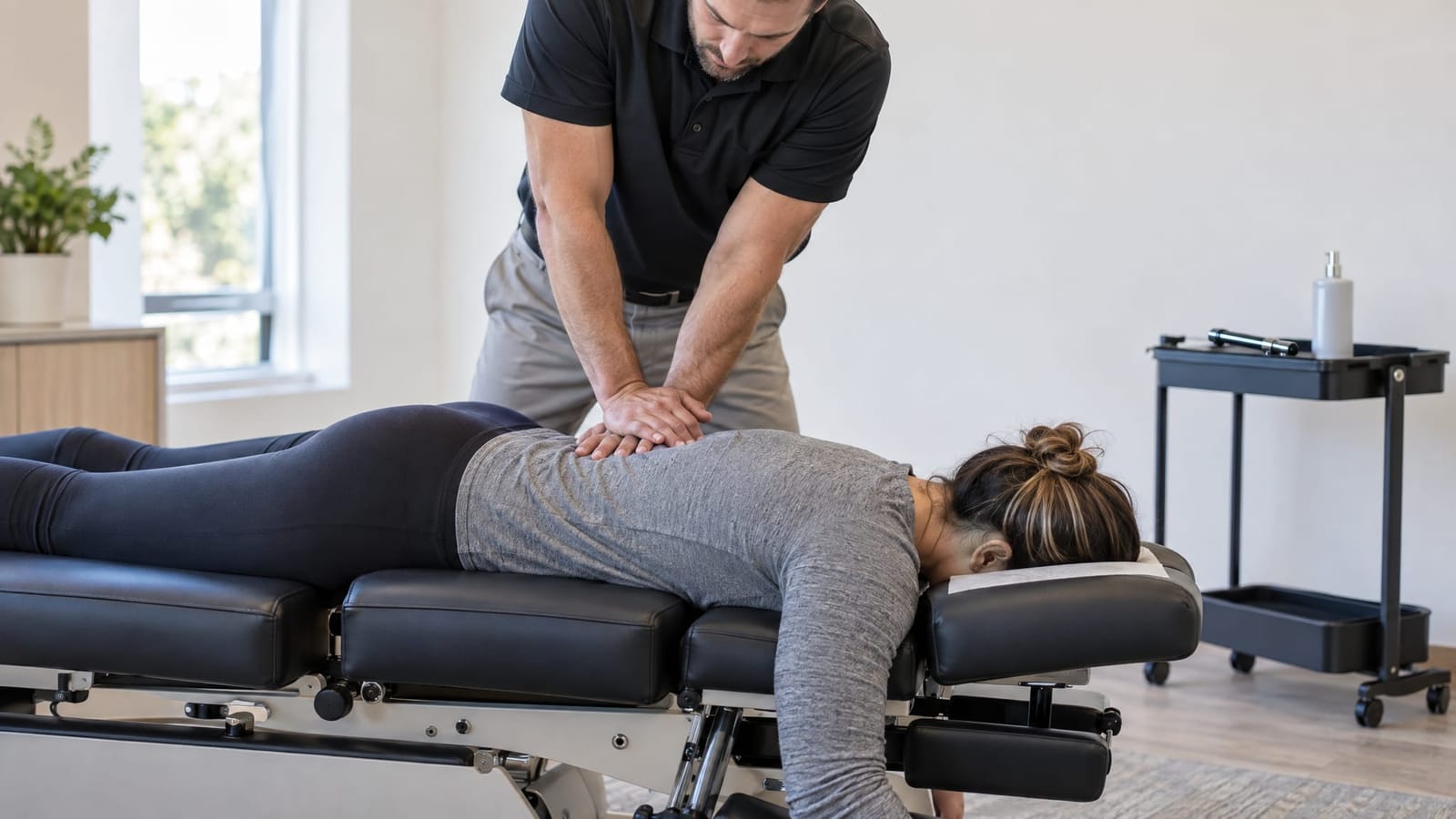
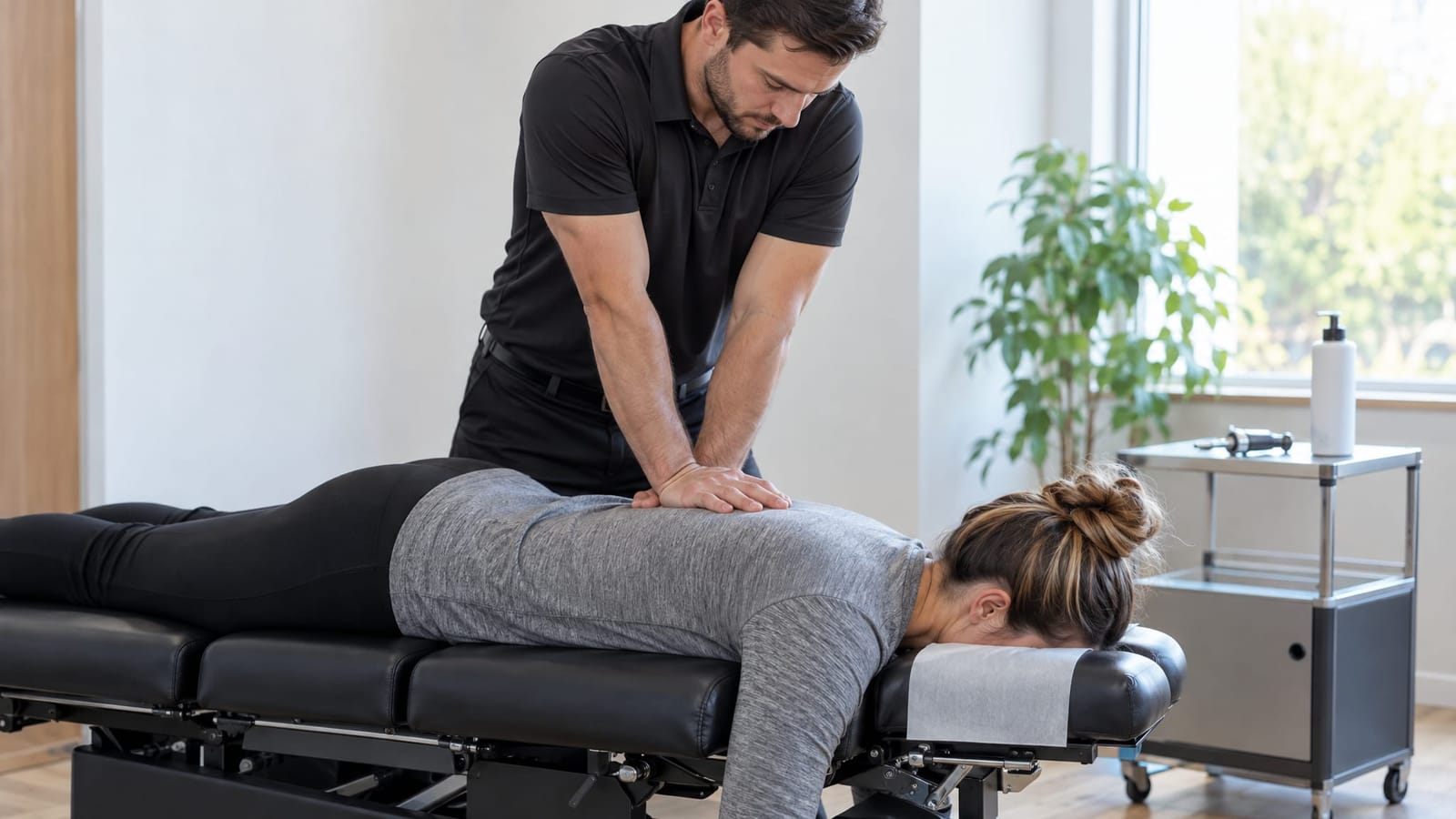
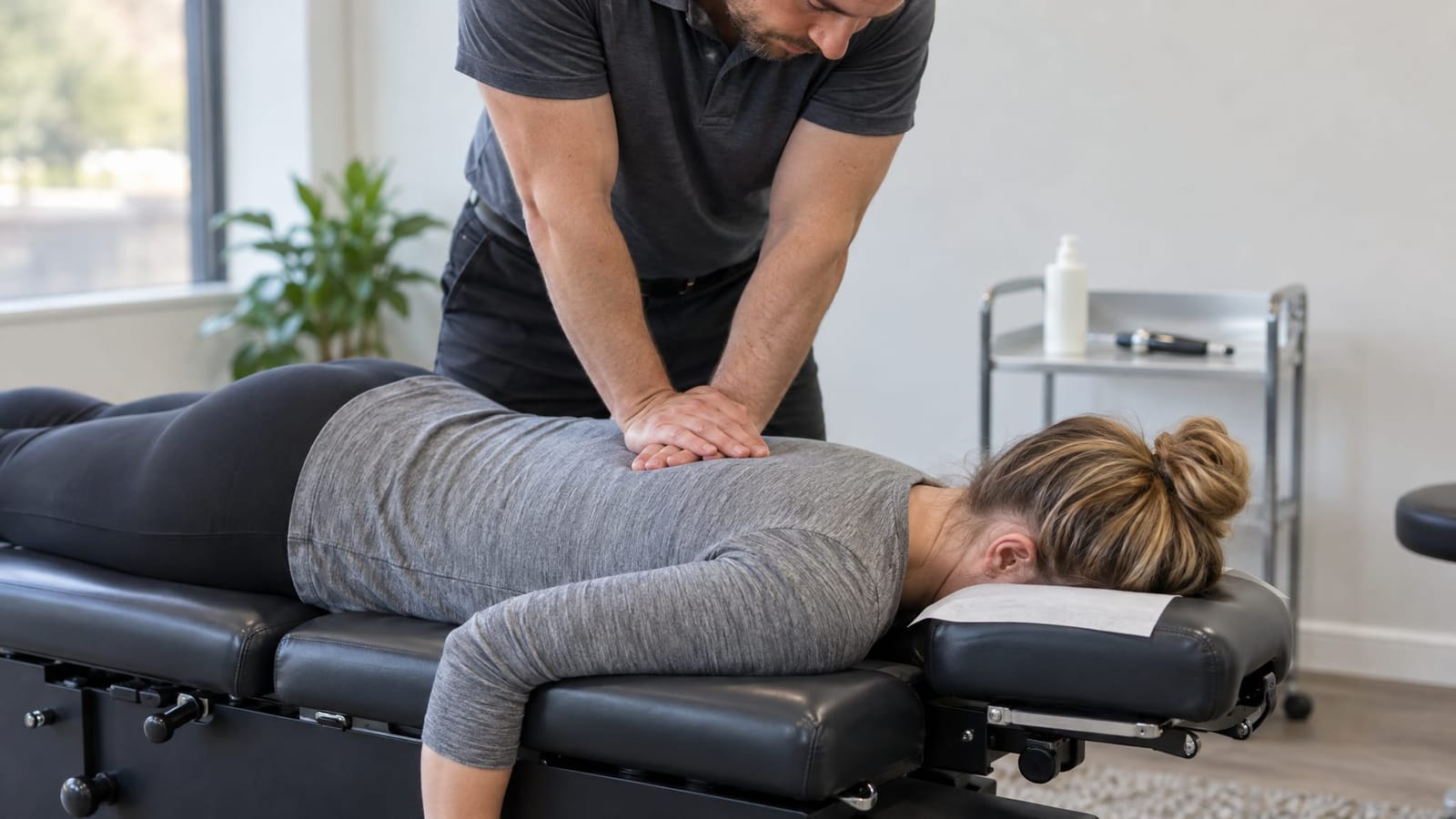
Chiropractic manipulation involves applying a controlled force to a joint. The technique and positioning are part of the clinical decision, rather than something determined solely by the presence of a herniated disc.
An adjustment does not manually push a herniated disc back into place. Understanding this distinction helps set realistic expectations about what the procedure involves.
Nonsurgical spinal decompression
Our nonsurgical spinal decompression service uses a computerized table to apply a controlled pulling force between the vertebrae, the bones of the spine. This is sometimes called a distraction force. It is a table-based procedure, not spinal decompression surgery.
The equipment and method differ from a hands-on adjustment. Suitability depends on the individual assessment, rather than the procedure’s name or the diagnosis alone.
Knowing which procedure is being discussed makes questions about positioning, sensations during the session, possible risks, and alternatives more specific. “Chiropractic care” describes a range of approaches, not a single technique or a standard visit schedule.
Information That Supports a Clinical Assessment
Preparing for a clinical conversation does not require interpreting a scan or deciding what caused the symptoms. A straightforward account of what has happened and what daily activities involve can provide useful context.
- Symptom history: When symptoms were first noticed, where they occur, and how their pattern has changed.
- Work tasks: The movements, positions, equipment, and travel involved in a typical day.
- Functional concerns: Specific activities that have become uncomfortable or difficult, rather than a general statement that work hurts.
- Existing medical information: Available imaging reports, prior evaluations, and any current activity restrictions from a treating clinician.
- Previous care: Treatments already received and the person’s experience with them.
- Relevant health history: Current medications, previous procedures, and other health conditions.
These details support the conversation; they are not a list of paperwork required for care.
Describe Job Tasks, Not Just Job Titles
Concrete descriptions communicate demands that a job title can miss. For example:
- Driving between locations: “I spend part of the day driving and repeatedly get in and out of the vehicle” explains more than “I work in sales.”
- Moving stock: “I move boxes from floor level to a shelf” describes the movement more clearly than “I work in a warehouse.”
- Desk-based work: Long video meetings, carrying equipment, and moving between workstations create different demands, even within the same role.
Frequency and duration add important context. A movement performed once during a shift presents a different work pattern from the same movement repeated throughout the day.
These descriptions help inform an assessment. Safe lifting limits, sitting limits, and readiness for particular duties also depend on the person’s clinical findings, not just the task description.
Treatment Planning and Return-to-Work Planning Are Different
A treatment plan addresses the clinical approach. Return-to-work planning addresses the demands of particular duties. The two are connected, but completing an appointment or feeling more comfortable afterward does not automatically establish readiness for every work task.
Useful questions for a clinical discussion include:
- What is the purpose of the proposed procedure?
- What might I feel during it, and how can I communicate discomfort?
- What are the possible risks and relevant alternatives?
- What will be reassessed during care, and how could that affect the plan?
- How will the demands of my specific work tasks be considered?
- How will the plan account for any existing clinical restrictions?
- How will the proposed visit schedule be reviewed?
A visit schedule and an estimated return to usual duties answer different questions. Keeping them separate helps avoid treating a number of appointments as a recovery deadline.
Frequently Asked Questions
Does a herniated disc automatically require surgery?
No. Nonsurgical care is part of the clinical discussion for many disc concerns. The decision depends on symptoms, examination findings, overall health, and other individual factors, rather than the diagnosis name alone.
Are a bulging disc and a herniated disc the same thing?
They are related but distinct descriptions. A bulge generally describes a broader extension of the disc’s outer contour. A herniation describes a more localized displacement of disc material. Neither term alone determines symptom severity or treatment selection.
Does chiropractic care always involve a hands-on adjustment?
No. Chiropractic techniques vary. Along with chiropractic manipulation and spinal decompression, we offer Activator and Low Force techniques. The choice of approach is part of the individual clinical assessment.