Cold Laser Therapy for Herniated Disc Pain Relief: Does It Work?
Cold laser therapy may help relieve back pain, but pain relief is not the same as repairing a herniated disc. Its intended role is symptom relief, not removing disc material or physically taking pressure off a nerve. That distinction matters when comparing cold laser with spinal decompression or considering how different services fit into a non-surgical care plan.
Your symptoms and treatment choices need an individual clinical evaluation with our chiropractic team. The information below explains the options and the questions that make a treatment discussion more useful.
What cold laser therapy is intended to do
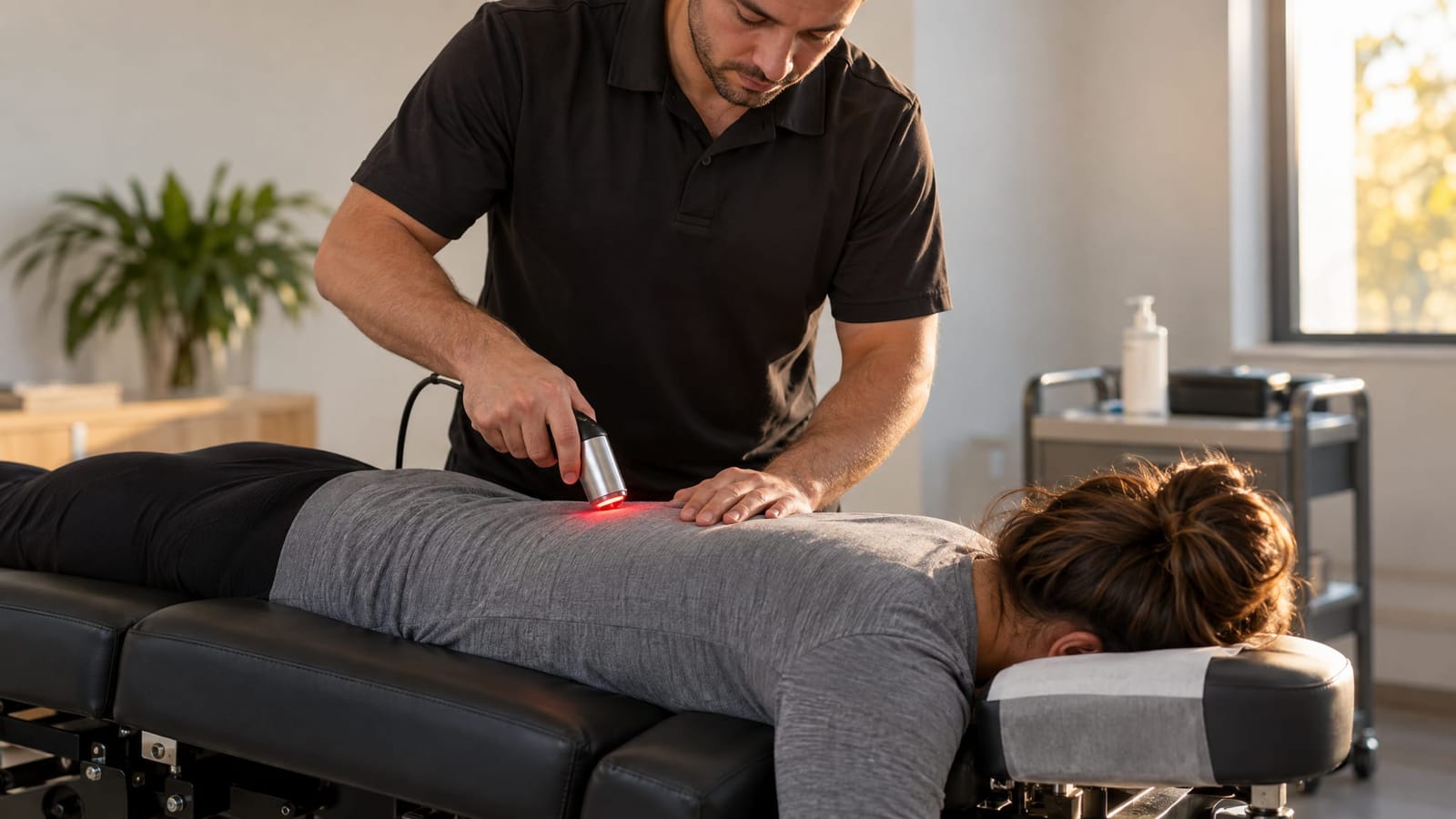
Cold laser therapy, also called low-level laser therapy, uses low-intensity light applied to the body as a noninvasive approach to pain management. Unlike a surgical laser, it does not cut or remove tissue. “Cold” refers to its low-intensity application, not a freezing treatment.
The light interacts with cells. The proposed action involves cellular processes related to inflammation and pain signaling. This is different from mechanically changing the space between vertebrae or removing the portion of a disc that has protruded.
A herniated disc can irritate a nearby nerve through both pressure and local inflammation. A treatment aimed at inflammatory processes is therefore addressing a different factor than a treatment that applies traction to the spine. Describing that mechanism, however, is not the same as demonstrating that a particular person’s nerve pain will improve.
Option 1: Cold laser as a symptom-focused service
When reviewing cold laser therapy, the most useful starting point is the symptom being addressed. Local back discomfort, pain extending into a leg, and difficulty completing daily activities are related concerns, but they are not interchangeable measures of success.
For example, greater comfort while sitting through a meeting describes a functional change. It does not demonstrate that a disc has changed shape. Similarly, less soreness around the lower back does not necessarily mean that nerve-related symptoms have changed.
The main distinction with this option is its scope: cold laser delivers light without an incision, but it is not a mechanical procedure for repositioning a disc. An effectiveness claim is more meaningful when it identifies a specific symptom or activity rather than using broad phrases such as “spinal healing.”
Option 2: Spinal decompression as a mechanical approach
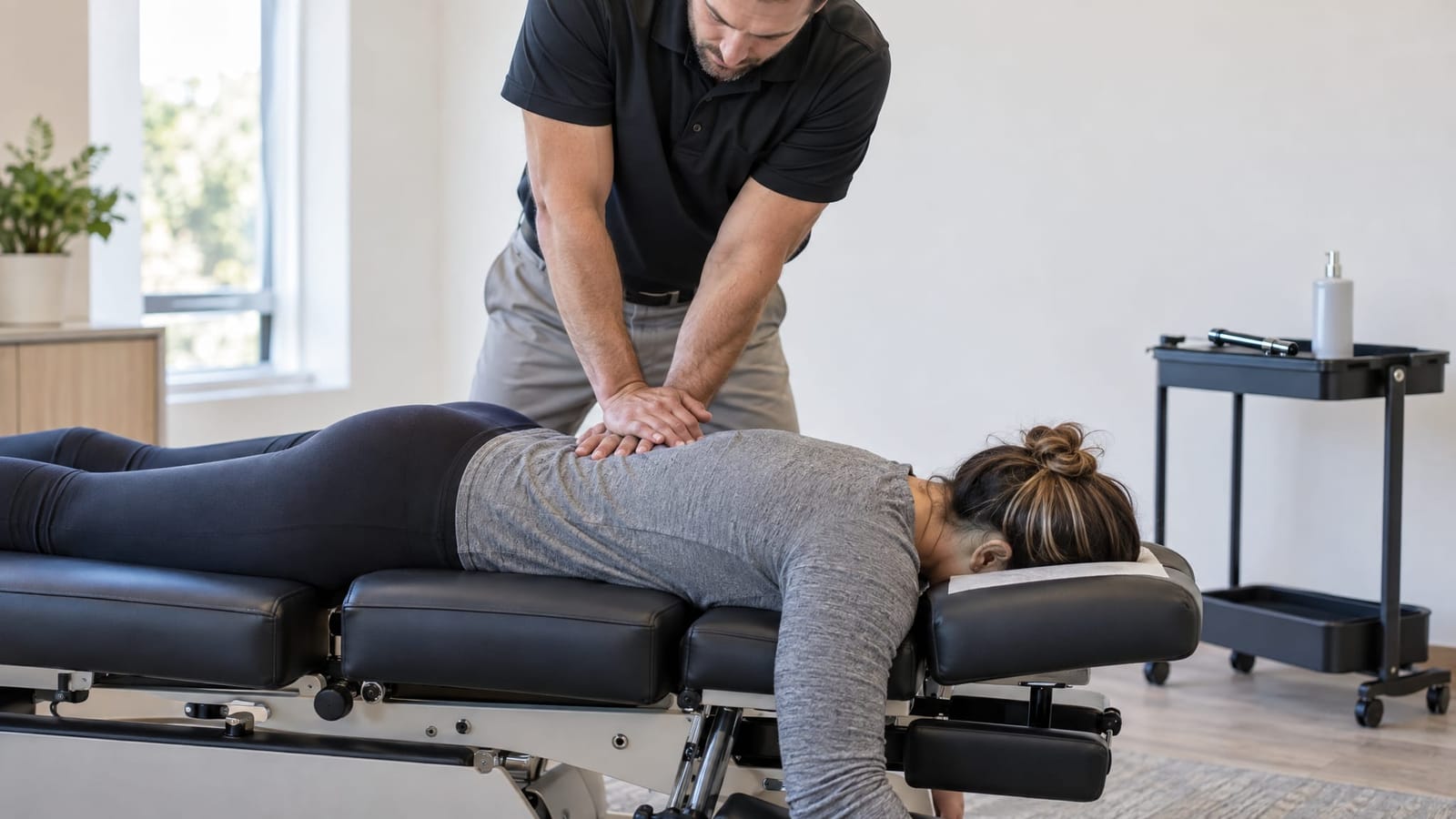
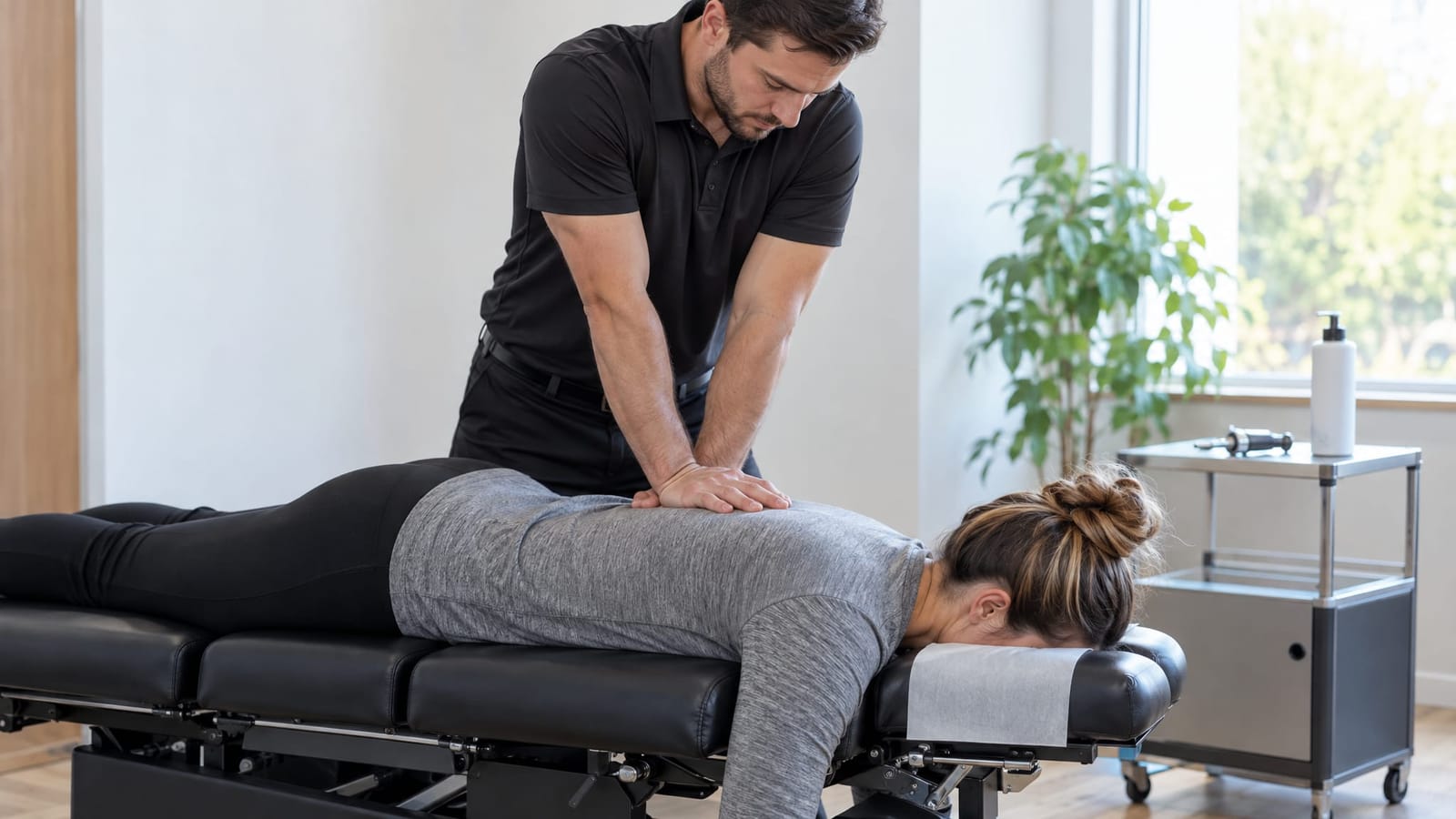
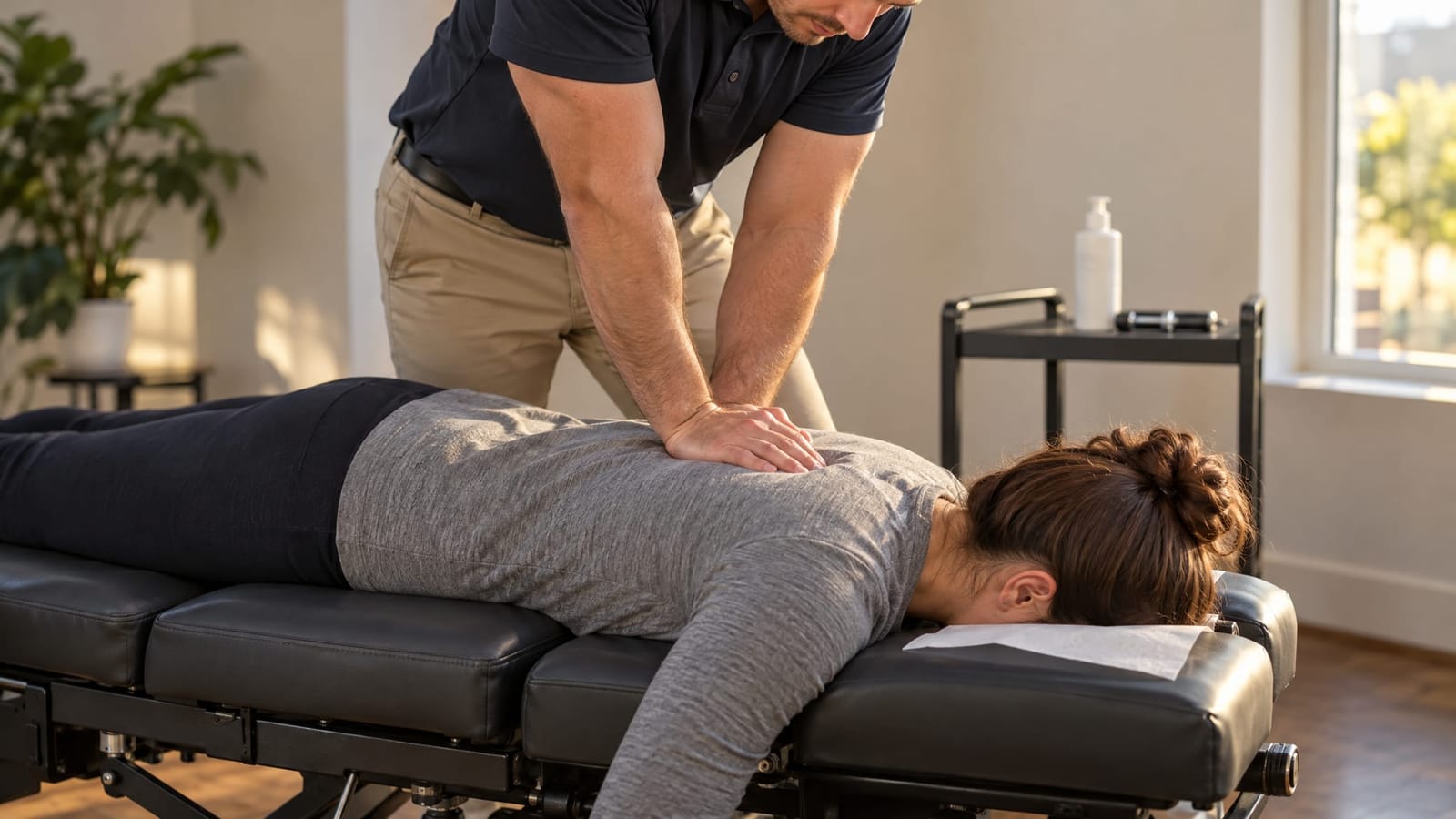
At Prodigy Chiro Care & Spinal Decompression in Santa Monica, we offer both cold laser therapy and spinal decompression. Our non-surgical spinal decompression service uses a computerized table to apply a controlled distraction force between the vertebrae. Distraction means a gentle pulling or separating force.
The practical difference is how the services are delivered:
- Cold laser therapy: Applies low-intensity light to a treatment area.
- Spinal decompression: Applies a controlled mechanical force through a specialized table.
Neither the equipment’s name nor its mechanism alone determines whether it fits someone’s symptoms. Comparing the options involves the clinical findings, the purpose of the service, and the person’s response, rather than assuming that one technology is automatically better.
Option 3: Considering cold laser alongside decompression
When cold laser and decompression are considered in the same care plan, the important question is what each is intended to contribute. Offering two different approaches does not mean that combining them automatically produces a better result.
Cold laser has a symptom-focused, light-based role. Decompression applies a mechanical force to the spine. A discussion about combining them is more informative when each service has a distinct purpose, rather than both being described simply as treatments that “help the disc.”
Useful questions for that discussion include:
- What symptom or functional limitation is each service intended to address?
- What changes would be meaningful enough to reassess the plan?
- How would short-lived comfort be distinguished from improvement in everyday activity?
- If several services are used together, how will the overall response be evaluated?
For example, someone whose main limitation is standing long enough to prepare dinner has a different practical goal from someone concerned primarily about discomfort while sitting. Naming that goal makes the conversation more specific without assuming a treatment outcome.
How to interpret cold laser therapy effectiveness claims
The word “effective” needs context. A claim about general back pain does not automatically answer a question about a herniated disc with nerve-related leg pain. Likewise, an effect on pain is not equivalent to a structural change in the disc.
Four distinctions help make an effectiveness claim meaningful:
- The condition: General lower back pain and disc-related nerve pain are different clinical categories.
- The outcome: Pain intensity, walking tolerance, sleep disruption, and disc appearance describe different things.
- The comparison: A change during a combined care plan does not isolate the contribution of cold laser.
- The duration: Comfort shortly after a session and sustained improvement in daily life are separate outcomes.
These distinctions also explain why a biological explanation is not enough on its own. Light interacting with cells describes a mechanism. Whether that translates into worthwhile symptom relief is a separate clinical question. For herniated disc care, promises of disc repair, predictable recovery, or guaranteed avoidance of surgery go beyond what a general pain-relief claim means.
Frequently asked questions
Does cold laser therapy hurt or heat the skin?
Cold laser is not designed to cut tissue or produce the intense heating associated with surgical lasers. The device is applied externally. That describes how the treatment works, rather than guaranteeing a particular sensation for every person.
Is cold laser therapy the same as laser spine surgery?
No. Cold laser is an external, noninvasive application of low-intensity light. Laser spine surgery involves a surgical procedure. Similar terminology does not make them interchangeable treatments.
How many cold laser sessions are needed?
Session planning is an individual clinical decision, not a fixed number that follows from the words “herniated disc.” The intended goal and how response is assessed are more informative than a session count alone.
Does less pain mean someone is ready for unrestricted activity?
Pain is one part of an activity discussion, alongside function, strength, sensation, and the demands of the activity itself. Feeling more comfortable after a session is not, by itself, a complete return-to-activity assessment.
The bottom line
Cold laser is a pain-management option, not a disc-repair procedure. Its role is clearest when the intended symptom, functional goal, and method of reassessment are specific. When comparing it with spinal decompression, the key is understanding their different purposes rather than assuming that either service, or their combination, promises a particular recovery.