Best Exercises for a Herniated Disc: What Helps vs What Hurts
When you're dealing with a herniated disc, movement can feel like the last thing you want to think about. But staying still for too long often makes things worse, not better. Understanding which movements support recovery, and which ones place extra stress on an already irritated disc, is one of the most practical things you can do for your spine health. This guide explores the best exercises for herniated disc recovery, explains why certain movements are beneficial, and clearly identifies the activities you should approach with caution. Whether you're just starting to learn about disc problems or looking for ways to complement your current care plan, this post is designed to help you move forward with more confidence. For a broader look at disc conditions, visit our complete guide to herniated disc vs bulging disc.
Why Exercise Matters for Herniated Disc Recovery
It might seem counterintuitive, but gentle, purposeful movement plays an important role in disc recovery for many people. Research suggests that approximately 90% of herniated disc cases improve without surgery, and regular, appropriate exercise is one of the key factors that supports that process.
Discs don't have a direct blood supply the way muscles do. Instead, they rely on the movement of surrounding fluid to deliver nutrients and remove waste. When you move regularly, you help maintain that fluid exchange. When you stay sedentary for extended periods, that exchange slows down.
Exercise also supports recovery in other important ways:
- Strengthening the core muscles reduces the load placed on spinal discs during daily activities
- Gentle stretching helps ease muscle tension that often develops around an irritated disc
- Low-impact aerobic movement improves circulation throughout the spine and surrounding tissues
- Regular movement supports better posture habits, which reduces unnecessary disc pressure
That said, not all movement is created equal. The goal is to identify what helps your spine feel supported, and what adds strain. Working with a qualified healthcare provider to build a personalized exercise plan is always the most important first step.
The Best Exercises for a Herniated Disc
The best exercises for herniated disc recovery tend to focus on three areas: core stability, gentle flexibility, and low-impact cardiovascular activity. Here's a closer look at each category.
Core Strengthening Movements
Your core includes not just your abdominal muscles, but also the muscles of your lower back, hips, and pelvis. When these muscles are strong and balanced, they act as a natural support system for your spine. Studies suggest that targeted core strengthening can reduce lower back pain intensity by up to 30-40% over 8 to 12 weeks in patients with lumbar disc problems.
Beneficial core exercises often include:
- Bird-dog: From a hands-and-knees position, slowly extend one arm and the opposite leg while keeping the back flat. This builds stability without loading the spine.
- Dead bug: Lying on your back with arms extended upward, slowly lower one arm and the opposite leg toward the floor while keeping your lower back pressed down. This challenges the deep core muscles gently.
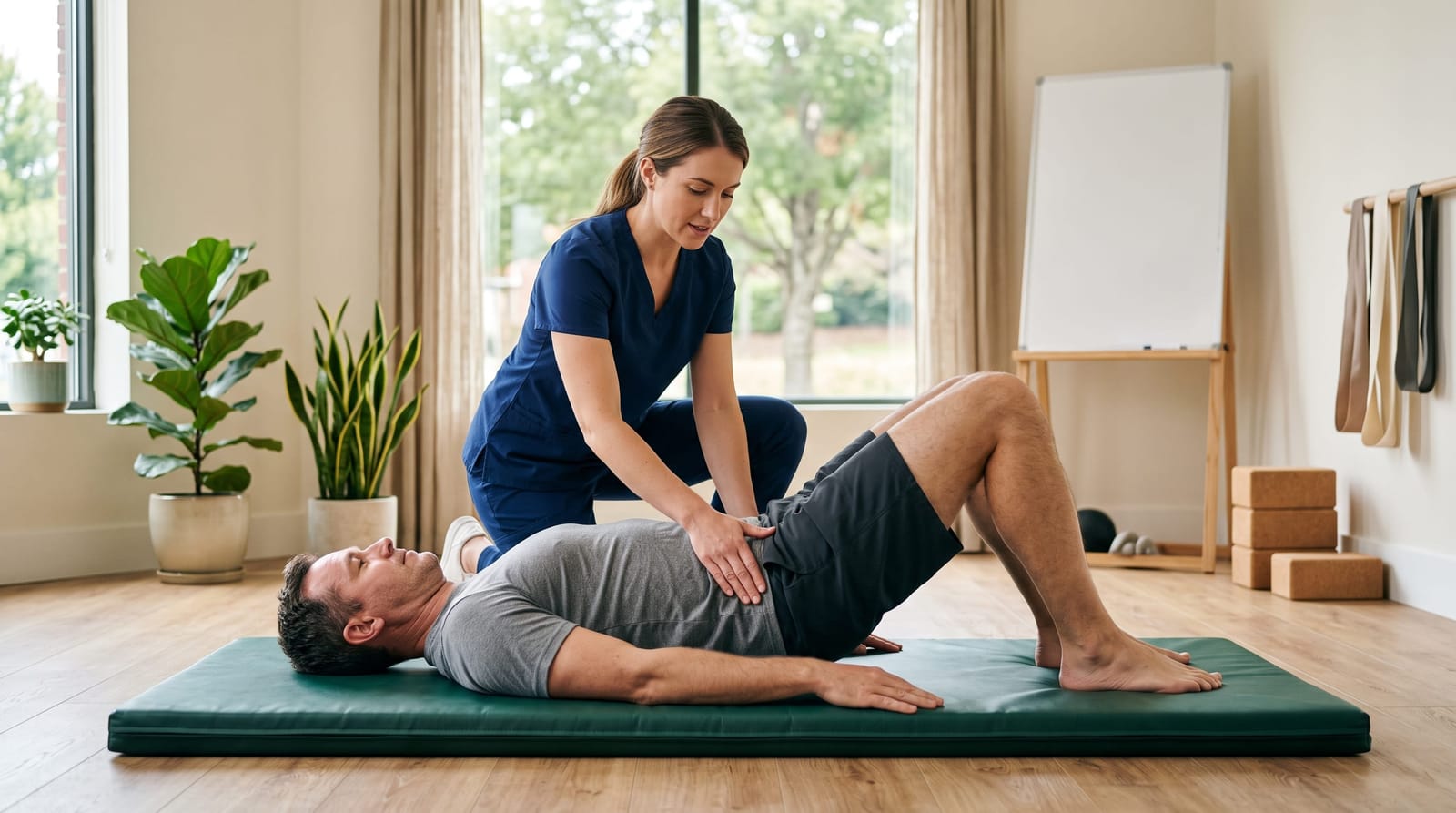
- Pelvic tilts: A simple movement lying on your back that helps activate deep spinal stabilizers and relieve tension in the lower back.
Gentle Flexibility and Stretching
Tight muscles, especially in the hamstrings, hip flexors, and piriformis, often pull on the pelvis and spine in ways that increase disc pressure. Gentle stretching can ease that tension significantly.
- Hamstring stretch: Lying on your back, gently pull one leg toward your chest with a slight bend in the knee. Hamstring tightness is extremely common in people with lower back and disc issues.
- Cat-cow stretch: Moving slowly between a rounded back (cat) and a gently arched back (cow) while on hands and knees helps mobilize the spine and relieve pressure on the disc. This yoga-derived movement is one of the most widely recommended exercises for lumbar disc conditions.
- Shoulder rolls: For cervical disc issues, gentle shoulder rolls, rolling up, back, and down in a smooth circular motion for 10-15 repetitions, help release tension in the neck and upper back without strain.
- Child's pose: A gentle resting stretch that elongates the lower spine and relieves compression in a comfortable, supported position.
Low-Impact Aerobic Activity
Aerobic movement keeps the cardiovascular system active and supports tissue health throughout the body, including the spine. For herniated disc patients, low-impact options are preferable because they don't send repetitive jarring forces through the discs.
Good options include:
- Walking at a moderate pace on flat, even surfaces
- Swimming or water aerobics, which are particularly gentle on the spine due to buoyancy
- Stationary cycling with proper seat height adjustment
- Elliptical training at a comfortable resistance level
Even 20 to 30 minutes of gentle walking 3 to 5 times per week can make a meaningful difference in how the spine feels over time. Starting slowly and building gradually is far more effective than pushing through discomfort.
Exercises to Avoid With a Herniated Disc
Just as important as knowing what to do is understanding what to avoid. Certain movements place significant compressive or shear forces on spinal discs, which can aggravate symptoms or slow the recovery process.
High-Impact and Heavy-Load Activities
Running on hard surfaces, jumping, and high-impact aerobics send repetitive compressive forces through the spine. These can increase pressure on an already irritated disc, particularly in the lumbar region. Heavy weightlifting, especially movements like deadlifts and squats with significant load, also dramatically increases intradiscal pressure. Research measuring intradiscal pressure has shown that heavy loaded squats can increase disc pressure by more than 150% compared to standing at rest.
Spinal Flexion Under Load
Exercises that combine bending forward with added weight, like traditional sit-ups, crunches with a medicine ball, or bent-over rows, place high stress on the posterior portion of the disc. For posteriorly herniated discs (the most common type), this type of loading can worsen symptoms. Standard sit-ups, in particular, generate significant spinal flexion force and are often better replaced with gentler core activation exercises.
Twisting Movements With Force
Explosive or loaded rotational movements, like golf swings, certain gym machines that isolate trunk rotation, or throwing sports, can stress the disc in ways that are unhelpful during recovery. Gentle rotational movements done slowly and within a comfortable range are a very different thing from aggressive twisting, but it's worth discussing both with your provider.
Prolonged Static Positions
While not an exercise per se, sitting for hours without movement increases intradiscal pressure in the lumbar spine, in some research, more so than standing. Taking regular movement breaks every 30 to 45 minutes is a small habit that supports disc health throughout the day.
How to Start Exercising Safely With a Herniated Disc
Starting any new exercise program when you're experiencing disc-related discomfort requires a thoughtful approach. Here are some practical principles to guide you.
Start With Professional Guidance
Before beginning a new exercise routine, working with a healthcare provider, whether that's a chiropractor, physical therapist, or your primary care physician: helps ensure that the movements you choose are appropriate for your specific situation. Disc problems vary widely depending on the location, severity, and which symptoms are present. What works well for one person may not be the right starting point for another.
Follow the "No Pain" Principle
Mild muscle fatigue or gentle stretching sensations are normal. Sharp, shooting, or worsening pain during an exercise is a clear signal to stop. The goal is movement that feels manageable and even relieving, not movement that provokes symptoms. If an exercise consistently causes pain, it's worth discussing with your provider before continuing.
Progress Gradually
Start with shorter sessions, even 5 to 10 minutes, and build from there. Gradually increasing the duration, repetitions, or intensity over several weeks gives your body time to adapt without overstressing healing tissues. Recovery from a herniated disc is rarely linear, and honoring that process matters.
Combine Exercise With Broader Care
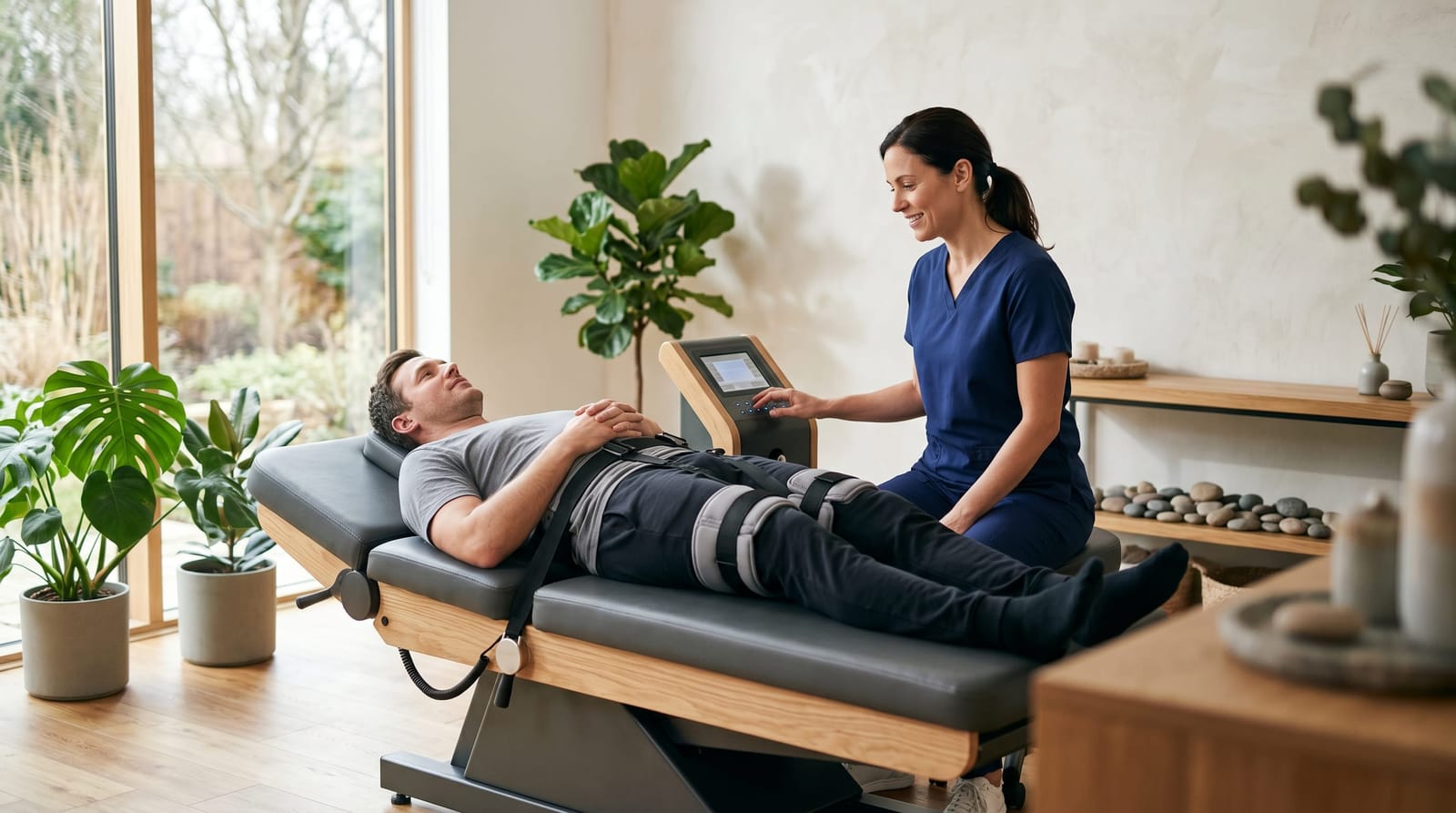
Exercise works best as part of a comprehensive approach to disc health. Many patients find that combining therapeutic movement with spinal decompression treatment helps them progress more comfortably. Decompression therapy creates gentle traction across the affected disc, which can help reduce nerve pressure and create a better environment for recovery: allowing patients to engage in exercise with less discomfort. Your care team can help you understand how different components of your plan work together.
If you're curious about your overall recovery outlook, our post on how long herniated disc pain lasts offers a helpful breakdown of recovery timelines based on different approaches to care.
Exercise and the Bigger Recovery Picture
Exercise is a powerful tool, but it's most effective when it fits into a broader understanding of your condition. Herniated discs at different levels of the spine, like the commonly affected L4-L5 herniated disc: may respond somewhat differently to specific movements, which is another reason why personalized guidance matters so much.
Many people also wonder whether non-surgical recovery is realistic. The short answer, supported by a growing body of evidence, is that it often is, and exercise is one of the most consistent contributors to that outcome. For a deeper look at what the research shows, our article on whether a herniated disc can heal without surgery walks through the evidence in more detail.
The relationship between movement, disc health, and overall recovery is a central theme across this entire cluster of topics. Building a sustainable exercise habit, even a modest one, tends to create positive momentum that extends well beyond any individual symptom.
Related Topics Worth Exploring
As you build your understanding of disc health and exercise, a few related areas are worth diving into:
- Posture and daily habits: How you sit, stand, and sleep affects disc pressure throughout the day, not just during exercise.
- Ergonomics at work: Desk setup, monitor height, and chair support all play a role in how much strain your spine experiences over time.
- Mind-body approaches: Gentle practices like yoga and tai chi combine movement, breathing, and body awareness in ways that can support disc recovery alongside traditional exercise.
Moving Forward With Confidence
The best exercises for herniated disc recovery are ones that gently strengthen the core, improve flexibility, and keep the body moving without placing excessive stress on the affected disc. Activities like bird-dog, cat-cow stretching, hamstring stretches, and walking can all be meaningful parts of a recovery-supportive routine. Equally important is knowing which movements to avoid: particularly high-impact activities, heavy loaded flexion, and explosive twisting.
Most importantly, exercise is most effective when it's guided by a professional who understands your specific situation. If you're ready to take the next step, we'd love to support you. Reach out to the team at Prodigy Chiro Care to discuss how exercise, spinal decompression, and personalized chiropractic care can work together to support your spine health and help you feel your best.